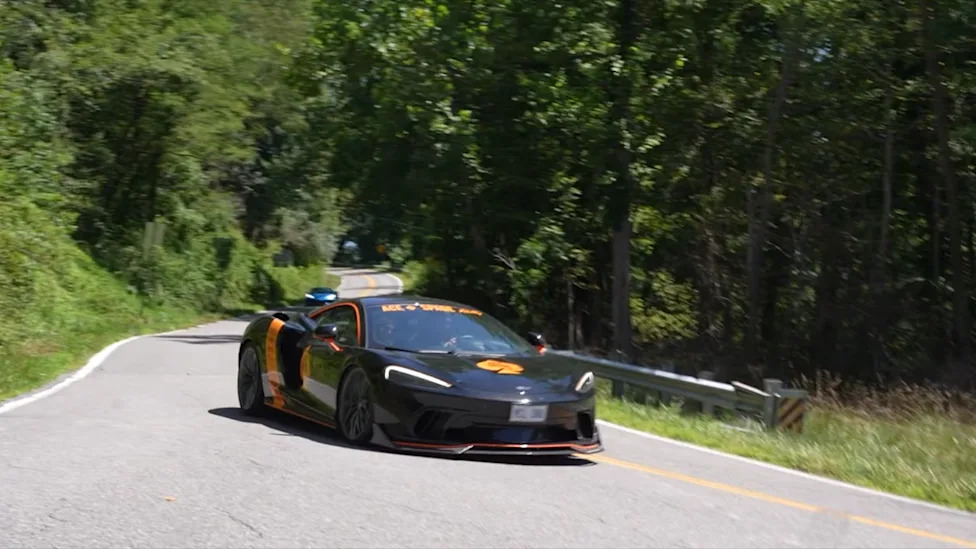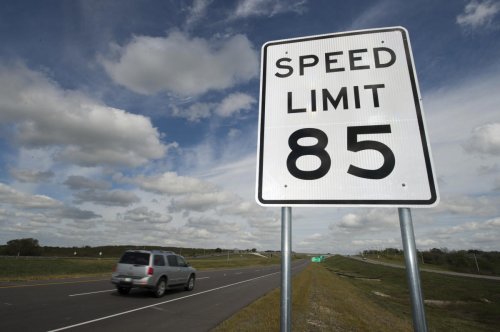
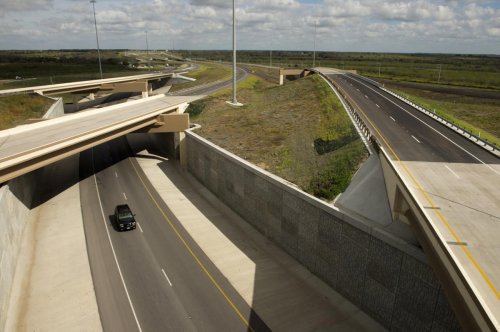
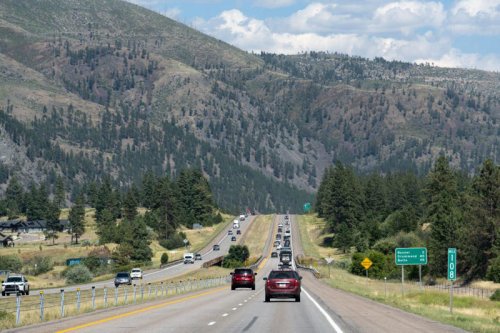
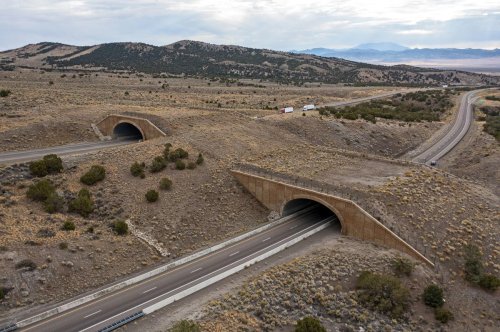
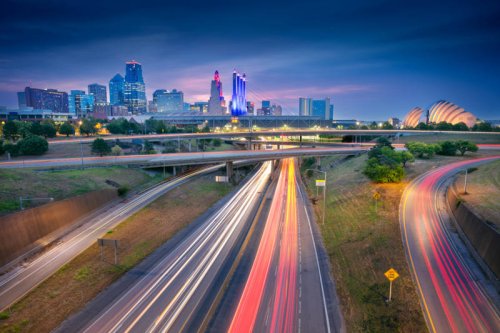


















Not all highways are made equal. For most drivers, the speed limit acts as a ceiling on how fast they should be travelling on a given road or highway. But for some pureblooded adrenaline junkies, it's a challenge. Across the wide-open landscapes of the American West and beyond, certain states have raised their highway speed limits far beyond the national norm, offering long stretches of smooth tarmac where triple-digit speeds feel almost within reach and entirely legal. Whether you're behind the wheel of a roaring muscle car, a slick and sleek sports car, or just a pickup truck with something to prove, some roads in certain states give you permission to push a little harder.Although rock star Sammy Hagar burned the phrase “I can’t drive 55” into American pop culture consciousness in 1984, the U.S. hasn’t had a federally mandated maximum speed limit since it was repealed in 1995. This means that for over 30 years, each and every state has had the freedom to set its own limits on its highways and byways. Effectively, this has made every highway in America particularly unique. Luckily for some brave motorists, a few states have set those ceilings particularly high on some of the nation's most scenic and wide-open roads. Texas is the speed limit king As the saying goes, everything is bigger in Texas, and much of it is true, especially their speed limits. While most freeways in the Lone Star state have speed limits of 55 to 75 miles per hour, one iconic stretch in the state holds the outright record for the highest posted speed limit in the Country. Texas State Highway 130, also known as the Pickle Parkway, has a dizzying speed limit of 85 mph. This 41-mile stretch of toll road runs from SH 45 near Austin south to where it meets with Interstate 10 near Seguin, cutting through open ranch country.The 85 mph limit was approved in September 2012 and went live when the road officially opened in October of the same year. At the time it was built, state officials, including Texas Department of Transportation spokesperson Kelli Reyna, defended the road against critics, saying it was engineered from the ground up to accommodate those speeds, with its wide lanes, sweeping long-radius curves, and unobstructed sightlines. Need New Tires? Save Up To 30% at Tire RackFind the perfect tires for your exact vehicle and driving style. Click here to shop all top-tier brands, including Michelin, Bridgestone, and more, directly at Tire Rack. “State Highway 130, including Segments 5 and 6, were designed and tested for high-speed travel," Reyna told Austin NBC affiliate KXAN at the time. "Safety is our top priority, and tests have shown the designated speed is a safe one. We look forward to opening this segment of SH 130, which will help reduce congestion for the Austin/San Antonio corridor by providing Texas drivers and others with an alternate route for travelling through our great state.”Beyond SH 130, Texas is already known for its high speed limits. Sections of I-10 and I-20 in West Texas, as well as parts of Highway 45 in Travis County, carry 80 mph limits for passenger cars and light trucks. The Lone Star State isn't just the fastest on a single stretch of road; it's a big state by land area, which means its motorists have to travel fast across hundreds of miles of open highway. Eight states are in the "80 MPH club."Beyond Texas, eight other states can be grouped into what I would like to call the 80 MPH club, as they have committed to relatively high 80-mph speed limits on at least some of their highways. These stretches of high-speed roads are in several states from the Pacific Northwest to the Great Plains, but while each has its own characterMontana is the crown jewel of the group and can arguably be considered the best driving state in America. Apart from the fact that Interstates 15, 90, and 94 all run at 80 mph, criss-crossing the state from Wyoming to the Canadian border, the state has amazing mountain ranges and endless acres of lush greenery that may make you consider taking it slow. At the same time, South Dakota offers one of the most satisfying high-speed drives on the continent. I-90 from Sioux Falls to Rapid City has a speed limit of 80 mph, running close to the Badlands before arriving at the doorstep of the Black Hills. While you can also push 80 mph on I-29 along the eastern border, it should be noted that the speed limit doesn't drop near cities, unlike in other states.Utah has multiple 80-mph zones throughout some of the state’s scenic green valleys and mountainous terrain. There are multiple on I-80 from its border with Nevada to SR 36 and I-15 between North Leeds and Santaquin, though speeds do slow near the state’s mountain passes. Another 80 mph corridor exists from Brigham City to the state's Idaho border; however, the potato state’s highways have some 80 mph sections along I-15, I-84, and I-86 in the southern part of the state. In addition, Nevada’s freeway network is full of driving surprises. The state may have high speeding fines, and speed limits in sections of I-80 may drop as low as 65 mph, but a 130-mile stretch from Reno east to Winnemucca runs through the "high desert," an isolated area in the northern part of the state. Wyoming is also one of the fastest states in the country, with three interstates that reach 80 mph: I-25, I-80, and I-90. I-80 runs along Wyoming's southern border close to Colorado, taking you past Cheyenne and areas near the Medicine Bow-Routt National Forest.At the same time, the Turnpike Authority in Oklahoma runs a well-maintained network of toll roads, including the H.E. Bailey Turnpike, the Kickapoo Turnpike, and the Cimarron Turnpike, all of which have speed limits of up to 80 mph. North Dakota rounds out the 80-mph club as one of its newest members, having raised the limit on I-94 and I-29 in recent years, though posted speeds drop to 75 mph near cities like Bismarck and Fargo. The "75 MPH Club": Maine, Michigan and KansasSeventy-five miles per hour may not sound as fast as 80 or 85, but these three states make a compelling case for their inclusion on this list, especially considering where they're located. While the 80 mph club is almost exclusively a phenomenon west of the Mississippi River, Maine, Michigan, and Kansas prove that fast highways aren't geography-dependent.While major stretches of I-95 through states like New Jersey, Connecticut and Massachusetts maintain rigid speed limits of 65 mph, including in cities like New York, New Haven and Boston, the stretch near Bangor, Maine, is different from the traffic that plagues the northeast. This stretch of 95 has a 75 mph limit through deep boreal forest, with luscious trees and driving pleasure that can’t be found in most of the East Coast. For a region where slower speeds are the norm, that extra bump feels more dramatic than it suggests.Highways with these speed limits aren't just a northeast thing. Over 600 miles of freeways in Michigan carry a 75 mph limit, including I-75, I-94, and I-96. But while both Maine and Michigan have pockets near urban areas with speed reductions, the Kansas Turnpike is different. In an uninterrupted stretch from the Oklahoma border near Wichita, through Topeka and Lawrence to Kansas City, the speed limit is 75 mph; even in corridors through cities and towns where speeds would be knocked down to 60 or 65 in most other states.Speed, at your own riskThough highways like Interstate 95 in Maine, or Texas's Pickle Parkway are built for actual long-distance travel, these roads provide enthusiasts and everyday drivers alike with something genuinely rare: an engineered and government-sanctioned opportunity to open it up. While it may seem fun to explore the country in search of these high-speed highways, there are inherent risks to both the automobile and the driver that exist. Legal or not, it should be noted that driving at higher speeds than your known abilities can be a dangerous activity if precautions are not taken into account.