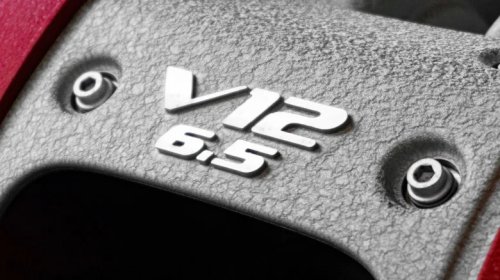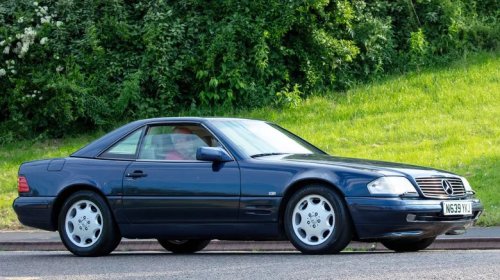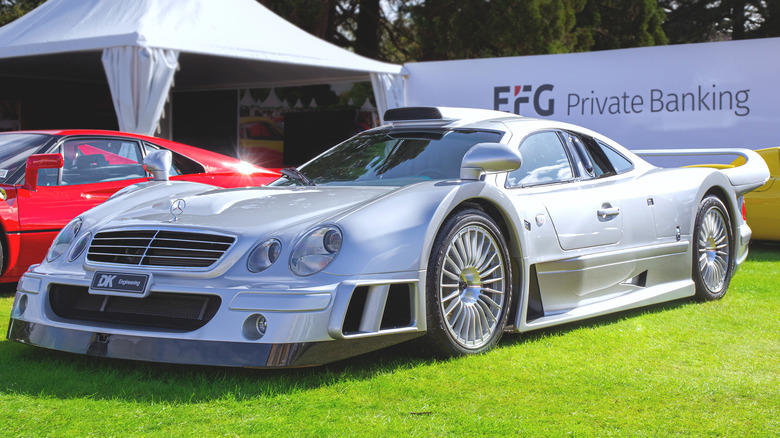
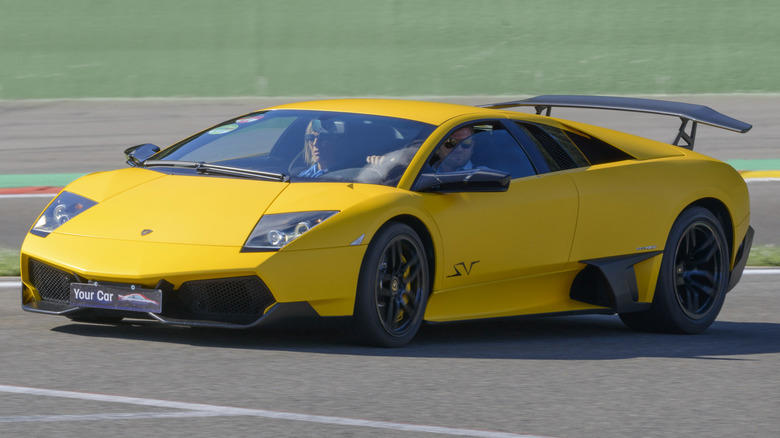
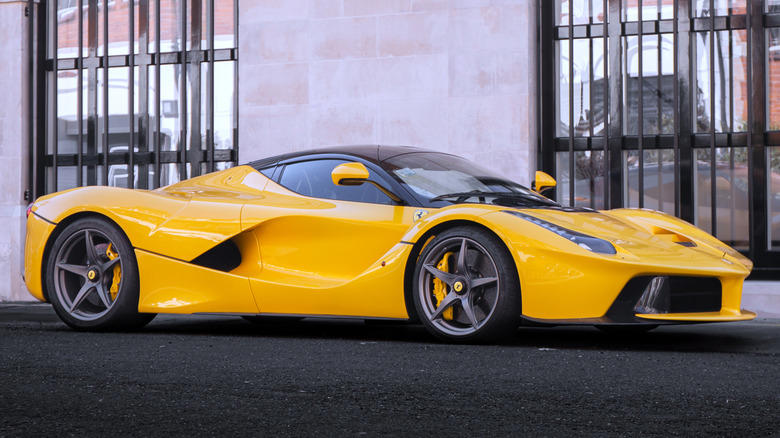















Mercedes-Benz CLK GTR – 205 MPHMercedes introduced the CLK GTR in 1997, a supercar created by Mercedes-AMG, in a record time of only 128 days. While the CLK GTR shared its name with the road-going Mercedes-Benz CLK, there was little resemblance, apart from using the same headlights, grille, and taillights. To create the CLK GTR in such a short time, the AMG team bought a secondhand McLaren F1, replacing its BMW-sourced engine with the CLK GTR V12 for testing. This enabled the team to build an iconic supercar boasting modern technologies like carbon fiber body panels and a central carbon fiber tub. These materials helped give the CLK GTR excellent rigidity and low weight.At the rear sat a Mercedes M297 engine, a 6.0-liter V12 derived from the M120 in the S and SL class vehicles. This engine produced 584 hp and 516 lb-ft of torque, sending it to the rear wheels through a six-speed sequential transaxle. With the powertrain, the Mercedes-Benz CLK GTR would sprint from 0 to 60 mph in just 3.8 seconds and reach a 205-mph top speed. The CLK GTR had excellent components, including adjustable front and rear suspension and six-piston brakes with carbon composite rotors.Lamborghini Murcielago SV – 213 HPLamborghini unveiled the Murcielago at the 2001 Frankfurt Motor Show. This marked the first Lamborghini vehicle of the 21st century to use the brand's legendary V12 engine, which was used in Lamborghini's most iconic models for almost six decades. The initial models of the Murcielago produced only 572 hp from the V12. However, the Superveloce (SV), introduced in 2009, upped the performance of the naturally aspirated 6.5-liter V12 to 661 hp. This enabled it to dash from 0 to 62 mph in 3.2 seconds and reach a 213-mph top speed. This upgraded version of the Murcielago showcased Lamborghini's exceptional skills thanks to its use of advanced materials like carbon fiber, which helped lower its overall weight.In addition, Lamborghini also made some tweaks to the Murcielago SV's interior, fitting it with sturdy, light carbon fiber seats, which safely restrained the driver even on the track. In its lifetime, the Murcielago was featured in multiple movies, with one of its most famous roles being in "Batman Begins," a 2005 film where the Murcielago was the personal vehicle for Bruce Wayne (Christian Bale). The Murcielago also had an extraordinary career in video games, including "Drive Club," "Forza Horizon," and the "Gran Turismo" franchise.Ferrari LaFerrari – 217 MPHFerrari unveiled the LaFerrari at the 2013 Geneva Motor Show. This was the definitive Ferrari of its era, rivaling other hybrid supercars like the McLaren P1 and Porsche 918 Spyder. The LaFerrari was a limited-edition supercar available in two configurations, a coupe and a convertible, also known as the roadster. The LaFerrari Aperta offered enthusiasts an open-air experience while maintaining the automotive DNA of the LaFerrari. Unlike most Ferrari supercars, the LaFerrari was a hybrid, boasting a mighty, naturally aspirated 6.3-liter V12 engine with 798 hp and 516 lb-ft of torque.At the time, this was the most powerful V12 engine, and it was supplemented by a KERS unit, upping the total performance to 950 hp and 664 lb-ft of torque. Ferrari paired the LaFerrari's engine with a seven-speed dual-clutch automatic, enabling the LaFerrari to dash from 0 to 60 mph in 2.4 seconds and reach a 217-mph top speed. Using the hybrid powertrain enabled the LaFerrari to enjoy the best of both worlds. It had the highest power output of any Ferrari at the time — a distinction it kept until the plug-in hybrid SF90 supercar was released — and boasted a 40% drop in fuel consumption compared to other V12-powered Ferraris.The F1-derived KERS system made the LaFerrari a trackable car, giving it instant throttle response. Fortunately, this wasn't the only high-tech innovation in the LaFerrari. Additional features included a lightweight carbon fiber chassis and active aero, which offered greater downforce and helped improve braking and cornering.