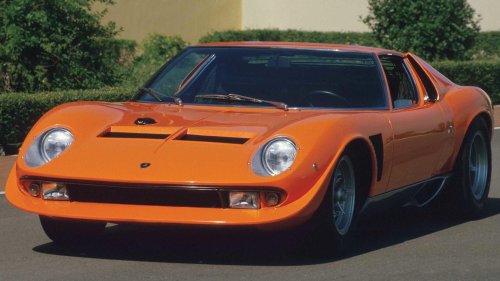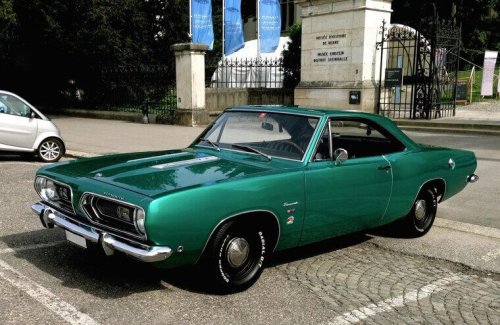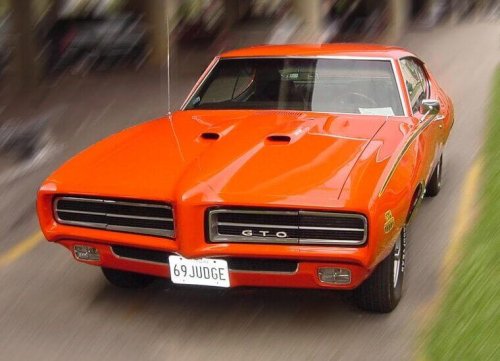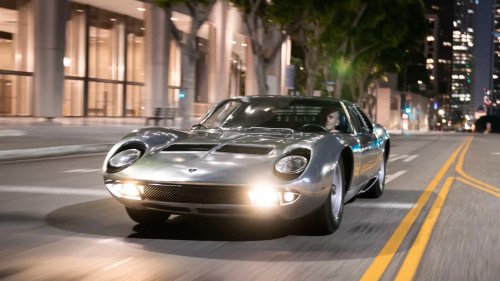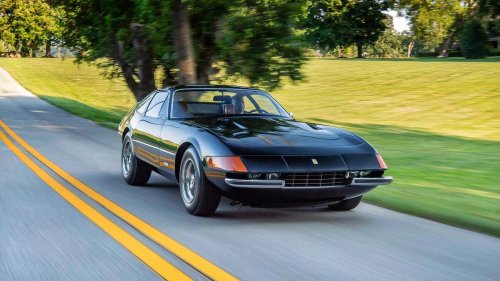
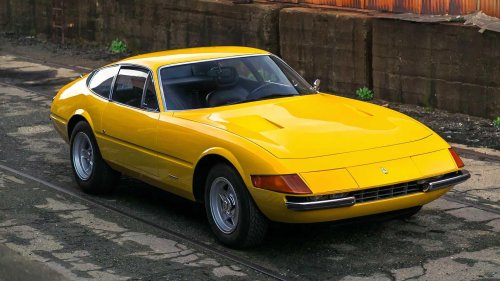
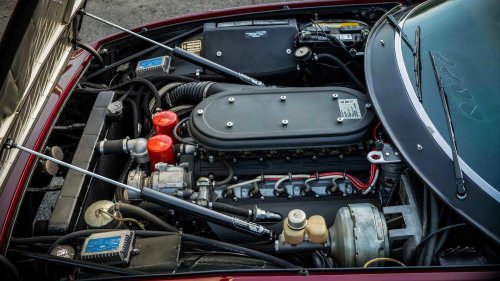
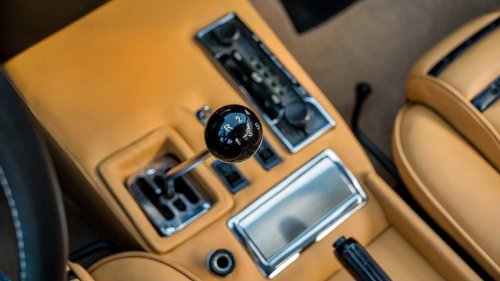
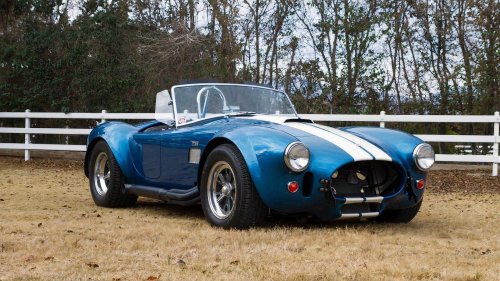
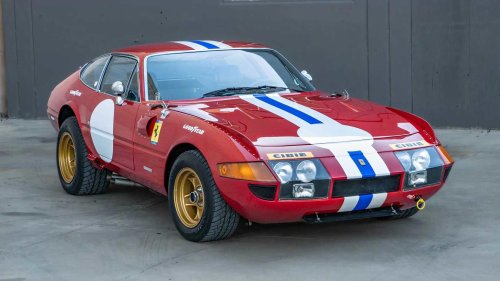
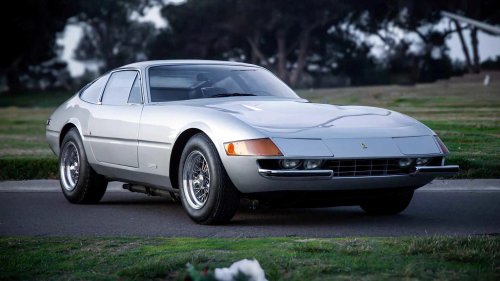
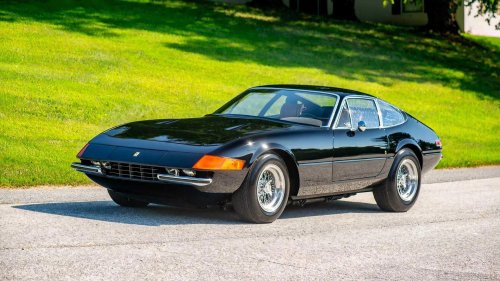
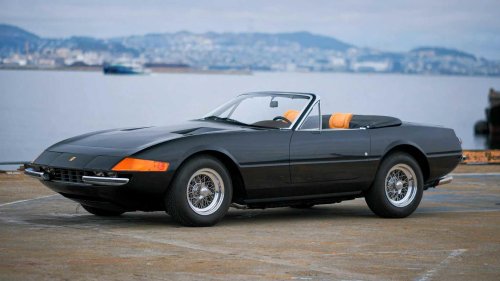


















In the late 1960s, the global automotive landscape was a battlefield. In Detroit, the muscle car wars were reaching their peak. Engineers were stuffing massive, high-displacement V8 engines into mid-sized coupes, creating legends like the HEMI-powered Plymouth Barracuda, Pontiac GTO, and almost every major American manufacturer has a car in this segment. These cars were designed for one thing: raw, straight-line power over a quarter mile.But across the ocean, in the quiet town of Maranello, Enzo Ferrari was playing a different game. While America was obsessed with the drag strip, Ferrari was obsessed with overall top speed. In 1968, Ferrari released the 365 GTB/4, which the world would later come to know as the Daytona. It was a car that didn't just participate in the speed wars; it conquered them.At a time when muscle cars were hitting aerodynamic walls at 130 mph, with the very best road cars topping out at 165 mph, the Daytona was still able to stretch its legs further. With a top speed that defied the physics of its era and a manual gearbox that required the precise shifting, it became the ultimate expression of 1960s performance. 174 MPH In 1968: The Ferrari 365 GTB/4 Daytona Claims The Throne Bring A Trailer When the Ferrari Daytona was unveiled at the 1968 Paris Motor Show, the atmosphere was electric. The automotive world was still recovering from the Lamborghini Miura, the mid-engined Italian masterpiece that first epitomized the term supercar. The Miura looked like a spaceship, and many critics believed it made Ferrari’s traditional front-engine layout look like a relic of the past. Enzo Ferrari was famously stubborn and deeply committed to his engineering principles and was unfazed. He still released these new sports cars with the traditional front-engine, rear-wheel-drive layout.It was an aerodynamic machine designed by Leonardo Fioravanti at Pininfarina. With its long, sweeping hood and a sharply cut "Kamm tail" at the rear, it looked like a shark cutting through water. But the beauty wasn't just skin deep. When testers finally got behind the wheel, the Daytona clocked a top speed of 174 mph.To put that in perspective, the fastest American muscle cars of the day struggled to maintain stability past 140 mph. The Daytona wasn't just a little faster; it was in a league of its own. It held the title of the fastest production car in the world, proving that the Ferrari front-engine grand tourer wasn't just alive, it was dominant. The Last Of Its Kind: A 24-Year V12 Gap Bring A Trailer The Daytona’s significance is amplified by what followed it. As the 1970s approached, safety regulations, fuel crises, and changing tastes pushed Ferrari toward mid-engine designs for its flagship models. The 365 GTB/4 was the final evolution of the classic front-engine V12 Berlinetta lineage that began after World War II.When the last Daytona rolled off the line in 1973, it marked the beginning of a long drought. For the next two decades, Ferrari’s top-tier cars like the Berlinetta Boxer and the iconic Testarossa would all be mid-engined. It wouldn't be until 1996, with the debut of the 550 Maranello, that Ferrari returned to the front-engine V12 grand tourer format. This 24-year gap turned the Daytona into a historical figure in automotive history. The Heart Of The Beast Is A Colombo V12 Bring A TrailerIf the Daytona’s body was a work of art, its engine was a masterpiece of mechanical engineering. Under that long hood sat the 4.4-liter Tipo 251 V12. This engine was the ultimate iteration of the "Colombo" V12, named after its designer, Gioacchino Colombo.The Colombo engine had been the backbone of Ferrari’s success for decades, but it was further updated for the Daytona. It was bored out to 4,390cc and equipped with dual overhead camshafts, which was a rarity for road cars at the time. To feed this hungry beast, Ferrari installed six twin-choke Weber carburetors. These carburetors sat in a majestic row atop the engine, and when the driver mashed the throttle, they didn't just deliver fuel; they created a mechanical howl that remains one of the greatest sounds in history.The engine produced 352 horsepower and 318 lb-ft of torque. In 1968, these were staggering figures for a car weighing roughly 3,500 pounds. But more than the numbers, it was the delivery. The V12 was incredibly smooth, pulling relentlessly from 2,000 RPM all the way to its 7,500 RPM redline. It was an engine that felt like it had no ceiling. The Unique 5-Speed Dogleg Manual Bring A Trailer A common issue with powerful front-engine cars is weight distribution. A massive V12 sitting over the front wheels usually leads to "understeer," where the car wants to plow straight ahead rather than turn. To solve this, Ferrari’s engineers utilized a transaxle design. Instead of bolting the gearbox directly to the back of the engine, they moved the 5-speed manual transmission to the rear of the car, integrated with the differential. This shifted the weight rearward, resulting in a near-perfect 50:50 weight distribution.The gearbox featured a dogleg shift pattern. In this configuration, first gear is located down and to the left, away from the main "H" pattern. This was a direct carryover from racing. On a track, you rarely use first gear except to start the race; by putting 2nd, 3rd, 4th, and 5th in a direct line of sight, Ferrari made high-speed shifting more intuitive and quick. However, the Daytona’s gearbox was notorious for being "stiff" when cold. Drivers had to be patient with it, wrestling with the heavy mechanical linkage until the oil warmed up, and the gears began to glide smoothly. Other Manual Speed Kings Of The ‘60s Bring A TrailerTo understand the Daytona’s triumph, one must look at the cars that forced Ferrari to innovate. The 1960s were a period of unrestricted engineering, where safety and emissions were secondary to horsepower and aerodynamics. These were the cars Ferrari had to beat for the title of "Top Speed King."The Lamborghini Miura was perhaps the most personal rival. When it debuted in 1966, it looked like it was from another planet. With a transversely mounted V12, it shattered the idea of what a supercar should be. Then there was the Iso Grifo, a fascinating Italian-American love child that combined gorgeous European styling with the brute force of a Chevrolet 427 Big Block V8. It was a "best of both worlds" machine designed to handle high-speed cruising with the reliability of an American powertrain.Over in Britain, the Jaguar E-Type and Aston Martin DB5 were the gold standards of sophistication, but they were increasingly looking over their shoulders at the rising top speeds from Maranello and Sant'Agata. Meanwhile, American muscle like the Shelby Cobra focused on raw, violent acceleration, often sacrificing top-end aerodynamics for the ability to tear your face off at a green light. Racing Victory At Le Mans And Daytona Bring A Trailer The "Daytona" name is actually an unofficial moniker. Ferrari officially designated the car as the 365 GTB/4. However, after Ferrari’s historic 1-2-3 finish at the 1967 24 Hours of Daytona, the media began calling the new model the "Daytona" in honor of that victory. Enzo Ferrari never officially adopted the name, but the public never let it go. While the road-going Daytona was designed as a "Gran Turismo" (grand tourer), it couldn't hide its racing DNA. Ferrari eventually produced three series of "Competizione" models for privateer racing teams.These racing Daytonas were stripped of their luxury interiors, fitted with flared fenders, and given even more powerful engines. They became legends of endurance racing. The Daytona’s most impressive feat wasn't just its raw speed, but its reliability. In an era where many race cars were fragile, the Daytona was a tank. It claimed class victories at the 24 Hours of Le Mans for three consecutive years (1972, 1973, and 1974). Perhaps most impressively, in 1971, a Daytona finished 5th overall at Le Mans, beating out several purpose-built, mid-engine prototypes that were theoretically much faster. It proved that a well-engineered front-engine car could outlast and out-perform very well through sheer endurance and stability. Current Market Pricing and Collector Status Bring A Trailer Decades after it left the production line, the Ferrari Daytona has transitioned from a used supercar to a "blue-chip" investment. It is the centerpiece of any serious Ferrari collection, representing the bridge between the vintage era of the 1950s and the modern era of the 1980s. It is so significant in the brand's history that the new Ferrari 12 Cilindri pays direct homage to the Daytona with its styling and the classic front-engine V12 design. The Berlinetta Vs. The Spyder Bring A Trailer The market for Daytonas is divided into two primary camps: the standard 365 GTB/4 Berlinetta (the coupe) and the incredibly rare 365 GTS/4 Spyder (the convertible). Only 122 genuine Spyders were ever built by the factory. Because of their rarity and their association with the "glamour" of the 70s, they are among the most sought-after Ferraris in existence. A genuine Spyder will frequently fetch between $2.2 million and $3 million at auction.Bring A Trailer The Berlinetta, while more common (with roughly 1,284 produced), is still a high-value asset. Depending on its provenance, color, and mechanical condition, a standard Daytona coupe typically sells for between $700,000 and $1.2 million. Cars with documented racing history or those owned by celebrities (such as Elton John, who famously owned one) can push those prices even higher. Owning A Ferrari Daytona Today Owning a Daytona isn't just about the investment; it’s about the stewardship of a dying art form. Modern Ferraris are marvels of computer-controlled precision, they have paddle shifters, electronic diffs, and power steering that make them easy to drive at 200 mph.The Daytona offers none of that. To drive a Daytona is to engage in a physical dialogue with a machine. It is a reminder of a time when didn't rely on software to keep you on the road, it relied on you.The Ferrari Daytona remains a titan of the automotive world. It was the last of its kind, a car that closed the chapter on the golden age of front-engine V12s. It stood up to the mid-engine revolution and the American muscle powerhouse, proving that with proper engineering could lead to world-class dominance.Sources: Ferrari, Top Gear, Classic.com