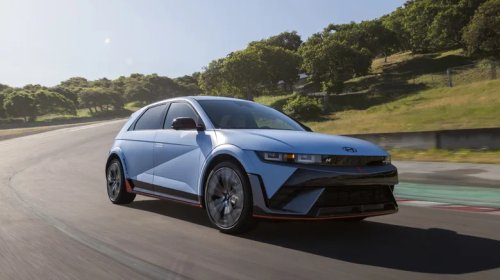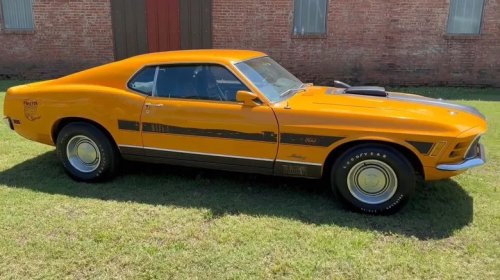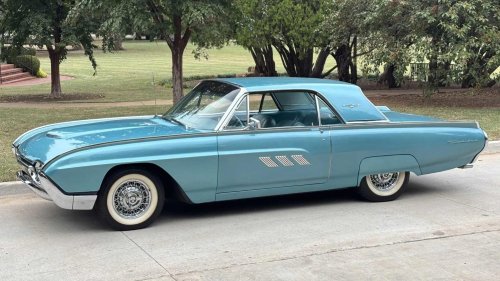
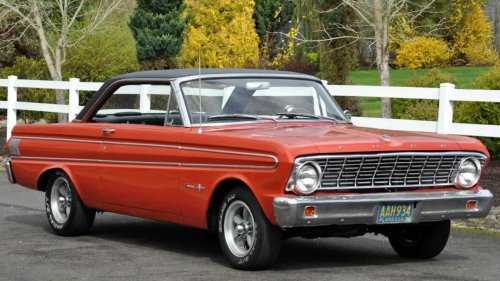
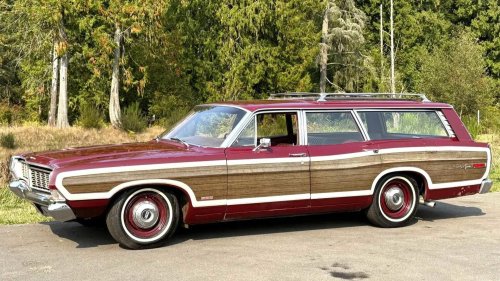
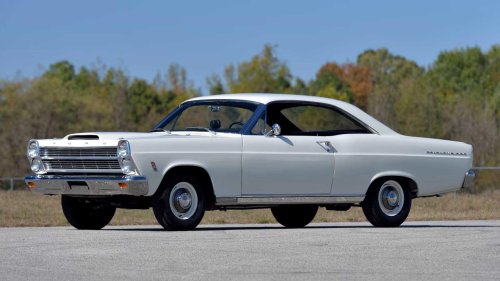
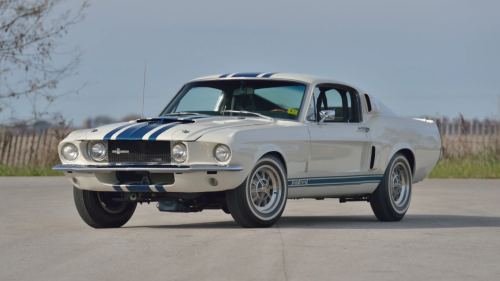
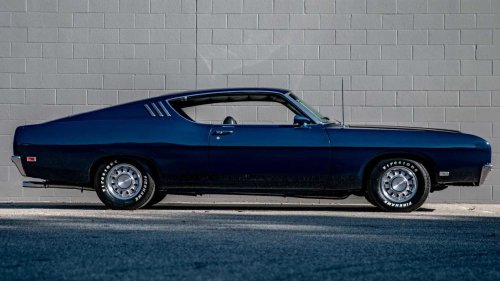
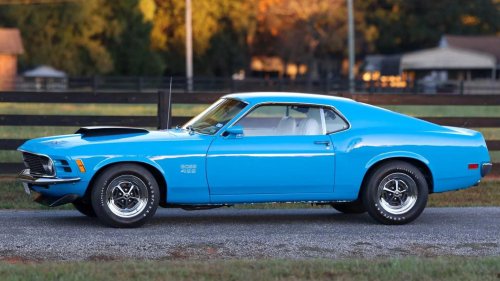
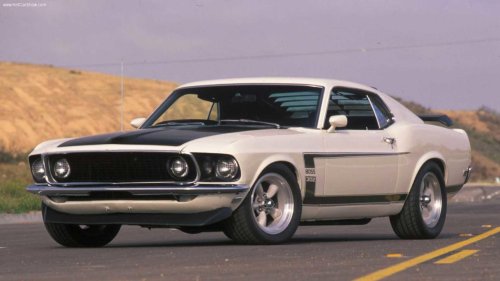
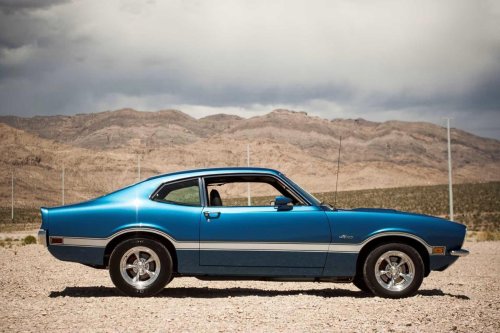
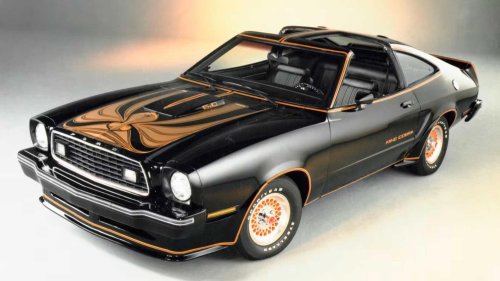


















If ever there were an impossible question for a gearhead to answer, it would be "What's your favorite car?" There are too many amazing machines that have been produced over the decades to pick just one - because both the Mazda MX-5 Miata and Chevrolet Corvette exist alongside the likes of the Porsche 911 and the Hyundai Ioniq 5 N. These are all exceptional cars we'd love to have in our garage.But since we love talking about exception cars, we can narrow the question down a bit: What are some of your favorite old Ford cars from the 1960s and 1970s? This question is not too specific, allowing us to whittle it down to a couple of decades when some of the most iconic Fords were produced. Read on to see what we came up with.This list covers some of the most popular Ford cars from the '60s and '70s; they are listed in chronological order. This list is not exhaustive as there are many great and memorable models to choose from - tell us your favorite in the comments below. 1960s and '70s Fords: The Good Ol' Days After the big tailfin era of the 1950s had come to a close, designs of the 1960s focused more on cleaner and simpler body lines. As the 1960s also ushered in the hotmuscle car era, a heavy emphasis was put on performance, competition and somewhat smaller proportions.Bubble tops gave way to fastback rooflines, curved and sweeping body lines gave way to boxier, more functional designs. The 1960s were here, and the muscle car was on the way. The 1970s would tell another story, perhaps not as glamorous, but indeed just as important, as strides were made in the name of safety and efficiency.Here are the ten best Ford cars from the '60s and '70s - at least, from our perspective. 1961-1963 Ford Thunderbird Bring A TrailerA new redesign for the 1961 model year brought the Thunderbird a striking new look. Often described as a "bulletnose", the Thunderbird had a more aerodynamic and futuristic front end. This proved to be a popular design as there were over 73,000 units sold for the 1961 model year. A new 390 cubic inch V8 that made 300 horsepower was the standard engine that was mated to a three-speed automatic transmission. For 1962, the Sports Roadster package was available. The Sports Roadster included Kelsey-Hayes wire wheels, and a fiberglass tonneau cover to conceal the rear seats, further giving the Thunderbird its unique futuristic look. Also introduced for the 1962 model year was a 340 horsepower version of the 390 V8. This hopped-up version of the 390 V8 also included three two - barrel carburetors for fuel delivery. Slight changes were made for the 1963 model as Ford was preparing the Thunderbird for another redesign for the 1964 model year. 1965 Ford Falcon Sprint Bring A TrailerThe Ford Falcon Sprint is often overlooked as it tends to live in the shadow of the beloved Ford Mustang. Although the Ford Falcon was first introduced in 1960, the Falcon Sprint trim wasn't offered until 1963. It was originally powered by a 260 cubic inch V8 borrowed from the Fairlane, which was impressive for the time as it was the first V8 stuffed in a Ford Falcon from the factory.A body style change happened in 1964, but the 1965 model was even more powerful as it came with the 289 cubic inch V8 powerhouse making 195 horsepower and 282 pound feet of torque, with only a two-barrel carburetor. However, once the Mustang hit the sales floors of Ford dealerships, sales of the Falcon decreased dramatically even with the more powerful engine. 1965-1968 Ford LTD Country Squire Station Wagon Bring A TrailerThe Ford LTD Country Squire was Ford's largest and top of the line family hauler at the time. This was the sixth generation of the flagship family wagon from Ford. The woodgrain was only for the Country Squire trim as the regular wagons did not offer the faux wood sides. The Country Squire could be had with a wide array of engines, from a 240 cubic inch inline six cylinder to the mighty 428 cubic inch V8 hovering around 340 horsepower. The Country Squire was a part of Fords full-size station wagon treatment up until the wagon was discontinued in 1991. 1966 Ford Fairlane 500 XL R Code MecumIn the name of horsepower and street dominance, Ford released the Fairlane 500 R Code in 1966. This formidable Fairlane came with a 427 cubic inch big block V8 that was conservatively rated at 425 horsepower and 480 pound feet of torque. Sitting on top of a mid -rise intake manifold was a pair of four-barrel carburetors that took care of fuel delivery. Of course, the package wouldn't be complete without a four-speed manual transmission with the ever-popular Ford 9" rear end for those hard launches at the track.The Fairlane 500 R Code could easily compete with Chrysler's menacing 426 Hemi, as it was not for the faint of heart. It was limited to only 57 units for the 1966 model year. In 1967, the R Code engine was offered in the Fairlane 500 XL, but with a single four-barrel carburetor and only making 410 horsepower, as Ford was trying to make the car more streetable for better sales. 1967 Ford Mustang Shelby GT500 David Newhardt/MecumOf course, popular opinion says that the 1967 Ford Mustang Shelby GT500 is the quintessential fastback Mustang. That's debatable, but it certainly is one of the most significant and collectible Mustangs in present day. Up until 1967, the Shelby GT350 was the top dog performer as far as Mustangs went. Coming off the success of the GT40 wins at LeMans, Ford and Carol Shelby conspired to deliver something more exciting than the Mustang GT350. With 428 cubic inches of American V8 underfoot, the Shelby GT500 had 355 horsepower and 420 pound feet of torque on tap. 1969 Ford Torino Talladega Bring A TrailerAs the 1969 Ford Torino Talladega was a homologation model for the NASCAR series, it was in limited production with roughly 750 models having been built. The Torino Talladega was different from a regular Torino. Although it was based on a Torino Sportsroof fastback, the Talladega included a modified front bumper, extended nose, flush-mounted grill and headlights, and black painted hood. It wasn't just looks either. Under the black hood was Ford's powerful 428 cubic inch CobraJet V8. This mighty V8 produced 335 horsepower and a whopping 440 pound feet of torque.The Ford Torino Talladega won 29 Grand National races during the 1969 and 1970 race seasons, it won the 1969 NASCAR Manufacturer's championship, and it won the 1969 ARCA Manufacturer's championship. Not only did the Talladega deliver wins on the track, but it was a serious contender on the street as well. 1969 - 1970 Ford Mustang Boss 429 Bring A Trailer The Mustang Boss 429 was produced for only two years. Interestingly, the "Boss 9", (a nickname for the Boss 429 Mustang), was originally introduced to homologate the 429 cubic inch V8 engine to meet the requirements for its use in NASCAR. The 429 itself had aluminum semi-hemispherical designed heads, four bolt main bearing caps, forged steel crankshaft, and forged connecting rods. The 429 also had what's called "dry deck" cooling where the heads and the block have separate cooling passages. The block was strengthened for the lack of a shared coolant passage. Utilizing hydraulic lifters for the 1969 models, the switch to a solid lifter was made for 1970 ford cars to help minimize valve float at high RPM.The Boss 429 also included a large diameter rear sway bar, making it the first Mustang ever to come with a rear sway bar. The battery was relocated to the trunk to help manage weight distribution. A manual-controlled hood scoop was part of the package as well as a 3.91:1 Trac Loc limited slip differential. The engine was too wide to fit within the stock Mustangs original design fender aprons, so custom aprons were made so the 429 could properly fit in the Mustang. Ford made 1,359 429 powered Mustangs before the model was discontinued. 1969 - 1970 Ford Mustang Boss 302 FordAvailable for the 1969 model year was Fords Boss Mustang 302. Like the Chevrolet Camaro Z/28, the Boss 302 was developed to meet the homologation requirements for the SCCA Trans Am racing series. Unique to the Boss 302 Mustang was the Boss 302 engine itself. The Boss 302 engine had significant upgrades over a standard 302 cubic inch Ford engine. For starters, the block itself was a thin wall design, with high nickel content. The main bearing caps were four bolts instead of two, freeze plugs were threaded into the block as opposed to a compression fit, solid lifters, and canted valve guides and seats to allow for larger valves.The 1970 model brought minor changes, including different stripes on the car, smaller intake valves, cast aluminum valve covers replacing the chrome covers, and a now standard Hurst shifter. 1971 Ford Maverick Grabber MecumThe Ford Maverick was actually never slated to be a genuine muscle car. It was a compact economy car starting life in 1970. In fact, the 1970 Maverick Grabber was strictly an appearance package. The largest engine available in the Maverick for 1970 was the (albeit a great engine) 250 cubic inline six-cylinder. It wasn't until 1971 that Ford graced the Maverick Grabber with the F-code 302 cubic inch V8, which put down 210 horsepower. This engine may not have made the Maverick a quarter-mile monster, but it certainly gave it some cubic inches to back up the graphics and scoops that were part of the performance image of the Maverick Grabber. 1978 Ford Mustang II King Cobra FordThe malaise era Mustang II was not the Ford Mustangs' best foot forward. But it wasn't alone, as the mid to late seventies was a difficult time for the automobile as a whole. It was not the most powerful of Mustangs by a long shot either. But it was definitely popular as Ford sold over a million Mustang II's over its four-year production. Derived from the Ford Pinto, the Mustang II was significantly smaller than the previous generation Mustang.Popular for its power assisted rack and pinion steering, which was a first in the industry, the Mustang II earned Motor Trends Car Of The Year for 1974. For 1977, the Mustang II went out with a low compression bang, introducing the Ford Mustang II King Cobra. This was more than an appearance package. The King Cobra was only available with the 302 cubic inch V8 that produced a less than exhilarating 139 horsepower. The standard transmission was a four-speed manual, but a C-4 automatic transmission was the more popular option. With the King Cobra package came front and rear spoilers, rear window slats, special wheels, fender flares, a rear-facing hood scoop and, to top it all off, a large Cobra hood decal that was obviously designed to mimic the hood bird from the Pontiac Trans Am. FAQs What Kind Of Cars did Ford Make In The 60s? The '60s took a fresh take on the automobile after the big tailfin era that came before in the 1950s. Cars from the 1960s were more conservative in their embellishments and focused more on streamlined and practical designs. Eight-cylinder engines were still heavily prevalent, with some inline engines available in base trims. What models did Ford make in the 1970s? Ford, like the rest of the automotive industry, was somewhat stifled in what they could offer as to maintain compliance with increasing standards for safety and efficiency handed down from the government. Cars from the early 1970s still had big engines with high compression and lots of horsepower. Fuel economy was an afterthought. By the time the mid to late '70s Ford cars arrived, big horsepower had left the scene, replaced by low-performing, low-compression V8s that were required to meet all the standards set forth by the EPA and the government for fuel economy. What Are The Most Iconic Old Ford Models? What era was the best old Ford model from? That's subjective. Ford cars from the '60s are truly iconic in their design alone and are highly collectible. Ford cars from the 1970s are iconic for different reasons. The early '70s models were hot Ford muscle cars evolving from the '60s, but the mid and late '70s Ford cars were dimensionally large with a small amount of performance. Even with these traits, these vintage Fords from the '70s still represent a significant time in automotive history and, for that, could be considered iconic.