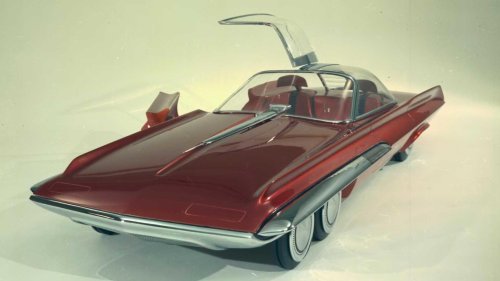
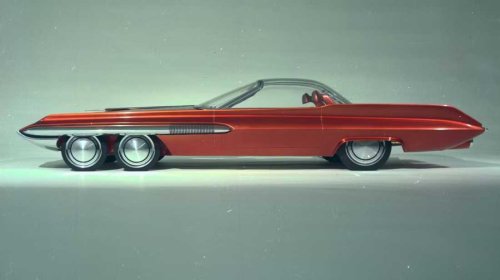
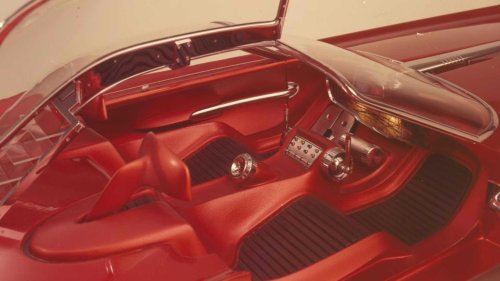
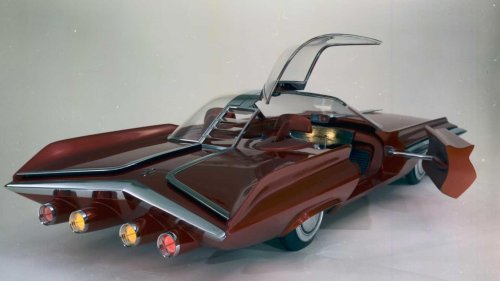
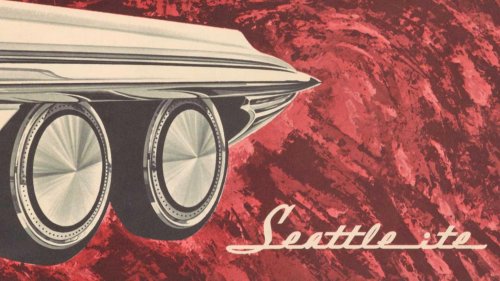
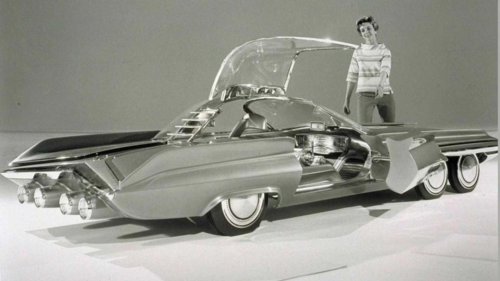
Chrome fins and rocket-inspired tail lights ruled American cars in the early 1960s, when Detroit chased muscle, luxury, and excess. Ford rolled out a six-wheel concept car that looked like it belonged on a launchpad more than a showroom floor. Instead of a steering wheel, it used fingertip controls.Instead of a fixed gas engine, it previewed a modular "power capsule" setup where the entire powertrain could be swapped. Right in the middle sat a screen that worked like an early infotainment hub. Ford unveiled it at the Seattle World’s Fair, and the tech sounded outrageous at the time. Now, it feels like a blueprint for the cars filling showrooms in 2025. The Optimistic 1962 Ford Concept That Imagined 21st Century Reality Via: Ford The early 1960s were buzzing with confidence. The space race was heating up, nuclear energy was sold as the clean fuel of tomorrow, and every World’s Fair promised a peek into a dazzling future. Ford leaned into that mood with the Seattle-ite XXI, a concept designed by Alex Tremulis and unveiled at the 1962 Seattle World’s Fair. It wasn’t meant to be built or sold. It was pure optimism on wheels, a statement of how boldly the brand imagined the 21st century could look.Seemingly echoing the same spirit and sentiment behind President John F. Kennedy's "We chose to go to the moon" speech, Gene Bordinat, Ford VP – director of design at the time called it "an example of the kind of exploration that can lead to key breakthroughs in automotive styling and engineering."The car itself was a 3/8-scale model, more exhibit than machine, but its details showed just how far Ford was willing to dream. The six-wheel layout stole the show. Four smaller wheels up front handled steering while two large ones out back kept the car planted. Ford claimed it would improve grip, braking, and handling precision. For 1962, when most Americans were rolling around in a Ford Galaxie or Chevy Impala built for size and chrome, the Seattle-ite looked like something straight out of science fiction.Via: Ford The point wasn’t to test engineering but to flex imagination. Detroit was still deep in the luxury and muscle car game, while the World’s Fair had its sights set on atomic energy, moon landings, and the promise of a tech-driven future. In that atmosphere of nuclear optimism and space race hype, a six-wheel prototype with fingertip steering and a modular power system felt right at home.Seen today, the Seattle-ite XXI feels less like a fantasy and more like an early sketch of trends that define modern car culture. EV startups chase modular platforms that can swap batteries or entire power units. Digital dashboards have replaced analog gauges. And aerodynamic design language has finally caught up to what Tremulis sculpted in 1962. The Seattle-ite never drove an inch under its own power, but its ideas drove straight into the DNA of today’s futuristic Ford concepts and the wider auto industry. Nuclear Power, Six Wheels, And A Computer Screen In A Car From 1962 Via: FordThe Ford Seattle-ite XXI wasn’t just about looking like a spaceship on wheels. Its entire architecture revolved around a modular design that let owners swap out the front power unit. Ford engineers pitched the idea of sliding in different propulsion modules depending on need. It could use anything from fuel cells to a speculative nuclear-powered pod. In theory, it was a car you’d never replace, only upgrade.The nuclear option sounded futuristic in 1962, but it raised obvious questions. Shielding alone would have weighed thousands of pounds, making it impractical for a passenger car. Fuel cells were closer to reality, but in the Kennedy era they were still lab experiments rather than mass-market tech.Bordinat said "...a driver could use an economical power capsule of, say 60 hp for short-trip driving, and he could quickly convert to a 400-plus hp unit for high speed, transcontinental driving"In essence, exactly what Toyota achieved with its various iterations of its Hybrid Synergy Drive system, but without the need for an entire detachment of the power unit. However, swappable pods didn’t vanish as they evolved into today’s battery swap systems from Nio and BYD, which can exchange an EV battery in minutes. Ford was decades early in floating the idea.Via: Ford Inside, the Seattle-ite XXI read like a playbook for modern infotainment. A central screen displayed a rolling map, estimated time of arrival, and trip data. The driver controlled direction through fingertip dials instead of a steering wheel, backed by variable-density glass that could tint itself automatically. Louvered windows handled airflow, and even the pedals were adjustable to fit different drivers. Put those features next to a Tesla Model S or Rivian R1T today, and the similarities jump out. Digital dashboards, adaptive glass, and ergonomic seating adjustments are now everyday expectations.Via: Ford The wild part was combining those futuristic ideas with a six-wheel chassis. Four steerable front wheels promised unmatched cornering stability, while the rear pair carried the load. In practice, the extra complexity and cost kept six-wheel road cars off the market.Outside of niche builds like the Hennessey Velociraptor 6x6, six wheels never went mainstream. But in racing, Tyrrell proved the idea could work, even if briefly, to limited success as it was complex and unviable.What makes the Seattle-ite XXI compelling is that its boldest dreams like nuclear propulsion and six wheels faded. But the subtler innovations like infotainment, modular power, and adaptive glass are now the norm. Six-Wheeled Cars Never Caught On, But The Seattle-ite XXI Was Important Via: Ford The Seattle-ite XXI never fired up an engine or rolled under its own power, but its ideas didn’t vanish when the World’s Fair packed up. Bits of its DNA can be spotted in everything from Ford’s later concept cars to the modern EVs rolling out of Dearborn today.Ford had already shown it wasn’t afraid to push weird ideas with futuristic concept cars. The Nucleon teased nuclear propulsion in 1958. The Gyron concept played with a two-wheel gyroscopic balance in 1961. The Seattle-ite carried that same spirit, reinforcing Ford’s rep as the automaker willing to dream in public. Those futuristic experiments built a legacy that makes today’s Ford concepts and EVs feel less like a gamble and more like the continuation of a mindset.Via: Ford Some of the Seattle-ite’s far-out ideas landed squarely in reality. Navigation screens, modular drivetrains, and fingertip steering all became normal. The Mach-E and F-150 Lightning carry that vision forward, trading nuclear daydreams for real-world batteries and digital interfaces. Even Ford’s obsession with modular design shows up in EV skateboard platforms, where one architecture supports multiple vehicles.Via YouTube The six-wheel layout is where the dream hit a wall. Cars like the Tyrrell P34 Formula 1 racer in the 1970s, the Panther 6 supercar, and even the Covini C6W tried it. The setup added complexity without delivering enough real-world benefit, which is why they failed. Mercedes came the closest to proving it could work with the G 63 AMG 6x6. That beast packed a 5.5-liter twin-turbo V8 and triple-locking differentials, but even then, Mercedes only built about 100 units. Six wheels never became practical for mass production, but the fascination stuck around.Mercedes-AMGThe Seattle-ite XXI is considered an important milestone in automotive design because it captured the exact moment when American car culture thought technology could solve anything. That optimism matters, as without cars like this, you don’t get the EVs that sit in dealerships today, or even concepts like the record-shattering SuperVan 4.2. The details may look different, but the spark, the willingness to toss out convention, is what still drives Ford’s boldest projects.Sources: Ford, Ford Heritage Vault.