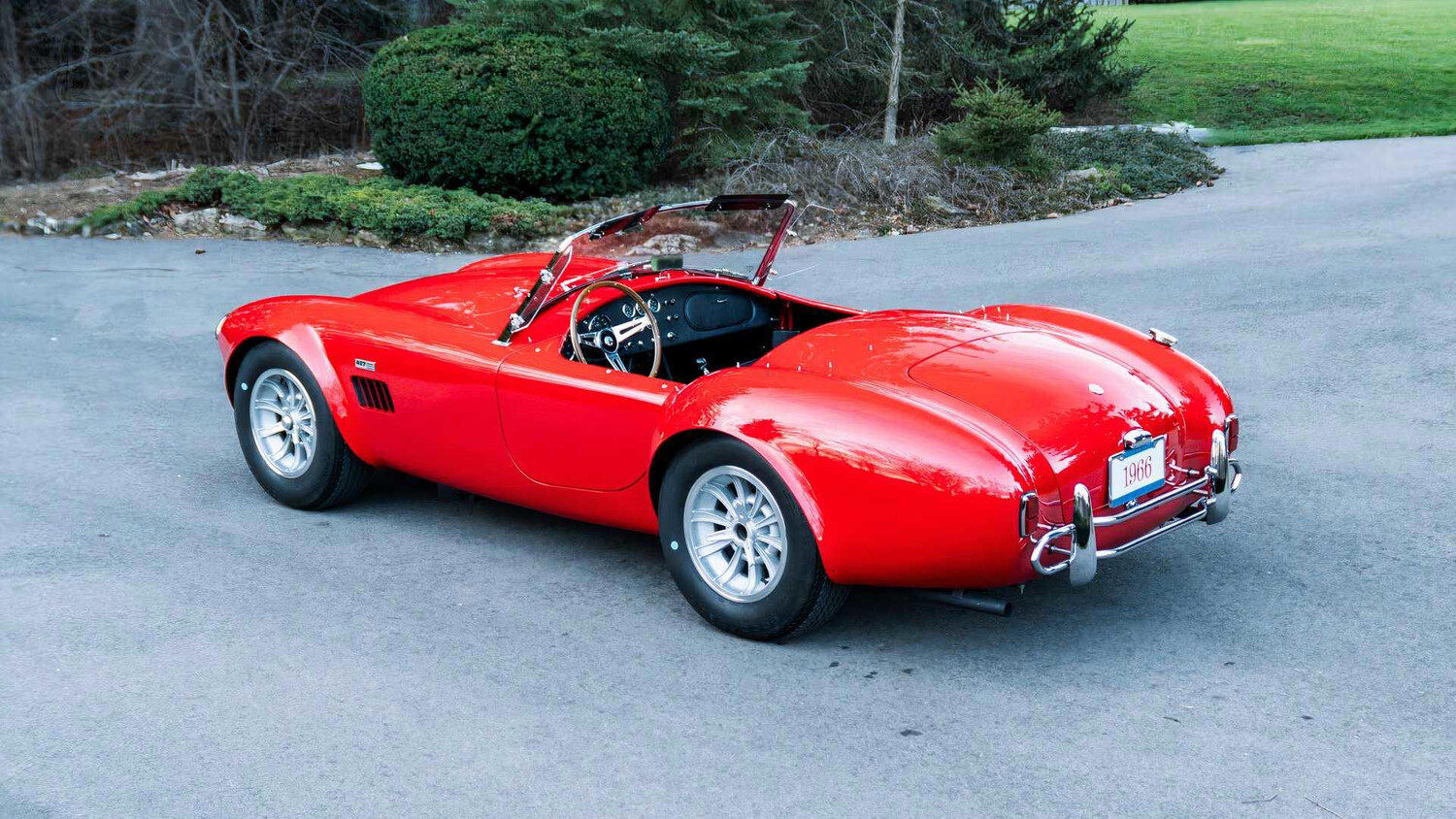
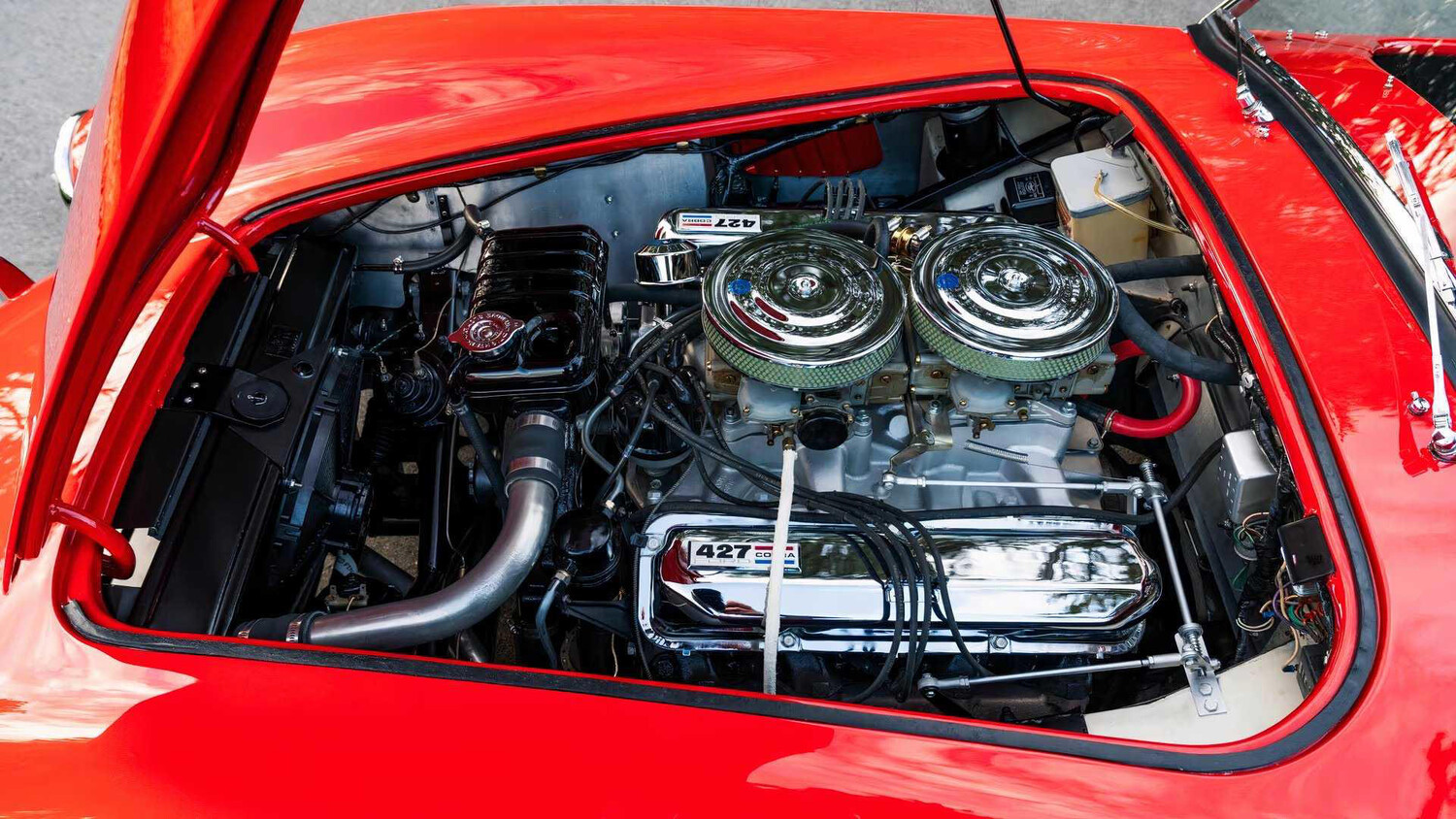
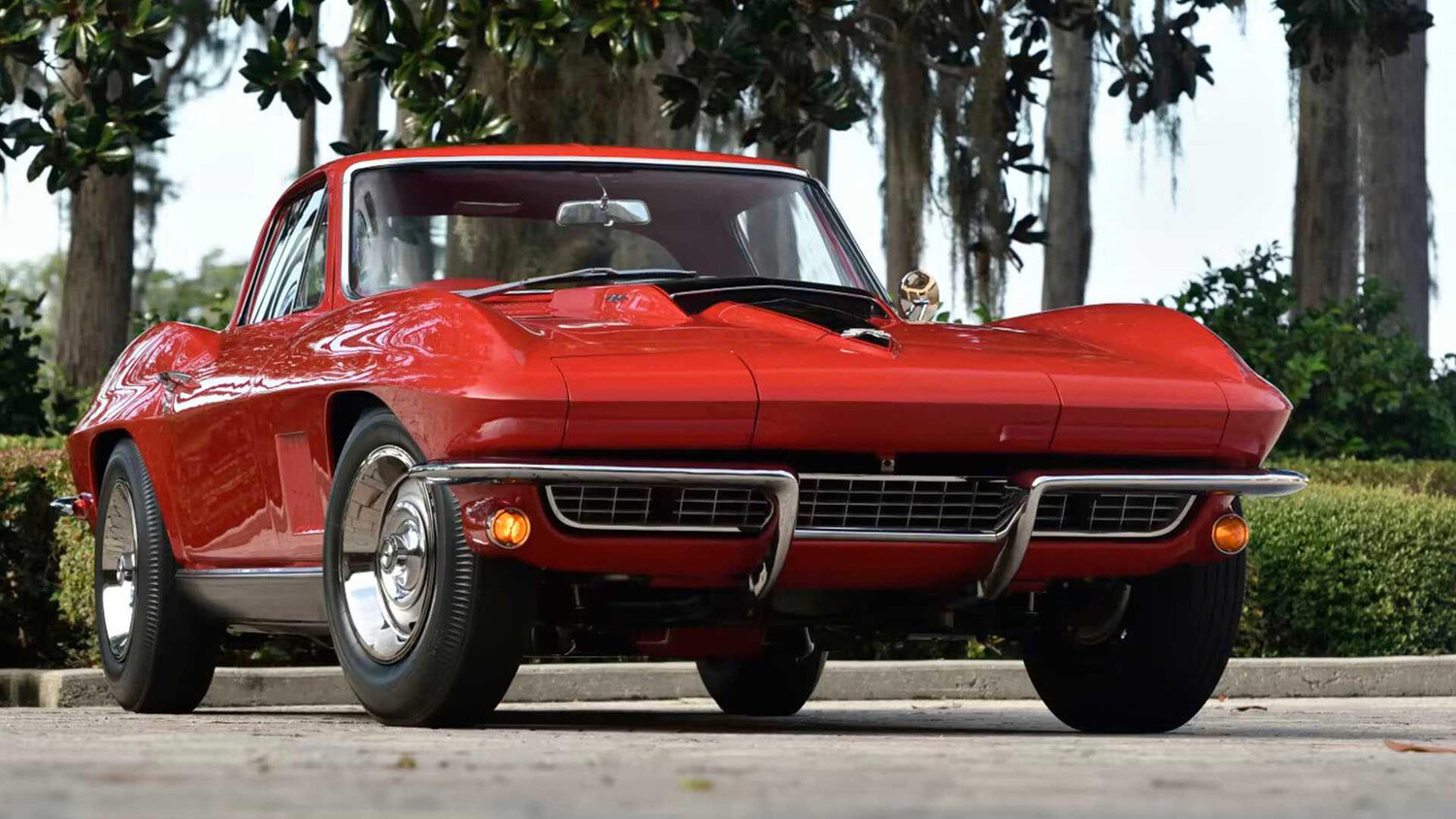
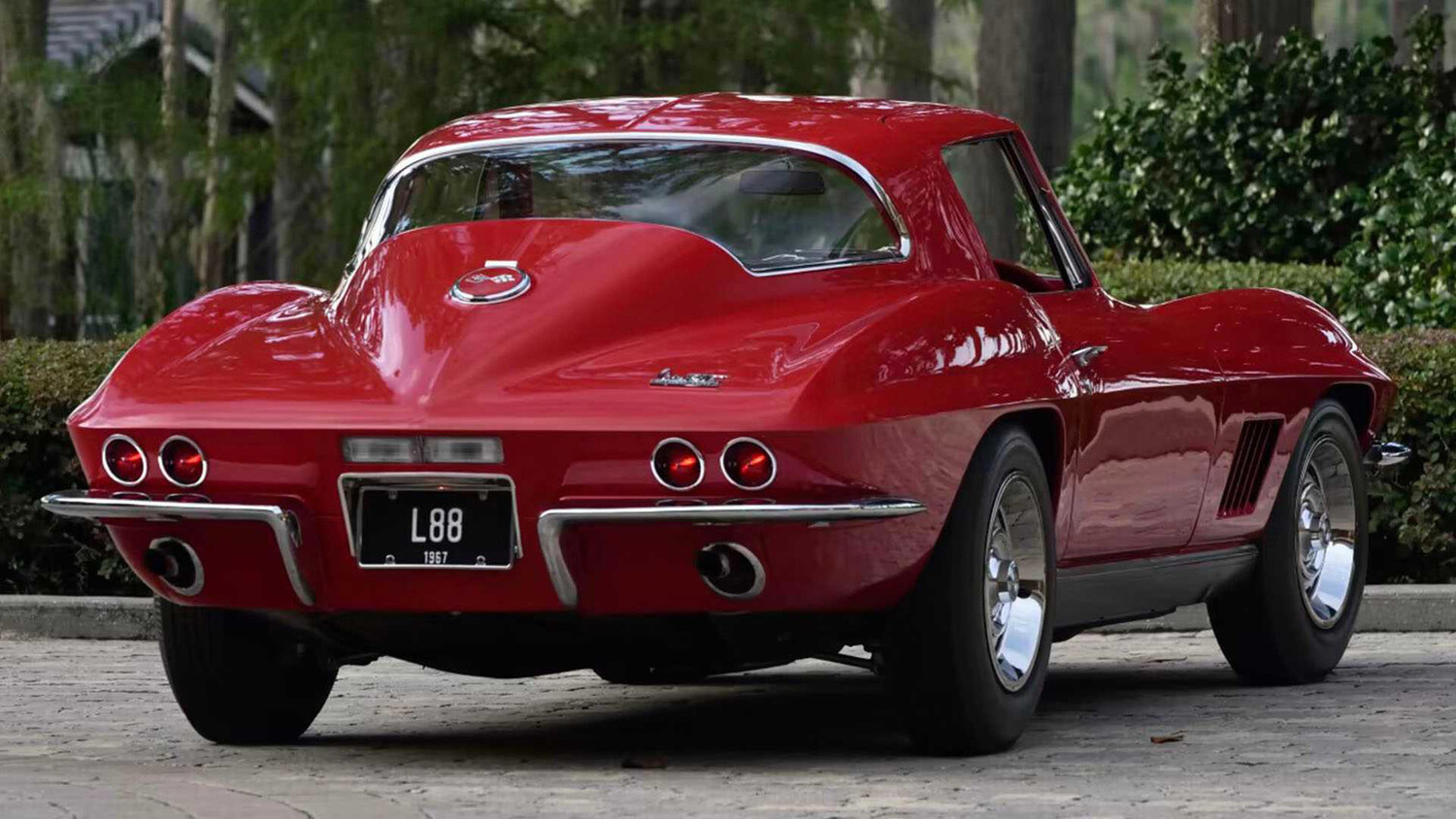
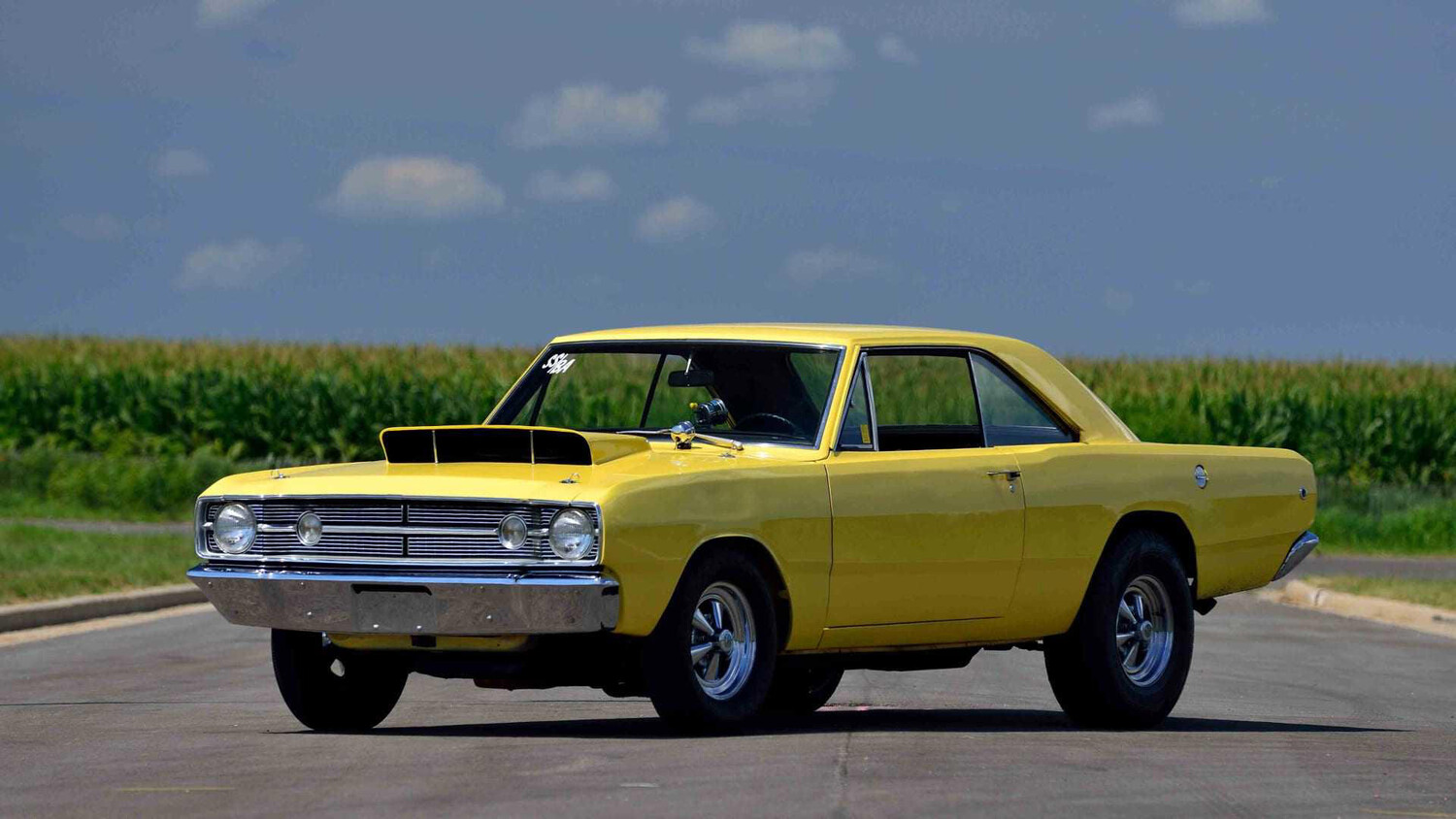
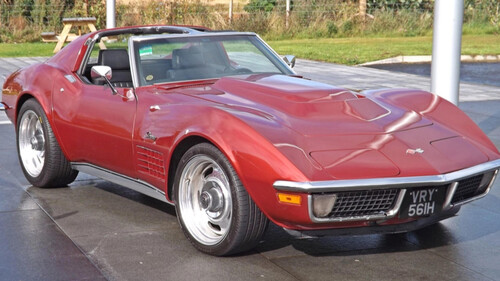
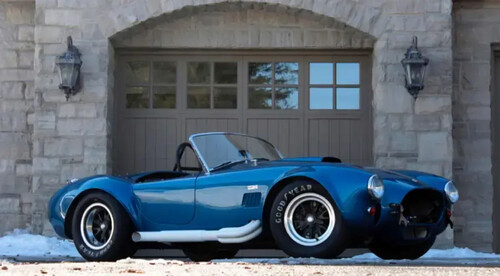
In the '60s, the muscle car era was in full swing, bringing huge power to everyday models, meaning you didn't need a second specially-prepared race car for a trip to the drag strip on the weekend. Established car manufacturers were even going as far as creating limited-run race cars that could technically be driven on the road, but buyers were advised against doing so. In short, America wanted cars that could explode down the road, or a quarter mile of asphalt, and the manufacturers were happy to oblige.But while the muscle car era generally meant sticking to the recipe of a two-door coupe, often derived from a more standard everyday model, with the power from the hefty V8 turned up to 11, there was one car that did things differently. Using an odd blend of dainty UK sports cars, which were also becoming increasingly popular in the USA in the '60s, and muscle car thinking, it was a unique proposition – and one that still captures the imagination today. This was a car that could beat any other over the quarter mile in the '60s, apart from a few race car specials. The Shelby Cobra 427 Had The Fastest Quarter-Mile Time In The '60s Mecum1965 Cobra 427 Specs The 1960s marked a golden era for British sports cars, which captivated drivers with their elegant styling and undeniable charm that perfectly matched the decade's laid-back spirit. However, many of these beautiful machines had one notable shortcoming: they were underpowered. Take the MG MGA, for example—its 1.6-liter twin-cam engine delivered 108 horsepower at nearly 7,000 rpm, making it nimble and entertaining to drive, but hardly a contender for serious straight-line performance.Everything changed in 1965 when Carroll Shelby introduced the 427 Cobra. Built on the foundation of the British AC Ace roadster but powered by Ford's legendary 427 FE big block V8, this creation represented the perfect marriage of two automotive worlds. While American muscle cars were ruling the drag strips and British roadsters were turning heads outside West Coast cafés, Shelby had brilliantly combined the best of both traditions to forge an automotive legend. The 427 Cobra Is A Fearsome Sports Car Mecum In 1965, automotive journalists got their hands on the new 427 Cobra and discovered something extraordinary. Priced at $7,000 and weighing just 2,529 pounds, this machine packed 485 horsepower and 480 pound-feet of torque, all routed through a four-speed manual transmission.Mecum The performance numbers were staggering. The Cobra could sprint from zero to 100 mph and brake back to a complete stop in just 14.5 seconds—though Shelby test driver Ken Miles managed to shave that down to an incredible 13.8 seconds. More impressive still, the car hit 60 mph in 4.3 seconds, a figure that would have been respectable for supercars well into the 2000s. It blazed through the quarter-mile in 12.2 seconds at 118 mph before reaching a genuinely frightening top speed of 165 mph. A Detailed Look At The 427 Cobra Mecum Racing driver Carroll Shelby admired the fast, expensive, and complex Ferraris, Maseratis, Aston Martins, and Jaguars of the day, and had the idea of building a car that could be cheaper but just as fast. In the early '60s, AC Cars had just lost the engine supplier for their car, and Shelby got in touch to explain his idea, at the same time getting on the phone with Ford to set up a supply of engines. The fact that the new car would no doubt help Ford compete with Ferrari helped to sweeten the deal.In 1962, Shelby created Shelby American, building the new car in California and calling it Cobra, a name that had come to him in a dream. These early cars were equipped with the Ford 260 and, later, the 289 cubic-inch engines, with plenty of success on the track. In 1962, the first 75 cars got the smaller-displacement V8, according to Hagerty.com, with the other 51 early-production cars getting a 289 cubic-inch mill. The 427 Was A Serious Improvement On The Original Cobra Mecum But it was the later iteration of the Cobra that cemented the car in automotive history. The 427 arrived in 1965 and was a different beast altogether. The car featured the 427 big-block Ford engine with 425 horsepower in standard form and 485 horsepower in competition cars.Mecum The tubing that made up the frame was thicker, and the traverse leaf springs in the suspension, which some magazines said made the car difficult to control on bumpy roads, were replaced by coil springs on all four corners. The 427 was made in both street and competition versions. Decades later, cars like the Dodge Viper were still trying to capture the magic of this legendary American sports car. Other Incredibly Quick Cars Of The 1960s Via: Mecum Auctions In the '60s, the Corvette was evolving quickly too. The pretty late '50s Corvettes were getting faster, to match their achingly good looks, but it wasn't until the second generation arrived for the 1963 model year that the car started to be appreciated by some as more of a serious sports car. Taking on the muscle cars of the day was no easy feat, but by the end of the '60s, Chevrolet had developed a special 'Vette that was a thinly disguised race car, sold in small numbers. Chevy also kept fairly quiet about the most powerful C2 Corvette. The L88 Corvette Was A Race Car That Could Be Driven On The Road Via: Mecum Auctions Checking the L88 option, which spanned two generations of Corvette (C2 and C3), meant the car came with a 7.0-liter 427 race V8 and numerous competition and high-performance parts, as well as a distinct lack of luxuries such as air conditioning and radio. One respected magazine quoted the quarter mile of this super 'Vette as being in the "mid-to-high 11-second range," this being backed up by an 11.44 run by Jimmy Johnson’s silver L88-spec 1969 ’Vette at the Pure Stock Drags event in 2011.The L88, being a thinly veiled competition car, however, means that Hagerty.com says it is "hard to start when cold and was notorious for overheating in traffic." The National Corvette Museum says that they don't "recommend for street use." Standard Corvette 427s, however, could complete the quarter in a very respectable time of around 13 seconds. Dodge Also Created A Wild Model For The Drag Strips Mecum AuctionsDodge also created 80 versions of the Hurst Hemi Dart LO23 Super Stock, which was street-legal and recorded a low-ten-second quarter-mile at roughly 130 mph. However, it was originally issued with a disclaimer that it was only to be used for drag racing or “supervised acceleration trials.”There was also the Hemi Barracuda Special Order fitted with a race engine, which was estimated as being able to post a low ten-second quarter mile time. But on the street-legal side of things, the 440 Six-Pack 1969 Plymouth Road Runner A12, famously cleared the 1/4 mile in just 12.91 seconds. This Is How '60s 1/4 Mile Times Stack Up To Today's Some modern supercars can post incredible quarter mile times. To keep it in context with the rear-drive Cobra, it's worth looking to 2023 when Car and Driver magazine said the incredible Ferrari 296GTB was the quickest rear-drive car they had ever tested. The GTB hit 60 mph in 2.4 seconds and covered the quarter mile in 9.7 seconds at 150 mph. In 2022, YouTube channel Carwow went much quicker, taking a McMurtry Spéirling fan car to 60 mph in 1.40 seconds and demolishing the quarter mile in 7.97s during filming.Sources: Hagerty.com; Hemmings.com; Dodgegarage.com; Shelby.com