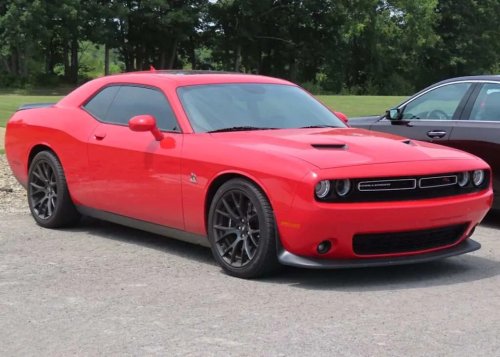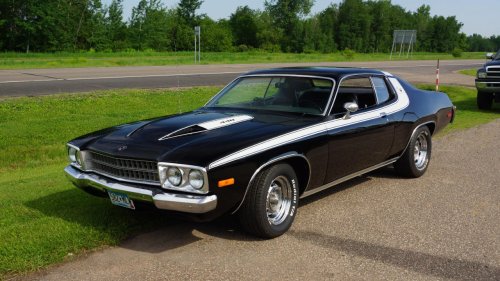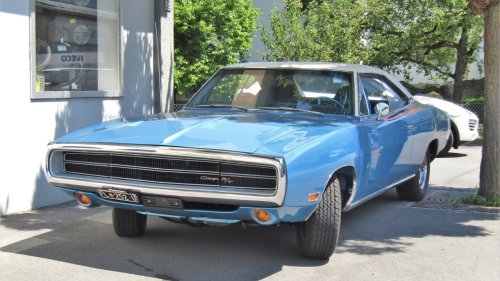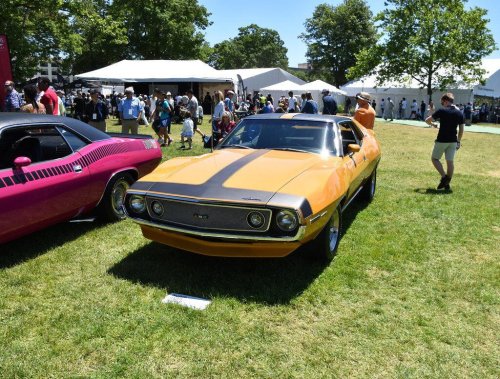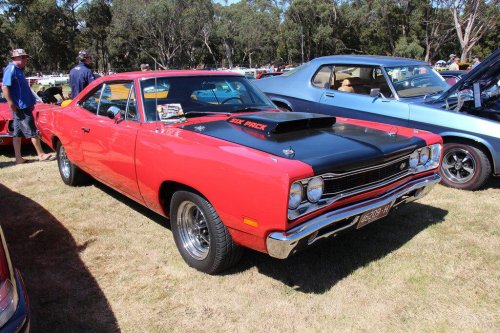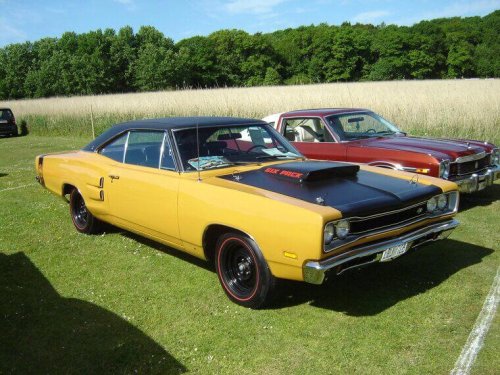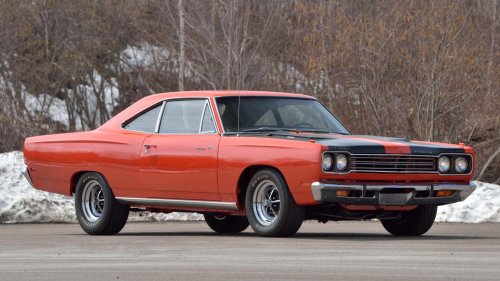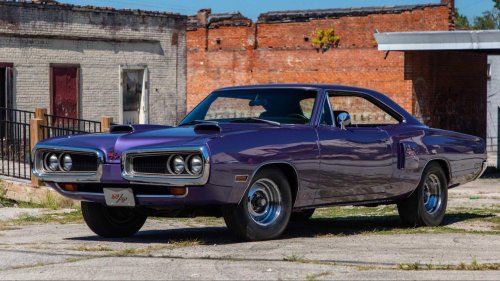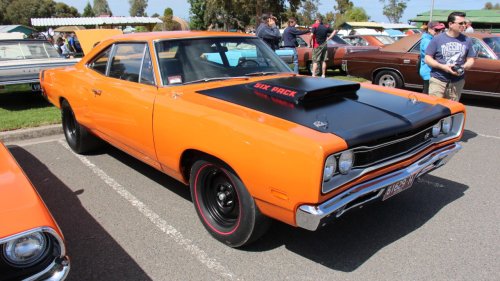
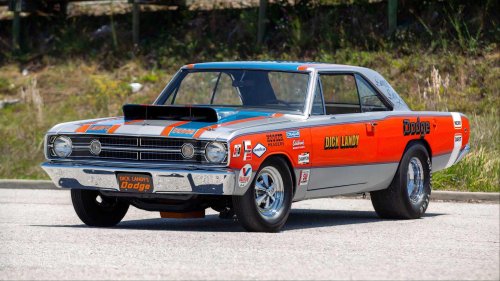
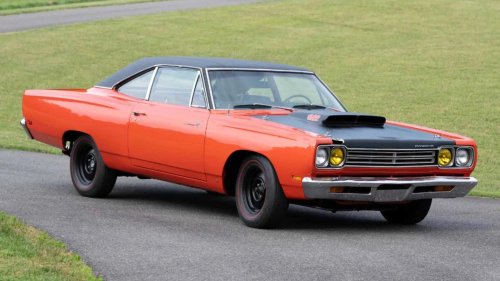
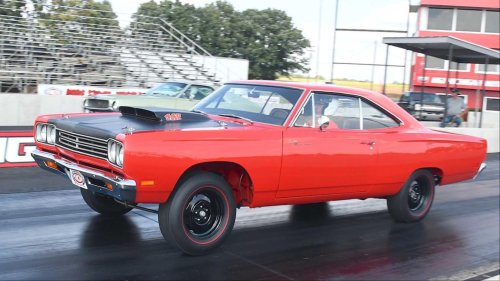
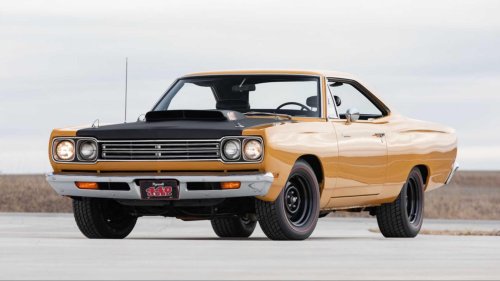
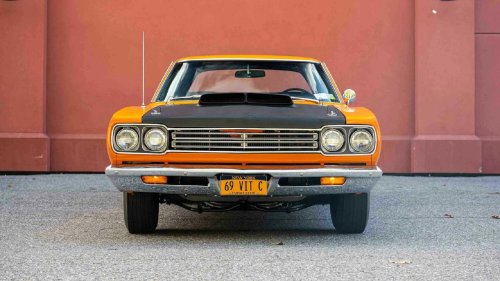
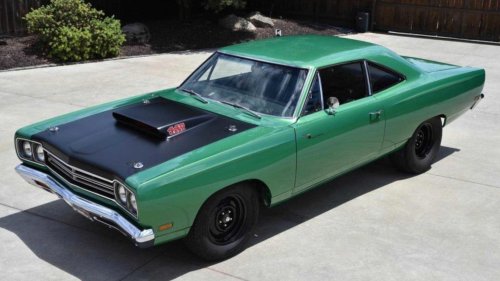



















American muscle cars have first and foremost always been about straight-line speed. Ever heard of a 10-second car? This referred to the quarter mile time of the fastest and most powerful cars in the late 90s and early 2000s. If you had a car that could cross the quarter mile in the 10s, then your car was stupidly fast. But the benchmark for fast cars has moved tremendously and, in 2026, some of the fastest modern cars can easily run 9s from the factory with very little changes thanks to modern engineering.Even stock cars like the four-door Cadillac CT5 V Blackwing, Chevrolet Camaro, Dodge Challenger or Ford Mustang can easily hit the 12-second mark with full comfort and air-conditioning, which is still fast today. However, back in the 1960s, 12 seconds was a huge goal to achieve. These cars had big engines with raw power and none of the technology we have today to make them go fast easily. Many cars attempted to hit 12 seconds flat but had to go through many extreme changes, but before 1970 came around, we finally got a street car that could hit that elusive number and anyone could buy it. Detroit Was Obsessed With Drag Strip Glory Mecum The classic muscle car era saw a lot of manufacturers and private owners push their cars to the limit to dominate. Ford, General Motors and Chrysler were engaged in a serious horsepower war where each wanted to improve its performance on the drag strip. Quoting big power numbers and theoretical times wasn't enough, you had to prove your car was the fastest without a doubt. At that time, there was the philosophy of "Win on Sunday, sell on Monday"—if your car did well on track, it raised the brand image, and you sold more cars.If you had a great racing weekend and were atop the NHRA (National Hot Rod Association) leaderboard, expect local dealerships to be full of prospective buyers. Seeing this strategy work allowed most manufacturers and their engineers to devote their time tuning their latest cars to squeeze every single ounce of performance. If a manufacturer could claim the title of the quickest car on the strip, they would win the hearts, minds, and wallets of American buyers. Why 12 Seconds Was Almost Unthinkable In The 60s Bring a Trailer Now, having lots of power wasn't enough to simply claim the quickest title. Modern muscle cars like the Challengers, Camaros and Mustangs make around 460 hp. They were muscle cars making as much power in the 60s, but while these modern cars can cross into the 11s with full interior features, most stripped-out cars could hardly break into the 12s back then. For the vast majority of factory muscle cars in the late 60s, the best they could muster was the mid-to-high 13-second range. So any car that crept into the 12s was already very fast.A true 12-second car was essentially guaranteed to be the undisputed king of any local street racing or weekend track day. But the main reason for not hitting the 12s wasn't lack of power, they clearly had a lot of power, the issue was traction. Tire technology was still in its early phase and simply could not handle the power these cars were putting down. Any attempt to push power was met with a smoke show with lots of noise before any movement took place. To engineer a car capable of overcoming these physical limitations right out of the box was a huge task. Some Cars Achieved It But Were Barely Street Legal Mecum But to be fair, some muscle cars did manage to hit the 12-second flat as early as 1963 with cars like the Chevrolet Impala Z11, 1964 Ford Fairlane Thunderbolt or Chrysler's own Max Wedge cars. These cars laid down 12-second passes and some did an 11.9, but there was a caveat. These were barely street legal and while they looked exactly like street cars, they ran engines, suspension and other mechanical setups that would make life on the road miserable or undriveable. So purists and regular enthusiasts rarely count these as true, honest muscle cars.These vehicles were factory-built drag racers disguised as production vehicles. They were mainly in the hands of select racing teams and even had manufacturer support to back their efforts. The radios had been deleted, there was zero sound-deadening material, and they had ultra-thin fiberglass body panels that could easily flex under hand pressure. There was no warranty, they rode on specialized racing slicks, and they used temperamental engines that needed to be monitored constantly during racing—not something the average weekend racer wanted to deal with. They were barely legal for street use, almost impossible for daily driving, and quite expensive to own and run for the average working-class enthusiast. The 1969 1/2 Plymouth Road Runner A12 Was The First Street Car To Hit 12.0 Bring a Trailer That all changed halfway through the 1969 model year when Plymouth dropped a performance package on the Road Runner that finally pushed it into legendary status. A mid-year package was released in 1969 and was officially designated by option code A12. It was a purpose-built package specifically engineered to dominate drag racing classes in the stock street car category while remaining a genuine street muscle car. This package included the 440 cubic-inch V8 (Six-Barrel), Dana 60 rear axle with a 4.10:1 gear ratio, four-speed manual and some exterior changes.The A12 was instantly recognizable by its functional exterior appearance, nothing was really for show. It completely ditched the traditional chrome trim and flashy decals. Instead, it arrived from the factory with plain, black-painted 15x6-inch steel wheels with exposed chrome lug nuts and no hubcaps. The most defining characteristic of the A12 was its radical hood. The standard steel hood was replaced with a lightweight, matte-black fiberglass one with a functional scoop with the "440 6BBL" stickers on each side. This was a lift-off racing hood secured at all four corners by heavy-duty hood pins. If you wanted to check anything under there, you and a friend had to lift the entire hood off the car. These mechanical changes with some lightweight parts allowed the Plymouth A12 Road Runner to hit 12.0 seconds. It Achieved This Without A Hemi When most classic car fans think of ultimate Mopar performance, their minds immediately think of a 426 Hemi power vehicle. But the A12 package was able to achieve its time without the expensive engine and instead used Chrysler’s heavy-duty 440 cubic-inch (7.2-liter) RB big-block V8. Plymouth didn't just drop a standard passenger-car 440 under the hood but made some improvements to make more power. The A12 engine featured heavy-duty valve springs, a high-performance camshaft, a dual-breaker distributor, a Hemi-spec oil pump, and better connecting rods. The most important part of this engine is the three dual-throat Holley two-barrel carburetors mounted on a factory-installed Edelbrock aluminum intake manifold. This was the very first time an aftermarket legend like Edelbrock supplied a production manifold for an OEM manufacturer.This engine was known as the "Six Barrel" by Plymouth (and the "Six Pack" by its sister brand, Dodge). The regular 440 made 375 hp and 480 lb-ft of torque, the six pack made 390 hp and 490 lb-ft of torque. This setup was perfect for street and track use. Under normal driving, it was smooth and had decent fuel economy, but bury the gas pedal past the midpoint and the engine would grab all the air and fuel possible and shoot forward. It had the torque of a Hemi but with a broad and usable powerband. Ronnie Sox Proved The A12 Road Runner Could Achieve This Dodge For insurance purposes, it wasn't uncommon to see manufacturers underrate the power of their cars, and it seems the A12 Road Runner was highly underrated. Officially, it made 390 hp, but some said it made around 450hp. One owner had his car dyno tested, and it made 475 hp, but this was after an engine overhaul. Out of the box, a typical driver could take an A12 with its factory tires and run a very respectable mid-13-second pass, but the car had more potential. Plymouth wanted to prove what this car was capable of doing, so the keys were handed to Ronnie Sox. Ronnie was a master of Mopar performance and owner of the Sox & Martin racing team. Ronnie Sox's Track Setup: Car: 1969 1/2 Road Runner A12 Hardtop ("Wayward Beeper") Transmission: A833 4-speed manual Rear End: Stock Dana 60 (4.10 gears) Modifications: Minor carburetor jetting adjustments & optimized tire pressure For the June 1969 issue of Super Stock & Drag Illustrated magazine, Sox took the car to Cecil County Dragway in Maryland. The car was effectively stock, with full interior and factory exhaust system. He was very good at using a manual, so with his fast powershifting technique, he was able to pull off the fastest time recorded with this car. When the tire smoke cleared after his run, he had clocked an astonishing, 12.0-second pass at 111.8 mph. It was a historic moment. Ronnie Sox had officially demonstrated to the world that a regular guy could walk into a local Plymouth dealership, buy this fully street-legal car, and run a sub-13-second quarter-mile. The A12 Was More Than Just A Quarter-Mile Hero Mecum Despite its stupidly fast acceleration, the A12 Road Runner was a true muscle car. It wasn't a temperamental, high-maintenance race car that required a support crew to keep it going. It was a fully functional, street-legal vehicle that you could reliably drive to work, take to the grocery store, or take on a weekend road trip. Under that mean-looking exterior was a very robust powertrain. To handle the violent launches required to achieve those 12-second times, Plymouth equipped every A12 with extra-heavy-duty "Hemi" suspension components, reinforced chassis to prevent body twist, and massive 11-inch drum brakes at all four corners for better stopping power. But the A12 felt perfectly composed on and off track. The A12 Road Runner Is The Ideal Muscle Car Mecum Auctions What truly made the A12 Road Runner the ideal muscle car of its generation was its balance of raw performance and accessibility. This was engineered so that almost anyone could easily tap into the potential of this car even when it was completely stock. You could comfortably drive to the local track, run a very fast time that would humiliate cars costing twice as much, and then drive back home with absolute peace of mind. But the biggest advantage the A12 held over its competition was its incredible value. In 1969, the A12 option package cost a modest $462.80 on top of the base Road Runner price, bringing the total cost of the vehicle to roughly $3,545.To put that into perspective, opting for the top-tier 426 Hemi engine alone cost over $800, required a much more expensive base vehicle configuration, and was notoriously difficult for the average mechanic to keep properly tuned. The A12 gave buyers 95% of the Hemi performance for a much lower price while being significantly easier to maintain and tune up. They Still Offer Great Value Today Bring A Trailer Decades after the muscle car wars ended, the legacy of the A12 remains incredibly strong among car enthusiasts and historic drag racing fans. Because Plymouth only manufactured the A12 package for a brief three-month window in 1969, production numbers were low, with only 1,412 total units ever rolling off the Detroit assembly line.While original, numbers-matching Hemis are now commanding high six-figure prices, the A12 Road Runner still remains an incredible value in the classic car market. They are still highly sought after and will continue to go up, but you can still find decent examples for under $100,000. The 1969 1/2 Plymouth Road Runner A12 stands tall as the definitive street-legal brawler that finally brought a 12-second street car to the masses.Sources: Mopar, DodgeGarage, Chrysler, Bring A Trailer, Classic.com, soxandmartin.