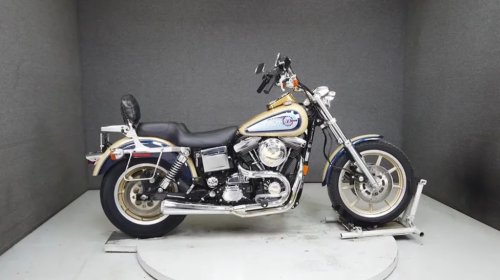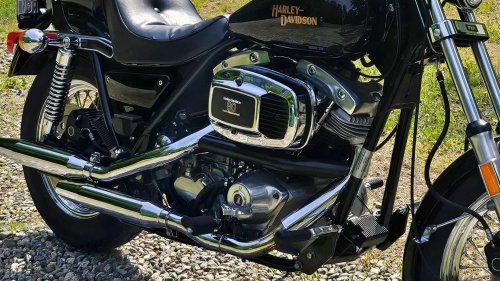
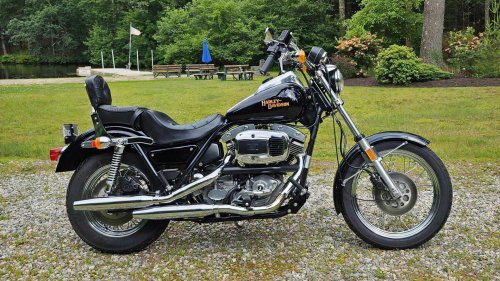
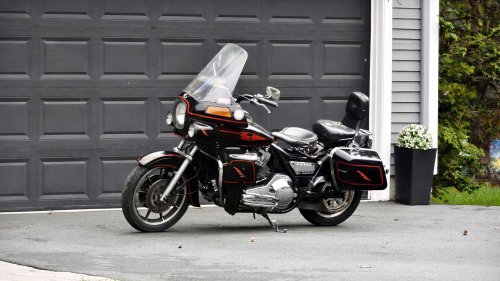
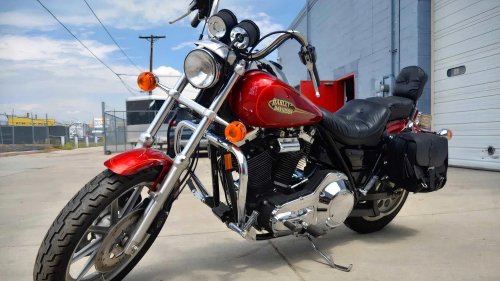


















So many motorcycles throughout history were woefully underappreciated during their production runs, only for people to slowly realize what they’ve lost once they were gone. A great example would be the six-cylinder Honda CBX, shunned by many back in the day for its high price and mechanical complexity but presently regarded as a very desirable collector’s item. Then we could talk about Ducati’s SportClassic lineup, which basically predicted riders’ affinity for modern classics but was too far ahead of the curve for its own good. The list goes on and on, as not fully appreciating something when you still have it seems to just be part of human nature. Damned If You Do, Damned If You Don’t Bring a TrailerIt’s a sad reality we also see in the car world far too often, but let us stay focused on two-wheelers for the purpose of today’s article. More specifically, we’ll be looking at Harley-Davidson in particular, a brand that’s been stuck between a rock and a hard place for many years now. On the one hand, traditionalists are appalled every time Milwaukee commits the cardinal sin of innovating, but living in the past to appease these customers is coming back to bite the American manufacturer. And several Harley models have come under attack from that same crowd over the years, so today we want to shine the spotlight on one such specimen. When Harley Decided To Chase Performance Bring a TrailerThe obvious candidate would be the V-Rod, of course, yet the bike we have in mind is actually an older model whose value is quietly surging without hype or fanfare. And unlike most of The Motor Company’s offerings at the time, this one was focused more on performance rather than chrome or touring comfort. As a matter of fact, it came to be known as one of the best-handling Harleys ever built, thanks in no small part to the great Erik Buell. He was heavily involved in the development process, pushing for chassis refinements, minimal vibration, and better handling characteristics as a test engineer. The Harley-Davidson FXR Emerges From Milwaukee Bring a TrailerThese efforts culminated in the Harley-Davidson FXR, which was introduced for the model-year 1982 in three different flavors — the Low Glide, Sport Glide, and Super Glide II. The company was going through a pretty rough patch back then, with AMF’s controversial ownership having just ended in ‘81 and Japanese bikes eating away at its market share. Facing all that doom and gloom, Harley sought to add a performance-focused model to its lineup in the hopes of attracting riders outside its typical demographic. The FXR seemed to be the perfect answer, but it would share its drivetrain with the FLT in order to minimize production costs.Speaking of which, FXRs came with a Shovelhead motor at launch and kept it until the more reliable, 80-cubic-inch Evolution V-twin was introduced in 1984. The Evo changed the game, for sure, yet the FXR had already managed to impress with its handling capabilities before getting the new engine. Much of that ability had to do with the frame — a triangulated, steel backbone skeleton far stiffer than what you’d find on other Harleys. Improved stability and cornering inspired confidence for those who liked a nice bit of spirited riding, but the frame was also narrower to bring about an increased lean angle. But understanding the FXR's technical brilliance is only half the story; what happened next would determine whether this engineering achievement would become a legend or a footnote. One Recipe Seasoned In Many Different Ways MecumTop that off with a lower center of gravity, and you’ve got a Harley that can excel at so much more than just straight-line cruising. Isolated vibration was yet another box to be ticked by the FXR, so the model received rubber engine mounts that ultimately made it a much smoother ride. The bike had a different personality depending on which iteration you chose, with the Super Glide II acting as the base variant. A more premium feel could be experienced with the FXRS Low Glide, providing a lower seat height, more chrome plating for visual bling and, in many cases, cast wheels. Then there was the FXRT Sport Glide, leaning toward performance and equipped with a distinctive, frame-mounted front fairing. It featured hard saddlebags and sportier ergonomics, too; traits that became synonymous with performance baggers later on.Aside from the three main versions of this nameplate, Harley made the FXRP Police for law enforcement, a one-year-only tourer known as the FXRD Grand Touring Edition, and the FXRS-SP Low Rider Sport once again emphasizing performance. But as solid as the lineup might’ve been, it never got the love it deserved while it was in production, and Milwaukee pulled the plug in 1994. Demand was low throughout its lifespan, as the market didn’t seem very keen on the whole sharp handling idea and would often criticize the FXR for feeling “too Japanese.” Marketing wasn't as strong as it should've been, either, and the model was inevitably outsold by some of its more traditional stablemates. The Misfit Becomes An Icon Posthumously Bring a TrailerThen production ended and the FXR became just another nondescript model on the second-hand market, at least for a while. During this time, many were either crashed, severely neglected or customized far beyond the point of no return, which boosted scarcity on top of already-low production numbers. The nameplate was relaunched as part of Harley-Davidson’s Custom Vehicle Operations (CVO) program between 1999 and the year 2000, but only in limited quantities before it was once again sent to the graveyard. Prices on older, used FXRs remained low well into the mid-2010s, and you could snatch one in good shape for around $7,000. Something began to shift toward the tail end of that decade, though, which is when people finally caught on to these underrated Harleys.Their popularity exploded on the custom bike scene, never quite reaching Sportster levels but still making the FXR’s presence widely known. Many have come to appreciate its analog character, as well, and rarity played a key role in driving prices up even further. Average values had reached five-digit territory as of 2021, only to continue their steady ascent until the present day. Folks gained a much bigger appreciation for what it represents, so you might find yourself spending around 20 grand on a more desirable FXRT or top-tier customs. For example, a clean FXRT formerly owned by Sonny Barger commanded a cool $22k at Mecum Las Vegas earlier this year. CVO models are highly sought-after, too, whereas the base Super Glide II is now a darling of the bike-modding community. So more than 40 years after its release, we're confident in saying the FXR is at last getting some serious attention. Better late than never, right?