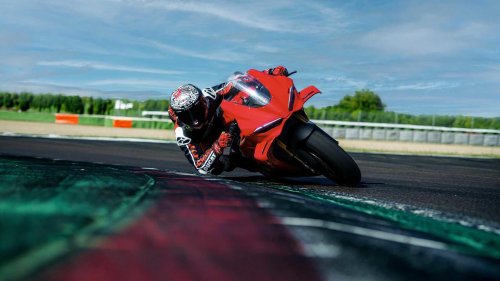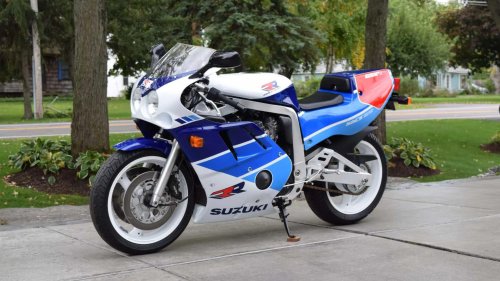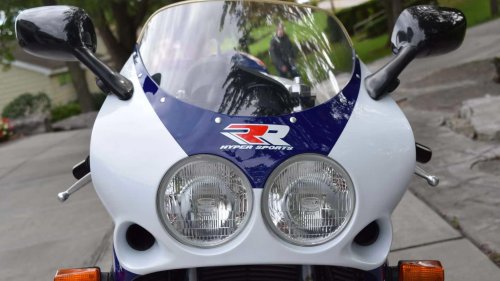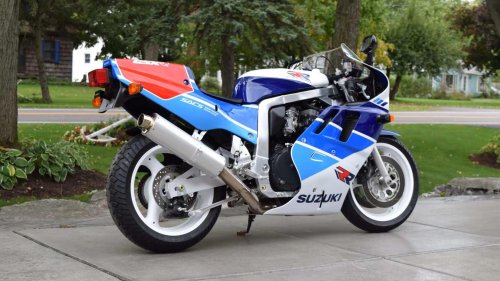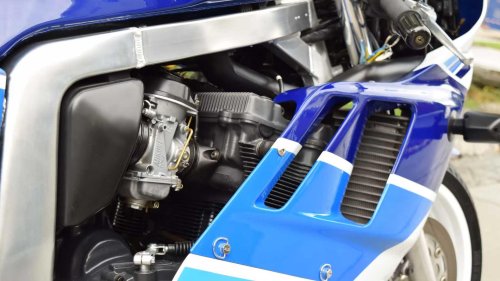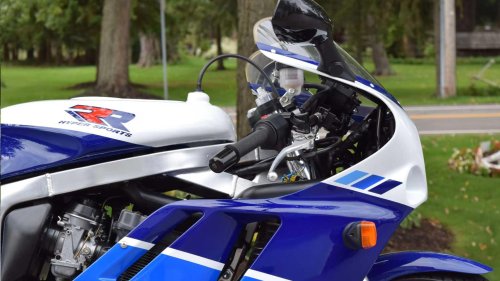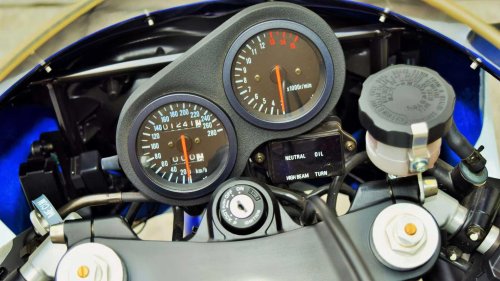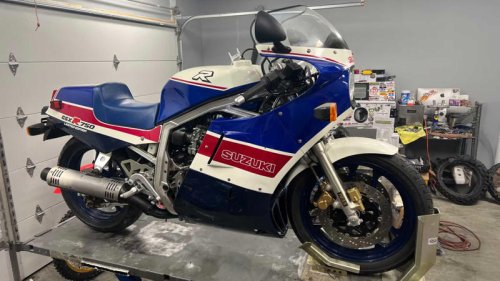
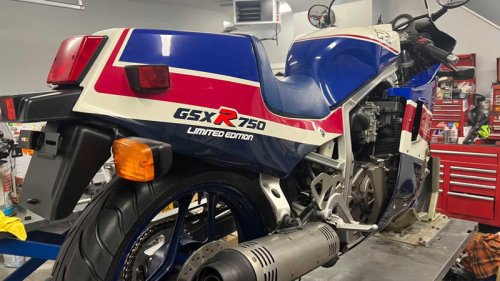
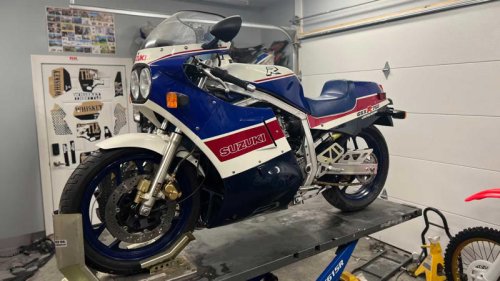
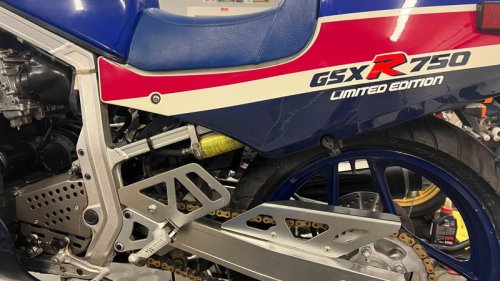
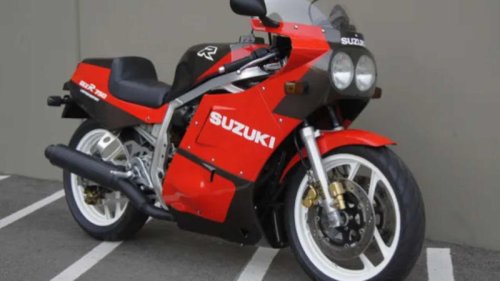
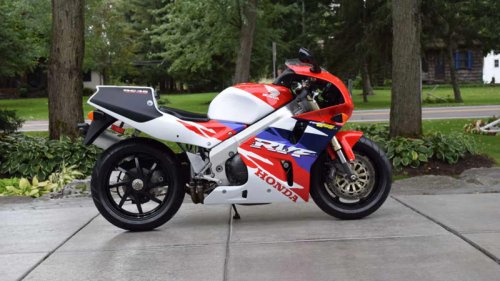
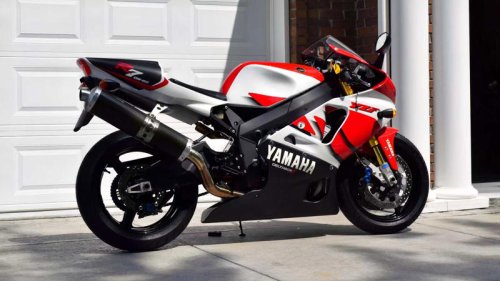
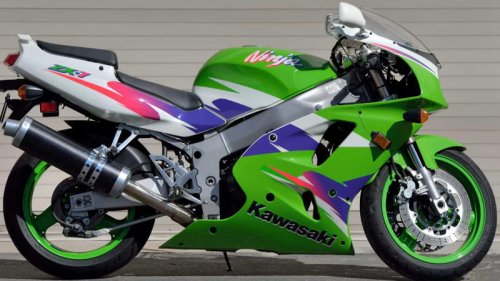
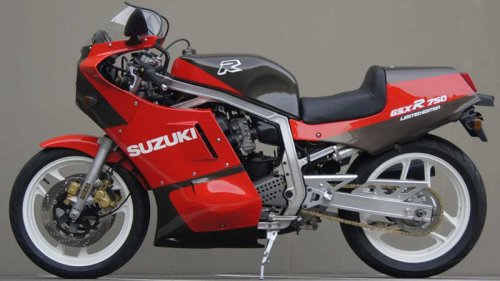



















The mid-1980s was a time when motorbike manufacturers were in a battle to be on top in the rapidly changing world of superbikes. Lightweight aluminum frames, high-performance engines and aggressive designs previously reserved for racing were suddenly making their way onto showroom floors, as brands scrambled to homologate machines for production-based racing.Many of these street-legal bikes have since become legendary, while others are still relatively unknown to the collecting community, overshadowed by more flashy competitors. Nearly four decades later, however, and there’s one from Japan which seems to be making a comeback, re-emerging from the shadows and quietly gaining serious traction among collectors. Suzuki Built The GSX-R750 Limited Edition To Win Races First Mecum Due to homologation rules, manufacturers were required to deliver limited numbers of street legal superbikes in order to qualify for competition. These conditions resulted in some of the most focused of the era, and one which has been quietly skyrocketing in value lately is the Suzuki GSX-R750 Limited Edition from 1986.Mainly built so Suzuki could compete in AMA Superbike racing, the Limited Edition was based on one of the most iconic motorcycles that defined the 1980s - the Suzuki GSX-R750. On track, this platform had already proven its credentials many times over, helping Suzuki secure major victories. These included the Le Mans 24-Hour endurance race in 1985, multiple Japanese National Road Racing titles, as well as success in the World Endurance Championship.Mecum But while the standard GSX-R750 allowed Suzuki to race, their teams still needed more specialized hardware to remain competitive. The Limited Edition existed to homologate those race-focused components, giving Suzuki’s racing program access to higher-spec parts while remaining within the rules. So, the most notable upgrade? The introduction of a dry-clutch setup, paired to a close-ratio six-speed gearbox. This was a favored feature by racing teams, since it could handle the heat and punishment of endurance competition far better than a conventional wet clutch. Meanwhile, fully adjustable suspension, an aluminum-bodied rear shock, and a remote gas-charged reservoir, all worked together to trim weight and sharpen stability for high-speed racing.As such, The Limited Edition wasn’t simply a sticker-and-paint job, where Suzuki just freshened up the livery and Bob’s your uncle, Fanny’s your aunt. This was a serious superbike built to win. Of course, as a homologation special, production was extremely limited to just 500 units, and only 199 were ever allocated for the US market, making it one of the rarest early GSX-R models to exist. Collectors Are Finally Catching On To The GSX-R750 Limited Edition Mecum For years, the R750 Limited Edition quietly hovered under the radar. When it first rolled off production lines, it was priced at $6,499 new, which is about $14,000 in today’s money. This made it a pretty pricey but race-ready streetbike from day one, but over the past few years, it’s been appreciating in value.Clean examples that would have traded for around $14,000 in 2020 are now routinely fetching $20,000-$26,000. This surge isn’t random either, and auction results over the last few years show a clear upward trend. In 2024, one went under the hammer for $18k on Classic.com, while most recently, another low-mileage one exchanged hands for $26,750.As prices rise, much of the value is driven by rarity, originality, low mileage, and race-bred components like the LE’s dry clutch and close-ratio gearbox - features that make this bike more than just a vintage sportbike. Additionally, even subtle cosmetic originality, like paint, decals, and fairings, can all add thousands to the final hammer price. Rarity And Racing Pedigree Are Driving The GSX-R750 Limited Edition’s Rise Mecum Enthusiasts are finally waking up to what made this little Japanese racer so special. Featuring race-bred engineering, lightweight agility, and a riding experience that feels impossibly analog in today’s electronic-assisted world of motorbikes, this sudden surge in interest has come from a place of nostalgia for days gone by, and fueled by childhood obsessions.For the R750 Limited Edition more specifically, it perhaps represents a moment in history that defined the very idea of an unshackled, Japanese superbike, making it increasingly desirable for any collector with a bidder’s card and some disposable income.Of course, as predictable as a puppy becoming a dog, rarity is another driver. With those 199 units for the US, original examples are dwindling, and any surviving bike with matching numbers, low miles, and untouched bodywork now command some serious attention.It’s this mix of race-bred performance and scarcity that has helped change the Limited Edition from an overlooked footnote into a rising star of 1980s homologation specials. And as for those who have managed to bag one for an attainable price, they could well be in for a potential profit if appreciation continues to climb. Collector’s Checklist: What To Look For In A GSX-R750 Limited Edition Bring a TrailerSo then, if the surge in values for these things has caught your attention, you may not be alone. With prices climbing, the GSX-R750 Limited Edition is finally getting the recognition it’s always deserved. Unfortunately though, truly clean, original examples have become increasingly rare.Like cash, originality is king, and buyers in the know will pay a premium for bikes with stock bodywork, unmodified suspension, and original engine components. The moment a GSX-R has been heavily customized, or worse, repaired with non-genuine parts, its value can drop like a stone.Secondly, and this may come as a surprise, condition matters more than mileage. Being considered too hardcore for a daily driver (or rider, I should say), many of these street-level racers spent decades in storage or were lightly ridden, so low-mileage examples with properly maintained engines and clutch systems can be highly sought-after. And that dry clutch we mentioned? It’s the jewel in the crown of nostalgic superbikes, and as such, demands care. Neglect it, and values can take a hit. Other Rare Homologation Machines Collectors Can’t Ignore The GSX-R750 Limited Edition isn’t the only race-bred machine from the 80s seeing its value surge. Several other homologation specials have been catching the eyes of collectors, too. Honda RVF750R RC45 (1994) Mecum The Honda RVF750R RC45 was the follow-up to the legendary RC30, built to dominate the WSBK Superbike World Championship. To succeed, it adopted a gear-driven CAM V4 engine, race-developed chassis geometry, and cutting-edge electronics for its time. Despite its impressive credentials, the RC45 still lived in the shadow of the RC30, but like the Suzuki, collectors have finally started to appreciate just how special it is, with values surging in recent years. Clean examples are now routinely fetching between $30,000-$45,000, with fully original, low-mile ones climbing even higher! Yamaha YZF-R7 OW-02 (1999) MecumThe OW-02 designation marked the limited-production version of Yamaha's YZF-R7, and like the Suzuki, was limited to just 500 units worldwide. It introduced lightweight carbon-fiber bodywork, a race-spec inline-four engine, and a weight-to-power ratio that rivaled contemporary superbikes. With rarity on its side and strong racing pedigree, it has since become increasingly desirable among collectors. Today, well-preserved examples regularly trade between $35,000 and $50,000, particularly in European and Japanese markets. Kawasaki Ninja ZX-7RR (1996) Mecum The ZX-7RR was Kawasaki’s homologation entry for AMA Superbike racing, with flat-slide carbs, and a more track-focused chassis compared to the standard ZX-7R. While still less famous than the RC45 or the OW-02, collectors are beginning to recognize its rarity, and prices for well-kept examples have quietly moved past $12,000-$15,000, with pristine machines going for as much as $25,250. Spec sheet: How they stack up The GSX-R750 Limited Edition Is Finally Getting The Recognition It Deserves Bring a TrailerSome bikes get old and fail to really make their mark on motorbike history. And then there are the rare few that feel more significant with every passing year. The Suzuki is one of these examples. It was built not for regular, comfortable riding, but to satisfy rulebooks at the height of superbike competition. Once perhaps undervalued, this super-rare homologation special is now chasing six-figure auction headlines, finally getting the recognition it’s always deserved.Meanwhile, for collectors who understand what the mid-’80s Superbike Wars really meant, the GSX-R750 LE isn’t just another appreciating classic, it’s a reminder of a time when Japan’s automakers went all-in on racing supremacy, making it one of the era’s purest survivors.Sources: Bring a Trailer, Iconic Motorbike Auctions, Classic.com, Hagerty, Cycle World, Visordown, Yamaha Global