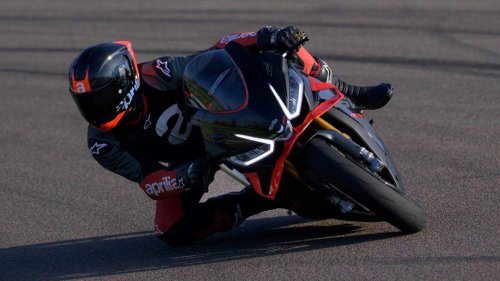
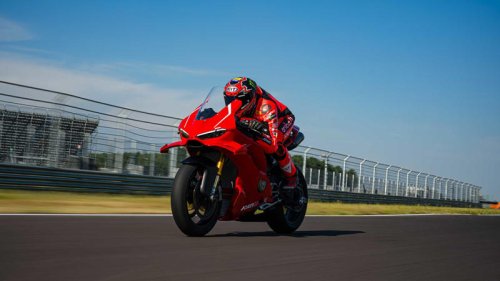
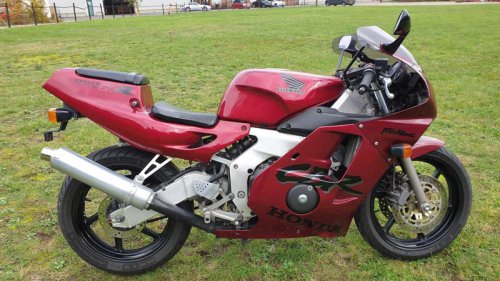
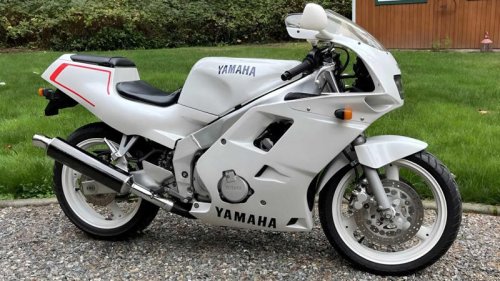
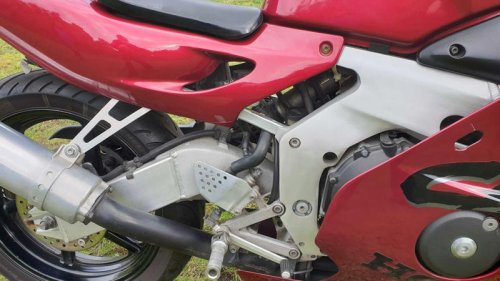
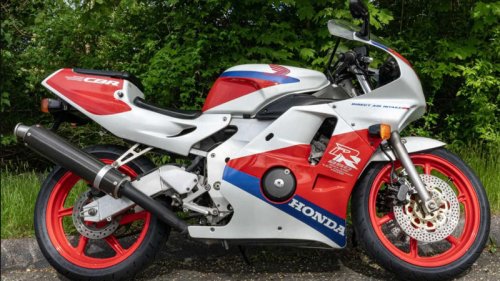
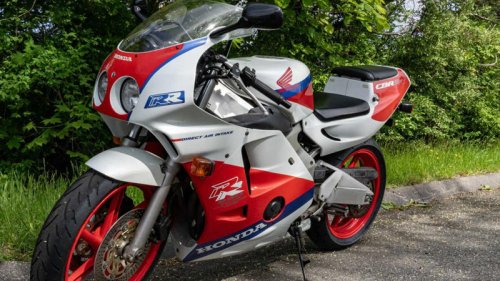



















If there’s one thing that motorcycles do better than cars, it’s hitting high revs. The smaller engines, lighter parts, and shorter strokes all combine to help bikes achieve much higher RPMs than you’d see in a car. For example, the Lexus LFA, which has a Yamaha-tuned V-10 engine, hits the redline at 9,000 rpm, while the 1,000 hp, V-12 Aston Martin Valkyrie tops out at 11,100 rpm. UPDATE: 2026/03/25 06:32 EST BY JARED SOLOMON This article has been updated to include additional context on why ultra high-revving small-displacement motorcycles are no longer produced today.While impressive for cars, these are both rookie numbers compared to a bike launched over 35 years ago. This particular bike revved higher than an F1 car of its day yet is relatively forgotten today. High Revs Can Equal High Fun Bring A TrailerAnyone who likes engines will likely enjoy more revs. There’s nothing quite like the feeling and the noise of an engine note rising, the power growing, everything around you coming to life. Some people prefer torque — the low-end grunt that gets you off the line and shreds tires in the process. There’s nothing wrong with that, everyone has their preferences, but headlines aren’t written by torque. They’re written by power and revs. And those headlines are where manufacturers like to one-up each other, in a never-ending game of Top Trumps.This obviously isn’t a bad thing, as it’s led to some of the best machines in history. Competition drives everyone forward, and in the world of high-revving motorcycles, there have been some standouts.DucatiTake the Ducati Panigale V4 R, for example. Created to satisfy World Superbikes’ homologation rules, the 2026 version is a $49,999, 218 hp motorcycle which is essentially a street-legal WSBK bike. Its 998 cc engine revs up to 16,500 rpm, making peak power right at the top at 15,750 rpm.Then there’s the Yamaha YZF-R6. The 2006 iteration of the bike initially had a claimed redline of 17,500 rpm, however this wasn’t actually accurate. Sure, the tachometer read 17,500 rpm and the marketing material said 17,500 rpm, but the bike hit a programmed rev limiter around the 16,000 rpm mark. Yamaha admitted that the tachometer was around 1,000 rpm lower than the true number and that the bike didn't really reach 17,500 rpm, so offered a buyback for any unhappy customers. But while there have been bikes with high redlines, and bikes that claim to have high redlines, there’s a 249 cc sports bike that has them all beat. The Honda CBR250RR Revved Higher Than An F1 Car MecumThe Honda CBR250RR is one of the highest-revving motorcycles in history, notorious for its 19,000 rpm redline. But to understand the CBR250RR, first you have to understand the environment it was made for. It’s Japan in the late 1980s, and you want to become a biker. You look at licenses and, unlike the US, they’re strictly tiered by power. You can easily get a license that covers you up to 125 cc; there's a slightly more difficult one that means you can go up to 400 cc; or there's a third which allows you to ride anything over 400 cc but is notoriously difficult to get at the time. So you go for option number two. But there’s a catch, and it’s that bikes over 250 cc need an inspection every six months, and they’re several hundred dollars.The choice is clear: you want a 249 cc motorcycle. Kawasaki had the ZXR250, Yamaha had the FZR250R, and Suzuki had the GSX-R250R-SP, all of which were race-inspired bikes with fairings and high redlines. Honda needed something to cut through and make them the clear option. In comes the CBR250RR.Bring a TrailerRevving higher than anything else on the market, the CBR250RR was parachuted right into the sweet spot of license and legal requirements. Coming after its competitors meant it had the advantage of knowing the numbers it needed to hit, so Honda used that to its advantage. The ZXR250 had 45 hp and an 18,000 rpm redline, so Honda gave the CBR250RR 44 hp and a 19,000 rpm redline. The FZR250R was a little bit softer, so Honda made theirs more refined. The GSX-R250R-SP was slightly heavy, so Honda made its lighter. Everything that the competitors did well, Honda tried to do better.The bike was launched in 1990, and only in Japan. This was largely due to Honda targeting a sweet spot in regulations that didn’t exist in other countries, meaning that a 250 wouldn’t have the commercial pull that a larger bike would have. Emissions and regulations in the US and EU were also sticking points, making it more hassle than it was worth to sell elsewhere. While not officially sold in Australia, the bike did find a second home there, becoming a popular grey market import.MecumLittle surprise, as modern reviews praise the bike's 19,000 rpm redline, though mention that riders need to use all of those revs to get the bike moving. Still, that high redline of a bike with just 45 hp means that riders aren’t likely to get in too much trouble by pushing it on a country road.Some bikes have made their way over to the US. However, with them going for around $7,500, they’re an expensive prospect for someone who doesn’t know their history. Why High-Revving Small Bikes Like The CBR250RR No Longer Exist As wild as the CBR250RR’s 19,000 rpm redline sounds today, there’s a reason bikes like it have largely disappeared. Modern motorcycles are shaped by a very different set of priorities—namely emissions regulations, cost efficiency, and real-world usability.High-revving inline-four engines like the one in the CBR250RR are complex and expensive to build, especially for small-displacement bikes. They rely on lightweight internals, tight tolerances, and high-quality materials to survive those extreme engine speeds. Today, manufacturers have largely moved toward simpler twin-cylinder layouts in the 250–400 cc class, which are cheaper to produce, easier to maintain, and deliver better low-end torque for everyday riding.Emissions standards have also played a major role. Engines that rev to the moon tend to be less efficient and harder to keep within modern environmental regulations without significant engineering investment. For most manufacturers, it simply doesn’t make financial sense to develop a screaming 19,000 rpm engine when a lower-revving twin can meet regulations and sell in higher volumes.That’s what makes the CBR250RR so special in hindsight. It represents a time when manufacturers were willing to push engineering boundaries in even the smallest classes, creating bikes that prioritized excitement and innovation over practicality. Today, that kind of approach is usually reserved for flagship superbikes—not quarter-liter machines. The CBR250RR Deserves To Be Remembered Bring A TrailerIn the motorcycling world, it’s usually the bigger bikes that get remembered. Bikes that have oodles of power and performance, and which propel their riders forwards eye-wateringly quickly. Whether it’s a race replica, a big cruiser, or something else entirely, bigger bikes are almost seen as the end goal in a rider's progression.Conversely, smaller bikes are often seen as a stepping stone to these more exciting bikes. Something for beginners to learn on then quickly get rid of when either finances or skills allow. Bikes like the Suzuki GSX-R750, the Yamaha R1, and the Honda CB750 are all on the higher end of the displacement spectrum, and are rightly remembered as the motorcycling legends they are. But this focus on bigger means that smaller can undeservedly go under the radar.Bring A Trailer The CBR250RR, being a smaller bike from the early 1990s, isn’t going to show up in many algorithms. Its power isn't going to win it much attention, nor are its top speed or torque. And with the final bike rolling off the production line in 1999, it’s older than almost all members of Gen Z (the range roughly running from 1997 to 2012). But that doesn’t mean the CBR250RR shouldn’t be talked about.With algorithms focusing on the biggest, the best, or the most, there's a wealth of options that don't get the coverage they deserve. The CBR250RR is one of them. So do yourself a favor and look at bikes that aren't superlative. You just might find some gems.Sources: Ducati, Motorcycle Daily, Motoplanete, Top Speed, Bring a Trailer