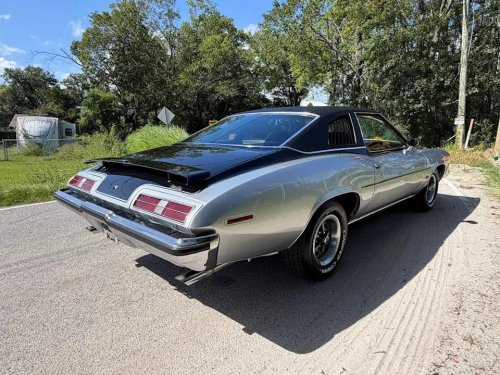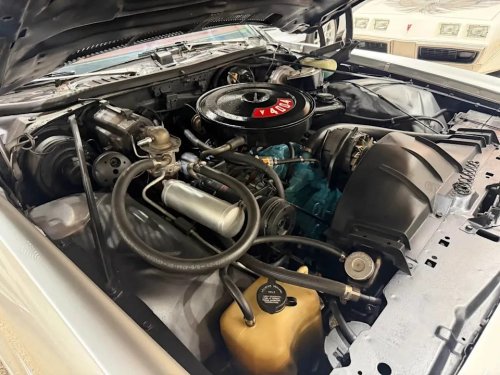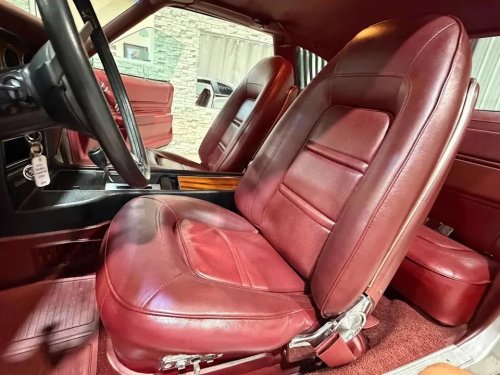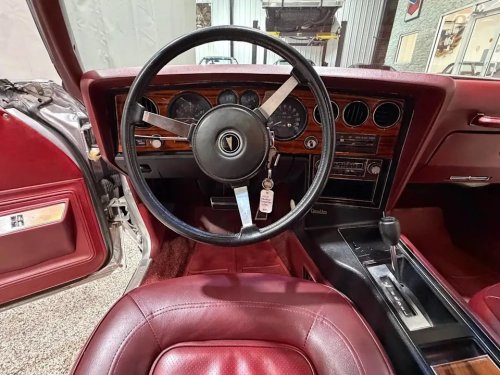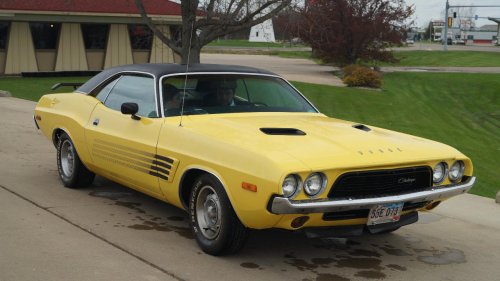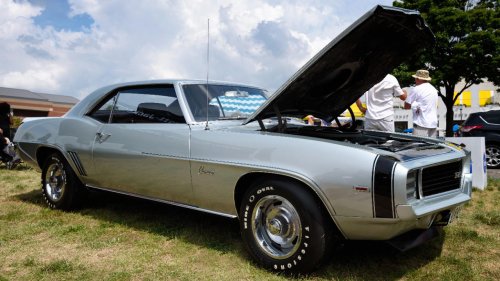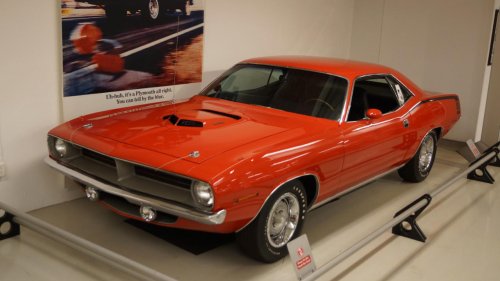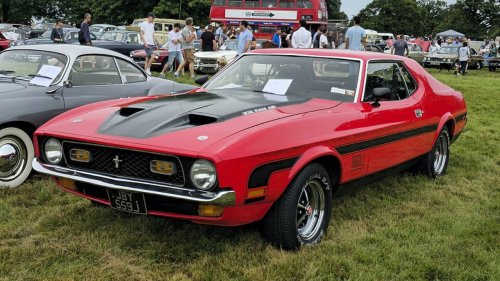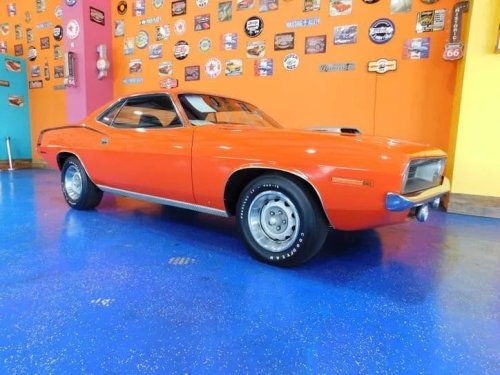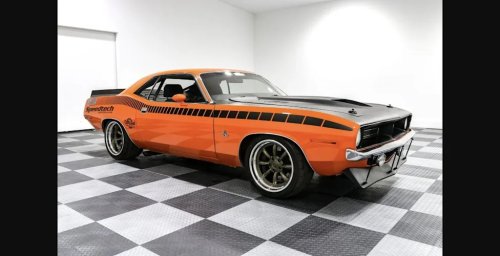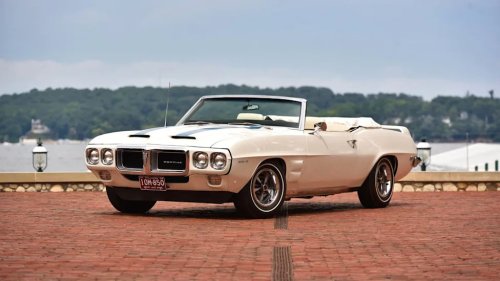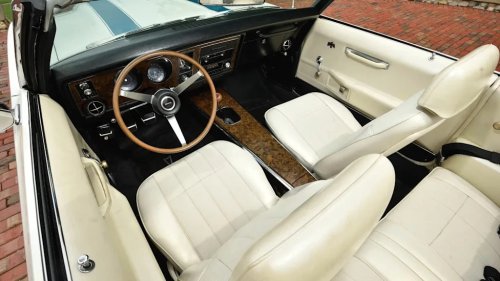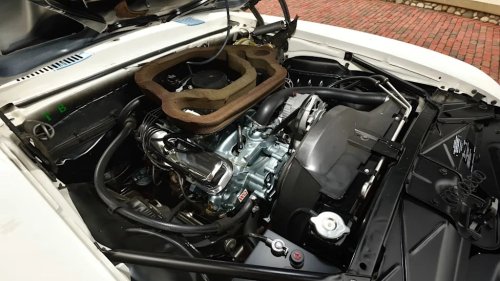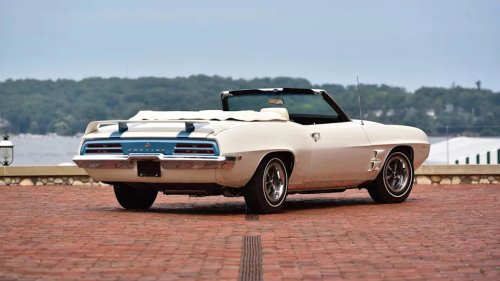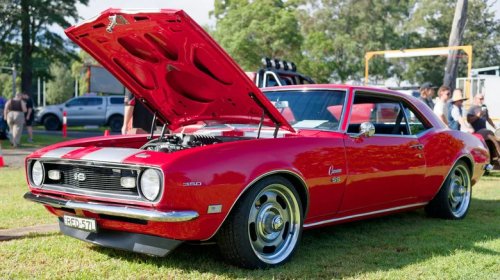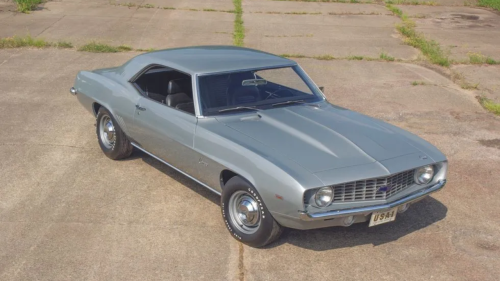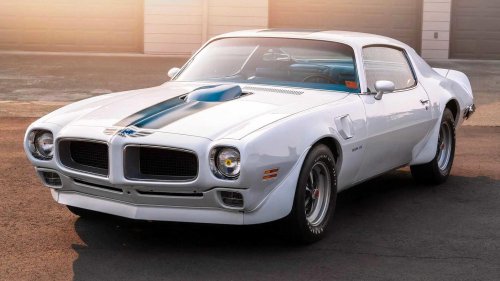
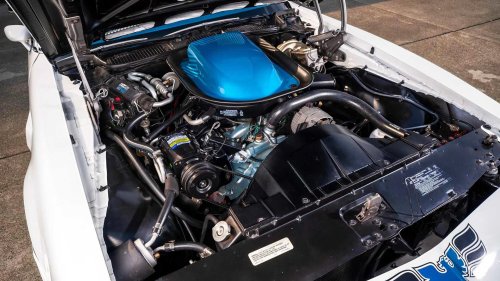
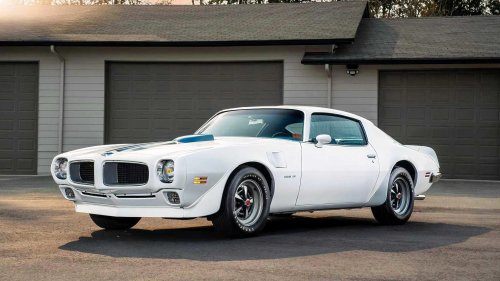
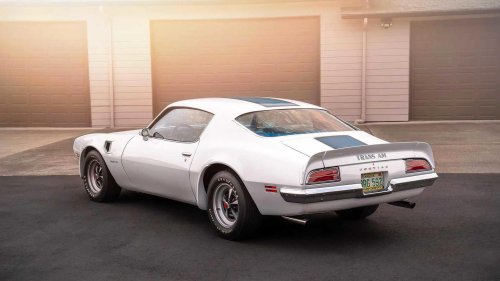
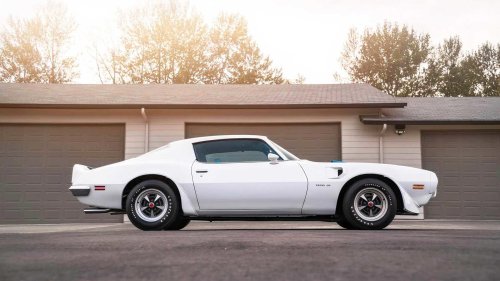

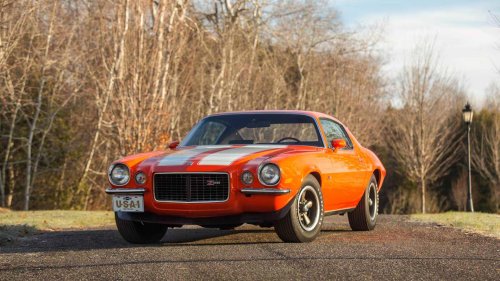
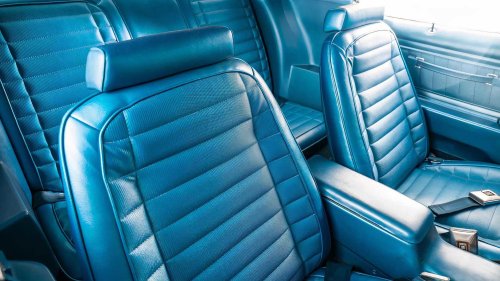
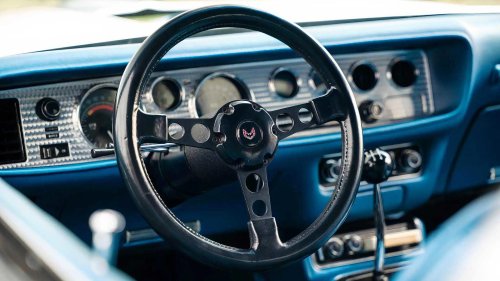



















Some muscle cars earned their reputation by dominating sales charts or becoming pop-culture icons, while others took a quieter path. Those on the road less traveled were built with intent rather than excess and produced in numbers so small they were never meant to be everywhere at once.These are the cars that tend to slip through the cracks, especially for younger enthusiasts and Gen-Z gearheads raised on highlights, algorithms, and instantly recognizable nameplates. But don’t get it twisted, rarity doesn’t mean irrelevance.This is the story of a purpose-built American performance car that arrived at the height of the muscle-car era, delivered real hardware from day one, and still manages to fly under the radar decades later. UPDATE: 2026/02/10 00:18 EST BY Hank O'Hop We've updated this article with more information about this legendary muscle car's performance, color options, and rarity in order to help readers properly distinguish authentic Trans Ams from clones. For context, we've also compared it directly against the Chevrolet Camaro Z28 of the same year and noted the most relevant differences between the two muscle cars. Why Young Gearheads Need To Know About The Pontiac Firebird Trans Am 4-Speed via Bring A TrailerNow, before we get started, let’s get one thing straight: this article isn’t to knock young gearheads. Rather, it has the completely opposite intent, to inform the Gen-Z's out there of some of the more under-the-radar muscle cars that came decades before they were even a thought in the minds of their parents. You see, this is a celebration of the phantom Pontiac muscle car that deserves some recognition among the younger crowd. And the rig that deserves that recognition the most is none other than the 1970 Pontiac Firebird Trans Am 4-Speed.Pontiac rolled out the first-generation Firebird Trans Am model in 1969, two years after the first Firebird hit the streets. And while the 1970 model year was heavily redesigned comparatively, it still sits in the first-generation run with the 1971 Pontiac Firebird Trans Am ringing in the start of the second-generation.The primary differentiator of the 1970 Pontiac Firebird Trans Am 4-Speed compared to its muscle rivals is how purpose-built it was in an era when muscle cars were still navigating a thin line between straight-line power and real handling.via Bring A Trailer Under the hood sat Pontiac’s 400-cubic-inch V8 – most commonly a Ram Air III, which rated at 335 horsepower and backed by a close-ratio Muncie four-speed manual. This muscle car could launch from 0 to 60 in about 5.5 seconds and run a quarter mile in 13.9 seconds. If optioned with the legendary Ram Air IV V8, the combination becomes even rarer, and the power rises to about 370 hp with 1/4 mile times dropping into the low 13s. On paper, those numbers might not sound outrageous by modern standards, but they don’t tell the whole story. You see, Pontiac wasn’t just chasing quarter-mile times. It was building a road car that could be driven hard, turned aggressively, and survive it. That mindset is exactly why the Trans Am earned credibility in motorsports circles and why its DNA still feels relevant today. The 1970 model year is especially important because it represents a transitional moment. It carried first-generation roots while previewing the more refined, performance-focused direction Pontiac would fully embrace in the second generation. Pontiac Built The 1970 Trans Am In Tiny Numbers Compared To Its Muscle Rivals via Bring A TrailerThis Firebird was built in extremely limited numbers compared to many of its muscle rivals. For the 1970 model year, Pontiac produced just under 50,000 Firebirds. However, only 3,196 of these units were the Firebird Trans Am, making it the rarest 1970 Firebird by a wide margin. Even crazier, those who were lucky enough to grab a Ram Air IV package for the '70 Trans Am were one of just 88 people to ever get it.To put that scarcity into perspective with direct muscle car rivals, take the Chevrolet Camaro Z/28, another high-performance F-Body pony car. In 1970, Chevy built only 8,733 units of the Z/28 Camaros, and that’s nearly three times as many as Pontiac’s Trans Am overall.Now, an example that is even closer to being in the same wheelhouse as the Firebird Trans Am is Plymouth’s AAR Cuda. This rare rig was something special, and Plymouth only produced 2,724 units of the AAR Cuda in 1970. Sure, it’s slightly fewer than the Trans Am, but still in the same low-volume bracket.via Bring A TrailerAll this shows that even among performance-oriented cars, Pontiac’s top-trim Firebird was never a volume proposition. The company wasn’t trying to flood dealer lots with Trans Ams. Rather, it was making a statement. The statement being, here’s a specialized performance machine, built with intent, not to chase sales numbers.Thus, its relatively low production run, especially to pony cars with cult followings or more mass-market muscle, is one of the reasons 1970 Trans Ams remain collectible and revered. It’s why they don’t turn up at every show or every swap meet, and why Gen-Z readers need to both know and respect what the 1970 Firebird Trans Am brings to the table. The 1970 Trans Am Had Real Muscle-Car Hardware From Day One via Bring A TrailerWhat made the 1970 Pontiac Firebird Trans Am stand out wasn’t just that it was fast for its time. It was that Pontiac engineered it as a complete performance package rather than a styling exercise built around an engine. From its chassis tuning to its braking and cooling systems, the Trans Am was designed to function as a serious driver’s car right out of the gate.Pontiac equipped the Trans Am with suspension components that went well beyond what most muscle cars offered as standard equipment in 1970. Heavier-duty springs and shocks, along with larger stabilizer bars, gave the car noticeably better body control than a base Firebird. The Trans Am was meant to be driven aggressively and predictably, not just launched from a stoplight.via Bring A Trailer Braking hardware reflected that same philosophy. The 1970 Trans Am came standard with power-assisted front disc brakes paired with rear drums, a setup that provided improved stopping performance compared to the all-drum systems still common at the time.Cooling and durability were also part of the equation. Functional hood scoops helped manage under-hood temperatures, while upgraded cooling components supported sustained use. This mattered in an era when many muscle cars were built to perform well briefly but struggled under prolonged stress.Taken together, the Trans Am’s hardware shows clear intent. Pontiac wasn’t trying to build the flashiest muscle car on the market. It was building a performance-oriented road car with the ability to handle power, corners, and real driving demands. That approach is exactly why the 1970 Trans Am still resonates today. The Z28’s Sister, Not Its Twin MecumThe Pontiac Firebird shared a lot in common with the Chevrolet Camaro, with the Z28 trim equivalent to the Trans Am. Being based on the same platform, it’s easy to fall under the impression that the differences end at the sheet metal, with the cars being identical mechanically. That’s not the case, though.Unlike the AAR ‘Cuda and T/A Challenger that featured the same guts, the 1970 Z28 Camaro and Pontiac Trans Am are distinctly different cars with separate powertrains. The ‘70 Z28 was paired with Chevrolet’s legendary 350 small block. It produced 360 horsepower and 380 lb-ft of torque. While horsepower was more than the Pontiac's 335 ponies, the 400 had a monstrous torque output of 430 lb-ft. That said, the 350 SBC was enough to sling the Z28 from 0 to 60 mph in 5.8 seconds, clearing the quarter-mile in 14.2 seconds—a mere hair behind the Trans Am. Why The 1970 Trans Am Still Flies Under The Radar Today via Bring A TrailerThe 1970 Pontiac Firebird Trans Am remains one of the most overlooked muscle cars of its era, and that has a lot to do with how few of them were built and how few truly solid examples remain today. With just 3,196 units ever rolling off the assembly line, the Trans Am was never a common sight to begin with. Unlike higher-volume muscle cars that filled dealer lots and drag strips, the Trans Am occupied a narrower, more specialized corner of the market.That scarcity has only increased with time. Many early Trans Ams were driven hard, modified, raced, or simply worn out over decades of use. Others were lost to rust, neglect, or just bad restorations during periods when these cars weren’t yet seen as historically important.The 1970 Trans Am also lives between a crossroads of two eras. It arrived just as muscle cars were reaching peak development, yet before the iconic second-generation Trans Ams that would dominate pop culture later in the decade. As a result, the 1970 model doesn’t get the recognition it deserves, as the spotlight has largely been put on the more recognizable cars that came later, despite being foundational to what the Trans Am would become.This combination of low production, shrinking survivor numbers, and cultural overshadowing helps explain why the 1970 Trans Am isn’t discussed as often as some of its rivals. However, the 1970 Trans Am represents a rare, authentic performance car that quietly earned its place in muscle-car history. It’s not underappreciated because it lacks merit. It’s underappreciated because there simply aren’t many left to remind people it exists.If you’re on the hunt for a ‘70 Trans Am and authenticity is a concern, tread with caution. While the famous black and gold theme would become a staple of the Pontiac Trans Am down the line, these early cars didn’t get to see such a scheme. The 1970 Trans Am was only available in two colors. Buyers could select between Lucerne Blue or Polar White only. For the record, only about 1,000 of the Trans Ams built in ‘70 boasted the blue paint job, making it the far more rare variant. It's Still A Valuable Muscle Car via Bring A TrailerBut don’t get it twisted, just because the 1970 Firebird Trans Am doesn’t have the cult following that some of its rivals have accumulated over the years, doesn’t mean it’s even close to being considered a bargain find. Based on data collected by Classic.com, the observed market range for a 1970 Pontiac Firebird Trans Am 4-Speed sits between $69,995 and $123,219. And, just take this 1970 Pontiac Firebird Trans Am 4-Speed, for further illustration. Finished in pearly white and featuring a blue racing stripe, this rare Firebird Trans Am 4-Speed was recently sold via Bring A Trailer. While it sports a replacement 400-cubic-inch V8 under its hood, it remains highly original, and one lucky gearhead with some pretty deep pockets was able to get their hands on this rare muscle car for $120,000. Now, that’s a steep price, but hey, it’s one heck of a rig.What Gen Z gearheads should take away is that the 1970 Pontiac Firebird Trans Am 4-Speed embodies a time when muscle cars were built with intent, not excess. It combined real performance hardware, limited production, and a philosophy that valued balance as much as power, all at a time when the segment was at its peak. Its rarity and lack of mass-market exposure have kept it out of the spotlight, especially as later Trans Ams captured more cultural attention. But that’s exactly what makes the 1970 model so compelling today. It isn’t a nostalgia piece or a headline grabber. It’s a historically important performance car that quietly helped define what the Trans Am stood for.Sources: Classic.com, Hagerty, HotRod Magazine, How Stuff Works, Over-Drive Magazine, Trans-Zam.com, Hemmings.