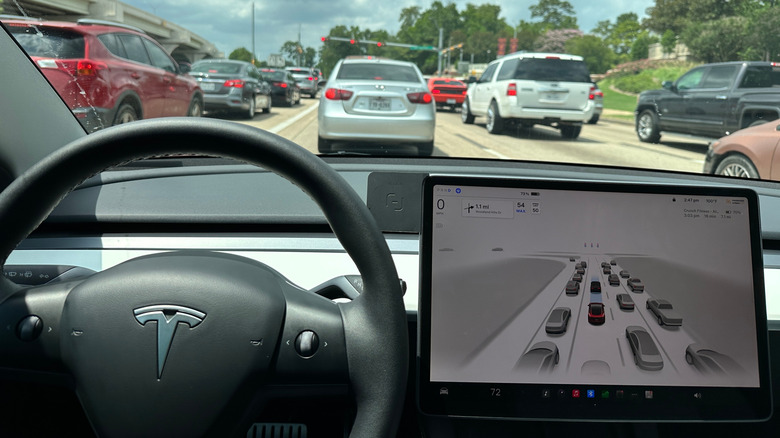
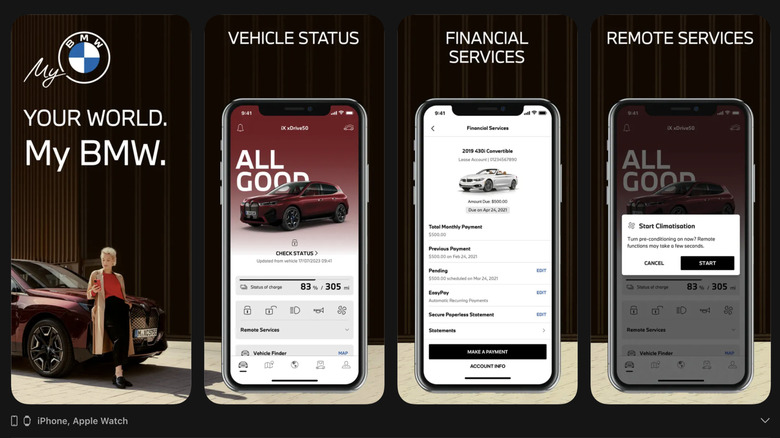
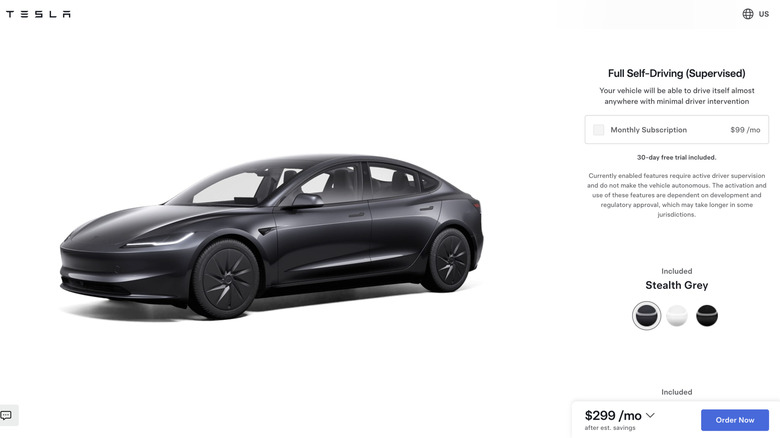


















Brian Gallegos/Shutterstock I hate subscriptions. You hate subscriptions. An overwhelming majority of Americans hate subscriptions. Nevertheless, some automakers persist in the face of all this adversity — especially all-electric OEMs like Tesla, which is by far the worst offender. Without a $99 per month "Full Self-Driving (Supervised)" subscription, its cars have fewer standard driver-assistance features than base-level economy cars. That's not great for a company that sells itself on being at the forefront of technology. Of course, Tesla's not alone in this scheme. Back in February, Rivian launched its hands-free driving system, which can be had for either an up-front $2,500 fee or as a subscription for $49.99 per month, according to Automotive News. At Lucid's Investor Day program in New York last month, the company also announced it was getting in on the action by launching its own subscription-based autonomy program that'll cost between $69 and $199, depending on the level of autonomy buyers choose. Don't worry, though. It's not just EV startups, either. Legacy automakers like Mercedes-Benz are digging this pay structure as well. Three years of access to the company's upcoming MB.Drive Assist Pro will either cost $3,950 or be offered as a monthly subscription, according to Car and Driver. It's not immediately clear how much the monthly cost will be, or what'll happen to your purchase once those three years are up. We also reported that BMW is launching a similar subscription-based program for its driver assistance features. Hell, even budget-friendly automakers like General Motors and Ford are forcing owners into subscribing to their Super Cruise and BlueCruise software. The former is $39.99 per month, and the latter is $49.99. The people aren't thrilled Apple App Store Believe it or not, consumers don't love these developments, and most say they're not willing to subscribe to features they believe should either be standard or be available as one-time purchases. That's especially true for driver assistance features that fall short of full autonomy, according to JD Power analysts who spoke with Auto News. Unsurprisingly, these subscriptions make buyers feel like they're being "nickel-and-dimed." So why do companies keep cranking out these subscriptions if people don't like them? It's simple. Money. At the very least, automakers seem to have realized that common, everyday features like heated seats aren't something you can ask people to subscribe to. BMW tried that in some markets a few years back, and it was a complete disaster. It's not just features in the car, either. Things that used to be real buttons, like remote start on a key fob, are not locked on a smartphone app you're going to need a subscription to access, Auto News reports. People just really do not like paying for things that used to come as-standard. Tesla's way Tesla.com Still, Tesla says it sees the value in making people pay monthly for Full-Self Driving (Supervised), rather than the $8,000 to $15,000 it once cost as a one-time up-front payment. It first launched the $99 monthly subscription in 2021. Back in October of last year, the Austin, Texas-based automaker said that about 12% of all Teslas on the road had the feature activated. In January, it said there were 1.1 million users globally, including folks who bought the feature outright. For CEO Elon Musk to earn additional shares as part of his $1 trillion pay package that was approved in November, FSD must hit 10 million active subscribers, so there's still a long way to go. Sure, Tesla hasn't disclosed FSD's revenue, but it's hard to imagine that it's not making a hell of a lot of money off of folks who have no other alternative after the one-time fee was discontinued in February and Autopilot was sundowned, taking standard lane-centering with it. Well, I guess they could not buy a Tesla, but that's neither here nor there. All of this is to say, I don't think subscriptions are going anywhere, unless, of course, people stop paying for them. While the vast majority of us may not want to shell out the money for these systems on a monthly basis, it seems like these companies feel more than enough people are willing to do so to keep the scheme going.