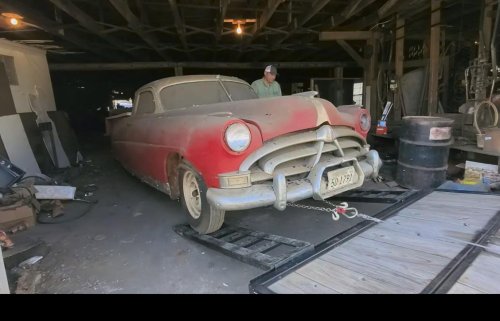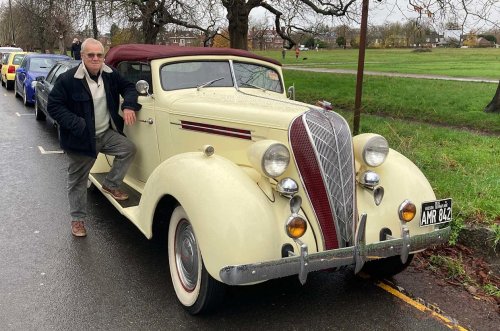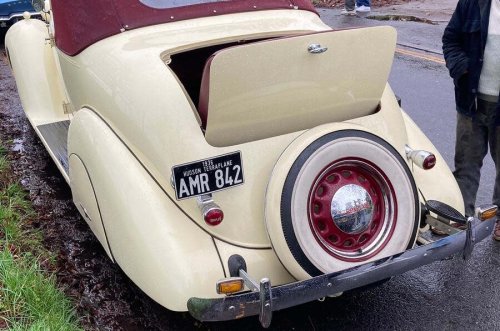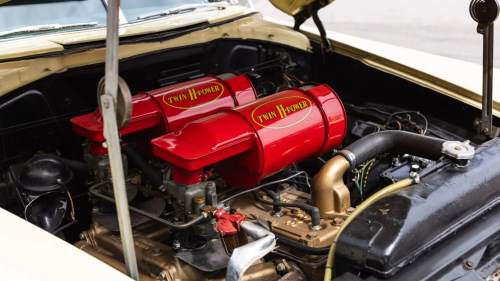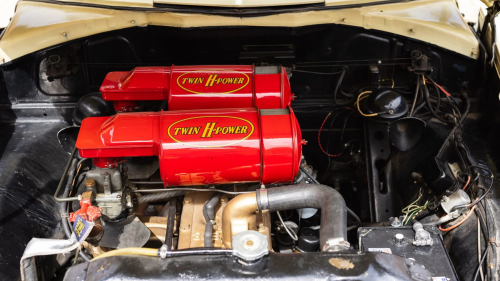


















Hudson’s 1951 Hornet kept winning races while looking like it didn’t careIn 1951, while Detroit was celebrating the flashy machines from Ford Chevrolet and Chrysler, a small company in Michigan named Hudso rolled out a big sedan that looked more conservative than cutting edge. Yet that same 1951 Hudson Hornet went on to dominate stock car racing and humiliate rivals that appeared far more aggressive on the showroom floor. The car kept winning while carrying itself with the calm, low-slung stance of a machine that did not need to shout about what it could do. The Hornet’s secret was not attitude but architecture: a step-down chassis, a low center of gravity and a straight-six that could take brutal race prep without complaint. Wrapped in a modest, almost sleepy body, it became one of the most feared shapes in American motorsport. The quiet troublemaker from Michigan At the start of the 1950s, Detroit’s biggest names were chasing chrome, tailfins and annual styling changes. Ford Chevrolet and Chrysler pushed bright, upright sedans and coupes that looked fast even when parked, the kind of cars that drew crowds at auto shows in Detroit. Against that backdrop, the car built by Hudso in Michigan looked almost restrained. Period footage of Detroit rivals shows how out of step the Hornet’s smooth, low profile seemed with the fashion of the day. Hudson had already set itself apart in the years after World War II by rethinking how a car’s body and frame should work together. Instead of a tall body perched on top of a ladder frame, the company merged the two into a single structure and dropped the floorpan between the frame rails. That step-down layout made the roofline lower without sacrificing interior space and, more importantly, pulled the mass of the car closer to the road. A later description of the concept notes that Hudson stood out post World War II by introducing this distinctive step-down chassis design in 1948, with the body and frame acting as one unit for strength and handling. When the Hornet arrived as a new model for 1951, it inherited that structure and wore a clean, almost formal body. The 1951 Hudson Hornet was described as a revolutionary car that combined sleek design with innovative engineering, famous for its step-down configuration that put occupants “in” the car rather than on top of it, a layout celebrated by enthusiasts who highlight the Hudson Hornet as a classic American car. Step-down science and a sleepy silhouette The step-down chassis did more than create a marketing hook. By lowering the floor and seats, Hudson effectively dropped the car’s center of gravity. The Hornet sat lower than most rivals, which gave it a planted stance in corners and reduced body roll at speed. Drivers climbed down into the cabin, which felt unusual at a time when most sedans required a step up from the curb. On the outside, the Hornet did not advertise that engineering. Styling favored rounded fenders, a simple grille and minimal ornamentation. In an era when rivals chased ever more flamboyant shapes, this big Hudson looked like a car for someone who had already made up their mind. That visual understatement fed the legend that the Hornet kept winning races while looking like it barely cared about appearances. Under the hood sat a large-displacement inline-six, an L-6 engine rated at 145 hp in street trim. Contemporary descriptions of Hudson performance stress that this straight-six was both durable and flexible, a foundation that racers could build on. Later accounts of the early 1950s Hornets on the street and track describe the cars as strong, dependable enough for daily driving yet capable of sustained high-speed punishment in competition, with enthusiasts noting that the Hudson Hornet ruled the NASCAR circuit in the early 1950s. From family sedan to stock car assassin Hudson did not originally intend for the Hornet to become a racing weapon. The company built it as a sporty, upscale sedan for buyers who wanted comfort and solid road manners. Yet the same attributes that made it composed on the highway made it deadly on dirt ovals and beach circuits. Accounts of the early stock car era describe how racers quickly noticed the Hornet’s combination of low center of gravity, strong chassis and willing engine. The step-down unibody resisted flex, which kept suspension geometry consistent through rough corners. The long wheelbase and wide track added stability, and the big straight-six could be tuned for more power without sacrificing reliability. Hudson engineers and independent mechanics began to push the engine harder. One detailed description of a race-prepared 1951 Hudson Hornet notes that it featured twin single barrel carburetors with larger bowls and improved fuel distribution, and that when tuned by men like Teague the Twi setup delivered a meaningful jump in performance without turning the powertrain fragile. That reference to Teague the Twi appears in a discussion of how race specialists refined the Hornet’s breathing and fuel delivery, captured in footage of Teague the Twi at work on the car. These modifications transformed the Hornet from a quick street car into a dominant stock car. The visual changes remained subtle compared with rival machines covered in scoops and stripes, which only reinforced the impression that the big Hudson was winning on engineering rather than show. The big bang of NASCAR In the early 1950s, the Hudson Hornet ruled the NASCAR circuit, becoming a legend on the track and the street. Period commentary on the series describes the Hornet as a kind of big bang for modern stock car racing, a moment when a manufacturer applied serious engineering to a production-based racer and changed expectations of what a sedan could do. One documentary voice calls the Hudson Hornet the big bang of NASCAR and recalls that the team built cars that won races and dominated 1952, with the Hornet taking a remarkable share of victories. Later historical summaries quantify that impact. Though Hudson did not originally intend for their sporty Hornet to go racing, thanks to a bulletproof 145 hp L-6 engine, class leading handling from the step-down unibody chassis and the talent of top drivers, the Fabulous Hudson Hornets captured 81 NASCAR race wins and multiple championships from 1951 to 1955. That figure of 81 wins appears in a detailed account of the factory-backed cars and their drivers, which also notes how the Hornet became shorthand for dominance in early stock car competition. Another reflection on the era argues that Hudson Hornet was the big bang of NASCAR because it showed how a well engineered production car could be prepared for racing without radical bodywork or exotic engines. The same source points out that the team built cars that simply won, season after season, and that the Hornet dominated 1952 in particular. Those comments appear in a feature on the Hudson Hornet and its NASCAR record. The drivers who made the Hornet famous Hardware alone did not win those races. The Hornet’s legend is tied to a roster of drivers and mechanics who understood how to exploit its strengths. A survey of Hudson racing history lists marshall Teague Fred Mundy Herb Thomas the Flock Boys El Keller Dick Wrathman Bub King as some of the names of the Hudson heroes who carried the car to victory. That roll call, preserved in a look back at Hudson racing, underlines how many top competitors gravitated to the Hornet once its potential became clear. One of the most celebrated combinations paired Herb Thomas with a Hornet prepared by legendary race mechanic Smokey Yunick. A detailed description of that partnership explains that this particular car was provided to NASCAR champion Herb Thomas by Hudson halfway through the 1952 season, and that Thomas became the most prolific Hudson driver in NASCAR with 78 total podium finishes at the wheel of the Hornets. The same account notes that he holds the record for highest win percentage in the sport, and that this Hornet is the only Hudson campaigned in NASCAR known to exist, preserved as the 31st vehicle on the National Historic Vehicle Register. Marshall Teague, another star in the Hudson camp, worked closely with the factory and independent tuners to refine the Hornet’s setup. References to Teague the Twi in technical discussions of carburetion and suspension speak to his reputation as both a driver and a development partner. Together with teammates like Fred Mundy and the Flock Boys, he turned the Hornet into a fixture at the front of the field. Engineering that aged into orthodoxy The Hornet’s step-down concept did not just win races. It anticipated a direction that much of the industry would later follow. A retrospective on the car’s Daytona success notes that most cars today are still based on the step-down premise, with low floors and integrated body structures that place occupants deep within the chassis. That same account recalls how, in 1951, Hudson introduced the powerful Hornet, a model that would dominate early 1950s stock car events and influence thinking about handling and safety. Another overview of Hudson’s postwar innovations explains that the step-down chassis merged body and frame into a single structure, improving rigidity and lowering the center of gravity. The 1952 Hudson Hornet, a direct successor to the 1951 car, is described as a particularly good handling car, especially for racing, because of this design. That description appears in a discussion of how Hudson stood out after World War II. Today, unibody construction and low seating positions are standard in passenger cars and performance models. The Hornet did not invent every aspect of those ideas, but it demonstrated how they could be combined in a mass produced sedan that excelled on real circuits. That achievement helps explain why historians still point to the 1951 Hornet as a turning point in American car design, even though its styling looked conservative next to some contemporaries. From real circuits to the silver screen The Hornet’s racing story might have faded into specialist circles if not for its second life in popular culture. Herb Thomas and the Fabulous Hudson Hornets were immortalized by Pixar’s Cars movie in 2006, which introduced a new generation to the idea of a low, blue stock car that carried itself with quiet confidence. The animated character Doc Hudson took inspiration from the real machines and drivers, and the film’s creative team drew on historical footage and interviews to capture that mix of restraint and authority. Modern enthusiasts often connect the on-screen Doc Hudson to the real 1951 Hornet that dominated NASCAR, and to the preserved cars that survive in museums and private collections. One short profile of the stock car legend describes the real machine as just a car built to move, and notes that The Hudson Hornet was not designed to dominate NASCAR. But dominance does not ask for permission, it simply arrives when the right combination of engineering and talent comes together. That reflection appears in a contemporary tribute to The Hudson Hornet and its racing history. More from Fast Lane Only Unboxing the WWII Jeep in a Crate 15 rare Chevys collectors are quietly buying 10 underrated V8s still worth hunting down Police notice this before you even roll window down The post Hudson’s 1951 Hornet kept winning races while looking like it didn’t care appeared first on FAST LANE ONLY.