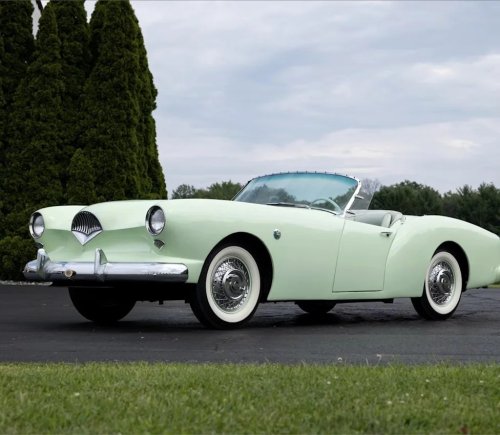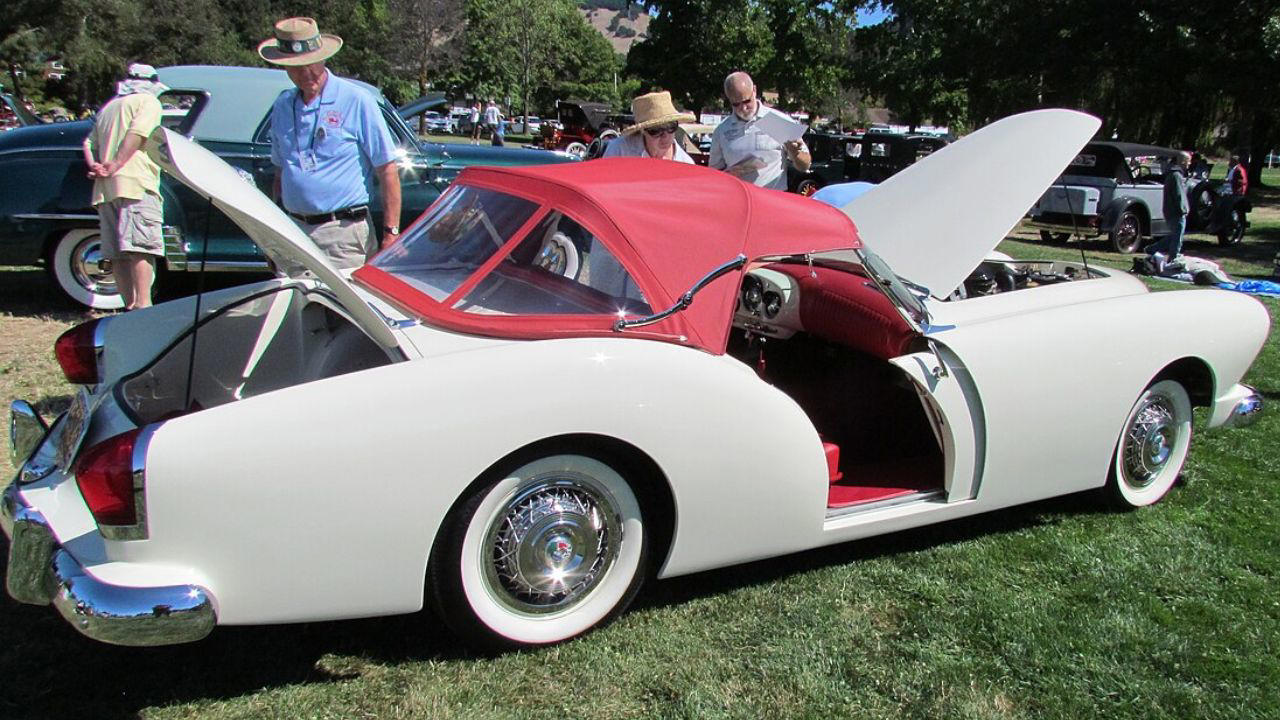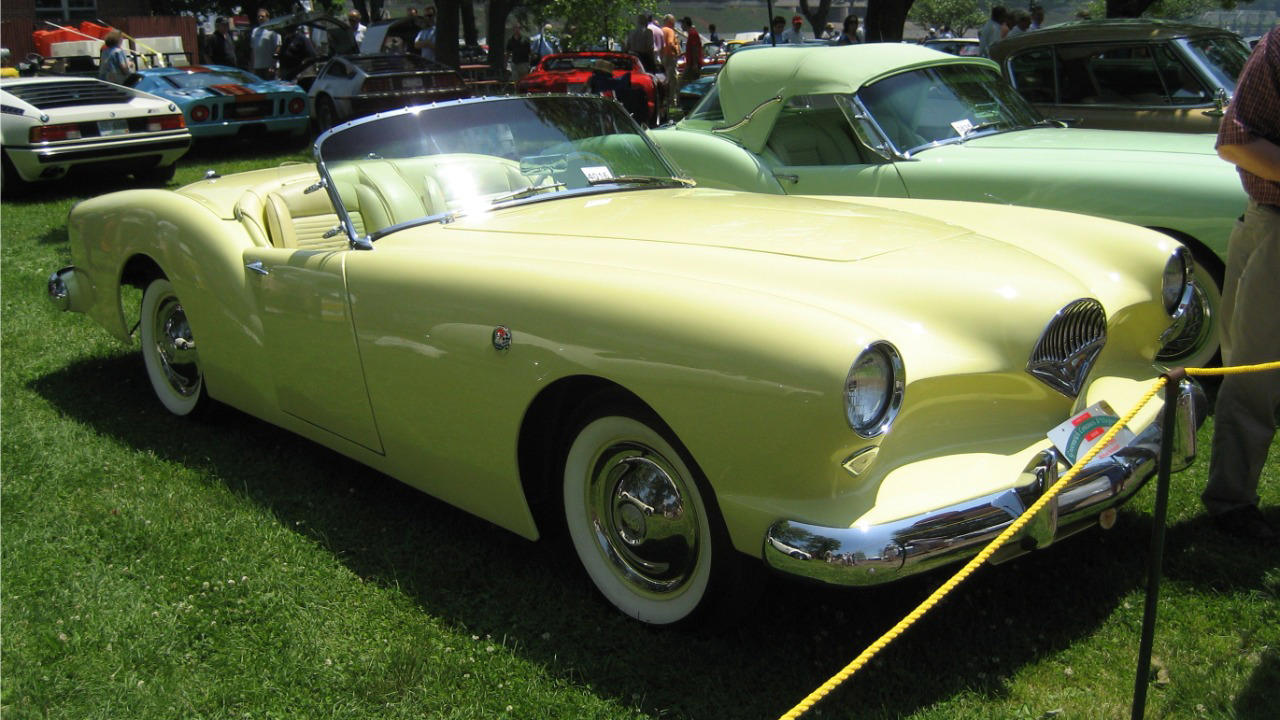



















Kaiser’s 1954 Darrin had doors that slid like it was hiding a secretThe 1954 Kaiser Darrin arrived at the tail end of America’s first sports car boom with a trick up its sleeve. Instead of doors that swung out into traffic, its body panels slid forward into the front fenders, as if the car were swallowing its own secrets. That single idea turned a short-lived fiberglass roadster into one of the most recognizable curiosities in postwar automotive design. A fiberglass gamble in the nifty 50s In the early 1950s, America was discovering the sports car. European imports filled club racing grids, and domestic builders rushed to answer with their own two-seat roadsters. Among them was the 1954 Kaiser Darrin, a limited-production model created for Kaiser Motors as a halo car and billed in enthusiast circles as America’s first fiberglass sports car, debuting just ahead of better known rivals. The car carried the names of industrialist Henry J. Kaiser and designer Howard “Dutch” Darrin, and enthusiasts still trace its origins through detailed histories of the 1954 Kaiser Darrin. Its long, low body, dramatic grille and cut-down doors signaled a clear attempt to court the same buyers who were eyeing early Chevrolet Corvettes and imported MGs. Fiberglass construction kept tooling costs down for a small run and allowed the sculpted surfaces that Dutch Darrin favored. Contemporary video pieces on “Just Cool Cars” still describe the 1954 Kaiser Darren as one of America’s original sports cars, and owners like John Nerstein and Stephanie Dunn of Tibber present it as a surviving example of a bold but brief experiment. That context matters because the car’s most famous feature, its sliding doors, only makes sense when viewed as part of a broader push by Kaiser Motors to stand apart from larger Detroit brands. Dutch Darrin and the idea that would not let go Howard “Dutch” Darrin had already made a name as a coachbuilder before he worked with Kaiser Motors, and accounts of his career emphasize how fixated he became on rethinking the way people entered a car. According to one detailed history of the first sliding-door car, Howard “Dutch” Darrin with ordinary swing-out doors and treated sliding panels as part of the future of car design. That obsession shaped the KF-161 project that became the Kaiser Darrin. Darrin wanted a car that felt like a piece of furniture, something that invited occupants in without the clumsy arc of a hinged door. He also saw practical benefits. In tight parking spots, traditional doors can be hard to open, and he believed a sliding mechanism could solve that. His solution was radical: the doors would run on tracks inside the front fenders and disappear into the body when opened. The idea did not come from minivans or commercial vehicles, which would adopt sliding doors decades later. Instead it emerged from a designer who treated the side of the car as a continuous sculpted surface and refused to interrupt it with conventional gaps and hinges. For Dutch Darrin, the sliding door was as much a styling statement as a piece of engineering. How the secret doors actually worked Most cars feature conventional doors hinged to open outward, so the Kaiser Darrin’s solution stood out immediately. As one enthusiast guide points out under the heading “The Kaiser Darrin Has Sliding Doors,” most cars feature that swing, while the Darrin’s panels slid straight forward into hollow spaces in the front fenders. From the outside, the door cutline followed the curve of the front wheel arch. To get in, the driver pulled a handle and the entire door moved along a track, vanishing into the body. The opening that remained was narrow and low, in part because the doors themselves were short and the car’s beltline sat high. Occupants had to step over a substantial sill and drop into low-mounted seats, which gave the car its distinctive “sit in, not on” feel but also made access more awkward than in a typical roadster. Technical accounts of the KF-161 emphasize that the fiberglass body sat over a steel structure, and the sliding doors required careful packaging around the front wheels and cowl. Guides to the first sliding-door sports car explain that the doors had to latch securely in both open and closed positions, and that the tracks needed to stay free of debris to work smoothly. Owners who demonstrate surviving cars today often show how the doors can stick if the car has been sitting, a reminder that the system demanded regular care. America’s first fiberglass sports car, and its rivals Fans of the Kaiser Darrin frequently describe it as America’s first fiberglass sports car, a claim that rests on the timing of its development and the way it reached the market. A detailed enthusiast history of the Kaiser Darrin roadster notes that it debuted at the forefront of the country’s fiberglass experiments and that its body was molded rather than stamped. At the same time, comparisons with the 1953 Chevrolet Corvette appear throughout coverage of the model. Analysts point out that the Corvette also used fiberglass and entered production around the same period, which has led to long-running debates among historians about which car deserves the “first” label. What the sources agree on is that both cars arrived in a short window when American manufacturers were testing new materials and new segments, and that the Kaiser Darrin was part of that first wave. Video features that introduce the car at auction, including a walkaround by Derek Shaky of the Collector Car Network at a Barrett Jackson event, repeatedly highlight its fiberglass construction and sliding doors as the two core talking points. In those segments, the car is framed as a rare artifact from a time when small companies could still bring highly unconventional sports cars to market. Styling flourishes beyond the doors The Kaiser Darrin’s sliding doors tend to dominate the conversation, yet the rest of the car was just as distinctive. The front end carried a heart-shaped grille opening that enthusiasts still recognize instantly. The hood stretched long over the inline-six engine, and the rear fenders tapered gracefully, giving the car a light, almost European profile. Inside, the dashboard was simple and symmetrical, with round gauges and bright trim that reflected midcentury tastes. The car’s convertible top folded back into a compartment behind the seats, and the windshield wrapped gently around the cockpit. Contemporary video coverage often highlights how low the car sits compared with modern vehicles, which adds to its dramatic stance. Collectors who speak on camera at auctions describe the Kaiser Darrin as a car that looks smaller in person than it appears in photos, in part because of its narrow body and minimal overhangs. That compact footprint made the sliding doors even more striking, since they allowed the car to be parked close to walls or other vehicles without worrying about door swing. Why the sliding doors never caught on For all their ingenuity, the sliding doors created as many problems as they solved. A detailed analysis of the model’s quirks asks bluntly why the sliding doors did not spread to other cars. The answers start with practicality. Because the doors slid into the front fenders, they had to be relatively short, which meant the opening for passengers was tight. Taller occupants had to twist and duck more than they would in a conventional roadster. Weather sealing was another issue. Reports from owners describe how water could find its way into the door cavities, and how the tracks could collect dirt and small stones. If the rails became contaminated, the doors could bind or feel rough when operated. In cold climates, ice could also interfere with the mechanism. A simple hinged door, by contrast, was cheaper to build and easier to maintain. Safety concerns added to the list. Because the doors slid forward, they did not offer the same kind of side-impact structure that a solid, hinged door might provide. Although crash standards were far looser in the 1950s, engineers already understood that door strength mattered. As a result, other manufacturers hesitated to copy the design, especially as cars grew heavier and faster. Inside the driving experience The Kaiser Darrin was never about raw speed. Under its fiberglass body sat a modest inline-six engine, paired with either manual or automatic transmissions depending on configuration. Period comparisons with other early American sports cars suggest that the Darrin prioritized style and cruising over outright performance, and enthusiasts often describe it as a pleasant touring car rather than a track weapon. That character comes through in modern video segments. In one feature labeled “How Love Created This 1954 Kaiser Darrin Roadster,” Derek Shaky of the Collector Car Network walks around a car at a Barrett Jackson sale and focuses on the craftsmanship of the restoration, the smoothness of the sliding doors and the attention the car draws in a crowd. The emphasis is on presence and story more than lap times. Another video piece titled “Super convertible for outstanding retirees” frames the Kaiser Darrin within a broader history of the global automotive industry, with narration that touches on the rise of brands and the takeover of less successful ones. In that context, the Darrin appears as a stylish but commercially fragile product, a car that looked ideal for leisurely retirement drives yet arrived from a company struggling to survive. The clip, available on YouTube, uses the car as an example of how bold design does not always guarantee long-term success. A brief production run and a long legacy Kaiser Motors built the Darrin for a very short period, and production numbers remained low, which only added to the car’s mystique. Enthusiast histories emphasize that the company was already under financial pressure, and that the sports car could not reverse its fortunes. When Kaiser left the passenger car market, the Darrin went with it. The sliding doors never reappeared on another mainstream American sports car. Later sliding-door applications arrived mainly on vans and people carriers, where the doors could be larger, the tracks more robust and the benefits more obvious. Analysts who review the Darrin’s history argue that the concept was simply too complex and too compromised for broader adoption in small, low sports cars. Yet the idea of a door that disappears into the body has continued to fascinate designers and fans. Coverage of the first sliding-door sports car on sites devoted to classic and collector vehicles often includes close-up photography of the doors in motion, along with diagrams of the tracks and latches. Those pieces treat the Darrin as both a technical curiosity and a symbol of a more experimental era. How collectors see it now Today, the Kaiser Darrin occupies a small but vivid corner of the collector market. Auction houses present restored examples as conversation pieces, and bidders respond to the combination of rarity, fiberglass construction and the unmistakable doors. When Derek Shaky introduces the car at Barrett Jackson events, he leans on that narrative, describing how love for the unusual design motivated owners to preserve or restore these cars even when parts and expertise were hard to find. More from Fast Lane Only Unboxing the WWII Jeep in a Crate 15 rare Chevys collectors are quietly buying 10 underrated V8s still worth hunting down Police notice this before you even roll window down The post Kaiser’s 1954 Darrin had doors that slid like it was hiding a secret appeared first on FAST LANE ONLY.