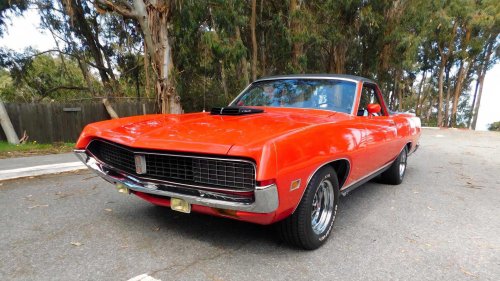
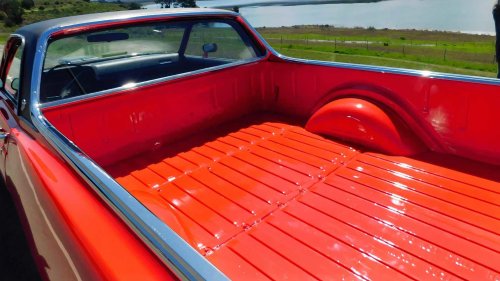
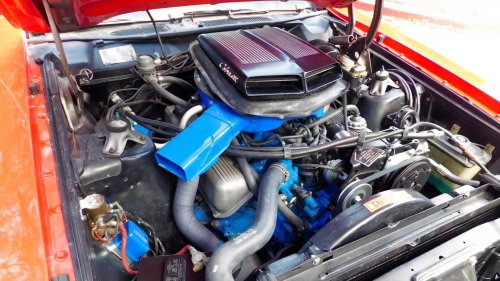
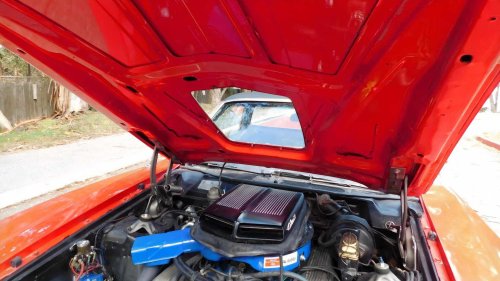
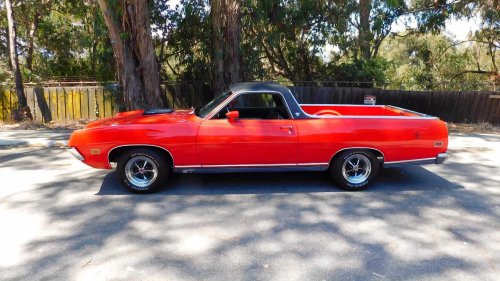
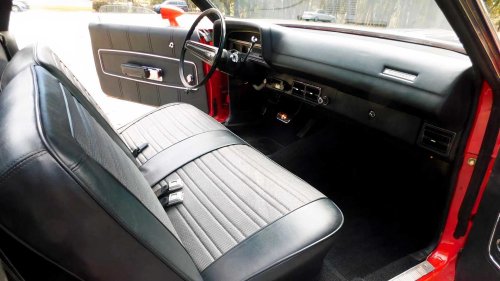
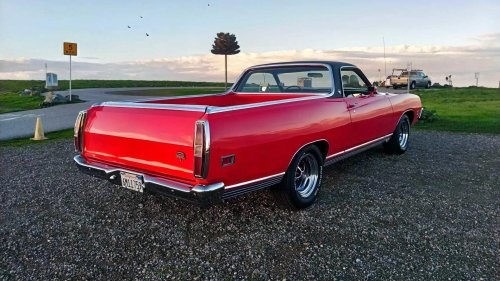
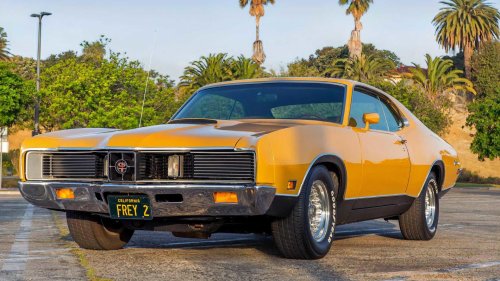
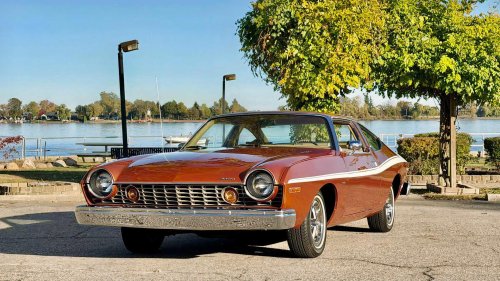



















The early 1970s were a strange turning point for American muscle cars. Just a few years earlier, Detroit was locked in a horsepower war where every brand wanted bragging rights at the drag strip. Big-block V8s were getting hotter, quarter-mile times were dropping, and even everyday commuters could option their way into something legitimately fast.But by 1971, the entire landscape started to shift. Insurance companies were punishing high-horsepower cars, emissions rules were tightening, and gas prices were creeping upward. Almost overnight, the golden age that defined the late ’60s began to fade.Yet that short window at the start of the decade left behind some of the most fascinating performance machines ever built. These early 1970s models seemed to arrive just as the party was ending. Today, many of these early-’70s bruisers barely get a mention, despite offering serious power, timeless styling, and a last glimpse of muscle’s greatest generation. Buckle up, because you're about to meet one of Ford's most underrated muscle cars of the forgotten era. The 1971 Ford Ranchero GT 429 Super Cobra Jet Was Ford's Most Underrated '70s Muscle Car via Bring A TrailerSince its debut in December 1956, the Ranchero has always lived in that weird gray area between muscle car and workhorse. And living in limbo is probably exactly why the Ranchero never truly got the spotlight it deserved. Ford first launched the Ranchero for the 1957 model, two years before Chevrolet's El Camino ever entered the picture.The mighty Ranchero survived across seven generations of production, with the last factory-made model rolling off the assembly line in 1979. According to Hagerty, Ranchero production was modest in respect to Ford production numbers, as only 508,355 were sold across its 22-year production run. While evolution did transpire throughout all seven generations, Ford's goals stayed relatively the same throughout the Ranchero's production by giving buyers a stylish car they could actually haul things with.Depending on the year, the Ranchero could be anything from a basic runabout to a legitimate performance machine. And one of the Ranchero's top performers was the 1971 Ford Ranchero GT 429 Super Cobra Jet from the fifth generation. The fifth-gen Ranchero models received the same Coke bottle styling as the second-gen Torino. Thus, Ford essentially created a Torino Cobra with a bed and a tailgate.via Bring A TrailerFord only built a small number of Rancheros with the Super Cobra Jet (SCJ) package. In a lot of ways, this model represents the last gasp of big-block performance before emissions rules and insurance premiums choked horsepower across Detroit. According to Hemmings, 24,946 Rancheros were built in 1971. However, only 3,632 were GTs, and even fewer of those models sported the 429 engine. But beyond its rarity, what really made the 1971 Ford Ranchero GT 429 SCJ so cool was just how unapologetically excessive it was with 375 horsepower pushing through its big-block V8, which allowed for unforgettable quarter-mile runs.Despite how unbelievable its performance numbers were for the early '70s, almost nobody talks about it today. It wasn't a coupe, it wasn't a truck in the traditional sense, and it didn't fit the muscle-car mold that enthusiasts were used to. That strange identity is exactly why the '71 Ranchero GT 429 SCJ remains one of Ford's most overlooked, but most fascinating, performance builds of the entire decade. A Look Under The Hood Of The 1971 Ford Ranchero GT 429 via Bring A TrailerPop the hood on the 1971 Ford Ranchero GT 429, and you're looking at one of the last truly wild big-blocks Detroit ever built. The 429 Super Cobra Jet wasn't just a warmed-over V8, either. It was a purpose-built beast designed for drivers who cared more about quarter-mile glory than fuel economy or subtlety. The 1971 Ford Ranchero GT 429 Specs HemmingsThe 1971 Ford Ranchero GT 429 was rated at 375 horsepower and 490 lb-ft of torque. Performance was right in line with the era’s heavy hitters. A properly set up SCJ Ranchero could run the quarter mile in the high 13-second range. This quarter-mile pace puts it door-to-door with legends like the ’71 Chevelle SS 454 LS5, the ’71 Plymouth GTX 440, and the ’71 Buick GS 455.via Bring A TrailerPlus, its top speed hovered around 130 mph, which was quite impressive for a vehicle that still had a tailgate hanging off the back. However, what truly made the Ranchero GT 429 so compelling wasn’t just its numbers. It was the shock factor it provided. You see, nobody expected a pickup-based Ford to run with the quickest muscle cars of 1971, yet the SCJ proved that it absolutely could. How Much Does A 1971 Ford Ranchero GT Cost Today? via Bring A TrailerFord only produced fewer than 4,000 GT variations of the 1971 Ranchero, making them extremely rare. And finding a 1971 Ford Ranchero GT with the 429 V8 is kind of like hunting a unicorn. However, if you play your cards right, you might actually be able to find one of these rare unicorns within your line of sight.According to J.D. Power, the original MSRP of a 1971 Ford Ranchero GT sat at $3,273. When adjusted for inflation, that is around $21,500 in today's cash money. J.D. Power also notes that the average retail value of a 1971 Ranchero GT sits around $21,900 today, with low retail prices dipping down to $12,000 and the higher range of things tapping out at around $35,700.via Bring A TrailerHowever, with the 429 V8 being an even rarer variation, gearheads can expect to pay even more if they are lucky enough to get their hands on the wheel of one of these classics. Just take a look at this flashy red 1971 Ford Ranchero GT 429. With around 40,000 miles on the clock, this Ranchero sold for $32,000 via Bring A Trailer in 2020.Now, five years later, any other surviving SCJ Ranchero models will be priced more like a collectible muscle car than a utility pickup. Plus, based on rarity alone, that trend won't be slowing down anytime soon, either. Other Underrated '70s Muscle Cars That Deserve A Second Look via Bring A TrailerWhile the 1971 Ranchero GT 429 SCJ is one of the most underrated muscle cars of the 1970s, it isn't the only muscle car that deserves a second look. As insurance crackdowns and emissions rules hit Detroit full force, some genuinely impressive performance machines arrived with surprisingly little fanfare as they seemingly slipped through the cracks.Today, a handful of these cars still lurk in the shadows, overshadowed by nameplates like the Chevelle SS or the Challenger R/T. Yet if you dig a little deeper, you'll find some hidden gems that delivered serious speed and big-block muscle in the 1970s. Here are two that absolutely deserve a second look. Meet The 1971 Mercury Cyclone Spoiler / GT (429 CJ) via Bring A TrailerMercury performance has always lived one step off to the side of Ford's mainstream lineup, and the Cyclone is the perfect example. Produced from 1964 through 1971, the Cyclone started as a mid-size performance coupe meant to compete with the Chevelle SS and Fairlane GT. But by the time the final-year 1971 models rolled out, the Cyclone had evolved into one of the most aggressive-looking muscle cars of the era, complete with long-hood and short-deck proportions and those unmistakable NASCAR-inspired curves.Production for 1971 was low across the board as the muscle car market started to cool, with only a few thousand Cyclones built in total. Plus, there were far fewer numbers equipped with the legendary 429 Cobra Jet, which had a whopping 370 horsepower and 450 lb-ft of torque. Thus, what truly makes the 1971 model stand out today is its combination of rarity, late-stage big-block power, and its "last of the breed" status before emissions neutered Mercury's performance lineup. So, for gearheads who want a true big-block sleeper, the Cyclone is one of the smartest buys of the early '70s. Meet The 1971 AMC Matador "Machine" 401 via Bring A TrailerAMC never got the same spotlight as the Big Three, but that's exactly why their performance cars are so fascinating. The Matador replaced the Rebel in 1971, and AMC quietly built a handful of high-performance variants equipped with the 401 V8 engine, which made up to 330 horsepower and enough torque to shock Mopar and GM loyalists.According to HotRod Magazine, while the original 1970 Rebel Machine is the better-known car, the 1971 Matador Machine is far rarer and far more forgotten. The data suggests that only a few hundred were built with the 401 and performance package. Thus, it stands out as one of AMC's last big performance-oriented V8s at a time when most companies were backing off muscle cars entirely. For gearheads who want something bold, rare, and different, the Matador Machine 401 is an overlooked muscle car with real bite, providing a big reward for anyone willing to look beyond the usual suspects.When you put all three of these forgotten performance cars together, you begin to understand just how much early-'70s muscle is still hiding in plain sight. So get your wallet ready, gearheads, because there are still plenty of opportunities waiting to be found. You just have to be willing to look in some unexpected places.Sources: Hagerty, Hemmings, HotRod Magazine, J.D. Power.