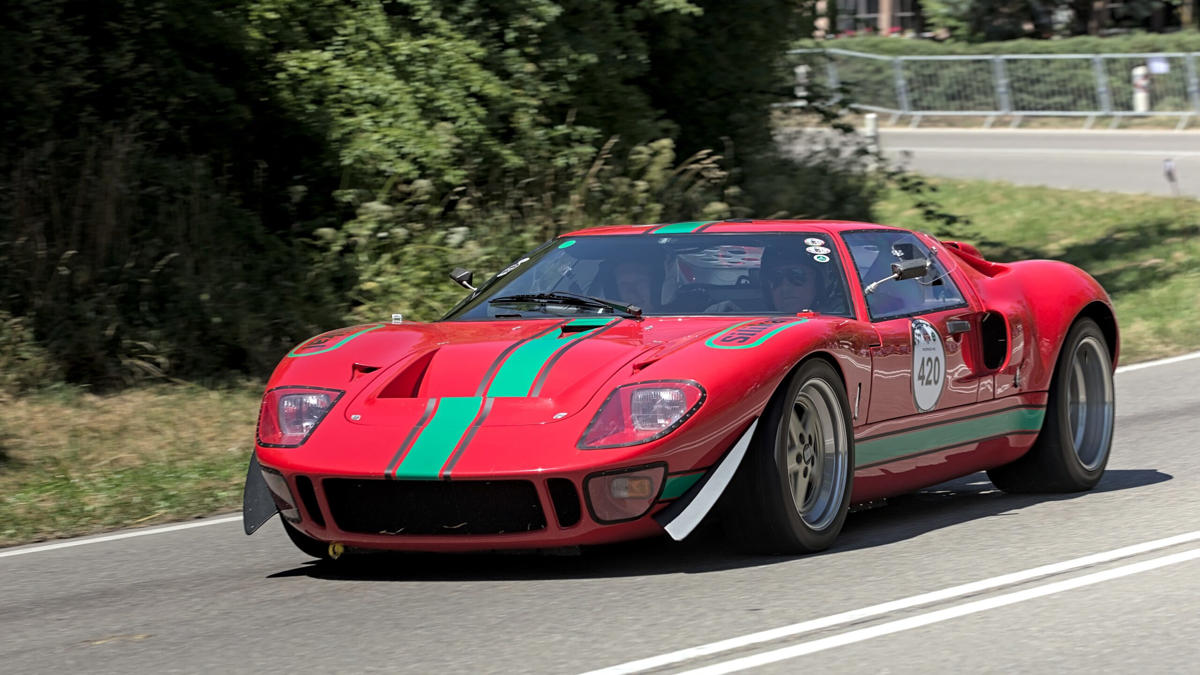
Built for racing, the 1966 Ford GT40 changed performance foreverThe 1966 Ford GT40 did more than win a race. It reset expectations for how fast a production-based car could go, how long it could survive at full throttle, and what it meant for an American manufacturer to challenge European dominance on their home circuit. Built with a single purpose, to conquer the 24 Hours of Le Mans, it became a template for modern supercars and a touchstone for collectors and engineers decades later. Today’s track-focused road cars, from carbon-tub hypercars to limited-run V8 specials, all owe something to the way the GT40 fused brutal power with long-distance durability. Its victories in the mid‑1960s turned a boardroom grudge into a racing dynasty and helped define the idea that a car could be both a technological weapon and a cultural icon. What happened The story of the 1966 Ford GT40 begins with a failed business deal. After negotiations for Ford to buy Ferrari collapsed, Henry Ford II directed his competition department to build a car that could beat Ferrari at Le Mans. The result was the GT40 program, a low, mid‑engined prototype designed around endurance racing rather than domestic showrooms. The car’s name reflected its purpose: “GT” for grand touring and “40” for its approximate height in inches. Early GT40s struggled with reliability, but Ford treated the program like a full industrial campaign. Engineers refined the chassis, improved cooling, and experimented with larger-displacement V8s. By 1966, the effort produced the GT40 Mk II, a more muscular evolution with a big-block 427 cubic inch engine and heavy-duty driveline components designed to survive a full day at racing speeds. That year’s 24 Hours of Le Mans became the showdown Ford had been pursuing. At Le Mans in 1966, the GT40 Mk II delivered the decisive blow. Ford entries finished first, second, and third, breaking Ferrari’s streak and giving an American manufacturer overall victory at the world’s most prestigious endurance race. Analysis of that race highlights how the GT40’s power and stability on the long Mulsanne Straight allowed it to run at sustained high speeds that Ferrari’s smaller V12s struggled to match over 24 hours, even though the Italian cars remained highly competitive in outright pace. The GT40’s success came from a blend of raw horsepower, improved aerodynamics, and a strategy built around running fast enough to pressure rivals into mechanical or tactical mistakes. The car’s legend did not end at the finish line. Ford continued to refine the GT40, producing lighter variants and specialized chassis for particular circuits. One of the most focused versions, the 1966 Ford GT40 Mk II Lightweight, stripped mass wherever possible and used carefully selected components to improve acceleration and braking. That exact specification, rare even by GT40 standards, remains so sought after that a surviving Mk II Lightweight has been described as a “rare jewel of American racing” as it heads to auction, a reminder that these machines were built in tiny numbers and often raced hard before anyone imagined they would become blue-chip collectibles. A detailed look at that 1966 GT40 Mk shows how closely today’s market still studies period race prep, original bodywork, and documented competition history. Behind the track results sat a technical package that aligned with a broader shift in racing powertrains. The GT40’s V8, especially in its big-block Mk II form, represented an American approach to endurance speed that relied on displacement and torque rather than small, high-revving engines. Lists of iconic racing engines often place the GT40’s powerplant alongside celebrated European units because it proved that a pushrod V8, properly engineered, could run flat out for an entire day at Le Mans and emerge victorious. Beyond the famous wins, the GT40 program created a web of stories and technical footnotes that still fascinate enthusiasts. Histories of the car point out that the GT40 was built in several distinct marks, with the original small-block cars evolving into the 427-powered Mk II and later into the even more specialized Mk IV. Features that now seem standard on top-tier sports cars, such as mid‑engine layout, carefully managed airflow, and extensive use of lightweight materials, were refined in the GT40 under the pressure of competition. Enthusiast compilations of GT40 facts highlight details like its extremely low roofline, the need to sculpt doors into the roof so drivers could climb in, and the way its fuel system and brakes were upgraded repeatedly as speeds climbed. The GT40’s life did not end when Ford withdrew its factory effort. Surviving chassis passed into private hands, some continued racing, and others were restored to period-correct specification. The car’s reputation grew as a symbol of a particular era when manufacturers could build purpose-made prototypes that still looked like exaggerated road cars. That heritage has led to modern historic racing series where original and continuation GT40s compete under carefully controlled regulations. One high-profile championship, announced for the 2021 season, focused specifically on original-specification GT40s and related prototypes. The organizers of that GT40 historic series set out strict eligibility rules to preserve authenticity, including requirements around period-correct bodywork and mechanical layout, which underlines how much value owners place on keeping these cars close to their 1960s configuration. Why it matters The 1966 GT40 changed performance expectations in several ways that still shape how high-end cars are designed, marketed, and raced. It proved that an American manufacturer could build a machine that not only matched but beat the best from Europe on their most demanding stage. That result shifted how global audiences viewed Detroit engineering and opened the door for later American supercars to be taken seriously on world circuits. The GT40 also established a template for the modern supercar as a race-bred object. Its layout, with a powerful engine mounted behind the driver and a body shaped primarily by aerodynamic need, foreshadowed the formula that later became standard for exotic performance cars. Interviews with figures like Alois Ruf, whose company is known for turning Porsche platforms into extremely fast road and track specials, show how deeply that race-first mindset has filtered into the way small manufacturers think about performance. Ruf describes building cars that can sustain very high speeds on the autobahn and track while remaining usable, a philosophy that mirrors the GT40’s balance between brutal pace and long-distance stability. His comments on supercar development reflect a lineage that runs directly through 1960s endurance prototypes. The GT40 further helped cement the idea that technology developed for racing would migrate into road cars. The car’s focus on brake cooling, tire durability, and high-speed stability influenced later production Fords and inspired other manufacturers to adopt similar solutions. Even when the exact components did not transfer, the engineering lessons did. The notion that a manufacturer could justify expensive research by pointing to racing success found a clear symbol in the GT40, which became a rolling advertisement for Ford’s technical capability. Its influence is also cultural. The 1966 Le Mans victory has been retold in books, documentaries, and dramatizations, turning the GT40 into a character in its own right. That storytelling helped fix the car in the public imagination as a symbol of determination and technical ingenuity. As a result, original GT40s and accurate recreations command high prices, and the car’s silhouette is instantly recognizable even to casual fans who might not follow endurance racing closely. Modern performance cars carry the GT40’s DNA in more direct ways too. When Ford launched the mid‑2000s Ford GT, designers and engineers consciously referenced the 1960s racer’s proportions, stance, and detailing. Period materials on the 2006 Ford GT highlight how the project aimed to capture the spirit of the GT40 while using contemporary construction and safety standards. The result was a modern supercar that looked like a refined GT40 and, more importantly, used lessons from decades of racing to deliver similar thrills with greater reliability and comfort. Engineers and historians of technology often point to the GT40 as an example of how a single program can accelerate innovation. The need to keep a large-displacement V8 alive at racing speeds for 24 hours pushed development in lubrication, cooling, and materials that later benefited both racing and road engines. The car’s braking system, which had to slow a heavy, very fast car repeatedly from more than 200 miles per hour, drove improvements in disc brake design and pad compounds that filtered down into more ordinary vehicles. For collectors and investors, the GT40’s story matters because it illustrates how competition history, rarity, and cultural impact combine to create long-term value. The Mk II Lightweight heading to auction is not simply a fast old race car. It is a tangible link to a turning point in motorsport, and that context is what drives seven- or eight-figure valuations. Auction catalogues dwell on original race entries, documented finishes, and period-correct components because buyers are not only purchasing performance but also a piece of the narrative that made the GT40 significant. The GT40 also shaped how racing series think about heritage. The dedicated GT40 historic championship launched for 2021 shows that organizers see value in giving these cars a stage where they can run as intended in front of modern audiences. That kind of series helps keep mechanical knowledge alive, since crews must maintain and race machines that rely on analog systems and manual craftsmanship. It also provides a living museum effect, where spectators can see, hear, and smell the technology that once defined the cutting edge. In a broader sense, the GT40’s success reinforced a competitive dynamic that still defines performance car marketing. Manufacturers now routinely develop halo models that exist partly to win races and partly to project an image of technical prowess. From hybrid hypercars that chase lap records to limited-run track specials, the strategy traces back to projects like the GT40, where victory at a single event translated into prestige across an entire brand. What to watch next The GT40’s legacy continues to evolve, and several threads are worth watching as the car moves further from its original era. The collector market is one. As more detailed research emerges about individual chassis histories, provenance becomes even more important. Cars like the 1966 Mk II Lightweight heading to auction illustrate how documentation, originality, and race record can dramatically affect value. Buyers increasingly scrutinize restoration work, searching for period-correct details and factory specifications rather than accepting generic refurbishments. Historic racing will also shape how the GT40 is perceived in future decades. Series that focus on original-specification cars, such as the GT40 championship announced for 2021, set a standard for authenticity that may influence how other historic categories operate. Regulators and organizers must balance safety upgrades with respect for original design, a tension that becomes sharper as speeds and crowd expectations rise. The way they resolve that tension will determine whether spectators continue to see GT40s racing in anger or mostly confined to static displays. More from Fast Lane Only Unboxing the WWII Jeep in a Crate 15 rare Chevys collectors are quietly buying 10 underrated V8s still worth hunting down Police notice this before you even roll window down