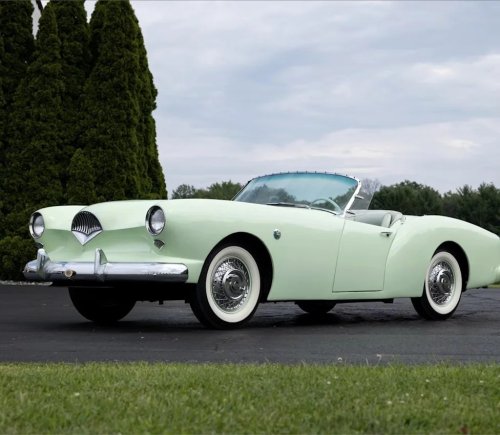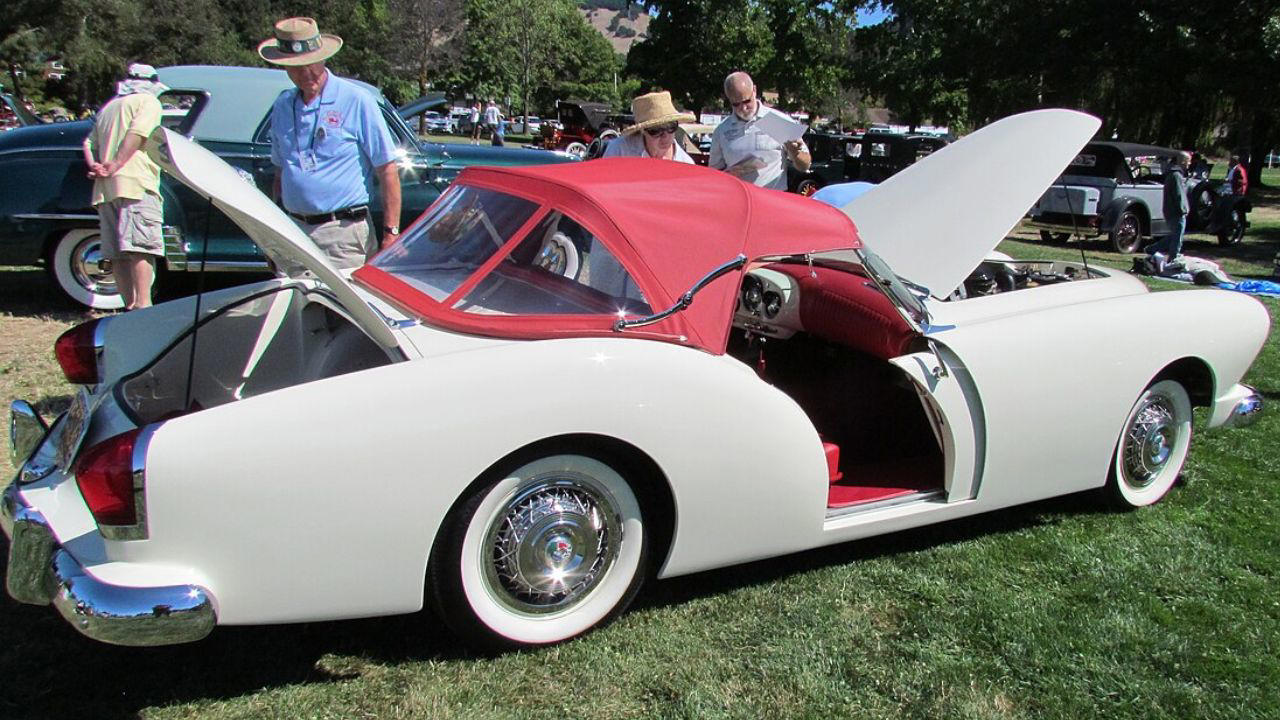



















You’ve probably never heard of the 1954 Kaiser Darrin but its doors slide into the fendersThe 1954 Kaiser Darrin is one of those cars that quietly rewrites a chapter of automotive history. It arrived as an American sports car with a fiberglass body, a small 161 cubic inch engine and a designer who insisted the doors should not swing out at all. Instead, they vanished into the front fenders. Most drivers have never seen one in person, yet the Kaiser Darrin anticipated sliding doors by decades and wrapped that trick in a low, sculpted body that still looks experimental. Its story ties together postwar optimism, corporate risk taking and a designer who refused to compromise on a wild idea. The strange little roadster that tried to beat the Corvette The car that enthusiasts now call the Kaiser Darrin began as an audacious project inside Kaiser, a company better known for sensible family cars than for sports machines. The roadster used a 161 cubic inch engine, which is why many references call it the Kaiser Darrin 161, and it leaned on light weight and style rather than brute power. The goal was to create an American alternative to European two-seat sports cars at a moment when the idea of a domestic roadster was still new. Built in tiny numbers, the Kaiser Darrin was marketed as a specialty American sports car rather than basic transportation. Contemporary descriptions emphasize how low and streamlined it sat, with a long hood, a short rear deck and a cockpit tucked well back on the chassis. One detailed profile describes the car as “Low, streamlined and incorporating a feature Darrin had long wanted to employ,” highlighting how the proportions were shaped around that feature rather than the other way around. That feature was the door system. Instead of conventional hinges, each door slid forward into a pocket inside the front fender. Period photos and modern walkaround videos show the opening as an almost perfectly vertical cut in the side of the body, just behind the front wheel arch. When the driver pulled a handle, the entire door moved forward and disappeared into the fender cavity, leaving a clean opening in the side of the car. On enthusiast forums, owners and historians often point out that these cars are 1954 Kaiser Darrin 161s and that Kaiser was the builder while Howard “Dutch” Darrin was the designer. The “161” designation refers to the engine size and appears repeatedly in descriptions of the car, reinforcing how closely the model identity was tied to that specific powerplant. One detailed discussion of the Kaiser Darrin 161 describes how the sliding doors became its most notable feature. Video coverage from collector events underlines how unusual the car still looks. In one ride along segment, a host introduces a 1954 Kaiser Darren and hands the explanation to Jonathan Klinger from Hagerty, who talks through the car’s proportions, its fiberglass construction and its modest power from Kaiser. The footage shows the car in motion and captures how compact and low it appears in traffic, with the sliding door cut lines clearly visible along the side of the body. Howard “Dutch” Darrin and the obsession with sliding doors To understand why the doors slide into the fenders, it helps to understand Howard “Dutch” Darrin. He was already a well known designer before the Kaiser project, with a reputation for elegant custom bodies and a stubborn streak. Several historical writeups describe how Darrin had long wanted to use a sliding door design and finally saw the Kaiser roadster as his chance to put the idea into production. In-depth descriptions of the car’s development note that the doors, which slid in and out of the fenders instead of swinging outward, were both a safety feature and a hallmark of Darrin’s design philosophy. One profile explains that the concept was initially created without Henry J. Kaiser’s approval, which fits with Darrin’s image as a designer who sometimes pushed ahead on his own and then convinced management afterward. The sliding doors were not a gimmick tacked on late in the process. They were central to how Darrin imagined the car from the beginning. Another detailed description from a specialist dealer emphasizes that the car was low and streamlined and that it incorporated the sliding doors as a feature Darrin had long wanted to employ. That language suggests the doors were a personal mission for him, an idea he had carried for years before he had a willing manufacturer. For Darrin, the sliding doors were part of a broader belief that a car could be both beautiful and functional if the designer controlled every line and mechanism. The sliding doors also aligned with Darrin’s interest in safety and urban practicality. By eliminating the outward swing, he aimed to reduce the risk of doors catching bicycles or traffic and to make it easier to get in and out in tight spaces. At the time, parking lots were getting more crowded and American cities were grappling with increasing car density. Darrin pitched the design as a way to adapt sports car glamour to real world use. Modern commentators have picked up on this thread. A widely shared discussion of early sliding doors points out that the first use of such a system in a production car did not appear on a minivan but on a unique American sports car. That reference is to the Kaiser Darrin, which used its body made from fiberglass to integrate the sliding door cavities into the fenders. The same analysis notes that the doors ran on tracks and used latches to hold them in place when closed, underscoring that this was a fully engineered solution, not a show car trick. How the doors actually work The sliding doors of the Kaiser Darrin look simple from the outside. In practice, they required careful engineering to function smoothly and safely. Each door rides in a track inside the front fender, with rollers or guides that keep it aligned as it moves forward and back. When closed, the door seals against the body opening and latches to prevent movement in a crash. When opened, it retreats into a recess ahead of the passenger compartment, behind the front wheel. Owners and restorers explain that the doors are relatively light because the body is fiberglass, which helps the mechanism operate without excessive strain. A detailed description of the 1954 Kaiser Darrin roadster notes that the doors, which slid in and out of the fenders instead of swinging outward, were both a safety feature and a signature of Darrin’s approach. The system was designed to avoid the typical arc of a hinged door that could strike nearby obstacles. Modern video clips show the operation in close detail. In one short video focused on the racing car door opening mechanism, the presenter demonstrates how the door handle is pulled and the panel glides forward into the fender cavity, leaving the side of the car open. The camera then moves in to show the track and the limited space inside the fender where the door must fit. The clip makes clear that the door does not fold or articulate. It remains a solid panel that simply disappears into a pocket. Another segment, filmed at a collector event, features a 1954 Kaiser Darrin 161 with doors that open into the fender. The host stands next to the car and invites the owner to show the operation. As the door slides forward, the camera captures how the front fender appears to swallow the panel. The same video introduces Debbie Powus, who is described as a friend of the channel and the owner of a 1971 Riviera featured in a separate segment of My Car Story. Her familiarity with the car helps convey that this is a usable feature, not just a static display trick. The link to that demonstration of the doors that open highlights how the system works in real time. In a longer ride along, the host and Jonathan Klinger from Hagerty take a 1954 Kaiser Darren onto the road and talk through the experience of living with the sliding doors. They note that the opening is not as wide as on some conventional sports cars, which can make entry slightly more awkward for tall drivers. At the same time, they highlight the advantage in tight parking spots, where the absence of a swinging door edge reduces the risk of dings. The footage of the Kaiser Darren and its door operation provides a rare look at the system in daily use. Short clips on social platforms add another perspective. One popular short video shows a quick walkaround of a Kaiser Darrin with a focus on the door sliding into the front fender. The presenter pulls the handle, the door glides forward and the camera lingers on the empty opening in the side of the body. The short format emphasizes the visual surprise and helps explain why the car continues to attract attention at shows. A link to that short video captures the moment in a few seconds. Fiberglass body, modest power and early sliding doors Beyond the doors, the Kaiser Darrin brought together several other forward looking ideas. The body was made from fiberglass, similar in concept to the early Chevrolet Corvette, which allowed complex curves and light weight. Detailed descriptions of the car emphasize that the fiberglass shell was bonded to a steel frame and that the low, streamlined shape was possible in part because the body did not rely on heavy stamped steel panels. Under the hood, the Kaiser Darrin 161 used a 161 cubic inch inline engine that prioritized reliability over raw output. Enthusiast discussions explain that some cars were later repowered with larger V8 engines, including Cadillac units, to improve performance. A widely shared post about the early sliding door car notes that these cars are 1954 Kaiser Darrin 161s and that some examples were repowered with Cadillac V8s after leaving the factory. The same discussion describes the Kaiser Darrin 161 as a groundbreaking sports car produced by the Kaiser-Frazer Corporation in the mid 1950s and reminds readers that the first car with sliding doors was the Kaiser Darrin 161. That reference to The Kaiser Darrin underlines its place in the history of door design. Other enthusiast groups describe the 1954 Kaiser Darrin as a unique American sports car produced by the Kaiser-Frazer Corporation and Designed by Howard Darrin. These summaries highlight that the car blended style and innovation, referencing its fiberglass body and its sliding doors that disappeared into the front fenders. One group post refers to the 1954 Kaiser Darrin as a prime example of mid twentieth century American automotive design and again points to the door system as the signature feature. A separate description shared by a collector car auction platform calls the 1954 Kaiser Darrin a rare American sports car designed by Howard Darrin and produced by Kaiser Motors. That phrasing reinforces the collaboration between the designer and the manufacturer, with Kaiser providing the production capacity and Howard Darrin and his team shaping the aesthetics. The same summary invites viewers to “slide in” and take the car for a spin, a nod to the way the doors operate. Modern video coverage from major auctions adds a human element. In one segment, Derek Shaky from the Collector Car Network walks through a 1954 Kaiser Darrin at a Barrett Jackson event. He highlights the fiberglass body, the sliding doors and the romantic backstory that connects the car to Howard Darrin’s passion for design. The camera lingers on the door operation and the interior details, showing how the sliding mechanism integrates with the dashboard and the seats. That coverage helps explain why the car draws crowds at events where dozens of other rare vehicles compete for attention. Why the Kaiser Darrin came first, then disappeared When people think of sliding doors, they often picture family minivans from the 1980s and 1990s. Historical analyses of automotive door design point out that this association is misleading. The sliding door did not start with the minivan. It appeared decades earlier in a unique American sports car that used fiberglass construction and a compact engine. That car was the Kaiser Darrin 161, which integrated sliding doors into its front fenders. One detailed history of sliding doors explains that with a body made from fiberglass, the Kaiser Darrin could carve out the necessary cavities inside the front fenders to house the doors. The same analysis notes that the doors ran on tracks and used latches to hold them in place when closed. It concludes that the car was the first production automobile to use such a system, predating later sliding door applications on vans and people movers. Despite that innovation, the Kaiser Darrin did not survive for long in the marketplace. Enthusiast histories and collector writeups point to a combination of factors. The modest 161 cubic inch engine limited performance compared to some European rivals. The price was high relative to more conventional cars from larger manufacturers. The sliding doors, while striking, also introduced complexity and potential concerns about weather sealing and crash protection in an era when such issues were becoming more prominent. Corporate dynamics also played a role. Kaiser and the Frazer Corporation were already under pressure from larger automakers, and the resources required to support a low volume specialty sports car were significant. Some accounts suggest that the car was initially created without full corporate enthusiasm and that internal debates over cost and strategy limited its long term prospects. As the company shifted focus, the Kaiser Darrin faded from the catalog. Yet the car’s influence did not disappear entirely. Later designers and engineers exploring alternative door concepts could look back at the Kaiser Darrin as proof that sliding doors could be integrated into a stylish body. The idea of using fiberglass or other composites to create complex cavities for door storage would resurface in various experimental vehicles, even if no later car copied the exact fender pocket layout. From forgotten curiosity to collectible icon Today, the 1954 Kaiser Darrin occupies a small but significant niche in the collector world. It is rare, visually distinctive and tied to a clear moment in design history. Auction coverage and enthusiast videos show that when one appears at a major sale, it attracts intense interest from bidders who appreciate both its aesthetics and its technical story. Ride along segments with owners and experts such as Jonathan Klinger from Hagerty show that the car is still driven on public roads, not just stored in museums. These videos highlight the sensory experience of piloting a mid century American sports car with a small engine and a lightweight body. They also capture the reactions of bystanders who watch the doors vanish into the fenders and often ask what they are seeing. Short form clips on social platforms have introduced the Kaiser Darrin to a new generation of viewers who might never have heard of Kaiser or the Frazer Corporation. A quick video of a door sliding into a front fender can travel widely, prompting comments about how futuristic the mechanism looks. These clips rarely mention the 161 engine or the corporate history, but they keep the car in the public eye. Enthusiast groups on social media continue to share detailed posts about the 1954 Kaiser Darrin, describing it as a unique American sports car and emphasizing its role as the first car with sliding doors. They repeat key facts such as the 161 cubic inch engine, the involvement of Kaiser and the Frazer Corporation and the design leadership of Howard “Dutch” Darrin. That repetition helps cement the car’s identity and ensures that new fans understand why the sliding doors matter. Specialist dealers and auction houses frame the car as one of the most distinctive and individually designed vehicles of the 1950s. They highlight the low, streamlined body, the fiberglass construction and the sliding doors that disappear into the front fenders. They also point to the limited production numbers and the survival of only a fraction of the original cars, which contributes to the model’s value in the collector market. Modern automotive history videos that trace the rise and fall of various brands often include the Kaiser Darrin as an example of bold experimentation from a company that ultimately could not compete with larger rivals. One such video, focused on the history of the global automotive industry, describes the ups and downs of manufacturers and the takeover of less successful brands. Within that context, the Kaiser Darrin appears as a bright but brief moment of innovation. At major auctions such as Barrett Jackson, presenters like Derek Shaky of the Collector Car Network use the Kaiser Darrin to tell a story about passion, risk and design. They emphasize that the car was created by Howard Darrin and produced by Kaiser Motors, that it used a 161 cubic inch engine and that it featured doors that slid into the front fenders. They also highlight that the car was born out of love for design and for a particular vision of what an American sports car could be. All of this attention has helped transform the Kaiser Darrin from an obscure footnote into a recognized icon among enthusiasts. It remains a car that most people have never seen in person, but among those who follow automotive history, it is now firmly associated with the first use of sliding doors in a production car and with a designer who refused to accept conventional hinges. More from Fast Lane Only Unboxing the WWII Jeep in a Crate 15 rare Chevys collectors are quietly buying 10 underrated V8s still worth hunting down Police notice this before you even roll window down The post You’ve probably never heard of the 1954 Kaiser Darrin but its doors slide into the fenders appeared first on FAST LANE ONLY.