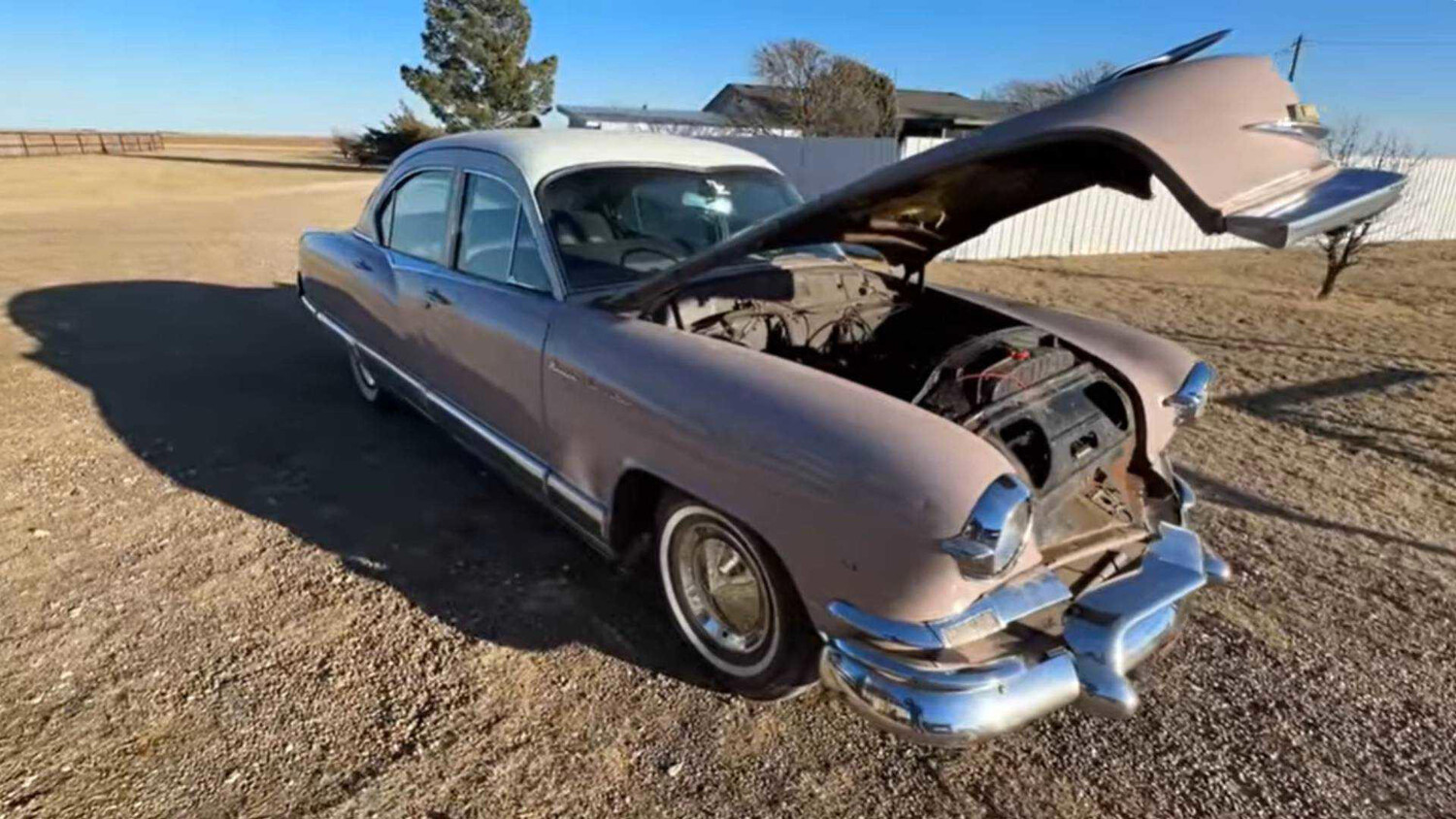
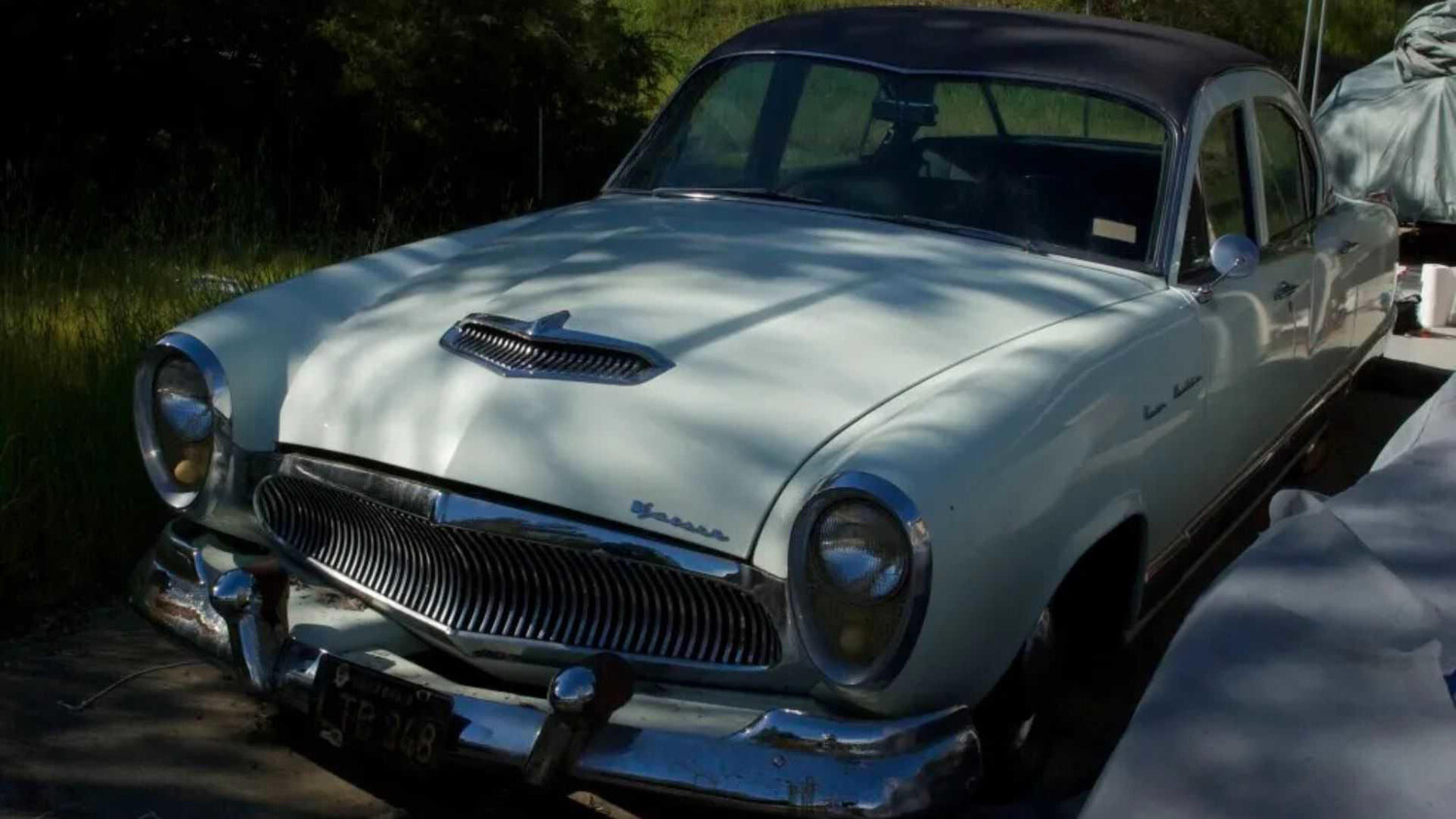
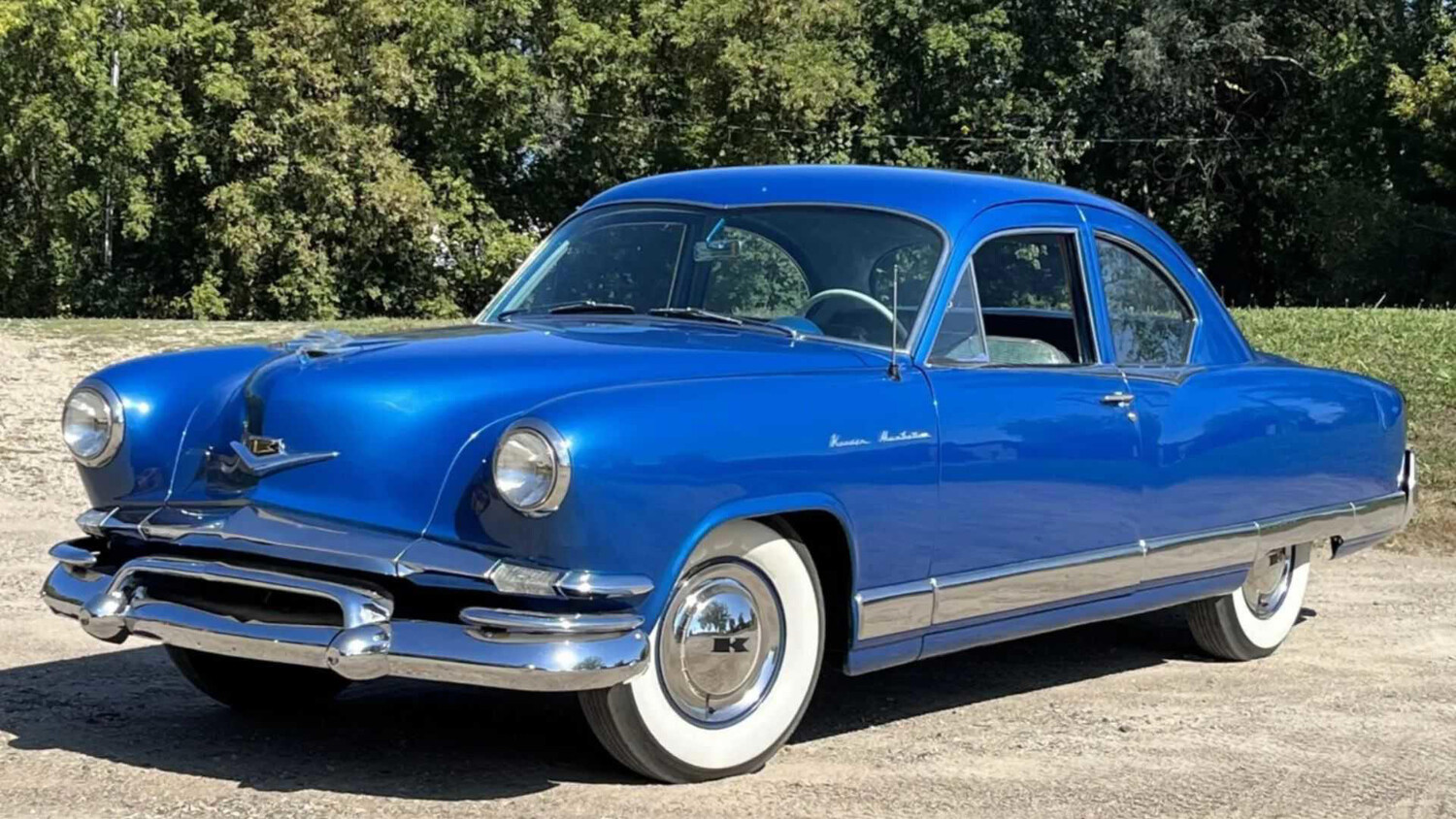
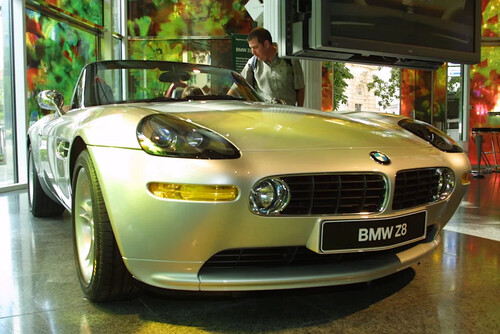
The first sound of the 1953 Kaiser Manhattan was not graceful after being silent for 57 years. It started with a dry, reluctant cough from an engine bay that had been parked since 1969. As dust shook loose, and the belts complained, metal that had been baking for almost six decades under the New Mexico sun began to move again. After some work, it finally settled into an idle. This was a ghost car from a ghost company, and not just another forgotten classic dragged from a field.Kaiser-Frazer had been a company that, in 1945, had tried what modern disruptors like Tesla, Lucid, and Rivian eventually attempted and succeeded generations later. Employ the sheer force of vision to break into the American auto industry. The Manhattan’s resurrection is a eulogy to one of automotive history’s boldest industrial gambles, and more than a barn find restoration story, a warning to every startup that thought Detroit and Dearborn’s grip could be broken easily. Kaiser-Frazer had learned this brutal lesson long before modern EV startup failures became routine headlines. Sleeping Since Nixon — How a 57-Year-Old Kaiser Manhattan Came Back From the Dead Walsh Fleet Services LLC The 1953 Kaiser Manhattan had spent more than half a century somewhere in the desert, becoming part of the landscape. With its paint fading under the harsh impact of the sun, its rubber drying and cracking, and dust sitting comfortably under every seam, switch, and fold of the upholstery, this legend had sat still through all of modern history. It sat through the oil crises, the rise of Japan, the moon landings, the fall of Detroit, the birth of the internet, and even the electric car revolution, from 1969, when Richard Nixon had just entered the White House.When Dan, the founder and main technician of Walsh Fleet Services LLC, a vehicle restoration YouTube channel, decided to give this four-door sedan another chance, he knew that reviving a long-dormant car is rarely cinematic. After paying scrap price for the relatively well-maintained relic, Dan planned to restore the car. Even with 89,918 miles on the odometer, the engine would still be expected to be seized, cooling passages clogged, wiring corroded, and the fuel system gummed up. Before the Kaiser would run, its mechanical systems would need a lot more patience than parts. Despite all of that, the stuttering 73-year-old engine spurted to life.From the beginning, the Kaiser Manhattan had the original Supersonic Six, a 226.2-cubic-inch straight-six engine under its hood, producing 118 horsepower at 3,650 rpm and 200 pound-feet of torque when new. By today’s standards, that’s barely modest, but by 1953 standards, it was quite respectable, and more importantly, it was durable. By the time they had gotten it to finally fire, the emotional payoff eclipsed the numbers. The next question was what exactly this car was, and why it felt so significant, even more than its forgotten badge suggests. The Man Who Thought He Could Out-Detroit Detroit — Henry Kaiser’s Impossible Bet Kaiser Before AMC made the Big Three sweat in the 1960s, Kaiser had tried something similar decades earlier with the Manhattan. But first, to understand this car, you’d have to understand the man, Henry J. Kaiser.Born outside the auto industry, Kaiser was a builder of dams, shipyards, and wartime production. He became synonymous with industrial speed and scale during World War II. When he looked at postwar America, he saw opportunity everywhere, including automobiles. Shortly before Japan formally surrendered in 1945, Kaiser partnered with Joseph W. Frazer to form Kaiser-Frazer, pairing wartime production genius with an experienced car executive. The plan was to introduce designs such as lightweight construction, front-wheel-drive concepts, and styling that left behind the conservatism of the prewar auto industry. They moved into Willow Run, Ford’s former bomber plant.From May 1946 to September 1955, this plan worked as Kaiser produced almost 760,000 vehicles. Including the Kaiser Special, a 3.5-liter naturally aspirated inline-six engine, producing 105 horsepower, the Kaiser Deluxe, a 3.7-liter naturally aspirated inline-six engine, producing 115 horsepower, and the Kaiser Manhattan, the top-of-the-line luxury offering, using the Kaiser Deluxe’s engine, but producing 118 horsepower. Yet, this output was significantly less than what the Big Three automakers, made up of General Motors, Ford Motor Company, and Chrysler Corporation, produced annually.The problem was that innovation alone would never overcome scale, as they’d need factories, supplier leverage, dealer networks, and financing as much as ideas. Over the years, Kaiser proved he had imagination in abundance, but his balance sheet just couldn’t keep pace long enough for his imagination to win. This tension eventually began to show up in the cars themselves. Dutch Darrin’s Rolling Manifesto: The Design Secrets Hidden Inside a 1953 Kaiser Kaiser While Henry Kaiser supplied the ambition, Howard 'Dutch' Darrin, a legendary American coach builder and automotive designer, supplied the visual argument. Darrin redesigned Kaiser’s line between 1951 and 1953, which gave the Manhattan a more sophisticated look, making its proportions cleaner, a lower stance than many contemporaries, and reducing its ornamental heaviness compared to Detroit competitors. Some of the details included the rear side window treatment, which BMW eventually made famous. Later enthusiasts recognized it as a Hofmeister kink. He gave the windshield a subtle widow’s peak center contour and the greenhouse area an astonishing 3,541 square inches of glass, which flooded the cabin with light and visibility at a time when many rivals felt more bunker-like.By 1954, Kaiser added a McCulloch supercharger to the Manhattan's Supersonic Six 226.2 cubic inch L-head engine, boosting its peak output to 140 horsepower, creating one of America’s earliest supercharged production passenger cars. This was Kaiser’s ingenious, desperate answer to the V8 surge coming from other parts of Detroit. Although it was clever, it came late with established luxury and "near-luxury" sedans like the Oldsmobile Super 88 producing more power at a similar price point. Darrin also produced the 1954 Kaiser Darrin, a 2.6-liter straight six engine, producing 90 horsepower and a top speed of roughly 93 mph, and could do 0–60 mph in 16.3 seconds. The Brutal Economics of Breaking Into Detroit Kaiser The downfall of Kaiser-Frazer was more structural than product-related. The far more established Big Three automakers controlled the vast majority of advertising reach, supplier pricing, financing relationships, dealer networks, and consumer trust. So, how much better Kaiser’s sedan was didn’t matter. Buyers were still faced with the question: where do I finance it, service it, trade it, and can you trust it ten years from now? This is the problem the average new automaker faces. In addition, Kaiser faced a capital dilemma, where it had to price competitively while spending heavily on the future’s tooling, a problem that destroys challengers in every era. While established giants can subsidize these transitions, new entrants often cannot.There are a lot of parallels to modern EV startup failures. One major example is Fisker Inc., which entered bankruptcy, and Lordstown Motors, which collapsed. Numerous well-funded entrants have discovered that it’s far easier to design a vehicle than it is to mass-produce one profitably. Even Tesla, Inc., which is the great modern exception, had to fight through years of near-death financial pressure before finally reaching scale. This was the lesson Kaiser-Frazer was forced to learn eventually. The American auto industry has antibodies like the human body’s immune system against newcomers. While innovation is necessary, it’s rarely sufficient. In the end, Kaiser ceased U.S. passenger car production in 1955, with the Manhattan being one of its final statements. Why the Kaiser Manhattan Deserves to Be Remembered Kaiser Reviving the New Mexico Kaiser did more for history than saving an old sedan. It preserved evidence that the automotive future does not have to be controlled exclusively by the largest players, and that independent companies can challenge giants with engineering, design, and nerve. It provides us with proof that being early can originally look identical to being wrong until history catches up.The 1953 Kaiser Manhattan suffers the fate of being much too ambitious, too underfunded, and an entry too exposed to forces bigger than merit. After 57 years of silence, it feels symbolic, and while history tends to routinely bury the losers first, some of those losers could’ve been right about where the world was heading. Every time a new startup tries to reinvent transportation like Tesla, Rivian, Fisker, and Lucid, then vanishes a few years later, the ghost of companies like Kaiser-Frazer re-enters the room.