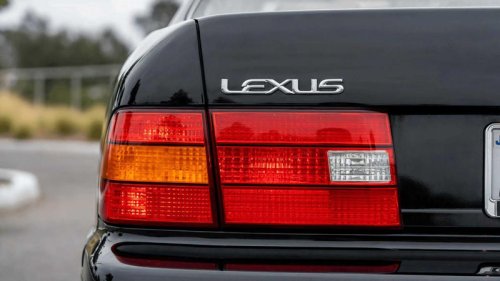
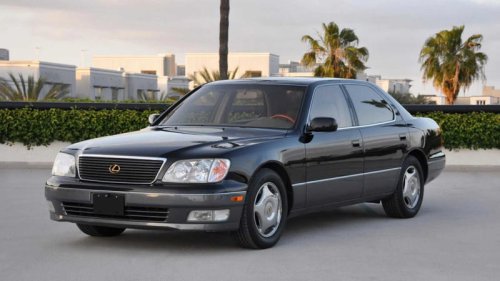
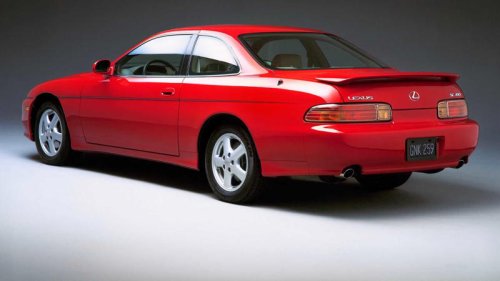
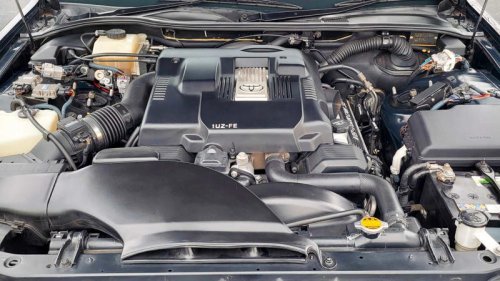



















In the late 1980s, the luxury car world had a clear hierarchy. If you wanted a V8, you bought German or you bought American, and that was about the size of it. The engineers and accountants at established marques were comfortable with that arrangement. Then a Japanese manufacturer decided to build a V8 from a blank sheet of paper, with an unlimited development budget, a mandate to beat the best in the world, and no interest in compromise. What came out of that project was an engine so far over-engineered for its intended application that it outlasted cars, trends, and generations of ownership. It also quietly became one of the most swapped, tuned, and sought-after V8s in the JDM enthusiast world, without most people outside that circle ever learning its name. A V8 Built Without Compromise Bring A TrailerToyota spent more than five years and well over $1 billion developing the car that would launch its new Lexus luxury brand in the US market. The brief was specific: beat Mercedes-Benz and BMW at their own game in every measurable area on the first attempt. That kind of pressure produces two outcomes: a competent but cautious result, or something genuinely extraordinary. The engineers chose the latter.The engine program alone was a statement of intent. Rather than adapt an existing block, Toyota's team engineered an all-new V8 from the ground up, using an all-aluminum construction at a time when that was still an advanced choice. Every internal component was specced for longevity rather than minimum cost. The bore-to-stroke ratio was kept deliberately over-square, which meant the engine could breathe freely at higher revs and generate less heat per cycle, both of which feed directly into long-term durability. The tune was conservative, leaving significant headroom above the quoted power figures. That headroom is exactly what the tuning community would later exploit.When the car debuted at the 1989 North American International Auto Show, the response from the European establishment ranged from skepticism to outright alarm. The price undercut comparable German sedans by tens of thousands of dollars while matching or exceeding them in build quality, refinement, and reliability metrics. The engine at its heart was a large part of the reason why. The 1UZ-FE: What It Is, Where It Lived, and What It Costs Bring A TrailerThe engine is the 1UZ-FE, Toyota's 4.0-liter DOHC 32-valve all-alloy V8, produced from 1989 to 2002. Its primary home was the Lexus LS 400, which used it from the first generation, XF10, through to the end of the XF20 run in 2000. The SC 400 coupe carried it from 1992 through 2000. In Japan, it appeared in the Toyota Crown Majesta and the Z30 Toyota Soarer, the domestic equivalent of the SC 400, across a similar period. If you want to own one in the US, the LS 400 is far and away the most accessible entry point.The market for first-gen XF10 cars (1990 to 1994) has sharpened over the past two years. Market data puts the XF10 benchmark at around $12,600, with exceptional low-mileage examples now clearing $30,000 at auction. The second-gen XF20 (1995 to 2000) commands slightly more across the board thanks to the VVT-i engine update, improved refinement, and sharper styling. The XF20 benchmark sits at around $12,900, though the gap between good and excellent condition cars is widening fast.For buyers who want the best of what the 1UZ has to offer in LS 400 form, the 1998 to 2000 XF20 models are the sweet spot. They carry the most developed version of the engine, the longest list of standard features, and they remain the easiest to source in genuinely good condition. A well-documented example with service history in the $10,000 to $15,000 range represents real value for a car that established Lexus as a credible rival to the best European luxury sedans on its very first attempt. How the Numbers Changed Over 13 Years LexusThe 1UZ-FE went through three meaningful phases during its production life, and the gap between first and last is larger than the numbers alone suggest. The original 250 hp tune put the 1990 LS 400 at around 8.1 seconds to 60 mph, which was not quick by sports car standards but was entirely competitive for a near-two-ton luxury sedan in its class. The 1995 update brought lighter connecting rods, higher compression, and a small power bump to 260 hp, tightening the sprint to 60 to around 7.3 seconds. That alone put it closer to the BMW 740i of the period than most buyers realized at the time.The VVT-i update in 1998 was the real step change. Variable intake valve timing unlocked 290 hp and 300 lb-ft of torque, dropping the sprint to 60 to around 6.2 seconds. That figure matched or undercut the contemporary Mercedes-Benz S420, which cost significantly more and carried a reputation for expensive running costs that the Lexus never earned. The LS 400 had started a war it was consistently winning, and the engine driving it kept getting better.What makes the performance story more impressive is context. These are naturally aspirated figures from an engine tuned for luxury refinement, not outright output. The 1UZ was producing those numbers while running whisper-quiet and returning reasonable fuel economy. That balance of smoothness, response, and durability in a single package was genuinely unusual for the era. Why The 1UZ Simply Would Not Die via Mecum The 1UZ-FE's reputation for longevity is not folklore. It has a structural explanation. The all-aluminum block uses pressed-in cast-iron liners rather than bare aluminum bores, which gives the cylinder walls far greater wear resistance over high-mileage use. The crankshaft is forged steel rather than cast, and the bottom end is supported by five main bearings across an over-square 87.5 mm bore, a configuration that reduces stress per cycle and keeps heat generation low. Toyota set the compression ratio at a conservative 10.0:1 on early cars, leaving the internals well within their operating envelope at all times.Beyond the belt, the engine's known wear points are minor. Valve cover gaskets seep with age, power steering lines can weep on high-mileage cars, and the ECU can develop faults after 25 or more years. None of those are terminal, and all are well-documented with affordable aftermarket solutions. Annual maintenance costs on a well-kept LS 400 run in the $800 to $900 range under normal circumstances, which is remarkable for a car of this age and mechanical complexity. The Tuning Angle Nobody Talks About The 1UZ-FE's standing in the JDM enthusiast community has always existed in the shadow of the 2JZ-GTE, and that comparison is worth unpacking. The 2JZ carries enormous cultural weight off the back of the Supra's motorsport and Fast and Furious profile. Prices for good 2JZ donor cars have climbed sharply as a result. The 1UZ offers a different proposition: a quad-cam V8 with a documented capacity for extreme power on stock internals, at a fraction of the swap cost.On a supercharger setup using an Eaton M90 blower, which is a common bolt-on for the 1UZ, the engine produces around 330 hp at conservative boost levels on the stock bottom end. Add headers and a proper tune, and that number climbs higher without touching the internals. For turbo builds, the early non-VVT-i 1UZ has been demonstrated at over 500 wheel horsepower on the factory block. SC400 builds hitting 800 hp without any bottom-end work have been well documented, a figure that speaks to the sheer structural overkill baked into this engine from the factory.The compact dimensions of the 1UZ have made it a popular candidate for engine swaps into smaller platforms. Nissan 240SX builds, AE86 conversions, and BMW E36 transplants all exist in meaningful numbers, and parts availability is excellent given how many donor cars are still on the road. The 1UZ does not have the 2JZ's name recognition, but among builders who have run both, the argument for the V8 is a short one. More cylinders, similar or greater structural strength, a broader torque spread, and a supply chain that remains healthy.That the engine is still attracting new converts more than 35 years after its introduction is the clearest measure of what Toyota's engineers actually built. It did not wear out because it was never designed to.Sources: Classic.com, Bring a Trailer, Hagerty, Lexus Owners Club, Drifted, Hughes Race Built.