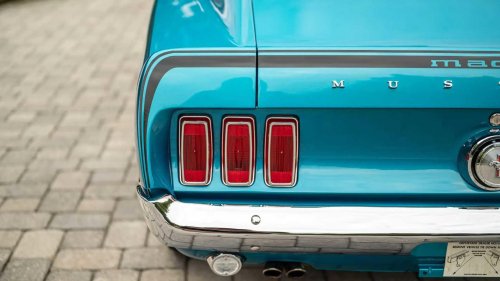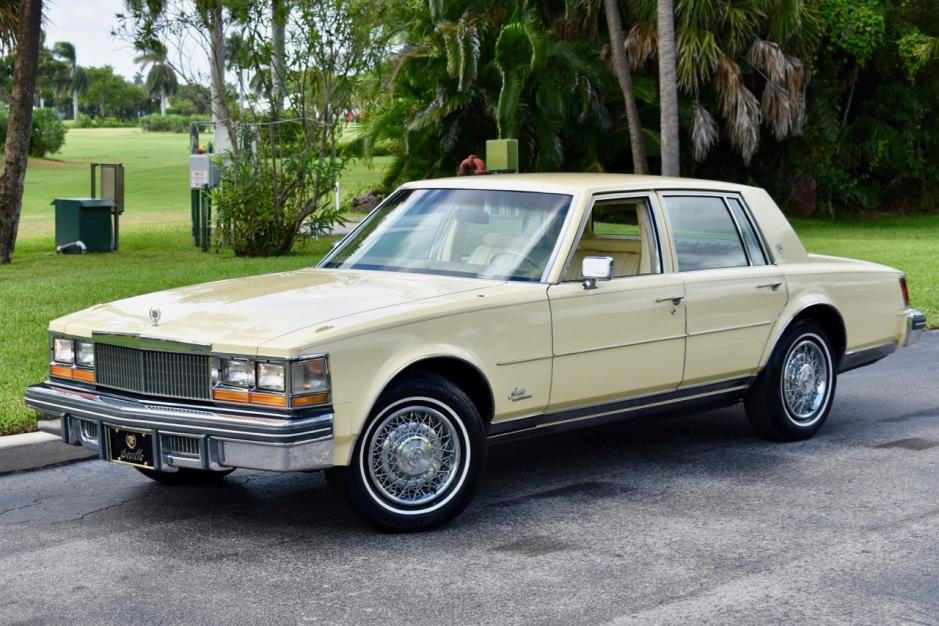



















Why the Cars Detroit Built in 1977 Tell the Whole Story of What Went Wrong Key Takeaways Detroit's strong 1977 sales numbers masked a structural collapse in quality, engineering ambition, and long-term competitiveness that was already well underway. The federally mandated downsizing program produced cars that were physically smaller but no lighter, no faster, and no more efficient than the imports they were meant to challenge. The Cadillac Seville — sold as Detroit's answer to Mercedes-Benz — was built on a modified Chevrolet Nova platform, a shortcut that defined the era's badge-engineering culture. Japanese automakers were already optimizing for fit, finish, and fuel economy while Detroit's labor agreements and management culture made that kind of flexibility nearly impossible to match. Most people think Detroit's decline happened in the 1980s, when the plant closures and layoff headlines were impossible to miss. But the real turning point came earlier and quieter. In 1977, American automakers were still posting respectable sales figures, the showrooms were open, and the parking lots were full. What you couldn't see from the outside was how much ground had already been lost — in engineering ambition, in manufacturing discipline, and in the basic willingness to rethink assumptions. The cars Detroit built that year weren't just products. They were a diagnosis. And once you know what to look for, every design choice, every shortcut, every missed opportunity tells the same story. The Year Detroit's Confidence Finally Cracked The sales charts looked fine, but something was already broken. On paper, 1977 was a decent year for American automakers. General Motors moved more than five million vehicles, and the industry as a whole was recovering from the shock of the 1973 oil embargo. Plant workers were busy, dealers were optimistic, and the Big Three's executives had reason to believe the worst was behind them. What the numbers didn't show was the tide running in the other direction. Toyota Corolla imports were climbing steadily, and buyers who had once dismissed Japanese cars as cheap novelties were starting to come back for second and third purchases. That kind of repeat loyalty was something Detroit's market researchers hadn't fully modeled. The deeper problem wasn't competition — it was complacency. Detroit's leadership had spent the post-war decades in a seller's market, where styling cycles and horsepower bragging rights drove purchases. When the rules changed after 1973, the response was to adjust the surface without questioning the foundation. By 1977, that approach was already running out of runway, even if the quarterly reports hadn't caught up yet. Big Cars, Small Ideas: The Downsizing Disaster Chopping inches off a car isn't the same as rethinking how to build one. After the 1973 oil crisis, Washington pushed hard for smaller, more efficient American cars. Detroit obliged — sort of. The 1977 Chevrolet Caprice was physically shorter and narrower than its predecessors, part of a broad downsizing wave that touched nearly every domestic model line. Cadillac's full-size cars lost between 8 and 12 inches in length and roughly 3.5 inches in width across the lineup. But here's what the press releases left out: the underlying architecture barely changed. The same heavy frames, the same large-displacement V8 engines, the same suspension geometry that prioritized a soft, floaty ride over handling precision. Interior dimensions were preserved — which was genuinely clever packaging work — but the weight savings were modest and the fuel economy improvements were marginal compared to what Honda and Toyota were achieving with purpose-built small-car platforms. The difference between downsizing and re-engineering is the difference between putting a smaller suit on the same person and actually getting fit. Detroit chose the suit. The result was a generation of cars that felt compromised in both directions — not as spacious as the full-size boats they replaced, and not as efficient or agile as the imports they were supposed to neutralize. Buyers noticed, even if they couldn't always articulate why. How the 1977 Cadillac Seville Fooled Everyone A $14,000 luxury car hiding a Chevy Nova underneath the chrome. The Cadillac Seville was supposed to prove that Detroit could build a genuine European-style luxury sedan. It arrived for the 1976 model year, priced well above anything else in the Cadillac lineup, and it sold well enough that by 1977 it had become a genuine status symbol in country club parking lots from Connecticut to California. What buyers were less likely to know was that the Seville rode on a heavily modified version of the Chevrolet Nova's X-body platform — the same basic architecture found under a car that retailed for a fraction of the Seville's price. Automotive journalists acknowledged that "the original Cadillac Seville was the right car at the right time, and GM had a hit. A profitable hit." That's accurate — but profitable and innovative aren't the same thing. The Seville's success actually made the underlying problem worse. It confirmed for GM's management that badge-engineering could satisfy luxury buyers without requiring genuine platform investment. That lesson echoed through the next decade in cars like the Cadillac Cimarron — a barely disguised Chevrolet Cavalier sold at a Cadillac price — and it eroded the brand's credibility in ways that took thirty years to begin repairing. “The original Cadillac Seville was the right car at the right time, and GM had a hit. A profitable hit.” The UAW Contract That Tied Detroit's Hands Rigid job rules made flexible manufacturing almost impossible to attempt. The engineering decisions get most of the attention in hindsight, but the factory floor told an equally important part of the story. The labor agreements negotiated through the mid-1970s locked American automakers into work rules that would have seemed reasonable in 1955 but were increasingly difficult to sustain against Japanese competition. The 1976 UAW contract, in particular, established rigid job classification systems that assigned specific workers to specific tasks with little flexibility to shift responsibilities as production needs changed. A worker on one line couldn't easily be reassigned to another without triggering grievance procedures. That kind of structure made sense when plants were running at full capacity on a single model — it protected workers from arbitrary reassignment. But it also made the kind of cross-trained, multi-role workforce that Honda was building in Japan essentially impossible to replicate in Michigan. Honda's Japanese plants in the mid-1970s were already using production teams where workers rotated through multiple stations, caught quality problems earlier, and adapted faster when a model changed. The per-unit cost difference wasn't just about wages — it was about how many people it took to build a car and how many defects made it off the line. Detroit's management and the UAW were both defending positions that made sense historically but were quietly becoming millstones. What Japanese Engineers Saw That Detroit Ignored The Honda Accord's door gaps were tighter than cars costing three times as much. The 1977 Honda Accord was in its first full American sales year, and it was doing something that seemed almost impossible at its price point: fitting together well. Panel gaps were consistent. Doors closed with a solid, even thud. Interior materials didn't rattle at highway speeds. These weren't luxury features — they were manufacturing discipline, applied to an economy car. Detroit's engineers weren't unaware of fit-and-finish problems. They knew the gaps existed. But the production system prioritized throughput over precision, and the assumption was that American buyers would accept a certain amount of looseness in exchange for size, comfort, and familiarity. That assumption had been correct for twenty years. By 1977, it was starting to expire. Japanese automakers were also thinking differently about the product lifecycle. While Detroit's planned obsolescence model encouraged buyers to trade up every two or three years, Honda was engineering for 100,000-mile durability — a number that seemed almost absurd to American mechanics at the time. The result was that Accord owners in 1977 were discovering something unexpected: the car still felt tight and reliable at 60,000 miles. Word spread. And once a buyer experienced that, the domestic alternative started looking like a step backward rather than a step up. The Showroom Floor Told the Real Story Standing in a 1977 dealership, the difference was impossible to miss. Walk into a Ford dealership in the spring of 1977 and you might still find a Pinto on the lot — a car already infamous for fuel tank safety concerns and known for rust that could appear before the first oil change was due. The interior plastics were brittle, the panel fits were uneven, and the ride on anything but smooth pavement felt provisional at best. Walk into a Honda dealership across the street and the contrast was immediate. The Accord felt assembled rather than bolted together. Consumer satisfaction data from the era reflected what buyers were already sensing — J.D. Power's early surveys, which began gaining traction in the late 1970s, consistently showed Japanese brands outperforming domestic ones on initial quality measures. The telling detail is that the price gap wasn't enormous. A well-equipped Accord wasn't dramatically cheaper than a comparable domestic compact — in some configurations it cost more. Buyers weren't choosing imports purely to save money. They were choosing them because the product was better, and they could feel it the moment they sat down and closed the door. That's a harder problem to solve than a price war, and Detroit wouldn't fully reckon with it for another decade. Why 1977 Still Echoes in Every Detroit Comeback Story The debt from those decisions took thirty years and two bankruptcies to settle. The 2009 bankruptcies of General Motors and Chrysler didn't come out of nowhere. They were the accumulated interest on decisions made — and avoided — across decades, with 1977 sitting near the center of that timeline. The engineering shortcuts, the labor rigidity, the badge-engineering culture, the misread of what buyers actually wanted — none of it was fatal in any single year. But it compounded. What's worth remembering is that Detroit did eventually learn. The lesson just took longer and cost more than it needed to. Ford's decision to build the 2015 F-150 with an aluminum body was exactly the kind of bold, expensive, first-principles engineering rethink that 1977 needed and didn't get. It required betting billions on an unproven material choice for America's best-selling vehicle — the kind of risk that the management culture of the late 1970s was specifically structured to avoid. Automotive journalists noted that the Cadillac performance identity — the idea of genuine engineering ambition under the badge — is something the brand has spent years trying to reclaim. The V-series cars that Cadillac builds today represent that reclamation. But it's worth understanding what was surrendered in 1977 to appreciate how far the road back actually ran. Practical Strategies Look Past the Sales NumbersStrong annual sales figures can mask structural problems for years before they surface in headlines. When evaluating any manufacturer's health — or any industry's — dig into repeat purchase rates and customer satisfaction trends, not just units moved. Detroit's 1977 volume looked reassuring right up until it didn't.: Badge Engineering Is a Red FlagWhen a premium product shares its fundamental platform with a budget product, the price difference is buying marketing, not engineering. The Cadillac Seville's Nova underpinnings are a textbook example. If you're shopping a vintage luxury car from this era, research the platform before the badge — it tells you what you're actually getting.: Feel the Door Before You BuyFor anyone considering a late-1970s American classic, the door-close test is still one of the most honest quality checks available. A solid, rattle-free close with consistent panel gaps indicates a car that was well-assembled or has been carefully restored. Looseness and flex point to either factory shortcuts or deferred maintenance — both worth pricing into any offer.: Understand the Labor ContextWhen researching why a particular model from this era had quality problems, the answer often lives in the production system, not just the design studio. Rigid job classifications and assembly line structures affected which defects got caught and which ones shipped. Factory tour records and model-specific owner forums can surface that history faster than any review from the period.: Track the Comeback MomentsDetroit's genuine engineering breakthroughs — the aluminum F-150 body, the LT1 engine program, Cadillac's CT6 platform — are worth knowing because they mark where the industry actually changed direction rather than just changed marketing. Collectors who can identify those inflection points tend to find the most interesting vehicles before the broader market catches on.: Nineteen seventy-seven is one of those years that rewards a second look. The surface story — decent sales, new model introductions, a recovering industry — sounds almost optimistic. The deeper story is about what happens when an industry mistakes momentum for health and confuses activity with progress. The cars Detroit built that year weren't failures by the standards of the moment, but they were built on assumptions that were already expiring. Understanding that gap between appearance and reality is what separates a casual observer of automotive history from someone who actually understands why the industry went where it did. The next time you see a 1977 Caprice or a Seville at a car show, take a closer look — you're looking at a turning point wearing a very convincing disguise.