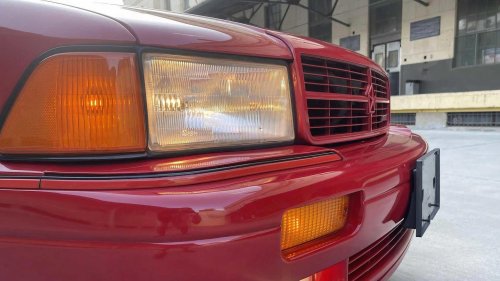
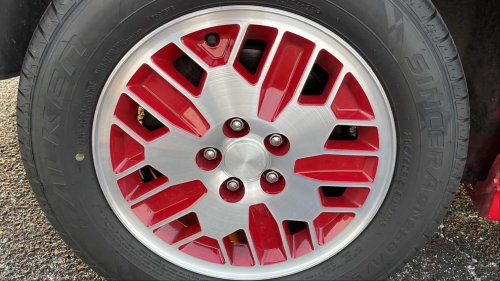
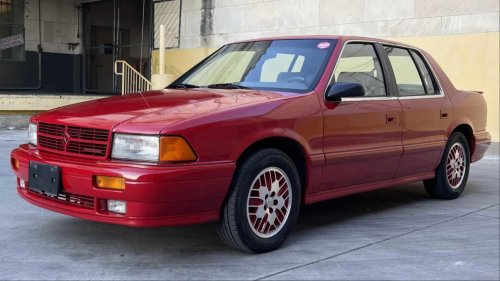
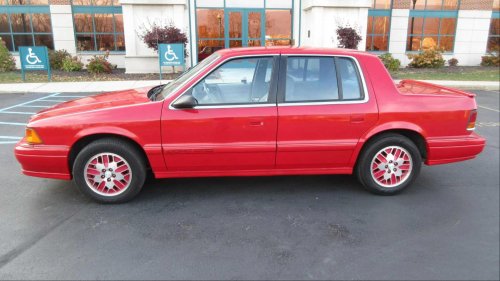
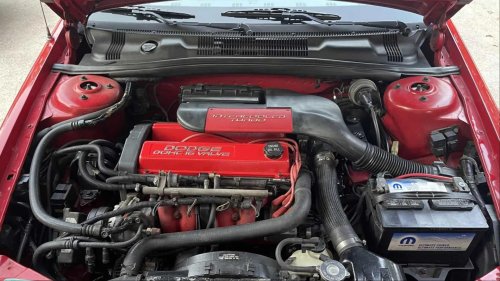
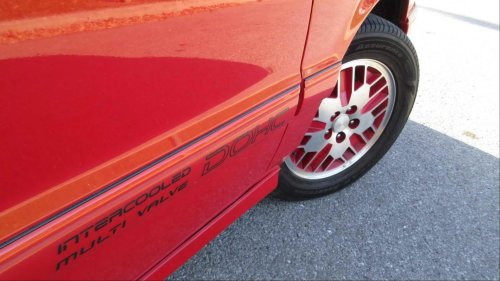
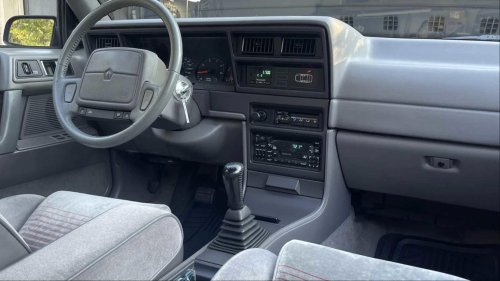
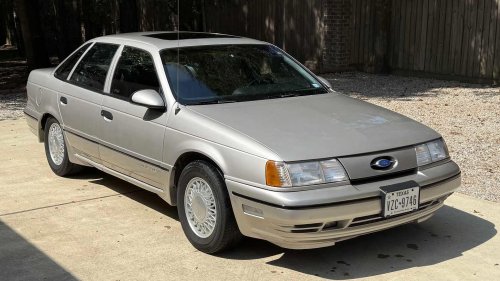
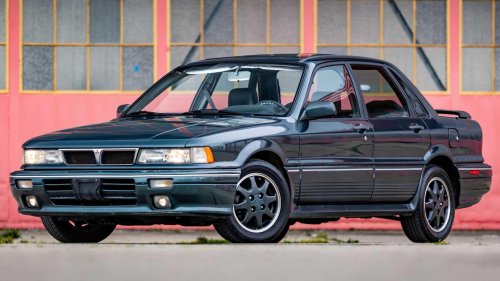



















Detroit loves the big performance names, and it’s been like that for decades. But the fun stuff sometimes hides in the back row of history, stuck behind flashier heroes and better-looking sheetmetal. In the early 1990s, one plain four-door slipped into the showroom with a numbers sheet that felt like an error. It even carried the “America's fastest sedan” brag for a hot minute, then disappeared before most drivers could spell it.That mystery car is interesting for at least one simple reason – it proves Detroit could still pull a fast one when it wanted. Engineers mixed boost, a stick shift, and just enough chassis tuning to make commuters do double-takes at stoplights. But how that family sedan turned into a factory sleeper and why the public shrugged? All the answers are below. Dodge Did The Perfect Crime In The Early 1990s BaT At the beginning of the 1990s, Dodge pulled off the kind of trick enthusiasts love – it sold a four-door that could hunt real performance cars, then dressed it like a weekday appliance. No flares, no big hood scoop, just a clean, boxy sedan with small tells if you knew where to look. That was the point — the car didn’t need to look fast to be fast. It only needed to roll up quietly, spool up, and leave somebody staring at a plain trunk lid.The recipe stayed simple and very intentional. Dodge paired a boosted four-cylinder with a manual gearbox and tuned the supporting parts so the car could actually use the power. Most buyers never noticed, because most buyers never shopped for a “serious” sedan at a Dodge dealer in 1991. That invisibility gave the car its whole personality.Bring a Trailer The funniest part is how close this thing came to mainstream fame without ever getting it. Magazine numbers put it at the top of the early-’90s sedan speed pile, but the badge on the trunk didn’t carry instant respect, and the shape didn’t stop traffic. Even the people who wanted quick four-doors tended to chase the obvious choices. Meanwhile, Dodge kept this one quiet and kept it short-lived.That short run is why it still feels like a rumor today. Dodge built only a small batch across two model years, and it insisted on a stick shift, which shrank the audience even more. So the car became a unicorn by default – quick enough to earn bold claims, subtle enough to slip past most eyes, and rare enough that many enthusiasts still haven’t seen one outside of a forum thread. The Spirit R/T's Numbers Still Sound Almost Fake Bring a TrailerLet’s start with the most important stats, because the numbers still land like a prank – 224 horsepower and 217 lb-ft from a 2.2-liter turbo four. Period tests clocked 0–60 mph in 5.8 seconds, ran the quarter-mile in 14.5 seconds at 97 mph, and recorded a 141-mph top speed. The base price sat at $17,820, and the test car still weighed a very un-scary 3,162 pounds. More than solid numbers for the early 1990s. Heck, those are good stats even in 2026.Those numbers hit harder with a little period context. A lot of people still romanticize early-'90s V8s, yet Ford rated the Mustang 5.0 at 225 horsepower around the same time. Dodge basically matched that output with half the cylinders and then stuffed it into a four-door that could carry four adults and their bad decisions.Even the supporting stats look legit, not flimsy. Car and Driver saw 0.80 g on the skidpad and a 207-foot stop from 70 mph, which means the car didn’t rely on straight-line drama alone. It also drank like a normal human, not a cartoon villain – the magazine noted 20 mpg in its testing. For a boosted oddball from 1991, that counts as civilized. Lotus Helped Dodge Create The Ultimate Sleeper Bring a Trailer The Spirit R/T’s party trick started with the Turbo III engine and a cylinder head tied to a name nobody expected on a Dodge family sedan. Lotus designed key pieces like the 16-valve DOHC head and intake manifold. That helped the American automaker achieve proper airflow and solid top-end power.That engineering choice explains the weird magic of the powerband. That engine was Chrysler’s first with four valves per cylinder, and it loved to pull once boost showed up. The unit also featured double overhead cams and a Garrett turbo with an intercooler. Simply put, Dodge built a serious engine and then hid it under the hood of a sedan most people never dreamed about. Then Dodge backed it with the right gearbox. The Spirit R/T used a heavy-duty A568 five-speed, and multiple references call out Getrag components in the mix. Faster Than A BMW M5 Bring a Trailer The funniest comparison happened in-house, on home turf, with other front-drive sports sedans of the moment. In Car and Driver’s 1991 performance-sedan matchup, the Spirit R/T ripped to 60 in 5.8 seconds, while the Ford Taurus SHO hit 60 in 6.8, and the Chevrolet Lumina Z34 needed 7.1. The humble Dodge also ran a 14.5-second quarter-mile while the Lumina posted a 15.5.The Spirit R/T also punched above its budget class in a way that makes enthusiasts smile. Period testing put the Spirit R/T quicker to 60 than a BMW M5 (6.3 seconds) and faster than the Taurus SHO in those same years, at a price that undercut the SHO by roughly five grand. We can't imagine a sleeper car beating an M5 in today's world, but in the 1990s, that was the reality. In one period testing, the Spirit R/T even beat – behold! – the Nissan 300ZX Turbo. Is It Difficult To Buy And Own One In 2026? Bring a Trailer Dodge sold 1,208 Spirit R/Ts in the U.S. for 1991 and 191 for 1992 according to production records, and each one used the A568 five-speed. Dodge kept the base price around $17,820, but option boxes could push an as-tested sticker past $20,000. The firm also offered ABS, and registry-style tallies suggest a meaningful chunk of cars got it. Low production plus a manual-only setup basically guaranteed rarity before the cars even hit their first set of tires.So why did Dodge build so few? The Spirit R/T mixed a specialty engine with a normal-car platform, and the buyer pool stayed small. Plenty of people liked speed, but plenty of people also liked automatic transmissions, softer suspensions, and a badge that didn't need explaining at gas stations. One could argue that Dodge built a superstar engine, but stuck it in a body the public couldn’t love. Sleeper Deal For A Sleeper Sedan Bring a Trailer In 2026, pricing still looks like a sleeper deal, just not a guaranteed steal. Bring a Trailer results show a 1991 selling for $8,091 in February 2025 and another for $7,140 in April 2025. Classic.com also tracks a 1991 that sold for $6,800 and another that hit $18,500 in late 2024. On the 1992 side, Mecum Kissimmee 2026 shows a sale at $8,800.Owning one rewards the patient and punishes the sloppy. The Turbo III uses R/T-specific parts that don't sit on every parts-store shelf, and the community has talked for years about timing-belt fussiness if a shop misses the setup details. Owners also share warnings about cylinder head problems, including reports that Chrysler issued a fix for cracking tied to plugs in the head's water jacket area. The car makes an owner feel special, right up until the owner needs a part that also feels special.The upside is that the internet finally made the car easier to live with than it looked in 2006. Niche vendors still machine or reproduce bits for the A568 and related transmissions. The best ownership advice in 2026 sounds boring, which means it works — buy the cleanest car possible, budget for a belt-and-cooling-system reset, and join the turbo Mopar community before anything breaks. The Spirit R/T can still serve as a usable classic, but it asks for a little respect, like any old car with a big ego and a small disguise. The 1990s Were Great For Sleeper Sedans Via Bring a Trailer The Spirit R/T didn't happen in a vacuum — the 1990s gave enthusiasts a whole mini-era of sedans that looked responsible and acted irresponsible. Automakers wanted speed with new engines, odd partnerships, and a lot of “let's see if this works” energy. Some of those cars got famous, but some stayed as trivia for the nerds, which, to be fair, describes the best trivia.Ford’s Taurus SHO might count as the most famous mainstream sleeper of the decade, even if it wore fog lights and cladding like it wanted credit. The SHO used a Yamaha-built V6 and built a reputation on balanced speed, comfort, and value. While it didn't hide as well as the Dodge, the Ford nailed the fast family car mission so hard that people still argue about it at cookouts.Cars & Bids Chevy went the opposite direction with the 1994–1996 Impala SS. That car looked like a government fleet car that ate its spinach and started bench-pressing. Period test credits the LT1 5.7 with 260 horsepower and 330 lb-ft, which gave the Impala SS real shove in a full-size package. It was the most brutal weapon in this secret category.Mitsubishi’s Galant VR-4 deserves a nod, too, because it pulled the rally trick – turbo power, all-wheel drive, and tech that seemed too fancy for a plain sedan. The road car was rated at up to 195 horsepower and had a 0–60 time of about 7.3 seconds. It didn't outgun the Spirit R/T in a straight line, but it delivered the same basic thrill and more enjoyable road behavior in corners.Source: Dodge, Car and Driver, Hemmings, Classic.com, Bring a Trailer