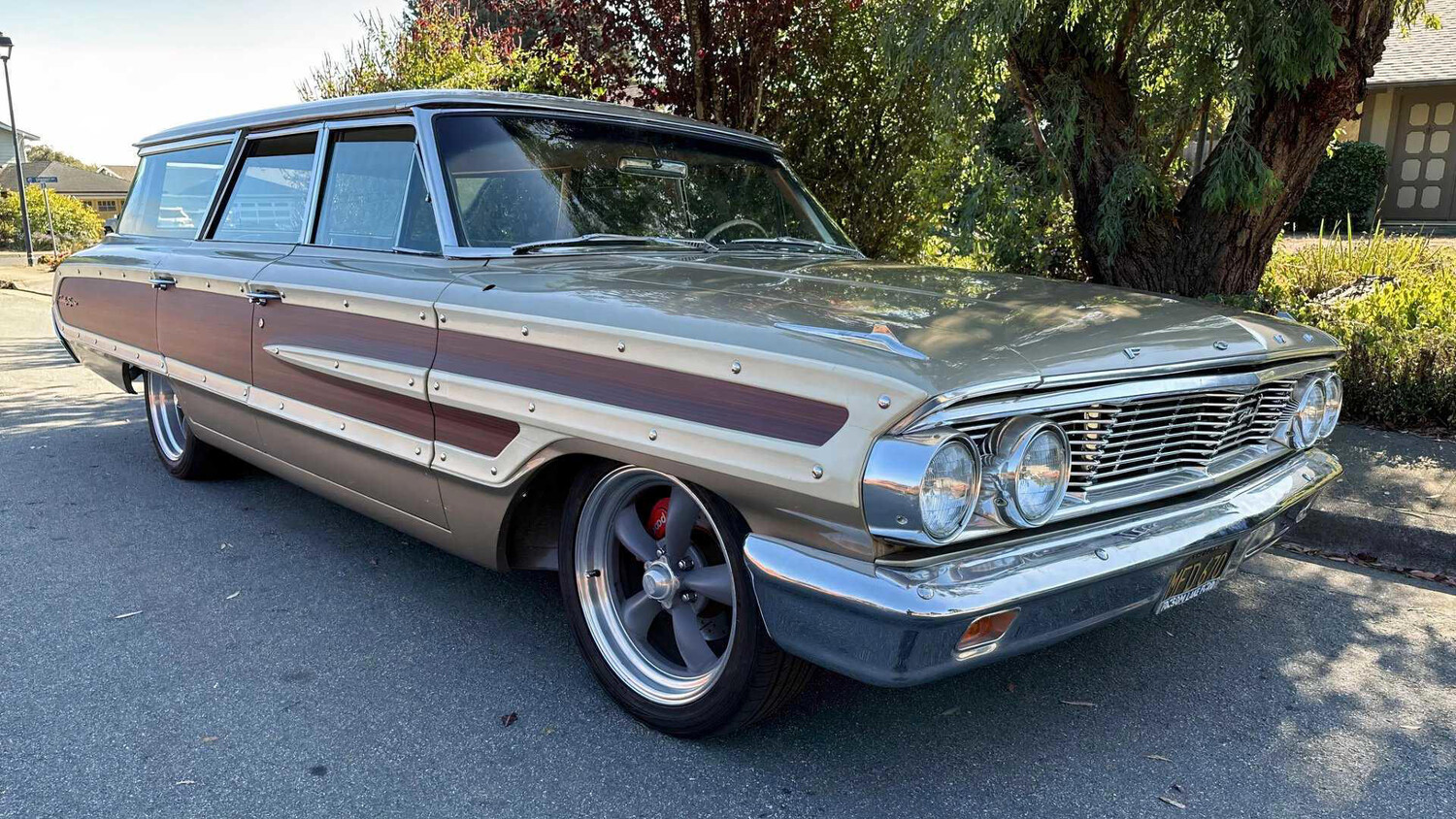
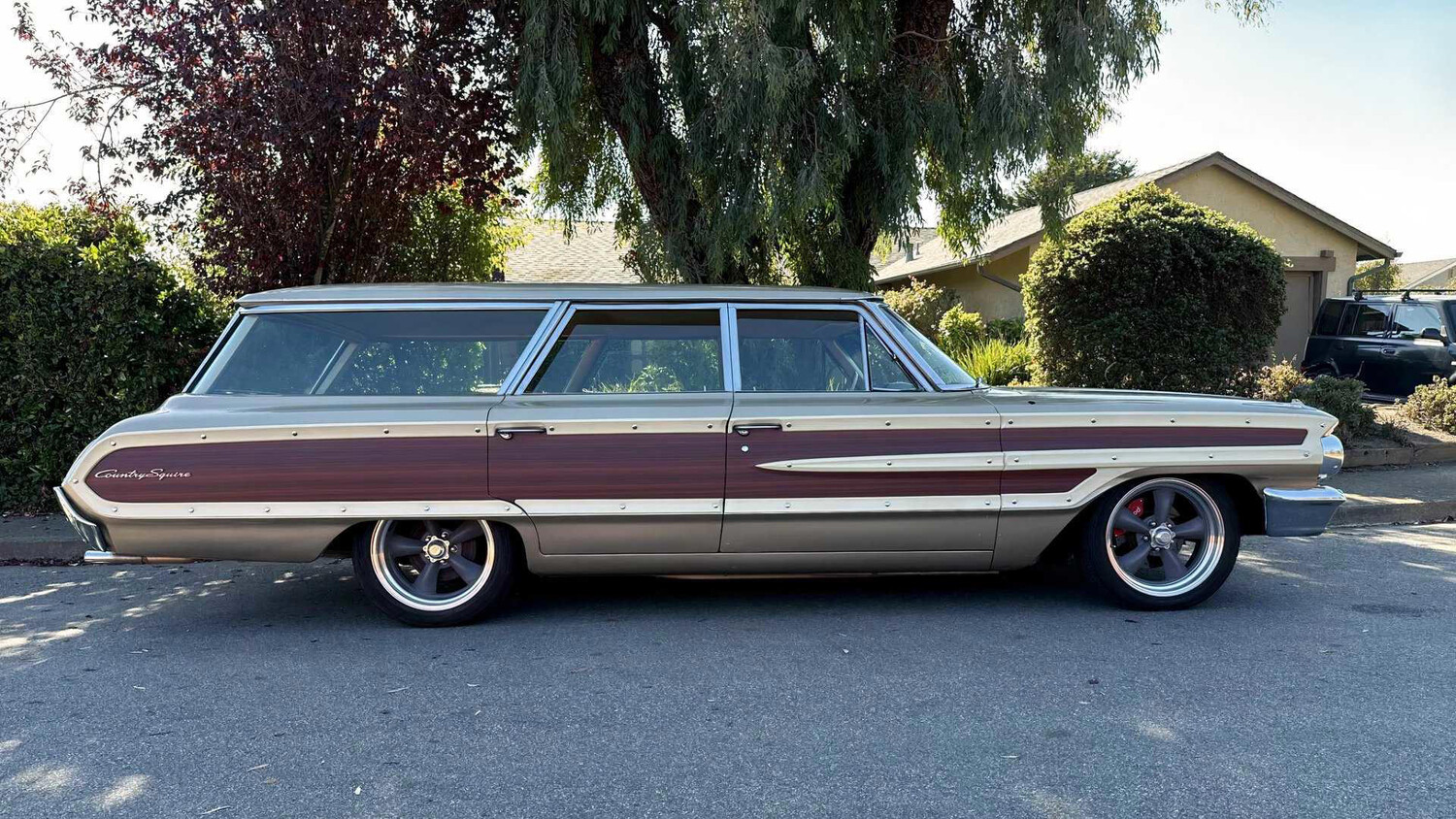
In the early 1960s and early 1970s, Detroit began to chase displacement like it never had before. With little emissions regulation and low gas prices, there was little hindrance in cramming massive V8s into anything on four wheels in the Land of the Free. While this era birthed the beloved muscle car, it also resulted in some lesser-known family haulers that packed serious power. There was no better time to load up the family for a road trip down Route 66 and stun every muscle car along the way. The only trade-off for mashing the skinny pedal was drowning out the latest hit from The Beach Boys. Buick Electra 455 (1970–1976) Estimated Value: $8,000-$13,000 1970 Buick Estate Wagon front three quartersIn contrast to mere Chevrolet jalopies, models from sister company Buick were noticeably more cush and refined. The C-Body platformed Buick Electra was an upscale highway cruiser with suave design, a model best suited for quiet highway miles. It boasted serious luxuries such as power seats, wood-grain dash trim, and velour leather seats. Comfort in the Electra was effortless, but Buick decided that acceleration should follow suit.1970 Buick Estate Wagon rearIn 1970, the Electra received a 455 cubic-inch V8 making 370 horsepower and an impressive 510 pound-feet of torque. While this engine was available across numerous GM models, the Electra was the sweet spot, boasting more comfort than its Chevrolet counterparts and fewer pounds than Cadillac cruisers. The Electra may have found more victories in the left lane than it did at the drag strip, but it still made for a fantastic horsepower hauler. Ford Country Squire 427 (1963–1964) Estimated Value: $7,000-$18,000 via Bring A TrailerA wood-paneled wagon certainly doesn't spell speed, but it did signal that your Ford family wagon wasn't your run-of-the-mill people mover. It meant you had a Country Squire, a name reserved for Ford's most premium estate car. With 19 feet of Detroit steel and room for up to 9 passengers, it was only a matter of time until Ford, too, entered the fray of ludicrous long-roofs.via Bring A Trailer Ford's 427 cubic-inch V8 was introduced to the Country Squire with a durable C6 automatic transmission to handle the extra grunt. With 425 horsepower and about 480 pound-feet of torque, the Country Squire was essentially a Torino in disguise. If you preferred a rarer flavor of fast wagon, the ritzier Mercury Colony Park was offered with the same powertrain configuration. Plymouth Fury Wagon 440 (1967–1969) Estimated Value: $10,000-$23,000 BatNameplates typically resemble the spirit of the vehicles they adorn, but the Plymouth Fury was an exception—at least on the surface. Most Fury's resided calmly in the ever-expanding suburban areas across the country, offering smooth and dependable family transportation. Thankfully, Plymouth gave the Fury a chance of living up to its bold name by hiding its rage under the hood.Bat Ridiculous titles seem like badges of honor when it comes to Mopar vehicles. The Plymouth Fury was a true example of that, as it was possible to order one with a 440 cubic-inch Super Commando V8 and a Sassy Grass green paint job. Yes, that's a real color. In this configuration, the Fury made 375 horsepower and could hit 60 miles per hour in about 7 seconds. Oldsmobile Vista Cruiser 455 (1970–1972) Estimated Value: $8,000-$20,000 Bring A TrailerThe Oldsmobile Vista Cruiser was considered a mid-size wagon in the early 70s, yet today such proportions would be considered extra-large. With a striking raised roofline and unique skylight panels, the Vista Cruiser had definitive style. Built on the A-body platform, this wagon shared its underpinnings with the capable Cutlass and 442 coupe, which made it the perfect recipient for more displacement.Bring A Trailer Oldsmobile Vista Cruiser 455 Specifications and Performance Oldsmobile fitted the Vista Cruiser with a huge 455 cubic-inch V8 making 365 horsepower and some serious twist, at about 500 pound-feet. With its sorted chassis and lively engine, the Vista Cruiser truly had muscle car character, yet a suburban appearance. The Oldsmobile's size and torque make it one of the quickest family-haulers on our list. Pontiac Catalina 421 (1962–1970) Estimated Value: $14,000-$23,000 Via Mecum AuctionsPontiac's Catalina was offered in a number of body styles, with the wagon as the most pragmatic choice. The B-body Catalina was slightly more athletic than other GM cars, with its wheels pushed outward as part of Pontiac's signature Wide-Track stance. Despite its wagon shape, the Catalina had sharper, more aggressive styling than competing wagons of the era. Maybe this one was a more obvious choice for the GM engineers when deciding which muscle wagon to bless with massive displacement.Via Mecum Auctions With a 421 cubic-inch engine making 390 horsepower, this V8-stuffed Pontiac Catalina family car was a serious performer. With an optional 4-speed manual, the Pontiac proved Chevrolet wasn't alone making hot-rodded wagons in the horsepower race at GM. The Catalina's appeal was that it wasn't as bare as similar Chevrolet models, yet didn't compromise performance in chasing comfort like Buicks. Dodge Coronet Wagon 440 (1966-1970) Estimated Value: $28,000–$40,000 via MecumWhile the Dodge Charger arrived on the scene as an icon in American muscle, the Coronet was a humble family car for suburban households. Available as a coupe, sedan, and wagon on the B-body platform, the Coronet was considered a mid-sized model, which represented affordability at the time. The wagon offered plentiful cargo space, a long roofline, and rear-facing seats, with no sporting aspirations to be found. Yet, horsepower was in demand, so Dodge decided to supply it.via Mecum Performance models from Dodge like the Super Bee and Charger were available with a gargantuan 440 cubic-inch V8 with equally aggressive sheet-metal to match such displacement. So when Dodge decided to shove the same 440 cubic-inch motor into the understated Coronet wagon, it made for an unlikely combination. The Coronet wagon didn't inherit the hood scoops and stripes of the closely related Coronet R/T coupe, so it was a true sleeper. With 375 horsepower and tractor-like torque, it was the perfect car to sneak to the drag strip after tucking the kids into bed. Chevrolet Biscayne 427 (1966-1969) Estimated Value: $20,000–$44,000 1966 Chevrolet Biscayne Wagon front three quartersWhile full-size cars were a usually statement of luxury in the 60s, the Chevrolet Biscayne was an exception. This was a bare-bones B-body sedan and wagon intended for fleet buyers and families on tighter budgets. With evident cost-cutting like minimal trim, bench seats, and not-quite-Impala styling, the Biscayne was nothing more than practical and dependable. That was, until it got a big-block V8.1966 Chevrolet Biscayne Wagon rear three quarters-1 While drag racing was wildly popular in the 60s, hot-rodders weren't shopping for extra chrome or bucket seats; they were looking for cheap speed. So, Chevy saw an opportunity with its stripped-down, comparatively lightweight Biscayne and offered it with a 427 cubic-inch V8 making a massive 425 naturally-aspirated horsepower. You could even get one with a 4-speed manual. At the drag strip, the 427 Biscayne could run low 13s in the quarter-mile. Unlike the Coronet, the Biscayne became widely-known for its sleeper speed.Sources: Hagerty, Bring a Trailer, Classic.com