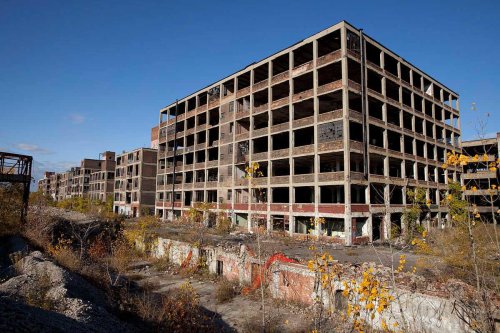
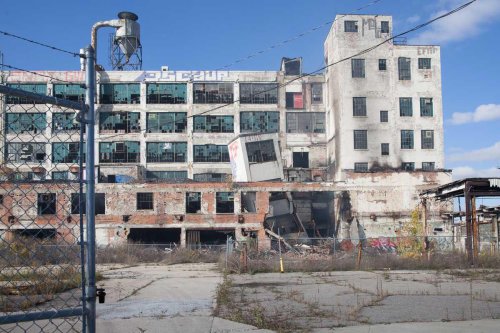
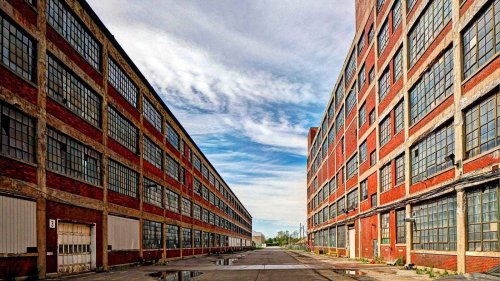
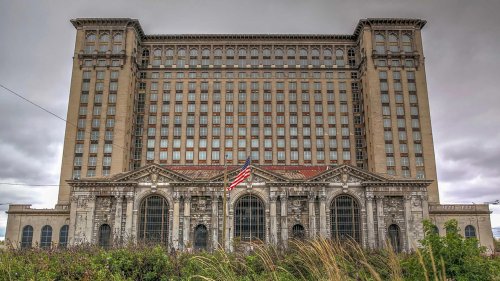
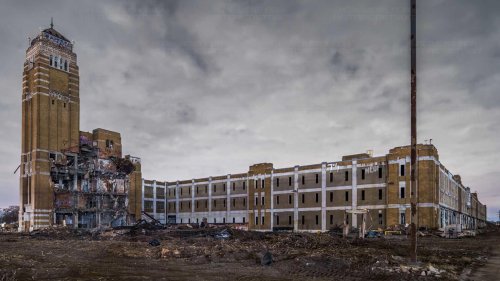



















Located in the state of Michigan, the city of Detroit was once the beating heart of the global auto industry. The American automobile industry rapidly expanded in the early 1900s, with Detroit as its epicenter. As millions of cars rolled out of its factories, the city rightfully earned the nickname “Motor City” and witnessed major industrial innovations. In December 1913, Henry Ford revolutionized mass production with the introduction of the moving assembly line, which helped accelerate industrial growth and transform the city into one of the most important manufacturing hubs in the world. Detroit’s industrial momentum continued through the First and Second World Wars as some plants also produced engines for fighter aircrafts.While Detroit cemented its place at the center of America’s automotive boom in the first half of the 20th century, the Motor City began to face mounting challenges. Economic shifts, racial tensions, and a declining population partly driven by suburbanization, contributed to the gradual decline of the city and the closure of many of its once-thriving manufacturing plants.In recent years, however, Detroit has begun to experience a turnaround, partly fueled by redevelopment efforts downtown. While some vast industrial complexes that once symbolized Detroit’s glory days still sit silent, the city is currently seeing a revitalization not witnessed in decades. From Packard Automotive Plant to the birthplace of Ford’s assembly line at Ford Piquette Avenue Plant, these once abandoned factories are currently undergoing renovation to transform these time capsules into modern, functional spaces that will quietly preserve the traces of the city’s automotive past. Before the new walls and fresh paint erase the history behind these abandoned factories, here are some of the secrets behind Detroit’s most iconic manufacturing plants. Packard Automotive Plant via Wikipedia Designed by industrial architect Albert Kahn, the Packard Automotive Plant once stood as one of the largest and most advanced automobile factories in the world. Instead of the traditional timber-and-brick structure, the new complex showcased the use of reinforced concrete, allowing for large open-floor designs. Filled with natural light, and providing strength and fire resistance, this innovative design became the industry standard for industrial sites.Since its opening in 1903, the plant served as the manufacturing heart of the Packard Motor Car Company, producing some of America’s most prestigious luxury automobiles. During World War II, the facility joined forces with Rolls-Royce to manufacture more than 55,000 Rolls-Royce Merlin engines, playing a crucial role in the war effort. The Merlin engines powered legendary fighter aircraft such as the North American P-51 Mustang and the Supermarine Spitfire.The Packard Motor Car Company’s collapse in the late 1950s led to the closure of the Packard Automotive Plant in 1956, leaving the location abandoned ever since. Deemed structurally unsafe after decades of neglect, the massive complex was partly demolished between 2022 and 2024. Today, only fragments of the once 3.5-million-square-foot factory remain. Collapsed floors, graffiti-covered walls and scattered industrial debris are the eery remnants of the factory’s former scale and activity. Fisher Body Plant 21 via Motor City Muckraker Built in 1919 and located on the Northwest corner of I-75 & I-94, the 600,000-square-foot Fisher Body Plant 21 was designed by the architecture firm Smith, Hinchman & Grylls and served as a key manufacturing site for General Motors. The factory manufactured bodies for a wide array of automakers in its early years. By 1914, Fisher Body was the world’s leading auto-body manufacturer, producing 370,000 car bodies for Ford, Cadillac, Buick, Oldsmobile, Chevrolet, and Packard. General Motors bought most of the company in 1919, and Fisher Body focused its production on General Motors’ Buick and Cadillac brands. The plant became a fully-owned GM factory by 1926.The plant closed in 1984, and despite a short second-life with small business occupying the premises until 1993, the massive concrete structure was left abandoned for decades. According to urban explorers, the rail system that transported vehicles within the factory was still left in place.After 3 decades of neglect, the building is now fenced off and finally being revived through the “Fisher 21 Lofts” redevelopment project. The restoration aims to transform the historic industrial structure into apartments and commercial spaces while preserving the building’s original architecture. Scheduled for completion in 2027, the project will give the once-forgotten factory a new life, but behind its restored walls, the legacy of a building that helped shape Detroit’s automotive golden age will remain. Highland Park Ford Plant via WTTW The Highland Park Ford Plant is one of Detroit’s most significant factories in automotive history. Opened in 1910 and designed by industrial architect Albert Kahn who also designed the Packard Automotive Plant, the plant became the birthplace of the modern moving assembly line. Henry Ford introduced his revolutionary system at the Highland Park Ford Plant in 1913, transforming the building process for vehicles. By dividing production into specialized steps and moving the chassis along a conveyor, assembly time for the Ford Model T dropped dramatically, from about 12 hours to just 93 minutes. This invention has helped slash costs, making the automobile affordable for millions of Americans.As the production of the Model T moved to a different factory, the Highland Park Ford Plant transitioned to automotive trim manufacturing, truck and tractor production, as well as the production of tanks and aircraft engine parts during World War II.According to Ford, the company sold the historic Highland Park complex in 1981, but continues to lease space there for storage even today. However, a lot of urban exploration footage shows that the once-groundbreaking facility sits largely unused and abandoned. Today the site awaits potential redevelopment, but its vast empty spaces still echo the innovation that reshaped global manufacturing. Some urban explorers have also found what appears to be Henry Ford’s office at the Highland Park plant. The surviving structure offers a rare chance to see the birthplace of the modern assembly line before future redevelopment potentially transforms the site forever. Michigan Central Station Bob Laperriere for HistoricDetroit.org The Michigan Central Station is one of Detroit’s most fascinating landmarks. Opened in 1913, the rail terminal served as a major transportation hub linking the city to the rest of the United States and Canada. The landmark’s Beaux-Arts style architecture stood out, as the building was designed by architects who had previously worked on the iconic Grand Central Terminal in New York City.Moving workers, auto parts, and finished vehicles in and out of the Motor City, Michigan Central played an important role in supporting Detroit’s booming automotive industry, as well as helping transport people during the two World Wars.The station closed on January 5, 1988, and the massive building sat abandoned for more than 30 years, becoming one of the most recognizable symbols of Detroit’s decline. Urban explorers frequently documented its large halls, while water damage, graffiti and vandalism slowly transformed the terminal into a symbol of urban decay.A new chapter began when Ford Motor Company purchased the building in 2018 for $90 million. Ford then carried out a massive $950 million restoration and after years of work, the station officially reopened in June 2024. Interestingly, parts of the graffiti from decades of abandonment were intentionally preserved inside the building, allowing the restored landmark to tell the full story of Detroit’s rise, fall, and ongoing revival. American Motors Detroit Plant Helmut Ziewers for HistoricDetroit.org Built in 1927, the American Motors Detroit Plant was a massive 2-million-square-foot industrial complex that served as the headquarters of American Motors Corporation (AMC). From here, the company first oversaw the development and production of appliances, and focused exclusively on the production of vehicles starting in the 1960s. The Rambler, the Hornet, the Javelin, the Gremlin and the Pacer were some of the manufacturer’s most popular models at the time.In the late 1980s, Chrysler acquired AMC, a move that led to the complex being repurposed into a Jeep and truck engineering center, supporting the development of vehicles for the iconic Jeep and Dodge brands. Chrysler downsized its activities at the plant, and finally sold the complex in 2010. The facility remained vacant and unused, and slowly deteriorated for decades. The abandoned complex was eventually acquired by the City of Detroit, which began demolishing the former plant in 2022 as part of a $66 million redevelopment initiative. If you take a look at the 14250 Plymouth Road location that once hosted the AMC headquarters, the area now appears to have welcomed a newly built industrial or commercial site. While the American Motors Detroit Plant’s existence only remains through photographs, the Detroit Historical Society has fortunately saved some of the decorative stone elements surrounding the main entrance.