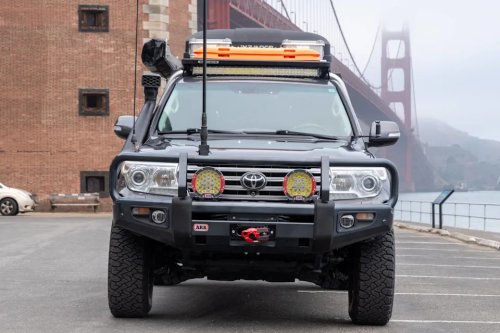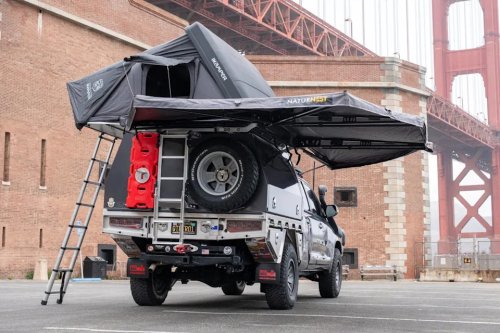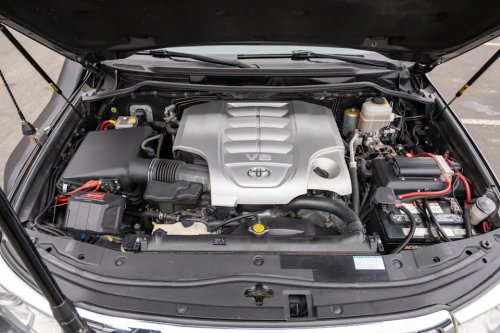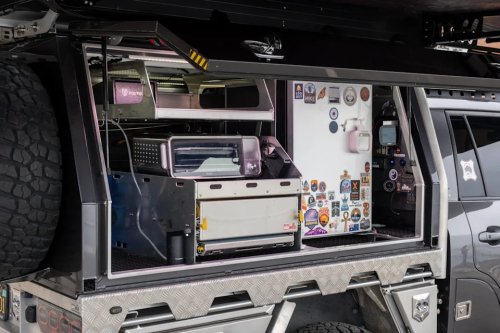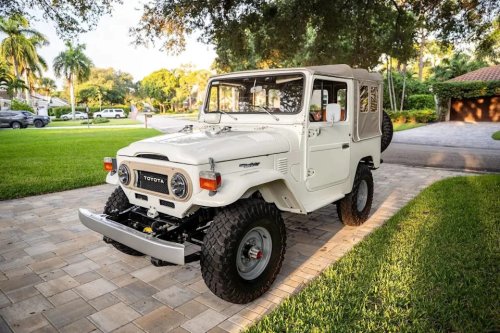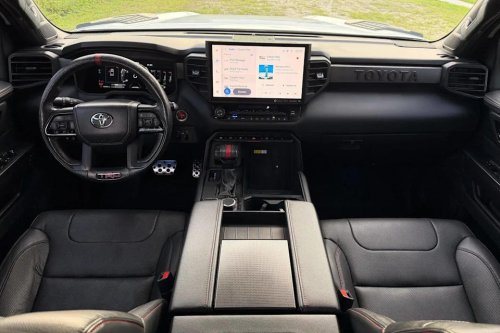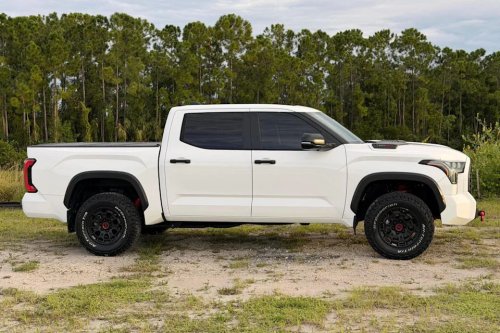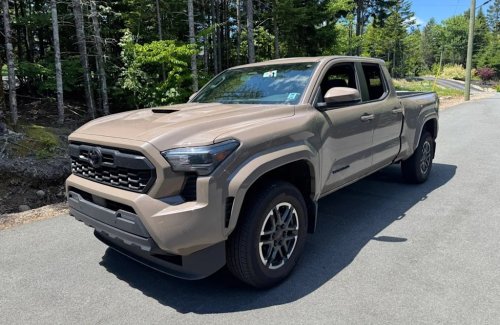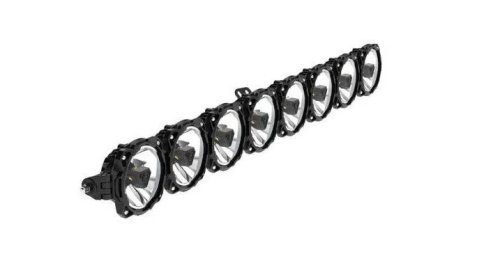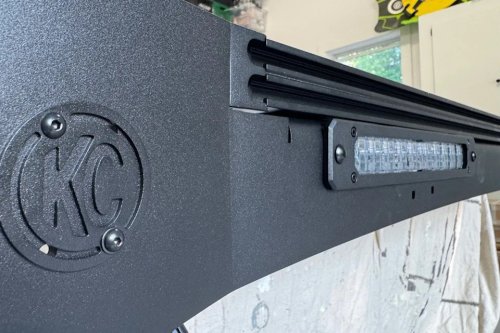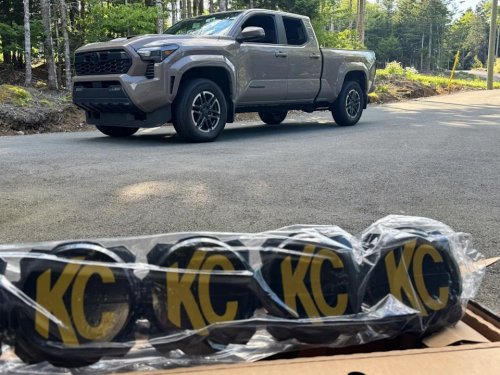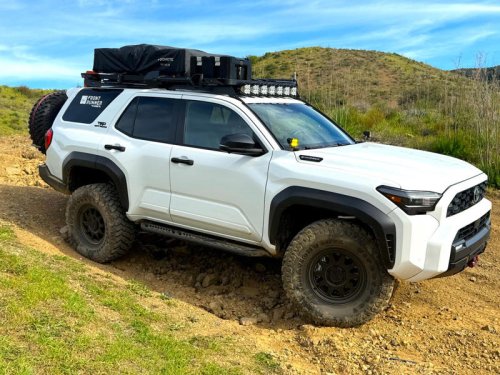
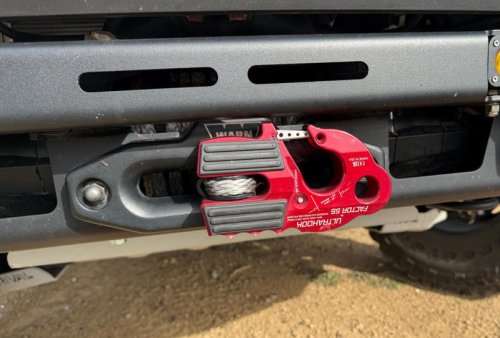
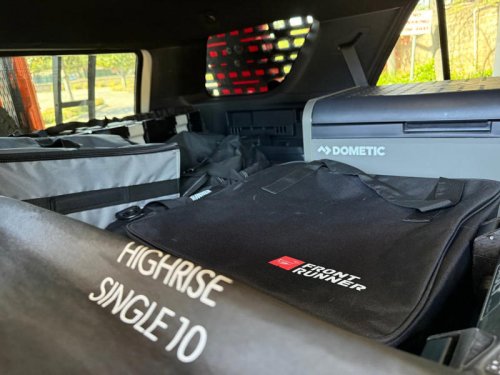
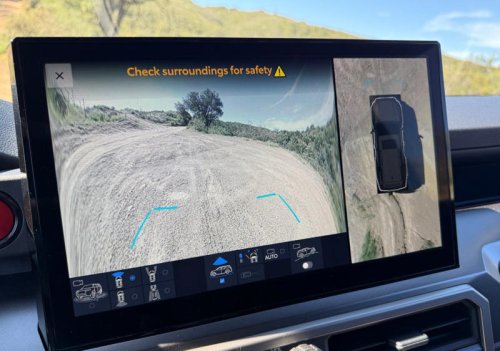
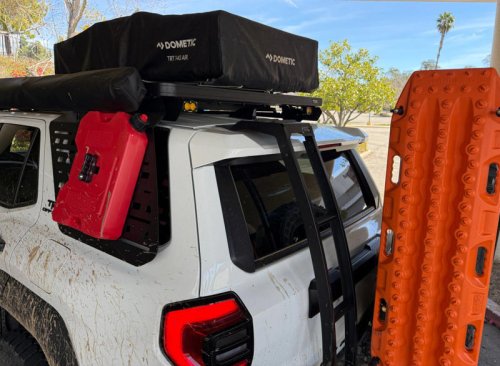
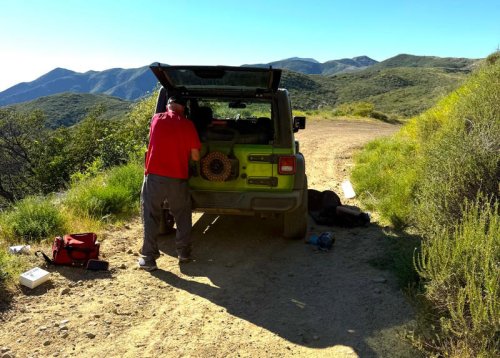
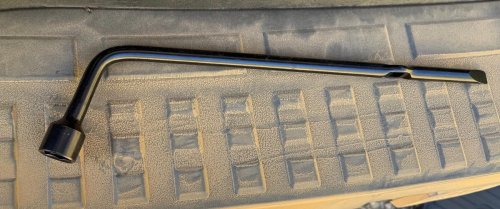
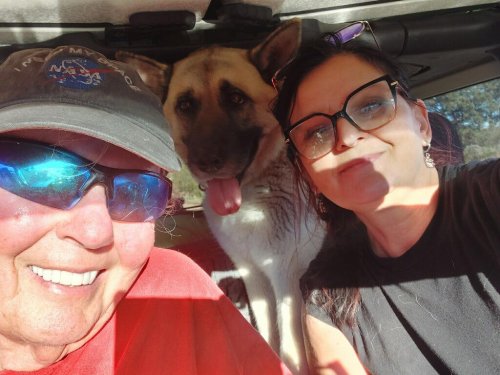
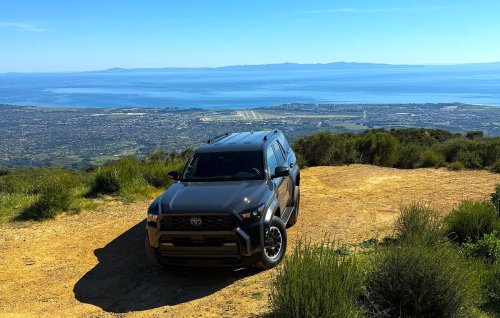

















West Camino Cielo runs along the top of the Santa Ynez Mountain. It’s a climb up from the San Marcos Pass (highway 154 to those who don’t live around here) to the ridgeline about 4000 feet above Santa Barbara. On a clear day—March has been nothing but clear—it presents spectacular views across the city out beyond to the Channel Islands. But it’s rugged. To get across it, you need the right tools. And the right mindset. Because without both, it’s easy to become stranded up there. Or worse.The United States Forest Service’s website warns that “A majority of this road is along very steep mountain ridges. Expect boulders and large rocks to navigate.” I take issue with describing it as a “road,” but it’s my go-to trail whenever I have a vehicle on hand built to traverse the terrain. And I’m not sure a Chevy Traverse or GMC Terrain could handle the craggy and loose surfaces. It’s about a 12-or-so-mile (depending on how it's measured) drive from the Pass to Refugio Road and then down past Ronald Reagan’s old ranch back to the coast. I love it. Just like racing on a track, off-roading means pushing a vehicle to its performance limits. The speed may be barely above a crawl, but traction is limited, surroundings are rugged, and help is often a long way away. West Camino Cielo is only 15 minutes from my house—so convenient, it's easy for me to forget the risks that accompany the adventure. Just a month ago, during a very rainy February, one off-roader lost his life when his new pickup slipped off the trail and tumbled down the hill more than 300 feet. But there is no more spectacular spot in Santa Barbara County than West Camino Cielo when the conditions are good.In successive weeks this month, I had two 2025 Toyota 4Runners. The first was a white TRD Off-Road Premium with the “i-Force Max” hybrid drivetrain that combines a turbocharged 2.4-liter four with a battery-fed electric motor for a combined 326 hp. It had been loaned to me by the PR agency for Front Runner Dometic, a South African company that builds rack systems and accessories for off-roaders. It was overstuffed with virtually every imaginable product that could be contained within the 4Runner’s 2850-millimeter wheelbase. So much stuff, about $26,000 worth, that the entire space behind the front seats was filled with emergency equipment, coolers, a kitchen, and drawers for tools.Total overkill for West Camino Cielo. During the three days it was with me, I couldn’t have used a tenth of the things aboard. I’d have liked trying to sleep in the roof tent… but then I would have blown several more deadlines than usual.That’s a lot of lights. A lot of tire. A lot of stuff on the roof. The second 4Runner was a gray, bone-stock TRD Off-Road Premium loaned to me by Toyota. It had the 2.4-liter turbo four aboard, but no hybrid system. So, that’s 278 hp backed by the same eight-speed automatic used in the hybrid. Take the additional weight of all the accessories carried by the white truck, and I imagine the power-to-weight ratios are close.An additional piece of peace of mind came with each product the white truck carried. The Rival aluminum skid plates, Westcott Designs rock sliders, and Warn five-ton winch mean that if the Earth opened in front of the truck, it would likely be hardly damaged, and the winch could safely pull it out. Shy of falling past the Earth’s crust and into the planetary mantle beneath, this truck wasn’t going to get stuck.But a new 4Runner, as it comes from Toyota, is astonishingly capable. The stock truck's skid plates are made of composite instead of aluminum, but that’s still protection. There’s no winch, but there isn’t so much stuff aboard that I couldn’t sleep inside if I had wanted. And Toyota’s electronically engaged, dual-range, part-time four-wheel drive system is effective and painless to use even when it’s turning the standard 265/70R18 Falken Wildpeak A/T tires instead of the white truck’s aggressive 35x12.50R17 Firestone Destination M/T2.A few decades back, almost any change made from stock to a 4x4 made it significantly better. Early Broncos, Blazers, and Land Cruisers came on horrible tires, ran flimsy shocks that may as well have been filled with concrete, and engaging four-wheel drive meant muscling the transfer case lever after manually locking the front hubs. It took talent, patience, experience, and a bunch of money to turn them into effective and robust off-roaders.Now, a full-frame SUV like the 4Runner comes ready to challenge most any situation, and all the cash goes in at the time of original purchase. The TRD Off-Road Premium starts at $57,565 after a $1495 destination charge. Above it is the Trailhunter hybrid starting at $69,495, and the TRD Pro hybrid at $69,695. Even in 2026, that’s a lot of money. And many dealers are reluctant to deliver Trailhunters and TRD Pros without significant markups beyond the MSRP.I never needed the winch. But it was nice knowing it was there.Everything Front Runner added to the white 4Runner seemed high-quality and worked well. The problem stemmed from being too, too much. Of course, it was equipped to show off the products, so overkill was inevitable. But those big tires are loud on pavement, the roof-mounted racks, tents, and awnings all add extra wind noise, and moving the spare tire up onto a rack behind the tailgate made accessing the back a hassle. Plus, the additional weight and compromised aerodynamics hit the fuel economy hard. The white 4Runner was filled with Front Runner equipment. No one has to take everything with them all the time.For any 4Runner (or whatever) owner, adding aftermarket equipment should be done with due consideration. The winch looks tough, but the truck isn’t likely to be stuck too badly in a Walmart parking lot. Big tires and a lift look cool, but on most trails, the stock 9.1 inches of ground clearance will be fine, and the stock tires grippy enough. And even with the spare tucked under its tail, the TRD Off-Road allows a solid 24-degree departure angle. Most of us are nowhere near as hardcore as we pretend to be.Plus, looking at my already full-up garage, I kept wondering where I’d store all the coolers and stuff when I wasn’t venturing out across the Darien Gap.Cameras and a big screen are spectacular tools on a trail.0That in mind, both trucks handled West Camino Cielo without straining. And the giant 14-inch center screen in both fed video from onboard cameras surrounding the 4Runner, making spotters almost unnecessary. I’m often critical of monster displays in new cars and trucks, but with off-roaders like the 4Runners, such video systems pay off in both real ability and driver confidence. After using such systems in several serious 4x4s, I’d insist on having one. And the 4Runner’s is the best I’ve experienced.While taking the stock 4Runner along the trail, I came upon a Jeep Wrangler blocking my progress. The right front tire on the Jeep had deflated, and a big, lopey dog was patrolling around it while the couple tried to swap out the tire. They didn’t have a long handle lug wrench aboard and couldn’t get the leverage needed to loosen the over-torqued lugs.With all the equipment aboard, there was always a tool on hand to get the white 4Runner unstuck. But getting to the lug wrench? It would have taken a while.“Thank God you’re here,” said Renata with her Czech accent as I approached. “You’ve got to help us.” I wasn’t carrying any tools with me except those that Toyota puts into every 4Runner. And that includes a lug wrench with a long enough handle to apply some torque to the nuts. The Wrangler only had a crescent wrench aboard.A flat tire that had to be changed. All it takes is the right tool for the job.The right tool.The lug wrench is stored in a cubby on the side panel behind the 4Runner's left rear wheel arch. Since this 4Runner was otherwise empty, it was easy to access it. If I had been in the white 4Runner, moving all the equipment necessary to access that panel was daunting to consider.It took some shoulder to get the lugs to crack, but crack they did. And maybe a half hour later, Peter, Renata, and Emma the dog were on their way. And the trail was cleared so that I could get by.Peter, Emma the dog, and Renata back on the trail. I wouldn’t say I was a hero. But I won't discourage others.The trick to driving off-road effectively is to pay attention and never believe that the vehicle will compensate for your own arrogance, recklessness, or complacency. Most often, what happens is that you’ll get stuck or run over something that flattens a tire. This is consequential driving. And consequences matter.Overlooking Santa Barbara and beyond to the Channel Islands. Off-roading has its rewards.Off-road driving's risk is much of its attraction. But no vehicle is so capable, and no amount of equipment or technology will eliminate the danger. That’s on the driver.Also, bring a lug wrench.