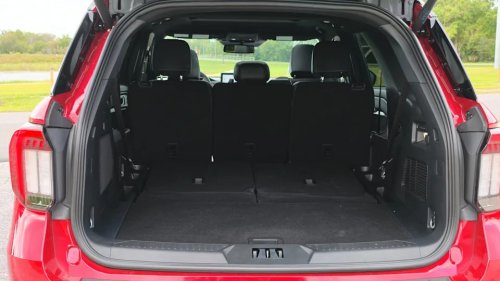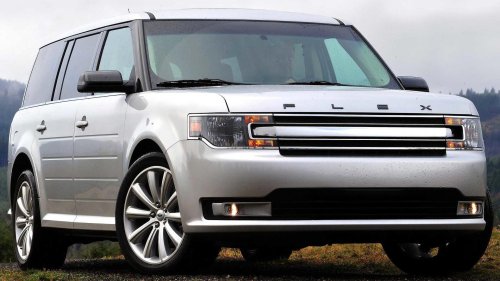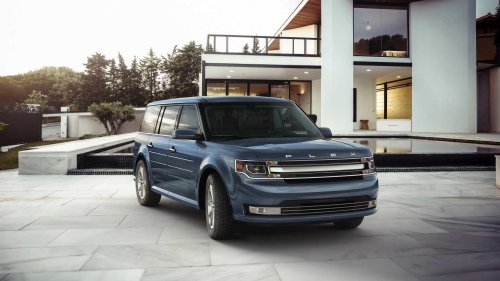
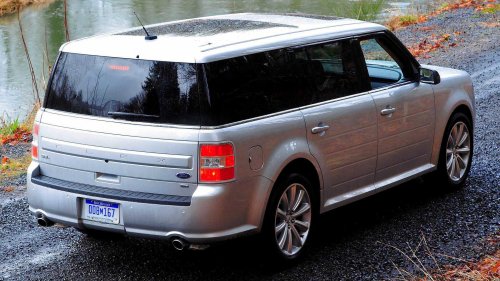
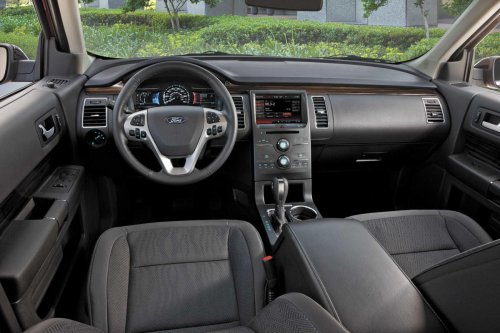
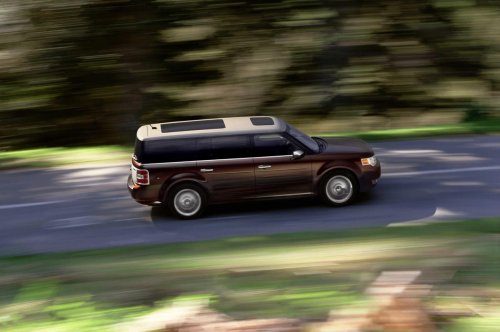
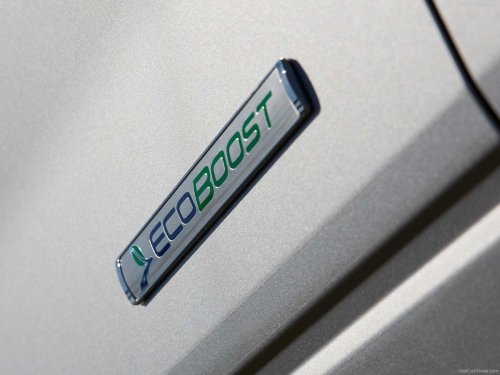
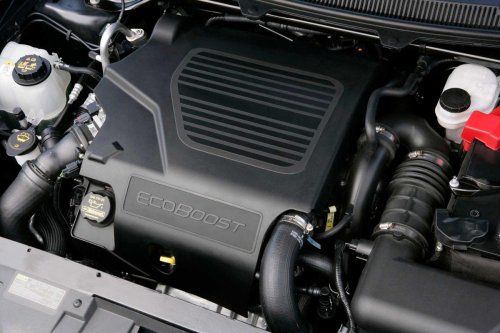
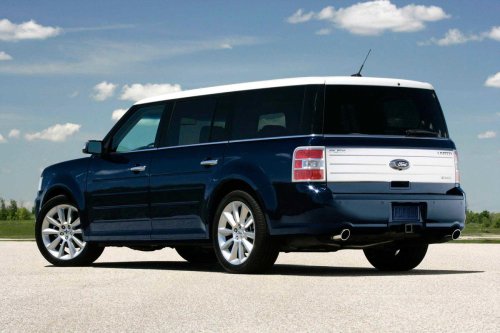
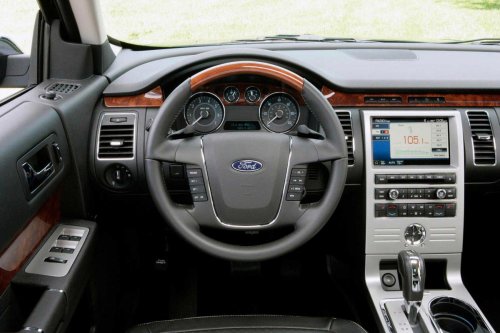
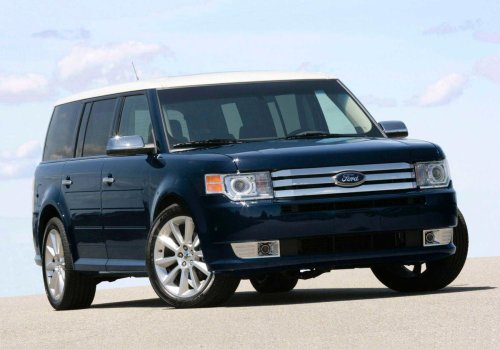
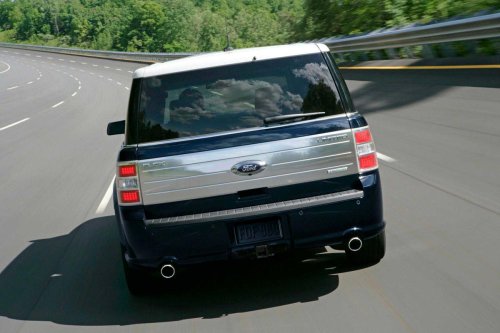



















In an era where crossovers and SUVs began to blur into one another with rounded edges, aggressive grilles, and faux off-road posturing, one vehicle took a radically different path. The Ford Flex didn’t just stand out; it refused to conform entirely. Long, low, and unapologetically rectangular, it challenged everything buyers thought they wanted in a family vehicle. And yet, beneath that polarizing design was one of the most intelligently engineered platforms of its time.Built on Ford’s D4 architecture and sharing DNA with models like the Explorer and Taurus, the Flex offered a rare blend of car-like driving dynamics and SUV practicality. Its standard 3.5-liter V6 delivered up to 287 horsepower, while the optional twin-turbocharged EcoBoost variant pushed output to a remarkable 365 horsepower and 350 pound-feet of torque, figures that rivaled performance-oriented SUVs of the era.But the Flex wasn’t just about numbers. It was about space, usability, and a uniquely comfortable driving experience that slowly, almost quietly, built a loyal following. Today, it stands as a reminder that sometimes the best automotive ideas aren’t the ones that follow trends, but the ones that ignore them completely. The Anti-SUV That Refused To Follow The Rules Ford At first glance, the 2019 Ford Flex looked like a throwback. Its silhouette was more reminiscent of a long-roof wagon than a modern SUV, with a low ride height and stretched proportions that immediately set it apart. In a market increasingly obsessed with height and rugged aesthetics, the Flex went in the opposite direction.Underneath, however, it was anything but outdated. Built on a unibody platform with a fully independent suspension, MacPherson struts up front and a multi-link rear setup, the Flex delivered composure and ride quality that traditional body-on-frame SUVs simply couldn’t match. Its layout was equally versatile.FORDBuyers could choose between front-wheel drive for efficiency or an intelligent all-wheel-drive system capable of sending torque between axles depending on traction demands. This wasn't an off-roader pretending to be a family car; it was a family car that understood how people actually drive. And in doing so, it carved out a niche that no competitor occupied. Why The Ford Flex’s Boxy Design Became Its Biggest Strength What initially limited the Ford Flex’s appeal ultimately became its defining advantage. That slab-sided, box-on-wheels design wasn't just stylistic; it was deeply functional. With a wheelbase of nearly 118 inches and a total length exceeding 200 inches, the Flex maximized interior space in ways that more sculpted competitors couldn’t. The result was a cavernous cabin offering generous legroom across all three rows and exceptional overall passenger volume.Unlike sloping-roof SUVs that compromised third-row usability, the Flex’s upright profile ensured that even adults could sit comfortably in the back. Cargo capacity was equally impressive, making it a true do-it-all family hauler. The design also improved visibility and accessibility. Large windows and a lower step-in height made it easier for families, older passengers, and children alike to get in and out, something increasingly rare in taller SUVs. In many ways, the Flex anticipated today’s emphasis on interior packaging efficiency. It proved that aerodynamics and aggressive styling weren’t always the answer. Sometimes, a simple box just works better. With all three rows of seating upright, it provides around 20 cubic feet of cargo space behind the third row, enough for groceries, backpacks, or a couple of carry-on suitcases. Fold the third row flat, and that expands to 43 cubic feet behind the second row, giving you room for strollers, camping gear, or large luggage. When both the second and third rows are folded completely, total cargo capacity reaches an impressive 83.2 cubic feet. Turbocharged Practicality: Performance Hidden In Plain Sight Ford One of the Ford Flex’s most underrated traits was its performance, particularly in EcoBoost form. While its shape suggested a relaxed cruiser, the available twin-turbocharged 3.5-liter V6 told a very different story. Producing up to 365 horsepower and 350 pound-feet of torque, the EcoBoost-equipped Flex delivered acceleration that rivaled performance SUVs costing significantly more. Power was routed through a six-speed automatic transmission and a standard all-wheel-drive system in these models, ensuring strong traction and confident power delivery in all conditions. Even the base naturally aspirated 3.5-liter V6, producing around 287 horsepower, offered respectable performance for daily driving. What made the Flex particularly unique was how it delivered this performance. Unlike high-riding SUVs with noticeable body roll, its lower center of gravity and wide stance contributed to surprisingly stable handling. It felt planted, composed, and far more car-like than its size would suggest.With a towing capacity of up to 4,500 pounds and a drivetrain capable of dynamically distributing torque, it was a complete package. It was, in essence, a sleeper family hauler, one that hid serious performance beneath an unassuming exterior. A Family Hauler With Luxury Car Levels Of Comfort Step inside the Ford Flex, and it became clear that Ford prioritized comfort just as much as capability. The cabin was designed with long-distance usability in mind. Wide, supportive seats, an airy layout, and available features like heated and ventilated seating made it an ideal road-trip companion. Higher trims introduced premium materials, ambient lighting, and Ford’s SYNC infotainment system, which, at the time, was among the more advanced interfaces in the segment. The Flex’s suspension tuning further enhanced its comfort credentials. The independent setup absorbed road imperfections with ease, while the long wheelbase contributed to a smooth, stable ride at highway speeds. Rear passengers weren’t treated as an afterthought either. With generous second-row legroom and a genuinely usable third row, the Flex excelled as a people mover. Even today, few vehicles match the Flex’s combination of space, ride quality, and everyday usability. From Slow Sales To Cult Classic: How The Flex Won Hearts Over Time Despite its strengths, the Ford Flex never achieved mainstream success. Its unconventional design and low stance clashed with shifting consumer preferences toward taller, more rugged-looking SUVs. Production ran from 2009 to 2019, after which Ford quietly discontinued the model. But something interesting happened in the years that followed — the Flex began to gain appreciation. Owners praised its performance, comfort, and practicality. Enthusiasts gravitated toward the EcoBoost models, recognizing their sleeper performance and relative rarity. Online communities formed around the vehicle, celebrating its quirks and capabilities. What once seemed like a styling misstep became a badge of individuality. In a sea of indistinguishable crossovers, the Flex stood out, and that distinction became increasingly valuable. Today, it occupies a unique position in the used market. It’s relatively affordable, versatile, and unlike anything else on the road. More importantly, it represents a philosophy that feels increasingly rare in modern automotive design: the willingness to be different.Sources: Ford U.S. & CarBuzz