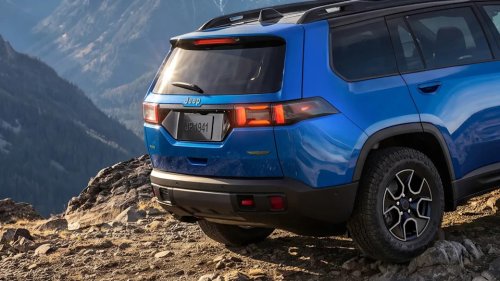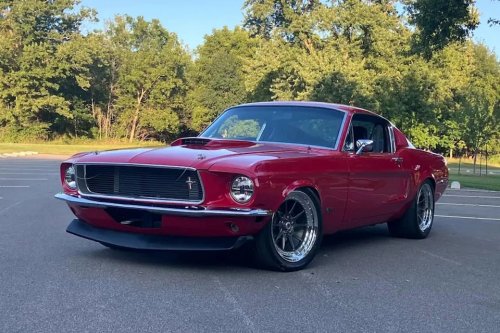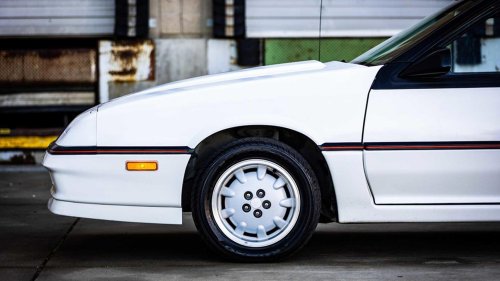
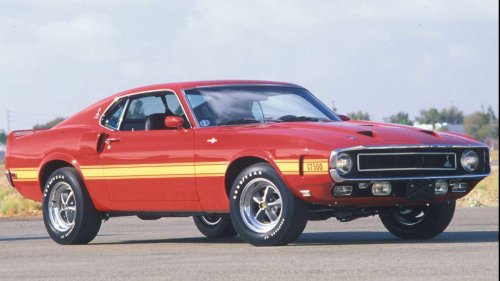
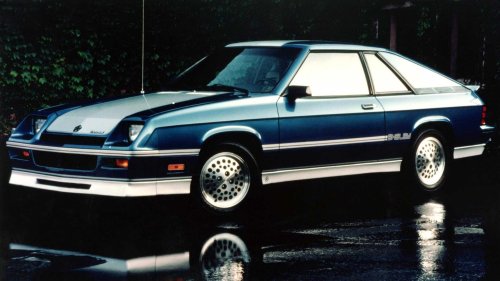
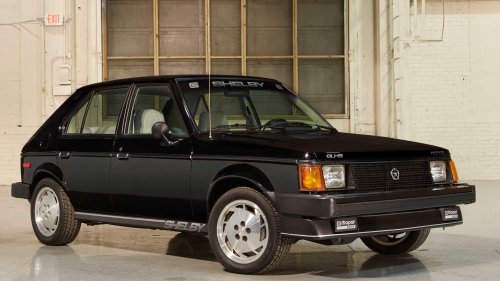
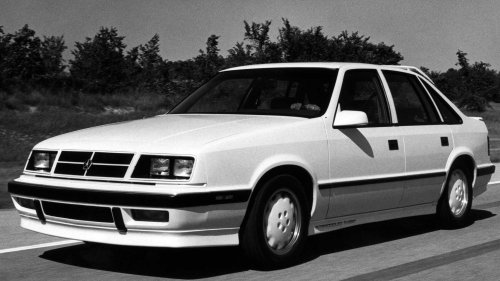
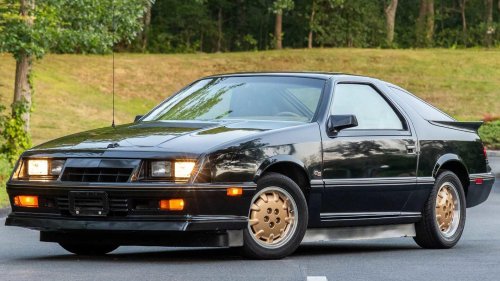
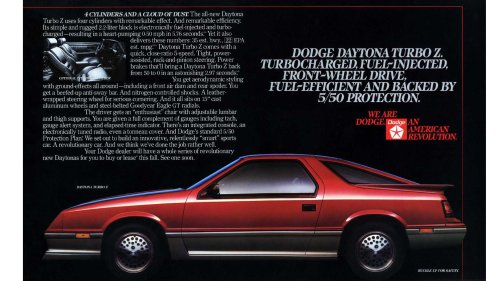
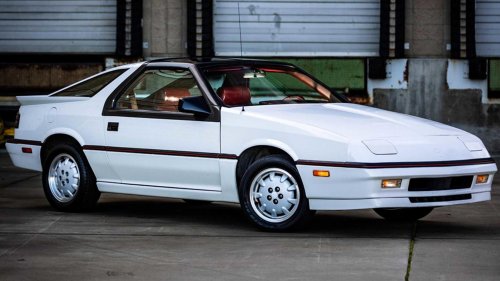
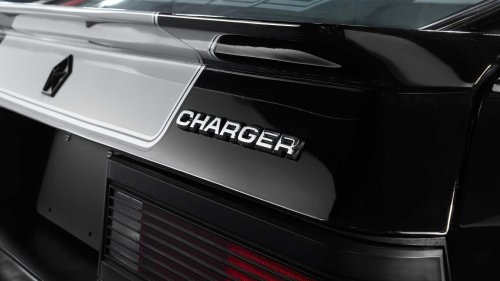



















Full disclosure: I'm a three-time Ford Mustang owner, former Mustang club member, and once upon a time, I handled warranty claims for Shelby Mustangs. I mention this for two reasons: I have a bit of insight into the world of Mustangs, and I'm rightfully qualified to tell you how best to troll die-hard Mustang people—especially those who live and breathe Shelby.So believe me when I say a few things stir Mustang rage quite so much as talking fondly about the legendary Shelby name affixed to four-cylinder, front-wheel-drive, 1980s Dodge models. One of these days, I will roll into a big Shelby meet, park my Shelby-tuned K-car next to a Mustang GT500, and proudly pop the hood on that 2.2 turbo.Check out my Shell-bee! I'll exclaim.This week, we're celebrating the 1980s on CarBuzz, from the wildest supercars to the coolest daily drivers. Take a trip back in time with us to then the colors were bright, the cars were loud, and EVs weren't even a dream yet.Cars and BIds But I digress. We're taking a walk down the 1980s nostalgia boulevard here, and speaking as someone who actually walked it back in the day, these turbo Shelbys were way cool for the time. I'll admit they've lost some of their luster, but I still love them. So with that in mind, here are my top-three turbo Shelby Dodge picks I would love to take to acars and coffee event.If you're so inclined, I'd love to hear about your top three in the comments. I can't be the only one with an irrational affection for these things.The views expressed in this post are from an individual who made his own acid-washed jean jacket, owns a BMX bike collection, and cannot possibly fathom Bumblebee being anything other than a yellow Volkswagen Beetle. His views do not represent the CarBuzz collective, and most rational people under the age of 40. From Ford To Dodge Ford Motor Company Before jumping into my picks, a quick Shelby history lesson is required. You know how it all began – Ford GT40, then Mustangs, starting with the 1965 Shelby GT350. Shelby was also doing a thing with the Cobra, too, but that was just a Ford engine stuffed into a small British sports car. Anyway, it all ended rather abruptly in 1970 when, according to the official Shelby website, Carroll retired. In fact, the 1970 Shelby GT500 Mustangs were actually 1969 models given the slimmest of changes to make it an official new model year.So Carroll spent much of the 1970s vacationing in Africa and launching his own brand of Chili mix. And then, the famed automotive executive Lee Iacocca called. Iacocca and Shelby forged a good relationship back in the Ford days, but in the early '80s, Iacocca was trying to save Chrysler. He pinged Shelby to do some marketing performance magic for Dodge, rebuilding the performance image that it brutally lost through the 1970s.Dodge The first Dodge with Shelby's name – the Shelby Charger – went on sale in 1983. However, this one wasn't turbocharged. The initial Shelby Charger was tuned to 107 naturally aspirated horsepower, paired with a close-ratio five-speed manual and a tuned suspension. And of course, prolific Shelby branding.Before scoffing at a 107-hp Shelby, consider that in 1983, the 5.0-liter Mustang GT made 175 hp from an engine over twice the size. In 1984, the Shelby Charger got a turbo that boosted output to 146 hp. A few years later, those engines made 175 hp, and they ultimately made 224 hp with some turning help from Lotus.Let's look at three of the best results from Shelby and Dodge's collaboration. 3. Dodge Omni GLHS Dodge I didn't want to include the little Omni on my list because it's almost a cliché by now. However, one cannot talk about '80s turbo Dodges without acknowledging this hot hatch. For those unaware, the GLH was a Dodge Omni econobox with stiffer suspension, bigger brakes, Shelby stickers, and more power. It's arguably the most famous turbo Dodge of them all, though it actually launched without a turbo in 1984, sharing the NA Shelby Charger's 2.2-liter mill. That changed in 1985, when it jumped to 146 hp with the Turbo I engine.The situation really changed in 1986. Not content to just let Dodge have the fun, Shelby brought 500 cars to its shop in California to get "S'more." Seriously, that's what the S in GLHS stands for. Considering GLH stands for Goes Like Hell, clearly Shelby didn't take things too seriously. But all the V8 pony car drivers of the day sure took the GLHS seriously. Its modified Turbo I engine (with preproduction Turbo II parts) made 175 hp in a car that weighed slightly less than a garden gnat.Road tests of the day reported that zero-to-60 mph took about 6.5 seconds. The GLHS could clip a quarter mile in under 15 seconds, the benchmark time for a fast car in the '80s. Beefy sway bars and adjustable Koni struts made the hot hatch handle like a boss. So yeah, I'd roll up to a Shelby meet in one of these. I might even get a little respect with it. 2. Shelby Lancer Dodge Shelby modified a Mitsubishi Lancer? No, Shelby modified a Dodge Lancer, a completely different vehicle, despite the broader Mitsubishi-Chrysler Corporation relationship. The Dodge Lancer was a boring midsize sedan until Shelby turned it into a sleeper. I like sleepers.Much like the Omni GLHS, Shelby acquired 800 examples of the 1987 Lancer and performed conversions in California. It got the same 175-hp engine as the GLHS. Shelby offered a choice of a five-speed manual or a three-speed automatic transmission. The car also received brake and suspension upgrades. The company even added a CD stereo system, something quite rare in cars at the time. Shelby envisioned the upgraded Lancer as a challenger to German sports sedans, which were growing more popular in the US market.It wasn't far off the mark either, at least in terms of straight-line performance. The Shelby Lancer could hit 60 mph in the 7.0-second range with the manual gearbox. The car bit at the corners with gusto, though understeer from its front-wheel-drive platform was always in the background. The Shelby Lancer continued through 1988 and 1989, though Dodge took over the conversion from Shelby and dropped things like the rear disc brakes. If you want one, a 1987 example is the vehicle to find. 1. Dodge Daytona Turbo Z C/S Bring A Trailer I need to be very specific on this one. I love the entire Dodge Daytona lineup, right through to the bonkers 224-hp IROC model from the early 1990s. But my heart yearns for the very first Shelby-kissed version, which is the (deep breath) 1986 Dodge Daytona Turbo Z C/S. You can probably guess that C/S stands for Carroll Shelby.I also confess to loving the earlier Daytonas with the four-eye headlights versus the pop-ups, and 1986 had the peak four-eye look. It's not the most powerful Daytona of them all, still running the Turbo I engine with 146 hp. A five-speed manual or a three-speed automatic transmission was available, and since the Turbo Z was the flagship Daytona, most came well-equipped. Buyers could even get T-tops.Dodge The C/S package was all about the suspension. It added bigger sway bars, retuned struts, sticky 50-series tires (a big deal in the mid-1980s), and simple C/S badges. That's one of the reasons I adore this Shelby above others. Shelby cars have always been big with branding – I once counted upwards of 80 Shelby mentions on the Shelby Dakota pickup truck. But this is simple: just some basic stripes and neat fender badges. I love it for the car, not the person's name slathered all over it. Doomed To Fail Cars and BidsSadly, none of these Shelby-touched cars have been embraced by collectors. Despite their relative rarity, the 2.2 turbo was never a fantastic engine, and the cars just didn't inspire people the way the Mustangs and Camaros of the day did. The black Daytona C/S pictured above sold for just $12,500 last October on Bring a Trailer, and it wasn't a basket case with 55,000 miles showing on the odometer. The Omnis can eclipse $20,000 for nice examples, but barring some special backstory or celebrity ownership, these boosted Shelbys are rare bargains.Dodge As the '80s transitioned into the 1990s, it was clear that American buyers didn't want small turbocharged engines, not in their everyday commuter cars, or their trucks, or especially in their performance vehicles.In hindsight, one could argue that Dodge's parent company, Chrysler, was way ahead of its time. In 2026, the vast majority of commuter cars now have small turbocharged engines. Trucks have them. And some performance cars have them.Could things go differently for turbo Dodges today? We might find out soon. Dodge, with help from a newly revitalized SRT division, just announced a new GLH performance vehicle. It's a midsize crossover so that it will be a tad bigger than the old Omni. But if a GLH can come back – and with Ford no longer playing ball with Shelby – the sky could be the limit.In the meantime, I'm still looking for just the right turbo Shelby to add to my collection. If you can't go fast, may as well go retro and nerdy, right?Source: Dodge