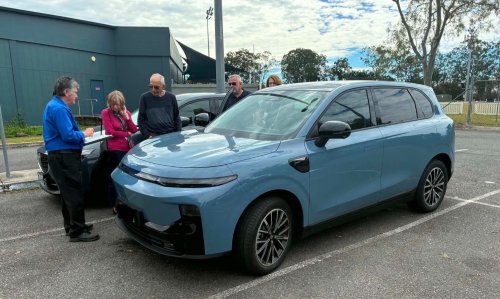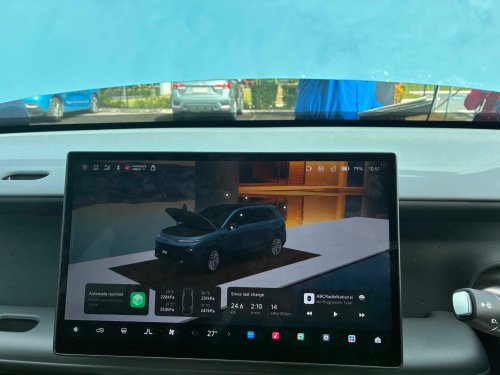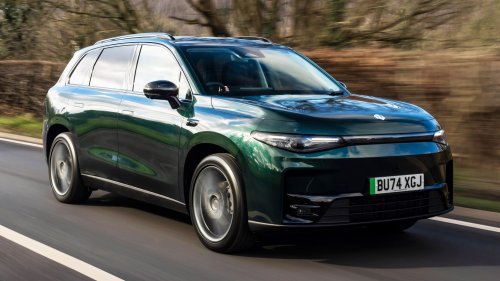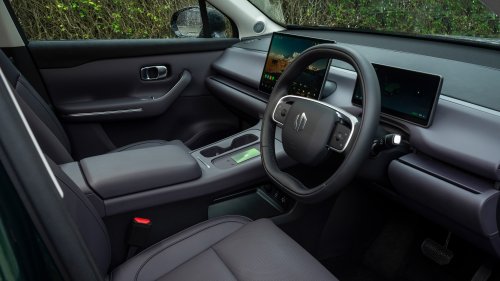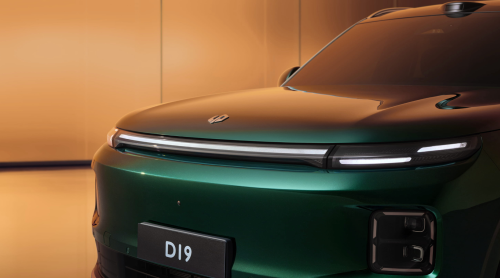
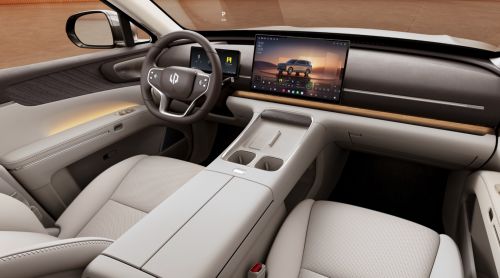
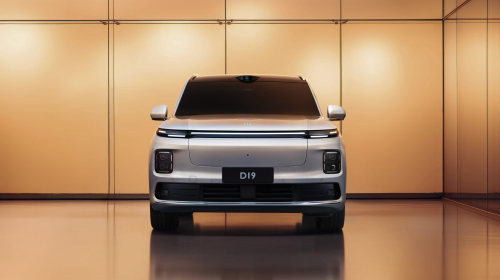
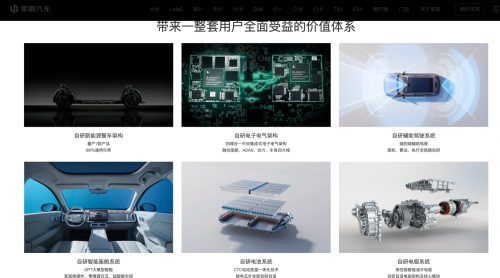



















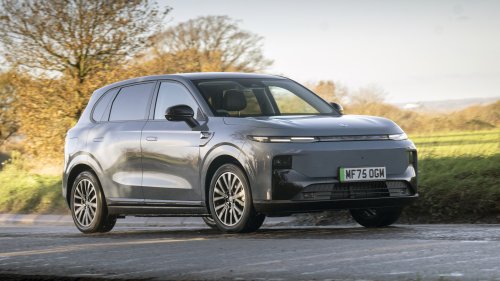



Gasgoo Munich- Leapmotor is entering the 300,000 yuan full-size SUV market from its position in the 100,000 to 200,000 yuan range. The strategy is to demonstrate that it can deliver 400,000 yuan-level specifications at a 300,000 yuan price point.The D19 measures over 5.2 meters in length with a 3.1-meter wheelbase, offering six- or seven-seat layouts. The extended-range (EREV) version features a pure electric range of 500 kilometers, while the battery-electric version achieves 720 kilometers. It introduces dual Qualcomm Snapdragon 8797 chips, with a nominal total compute of 1,280 TOPS, a VLA world model for assisted driving, and an automotive-grade hyperbaric oxygen chamber. Two years ago, these specifications would have been found in a vehicle costing well over 400,000 yuan.Leapmotor aims to price the D19 between 250,000 and 300,000 yuan. The question remains whether this market-disrupting approach represents a milestone in technological democratization or merely passive specification inflation amidst fierce competition.Range and Intelligence are Key Selling PointsFirst, consider the core range and smart features. The EREV D19 is equipped with an 80.3 kWh battery using CTC (cell-to-chassis) technology, achieving a CLTC pure electric range of 500 kilometers. This figure stands out in its class; the Li Auto L8 manages about 280 kilometers, while the AITO M7 long-range version offers 327 kilometers. Leapmotor utilized CTC to integrate a larger battery into a limited space. Combined with a 40-liter fuel tank, total range exceeds 1,000 kilometers.Image Source: LeapmotorHowever, a question remains: do EREV users really need 500 kilometers of pure electric range? The principle of range extension is to use electricity for the city and fuel for long distances. A range of 200 to 300 kilometers already covers most urban commutes. Increasing this to 500 kilometers means the range extender rarely operates during daily use, raising the question of why not simply buy the pure electric version. Furthermore, large-battery EREVs suffer efficiency losses from the added battery weight during long trips.Leapmotor explains this as "covering all scenarios" — allowing users to charge once a week and use fuel for weekend trips. There is logic in this, but it also highlights the challenges of the EREV path: when the battery is large enough, the range extender becomes a burden. A more plausible explanation is that Leapmotor seeks to build differentiation around "500 kilometers." With Li Auto and AITO in the 200-300 kilometer range, nearly doubling that figure creates a distinct competitive advantage.Image Source: LeapmotorThe pure electric version utilizes a full-stack 1,000-volt electric system, featuring a CATL 115 kWh ultra-hybrid cell. CLTC range reaches 720 kilometers, with a theoretical efficiency of "350 kilometers charged in 15 minutes." However, Leapmotor's rollout of 1,000-volt ultra-fast charging piles is still in its infancy. In the short term, users will rely mostly on third-party 600-800 volt piles, where actual charging power will be limited by hardware capabilities, a common industry challenge.Regarding intelligence, the dual Qualcomm Snapdragon 8797 chips are a major selling point. A single chip offers 640 TOPS of sparse NPU compute; two together nominally reach 1,280 TOPS on a 4nm process. AnTuTu scores exceed 2 million, representing the highest cabin-plus-driving fusion compute in any mass-produced car today. Currently, mainstream products enabling city NOA operate in the 200-500 TOPS range, meaning 1,280 TOPS is largely reserved space for algorithm iterations over the next 3 to 5 years.For the average consumer, the immediate experience gain from dual 8797s is not obvious. However, the cabin's five-screen linkage, including a 60-inch AR-HUD, 17.3-inch central control screen, and 21.4-inch rear entertainment screen, along with second-level voice response, feels smoother than mainstream 8155 or 8295 models.Of practical value is the VLA world model assisted driving system. With 28 sensing hardware units, including two LiDARs, paired with high compute power, it theoretically enables high redundancy for city NOA.The Cost Advantage of In-House R&DTurning to comfort, safety, and technical confidence, the "Wilderness Oxygen Cabin" is a D19 innovation. It features automotive-grade vacuum pressure swing adsorption oxygen production with an output of 8 liters per minute, supporting both diffuse and nasal inhalation. It operates stably in plateau environments up to 4,500 meters. This feature is clearly designed for family long-distance road trips.However, few families will regularly visit altitudes above 4,500 meters. Most urban SUVs operate in plains and hills, so the usage frequency of the oxygen cabin may be low.Image Source: LeapmotorLeapmotor employs a "unique feature" strategy here, creating an exclusive selling point at relatively low cost to provide a distinct factor for consumer comparison. Similar logic applies to the 8.1-liter hot and cold refrigerator, 120-degree zero-gravity seats, and 131-degree adjustable third-row backrests. While none are revolutionary innovations, combined with the length exceeding 5.2 meters and 3.1-meter wheelbase, they achieve an 88% space utilization rate, creating an overall impression of a "mobile first-class lounge."Regarding safety, features include ten-layer battery protection, with no fire or explosion for 72 hours, and 50,500 N·m/deg torsional stiffness, surpassing million-yuan luxury levels, as well as stability control during dual tire blowouts. While these are "baseline specifications" that do not directly drive sales, they reduce decision-making anxiety for high-net-worth families.Image Source: LeapmotorLeapmotor is able to price the D19 between 250,000 and 300,000 yuan due to its 65% full-domain in-house R&D rate, based on vehicle cost. Self-developed vehicle architecture, electronic and electrical architecture, assisted driving systems, CTC technology, and electric drive systems reduce external procurement costs.Meanwhile, supply chain partners such as CATL, Continental, Michelin, and Fuyao guarantee core hardware quality. This model has been validated on the C11 and C10. However, as a flagship, many D19 features are making their debut, such as dual 8797s, 1,000-volt architecture, and the oxygen cabin.From a market competition perspective, the D19's direct rivals are the Li Auto L8, AITO M7, and XPENG G9. Leapmotor's pricing strategy includes standard air suspension, LiDAR, dual 8797s, and an oxygen cabin across the lineup. Among competitors, the Li Auto L8 maintains stable monthly sales of around 10,000 units, driven by its precise "family car" positioning and proven EREV reputation. AITO relies on Huawei channels, and XPENG on smart driving. The Leapmotor D19's selling point is clear: price-performance ratio.In 2025, Leapmotor delivered 596,600 vehicles, up 103.1% year-on-year, and achieved a net profit of 538 million yuan, its first annual profit. Overseas exports reached 67,000 units, ranking first among new forces. This provides fundamental support for the D19's move upmarket.However, the 300,000 yuan-plus segment is a different competitive landscape. The D19 needs to attract two groups: existing Leapmotor owners upgrading from a large base, and "price-sensitive family users" originally considering rivals like the Li Auto L8 but finding the price too high.Overall, the Leapmotor D19 is a vehicle that is impressive on paper. With 500 kilometers of EREV range, 720 kilometers of pure electric range, 1,280 TOPS of nominal compute, standard air suspension, oxygen cabin, and a large six-seat layout, any single feature represents the ceiling for the 300,000 yuan class.However, a vehicle is not a simple sum of parameters. Brand, channels, after-sales service, resale value, and actual experience carry more weight in the 300,000 yuan-plus market. On April 16, after Leapmotor announces the D19 price, the market will respond with orders.