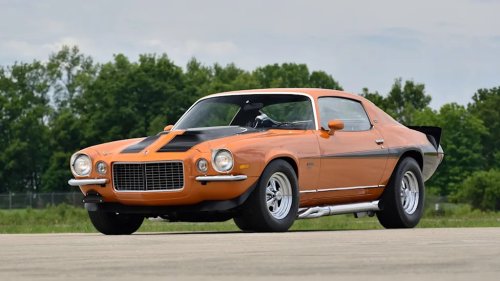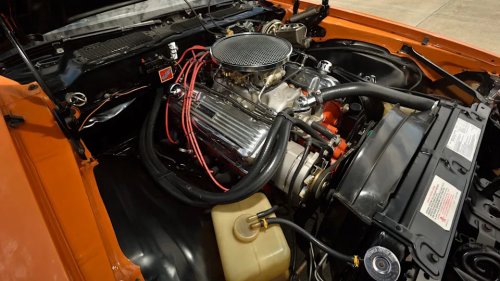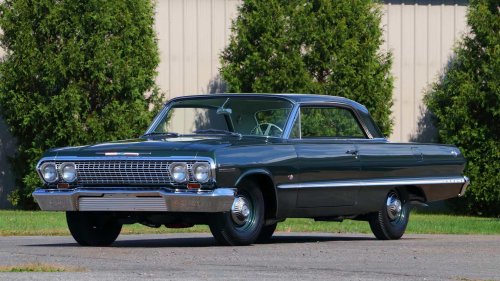
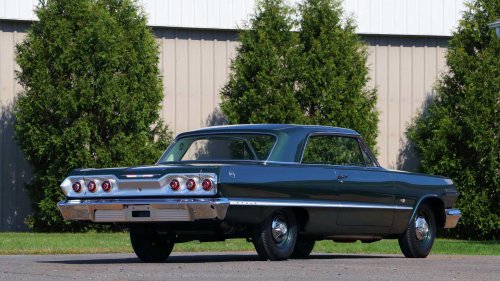
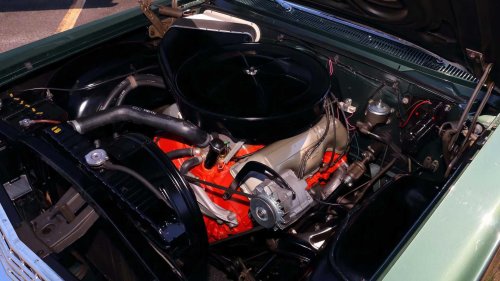
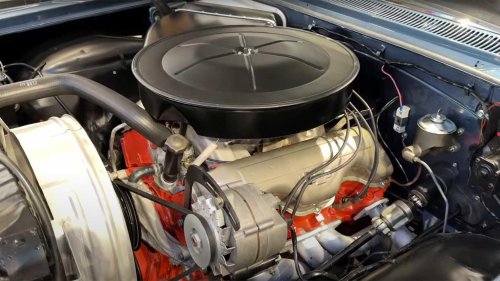
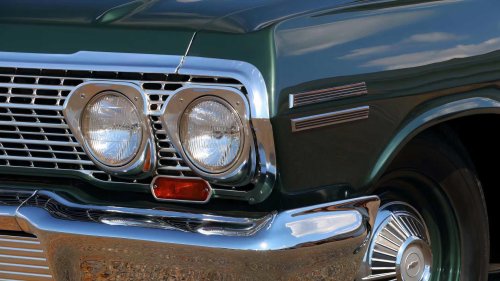
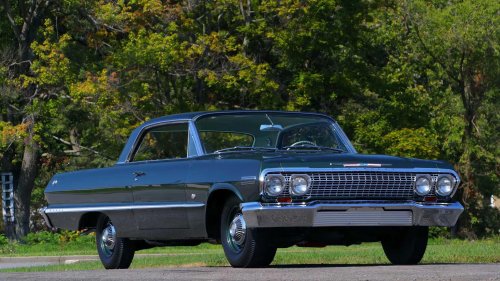
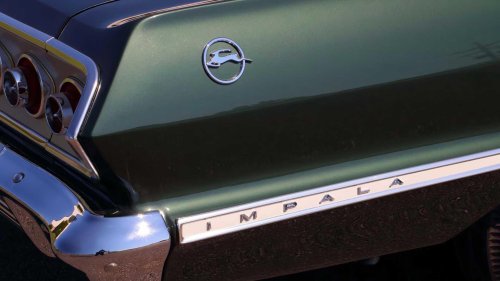
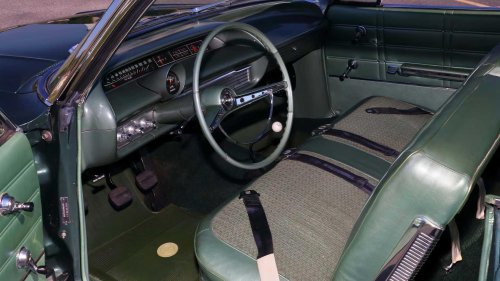
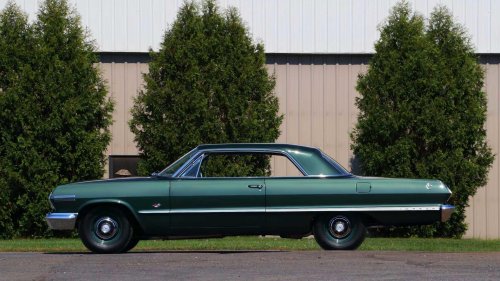



















It’s not the Camaro or the Corvette. And no, it’s not some backroom COPO experiment gone rogue. Chevrolet built this factory sleeper with a singular mission – pure drag strip domination – and it succeeded so thoroughly that the NHRA took notice. This purpose-built monster achieved its goal with such devastating effectiveness that it virtually vanished from public consciousness afterward.What makes this even more remarkable is how forgotten it's become. While late '60s and early '70s muscle cars bask in endless acclaim, this early '60s powerhouse remains largely overlooked despite housing the most aggressive factory engine Chevrolet ever installed in a full-size vehicle. Spotting one of these rare machines in person meant witnessing automotive history – assuming you could even keep up with it long enough to appreciate what you were seeing. The 1963 Chevrolet Impala Was A Badass Performance Car Mecum In the early 1960s, full-size cars still ruled the streets. Before the arrival of the Chevelle SS, and well before the Camaro hit showroom floors, the Impala was Chevrolet’s performance flagship. But in 1963, Chevy took things several steps further with a version that was so factory it was legal – but so wild it barely stayed that way.Mecum The standard 1963 Chevrolet Impala was already a stylish, well-appointed cruiser. But to gearheads, it was something more. Underneath all that chrome and class, the Impala could be optioned with serious performance hardware. But for a short time, Chevrolet offered something far more sinister than just a big engine with a four-speed. The Z11 package transformed the Impala from a fast full-size into a full-blown drag strip weapon. The Impala's 427 Z11 V8 Was A Drag Race King Mecum1963 Chevrolet Impala Z11 Key Specs The Z11's 427 cubic-inch V8 represented far more than an enlarged 409 – Chevrolet engineered this powerplant from the ground up for Super Stock competition. Starting with the W-series big block architecture, engineers added a raised deck height, incorporated a forged steel crankshaft, pushed compression to an aggressive 13.5:1, and fitted aluminum cylinder heads featuring oversized ports. The induction system consisted of a two-piece aluminum manifold crowned by twin Carter 4-barrel carburetors.Hot Rod Hoarders Via YouTube While Chevrolet's official documentation claimed 430 horsepower, this conservative figure fooled no one. Actual dyno readings exceeded 500 horsepower, and when installed in lightweight configurations, these engines propelled cars through the quarter-mile in the high 10-second range – remarkable performance considering the era's narrow bias-ply tires and all-steel construction. This was no street cruiser; it was a street-legal dragster. Highlights Of The Z11 Impala Aluminum hood, fenders, and bumpers to save weight No sound deadening, radio, heater, or power accessories Reinforced chassis and heavy-duty suspension A close-ratio 4-speed manual gearbox 4.11 rear gears and a Positraction differential The '63 Impala With The Z11 Was Exceedingly Rare MecumThe Z11 never aimed for showroom floors – Chevrolet created this purpose-built weapon exclusively for Super Stock warfare, ensuring their drag racing teams could match anything Mopar or Ford brought to the starting line.Production numbers tell the story: merely 57 Z11 Impalas rolled off the line, with only a fraction surviving today. These weren't vehicles available through traditional channels. Instead, they went straight to racing operations, typically facilitated by insider dealers or factory-supported drivers.Mecum Legendary racers including "Dyno Don" Nicholson and Bill Jenkins, campaigned these machines, painting quarter-mile strips with rubber while shattering existing records. Their reign proved short-lived, however. The NHRA began restricting factory lightweight specials in 1964, prompting Chevrolet to redirect resources toward different motorsport ventures. This single production year transformed the Z11 Impala into one of drag racing's most elusive legends. Understandably, They're Not Cheap Today MecumWith only a few examples still in existence and a drag racing pedigree that rivals some of the most legendary names in muscle car history, the Z11 Impala has become one of the most desirable collector Chevies ever made.According to Hagerty’s Valuation Tool, a 1963 Chevrolet Impala Z11 in Concours condition is valued at $434,000. Even a 'Good' condition example commands around $296,000. That’s not just rare muscle car money – that’s big-block Corvette, and Boss 429 territory.It’s worth noting that most surviving Z11 cars today aren’t in the wild. They’re tucked away in high-end collections, only shown at concours events, auctions, or vintage drag exhibitions. The Z11 Impala Was The Original Factory Freak MecumThe Z11 Impala predated icons like COPO Camaros and LS6 Chevelles, demonstrating Chevrolet's commitment to racing dominance years before those legends emerged. This represented the ultimate expression of single-minded engineering – a machine stripped of amenities, refinement, and any pretense of daily practicality. Chevrolet designed the Z11 with zero compromise: drag strip supremacy was the only objective that mattered.Its brilliance lay partly in its deceptive appearance. Casual observers might mistake it for a standard , never suspecting the radical engineering beneath that familiar bodywork. Consider the performance gap: while typical "high-performance" vehicles of the era struggled to break into the 14-second range, the Z11 was already running 10-second passes. This staggering advantage redefined what factory-built performance could achieve. The Z11 didn't just compete; it established the blueprint that future factory race specials would follow. Chevy Never Really Did Build Anything Else Like It MecumThe 1963 Chevrolet Impala Z11 doesn’t get the credit it deserves. It didn’t have the long production run, the pop culture fame, or the flashy styling of later muscle cars. But in terms of pure, purpose-built performance, Chevy never built anything else quite like it.It was a drag car in a dinner jacket and an absolute weapon that came from the factory ready to destroy its lane. And in a sea of Camaro and Chevelle tributes, the Z11 stands alone as one of the brand’s boldest and rarest creations.Mecum If you’re lucky enough to see one in person, take a second to appreciate it. You’re looking at one of the fastest, rarest, and most hardcore Chevies of all time, and one that most people have never even heard of.Sources: Hagerty, Hemmings, Mecum.