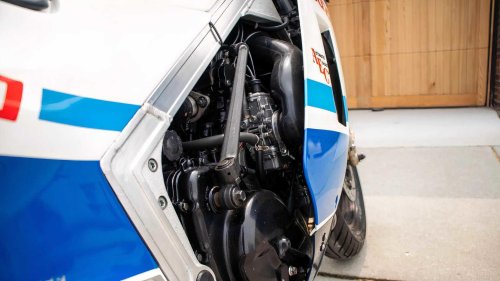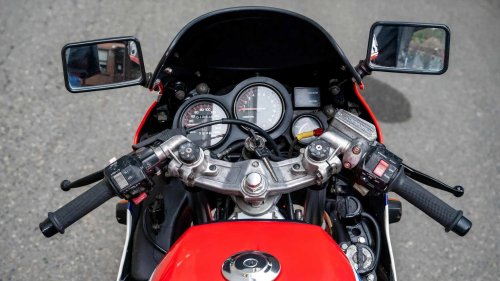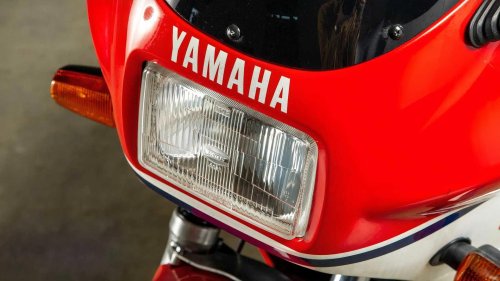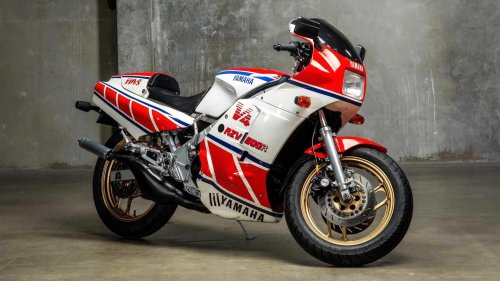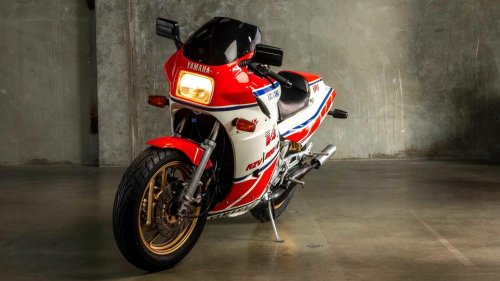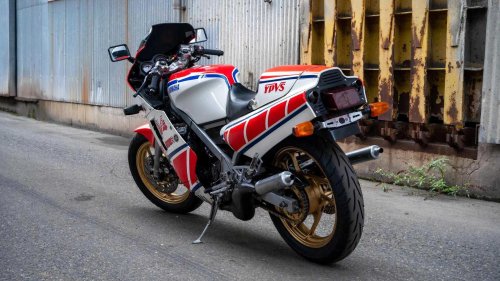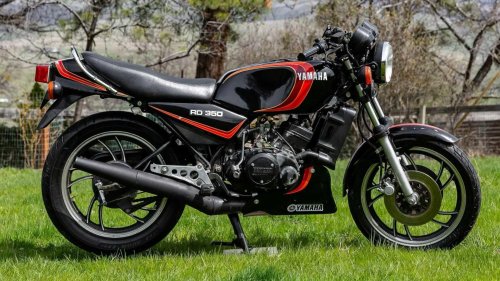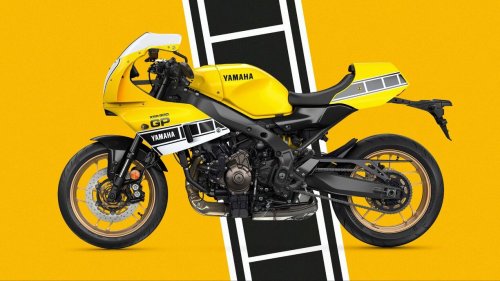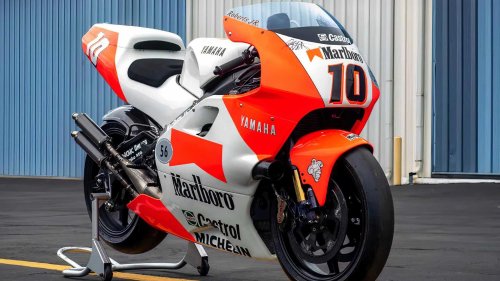
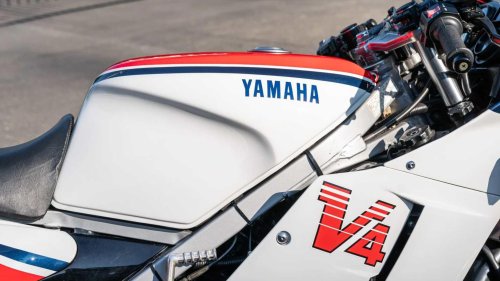
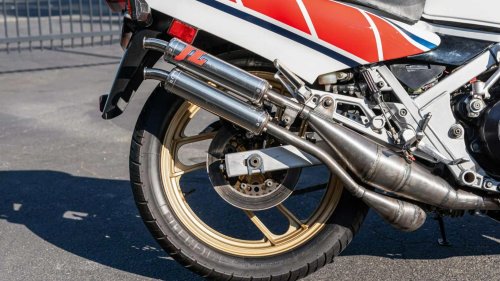
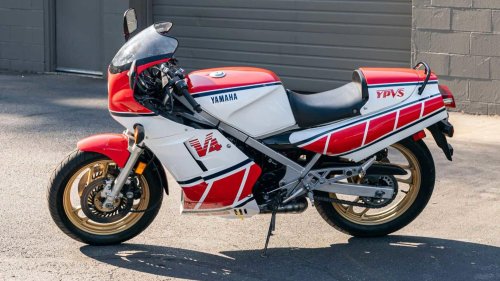
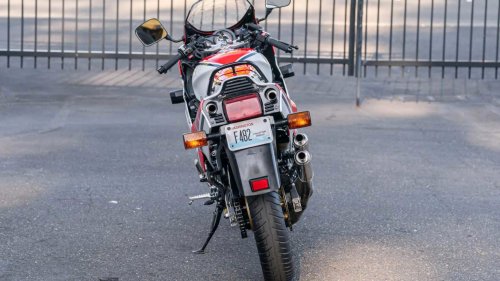
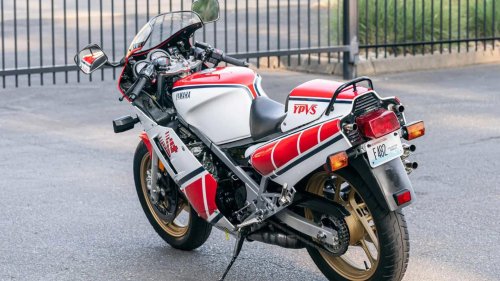
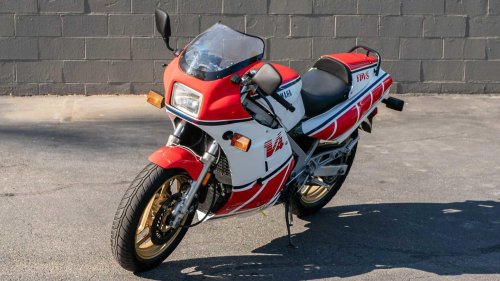
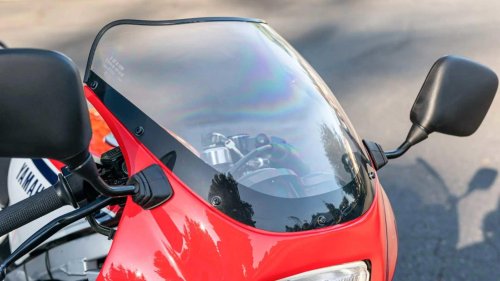
















There is a particular kind of frustration reserved for the machine you cannot have. Not because it is too expensive, or too fast, or too impractical, but because a federal agency decided it should not exist in your country. In 1984, Yamaha built a production motorcycle directly derived from the Grand Prix race bike that had won three consecutive world championships. It was available at dealerships in Canada, Australia, and the United Kingdom. The United States government said no. The EPA's emissions regulations made compliance effectively impossible without compromising the engine that made the bike worth building, and Yamaha chose to build it correctly for the markets that would have it. Forty years later, collectors are still crossing the border to find one. The GP Bike That Started Everything Iconic Motorbikes Kenny Roberts won the 500cc World Championship in 1978, 1979, and 1980 on Yamaha's YZR500. He was the first American to win the title, and the manner of his victories, attacking fast corners with the rear wheel sliding in a technique imported from American dirt-track racing, changed what Grand Prix motorcycle racing looked like. The bikes that carried him to those championships were inline-four two-strokes, developed through successive iterations to extract maximum performance from the 500cc class. The YZR500 evolved considerably during Roberts' championship years, with Yamaha's engineers continuously refining the engine architecture and suspension package to stay ahead of the competition.By 1983, the YZR500's development had produced the OW70, a bike using a 50-degree twin-crank V4 architecture with exhaust power valves to broaden the powerband. Roberts used this machine in the 1983 season. Yamaha used photographs of Roberts with the new production bike for its promotional launch materials, making the connection between the race machine and the road bike explicit from the first moment of public awareness. The message was straightforward: this is the GP bike you can register, insure, and ride to work. The EPA had a different message for American buyers. What Yamaha Actually Built Bring a Trailer The RZ500 engine is a 499cc liquid-cooled two-stroke 50-degree V4 with twin crankshafts and reed valve induction on all four cylinders. The four 26mm Mikuni carburetors are mounted to the side of the engine rather than in the vee between the cylinder banks, where the YPVS power valve servo unit sits instead. The YPVS system adjusts exhaust port timing electronically as engine speed rises, expanding the usable power band beyond what a fixed-port two-stroke could deliver and making the bike considerably more manageable on public roads than a conventional racing two-stroke of the same displacement.The frame is a steel perimeter design, a layout borrowed directly from racing motorcycle practice. The rear shock absorber is mounted horizontally under the engine, an arrangement that clears space for the upper cylinder expansion chambers that would otherwise occupy the area under the seat. The front suspension is 37mm air-assisted forks with a variable anti-dive system. The 16-inch front wheel was the contemporary sporting choice, paired with an 18-inch rear. The complete package weighed 437 lbs wet. The gear shafts are removable from the right side of the engine without splitting the crankcases, a detail that tells you something about the priorities of the people who designed it. This was a machine built for people who would work on it. Why America Never Got One Bring a Trailer The EPA's emissions standards for motorcycles in the mid-1980s were structured around the assumption that motorcycles used four-stroke engines. A two-stroke engine produces power on every crankshaft revolution rather than every other one, which theoretically enables higher specific output. The practical consequence is that a two-stroke produces significantly higher hydrocarbon emissions than a four-stroke of equivalent displacement, because a portion of the fuel-air charge passes through the combustion chamber and out through the exhaust without being burned. This is not a tuning issue or an engineering failure. It is a fundamental characteristic of the two-stroke combustion cycle.Making the RZ500 comply with EPA hydrocarbon emissions limits would have required changes to the engine's fundamental operating principle. The exhaust power valves, the reed valve induction, and the expansion chamber exhaust system that gave the bike its performance characteristics were all aspects of the same two-stroke architecture that made compliance impossible. Yamaha could have built a different bike. It chose instead to build the right bike for the markets that would accept it, and to leave the United States to manage without one. Contemporary auction documentation confirms the situation plainly: emissions rules put in place by the EPA prevented Yamaha from selling the RZ500 in the US, so the select few in American hands had to be imported, typically from Canada. Meet The 1984-86 Yamaha RZ500 Bring a TrailerThe RZ500 went on sale in 1984 at a price of approximately $4,800 in the Australian market and at comparable pricing in Canada and the UK. Production ran through 1986, at which point Yamaha discontinued the model. Total production across all variants is estimated at approximately 6,632 to 6,800 units, with the majority going to Canada, Australia, and European markets. The Suzuki RG500 Gamma arrived during the same period, was lighter by approximately 80 kg, and was by most objective measures the faster machine. The RZ500 outshoots the RG500 on one specific metric: it is the bike that existed in a showroom you could walk into. For most American enthusiasts who wanted a production 500cc two-stroke V4 derived from a GP championship machine, the RZ500 was the only option, and it was not actually available.The model year differences are minor but documented and matter to collectors. The 1984 launch model carried the original color scheme and fairing configuration. The 1985 model brought revised graphics. The 1986 final year also received minor updates. All three years used the same fundamental engine, frame, and suspension package. The RZV500R sold in Japan used an aluminum frame and weighed approximately 20 lbs less, but was also detuned to comply with Japanese regulations, producing significantly less power. The RZV500R has since been exported privately from Japan and is regarded by the community as a separate and distinct machine from the Canadian and Australian market RZ500. Living With A Two-Stroke V4 In 2026 Bring a Trailer Two-stroke ownership in the modern era requires a specific kind of commitment that four-stroke riders do not face. The expansion chambers are the most critical mechanical variable on any surviving RZ500: cracked, dented, or incorrectly repaired pipes will compromise power delivery in ways that are immediately audible and measurable, and correct replacement chambers for a 40-year-old performance two-stroke are not stocked at the local motorcycle shop. The YPVS servo system requires periodic synchronization to ensure the power valves are opening and closing correctly across all four cylinders. When the system is correctly set up it is transparent in use. When it is not, the power delivery becomes uneven in a way that experienced riders will notice immediately.The gearbox oil is the primary service interval on a two-stroke: there is no engine oil sump in the conventional sense, with lubrication handled by Yamaha's Autolube injection system drawing from a separate reservoir. The four 26mm Mikuni carburetors require synchronization across all four units, a process that demands patience and the right tools but is well-documented in the owner community. Parts availability through specialist suppliers remains reasonable for a bike of this age, and the RZ/RD Owner's Group represents the most comprehensive online resource for technical documentation, parts sourcing, and build advice currently available to owners. The community around these bikes is small, knowledgeable, and consistently generous with information. The Canadian Connection Bring a Trailer Canada received the RZ500 as an official Yamaha market, which means Canadian-titled examples represent the cleanest available route to US ownership. The 25-year rule that permits importation of vehicles not originally sold in the United States without EPA compliance applies to all surviving production examples: the most recent 1986 bikes crossed that threshold in 2011. Any example you find today is fully legal to import and register in the United States provided it carries the correct documentation. The practical reality is that most RZ500s already in American hands arrived through the Canadian border at some point in the preceding four decades, which means the Canadian title that confirms provenance is also the document that confirms the import was completed.What you are looking for when buying is straightforward to define and genuinely difficult to find: an unmodified, running example with documented maintenance history and original expansion chambers. Modified bikes are common, original bikes are not, and the gap in value between the two categories is significant. Anything that has been converted to a track configuration, fitted with non-original pipes, or had its YPVS system bypassed is a different purchase from a numbers-correct original. The community's advice is consistent on this point and has been for years. Buy the best original example you can afford. Restorations are expensive and the correct original parts are becoming harder to source with every passing year. What One Is Worth Today Bring a TrailerCurrent valuations show a good condition RZ500 at $18,700, a figure that reflects a market which has been paying increasing attention to the two-stroke GP replica category as surviving examples become scarcer and the bikes that started the 500cc production race replica conversation receive the recognition they were never quite given during their brief production window. A listing from 2017 noted $15,000 as the going rate for a nice example. The trajectory since then has been upward, and the condition spread between a rough running example and a correct original bike is wider than the valuation table alone conveys. The collector who finds a clean, documented, unmodified Canadian-market RZ500 and understands what they are looking at is buying a machine that was never supposed to be in this country, from a three-year production run that ended nearly forty years ago, at a price point that has not yet caught up with that history. The Bike America Said No To Bring a Trailer The EPA did not ban a dangerous machine. It banned a brilliant one. The regulatory framework that excluded the RZ500 from the US market was not designed with the RZ500 in mind. It was designed around four-stroke emissions chemistry, and the RZ500 used a different combustion cycle that could not meet the same standards without ceasing to be the machine it was. Yamaha made a reasonable engineering decision: build it correctly for the markets that can have it, and let the other markets manage without. The consequence is that the closest thing to a road-legal Kenny Roberts GP bike that Yamaha ever built was never officially sold in the country where Kenny Roberts came from.The collectors crossing the border to find Canadian-titled examples are not circumventing anything. The 25-year rule exists precisely to allow machines like this to enter the market once the regulatory rationale for exclusion has receded into history. What they are doing is correcting a forty-year-old outcome that had less to do with the motorcycle's merits than with the timing of its existence. The bike the US government said no to has become exactly the kind of machine that serious collectors will spend years tracking down. That is, in retrospect, the most predictable outcome imaginable for a forbidden-fruit two-stroke V4 with a GP pedigree and a three-year production run.Sources: Iconic Motorbike Auctions, Hagerty, RZ/RD Owner's Group, Bring a Trailer.