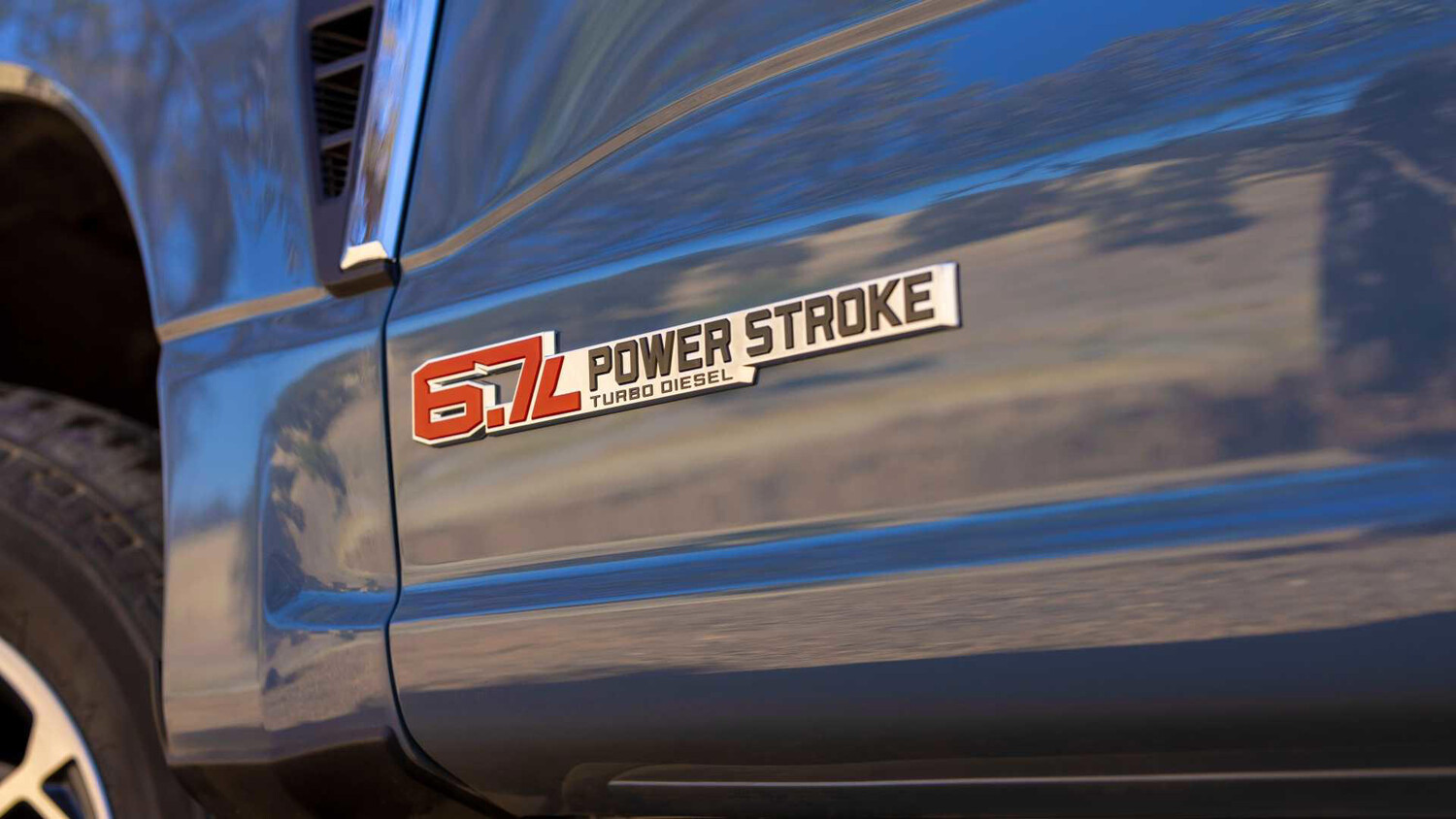
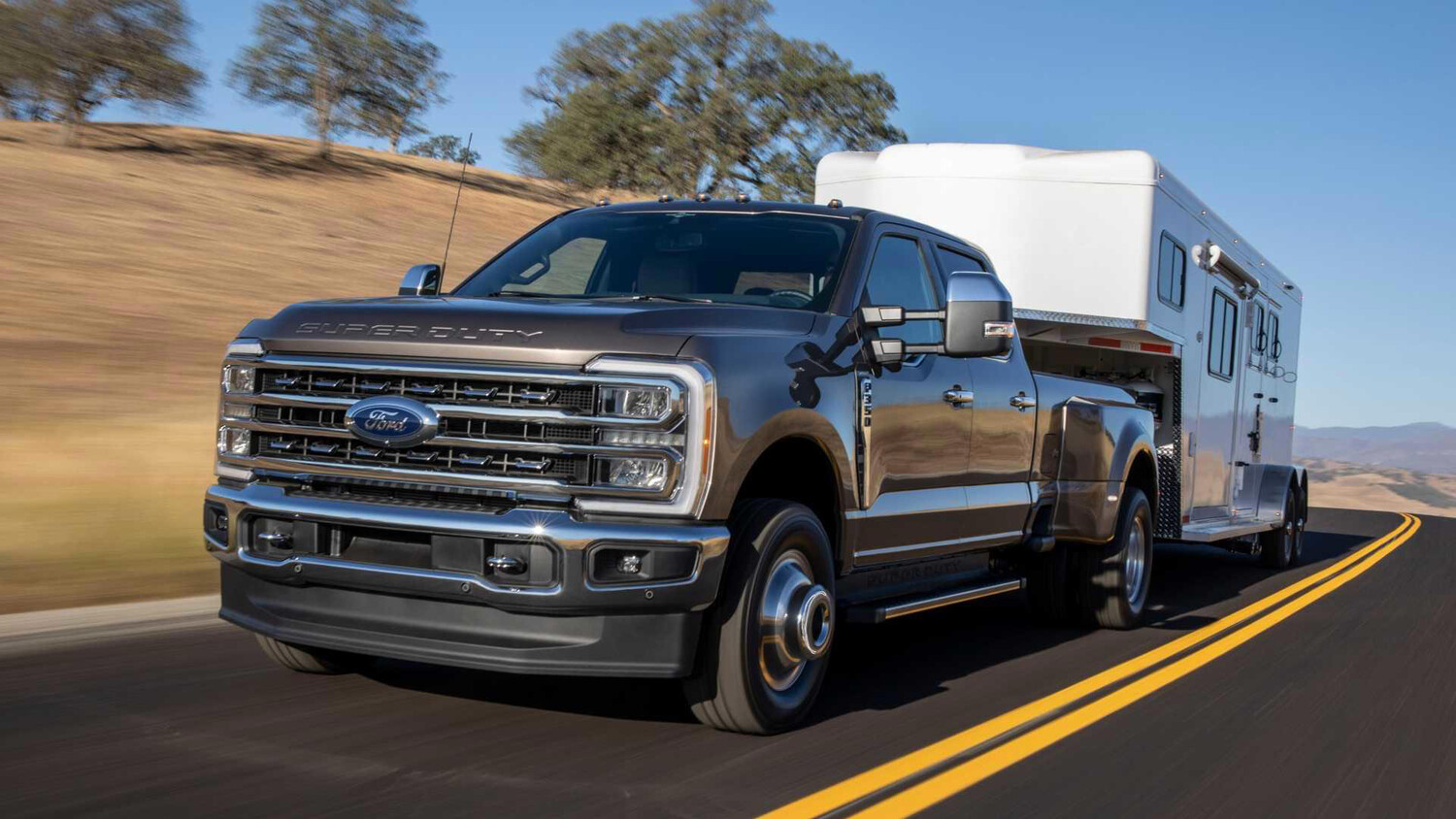
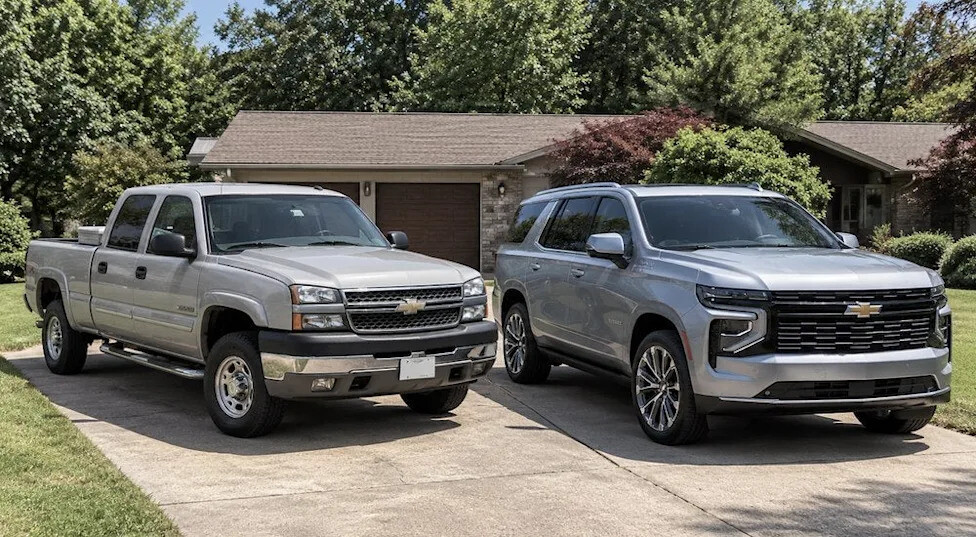
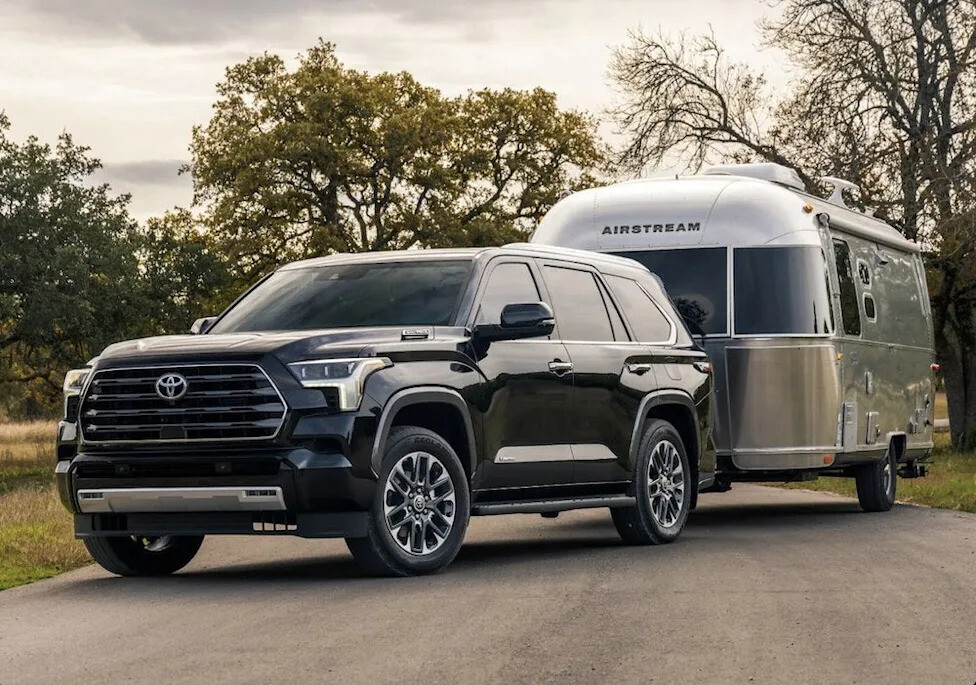
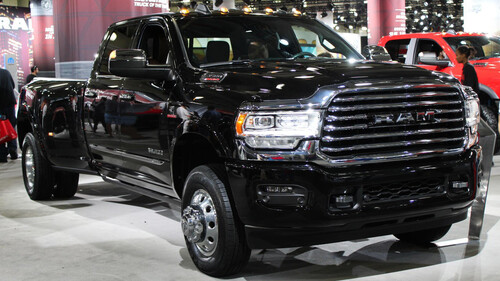
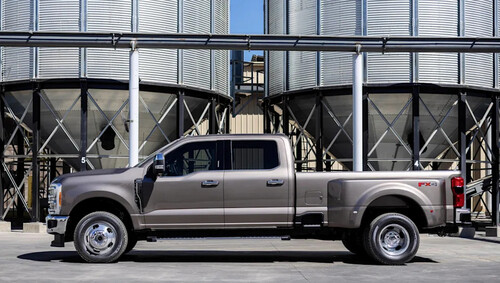
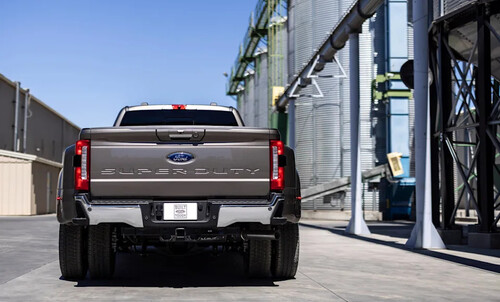
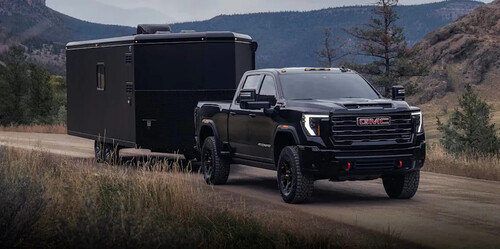
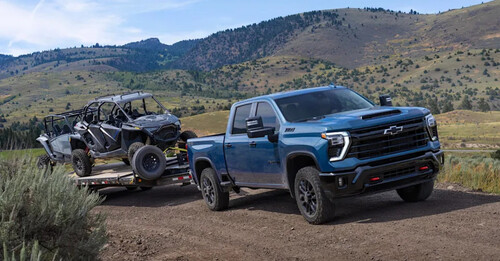
The car-buying market in the United States is very different from Europe, Australia, and Asia. Here, the default engine choice is gasoline-powered internal combustion, while Spain, France, Croatia, India, and others tend to skew toward light-duty diesel powerplants. Those jurisdictions value the additional energy per gallon relative to gasoline. The result? Improved fuel economy.The one place where diesel engines are most commonly found in the US is under the hoods (or cabs) of heavy-duty pickups, 18-wheelers, and construction equipment. That's because another big benefit of diesel engines is that they tend to produce lots of torque right off idle, making it easier for those big machines to get their heavy cargo moving. Walk around a construction site or a towing yard, and you're sure to see dozens of Ram 3500, Chevrolet Silverado HD, and Ford F-Series Super Duty trucks just waiting to be put to work.It's not uncommon these days to see a stock diesel truck engine produce 1,000 pound-feet of torque or more. Yet despite that prodigious amount of twist, horsepower is usually comparatively low for diesel powerplants. For example, despite decades of heavy-duty one-upsmanship among Ram, General Motors, and Ford, the first factory-installed 500-horsepower diesel didn't come out until 2023, under the hood of the redesigned F-Series Super Duty. How Did Ford Get There? FordThe latest 6.7-liter Power Stroke turbodiesel V8 produces 475 hp and 1,050 lb-ft in standard form, but a high-output version ups those numbers to the aforementioned 500 hp, plus 1,200 lb-ft of twist. Either engine is available as an option on the F-250 and F-350. The one-class-up F-450 gets a standard Power Stroke and offers the HO as an option. The Blue Oval's experience with diesel goes back much farther than today's headline-grabbing numbers.The first Power Stroke was a rather unassuming but extremely reliable 7.3-liter turbo V8, found in the classic old-body-style (OBS) F-Series starting late in the 1994 model year. Making up to 275 hp and 525 lb-ft, it's almost exactly half as powerful as today's truck. The replacement came in the middle of the 2003 model year. Despite its smaller 6.0-liter displacement, the new Power Stroke made 325 hp and 570 hp thanks to a more efficient intercooler, variable-geometry turbocharger, and a number of other engineering changes. Unfortunately, the 6.0 suffered from several mechanical problems when new, although the aftermarket now has some good solutions.Its replacement in 2008 was the short-lived 6.4-liter Power Stroke, the first truck engine to come from the factory with dual turbochargers. The compound setup featured a smaller turbo that fed lightly pressurized air into a larger, higher-pressure unit, thus reducing turbo lag at low speeds without sacrificing output. Its 350 hp and 650 lb-ft were a handy upgrade over the 6.0-liter, but after only two years on the market, the powerplant got axed in favor of a wholly redesigned 6.7-liter Power Stroke V8. Initially making 400 hp and 800 lb-ft, it was a big level up from earlier Ford turbodiesels, but that wasn't the end.FordSteady upgrades to the engine brought torque closer and closer to that four-digit mark until Ford finally broke the barrier with the 2020 model year. Boasting 475 hp and 1,050 lb-ft, the Blue Oval briefly held the diesel truck output crown until Ram volleyed back with a 1,075-lb-ft Cummins turbodiesel in 2021.Not content to leave well enough alone, Ford took its long-running 6.7-liter engine back to the drawing board. By adding a unique turbocharger and upgraded exhaust manifolds, the high-output Power Stroke that came along in 2023 was able to breathe better, allowing it to crest that magic 500-hp number – with a best-in-class 1,250 lb-ft of torque as well. What Does Torque Mean For A Truck? FordIn the case of the record-breaking Power Stroke, all that grunt means the Ford Super Duty can tow up to 40,000 pounds with a gooseneck-style hitch. A lot more goes into that capability rating than the engine's sheer force because if you want to hit that number, you've got to option the F-450, which includes dual rear wheels, wider and more robust axles, and commercial tires riding on 19.5-inch aluminum wheels. But even if a buyer chooses a less capable Super Duty, such as a single-rear-wheel F-250, the high-output Power Stroke would still add a measure of confidence even while towing smaller loads, especially on hills or slippery surfaces.The 500-hp Super Duty isn't the only pickup to offer eye-popping power, torque, and capability. The 2026 Ram Heavy Duty is available with a 6.7-liter Cummins turbodiesel inline-six that makes 430 hp and 1,075 lb-ft, allowing a properly equipped 3500 with dual rear wheels to tow up to 36,610 pounds. Meanwhile, the Chevrolet Silverado HD and GMC Sierra HD offer a 6.6-liter Duramax turbodiesel V8 that can tow 36,000 pounds, thanks to 470 hp and 975 lb-ft. Why Do Diesels Make More Torque Than Horsepower? FordIn designing a diesel engine, most automakers opt for a longer piston stroke and a narrower cylinder bore, a design that maximizes low-end torque at the cost of a rather low redline. A longer stroke means longer piston rods, which in turn means a crank pin that's further away from the center line of the crankshaft itself. The design means that for a given amount of vertical piston movement, there's more rotational force on the crankshaft. Said another way, think of how much easier it is to remove a stuck bolt with a long breaker bar than a ratchet.That turning motion is the very definition of torque. The amount of twisting force that an object (in this case, the crankshaft) exerts on another object (the rest of the driveline and axles). And since the engine doesn't have to be spinning very fast for big torque to show up, you get all that grunt just off idle. Of course, with such heavy forces at play under the hood, diesel engines are usually built from extremely tough materials, such as solid iron.FordThe drawback, if you can call it that, would be that high-rpm power is rather limited by a diesel's lower engine speeds. That's why it took the auto industry until 2023 to mass-produce a 500-hp diesel, when gasoline engines crossed that threshold in the mid-2000s – big power is less important than big torque.Still, we doubt Detroit's Big Three automakers will call off their game of leapfrog any time soon. Seemingly every year, there's another insane statistic coming from the heavy-duty pickup segment. If things keep going the way they're going, a 600-hp turbodiesel could be on the horizon. The only question: Which automaker will break that ceiling first?