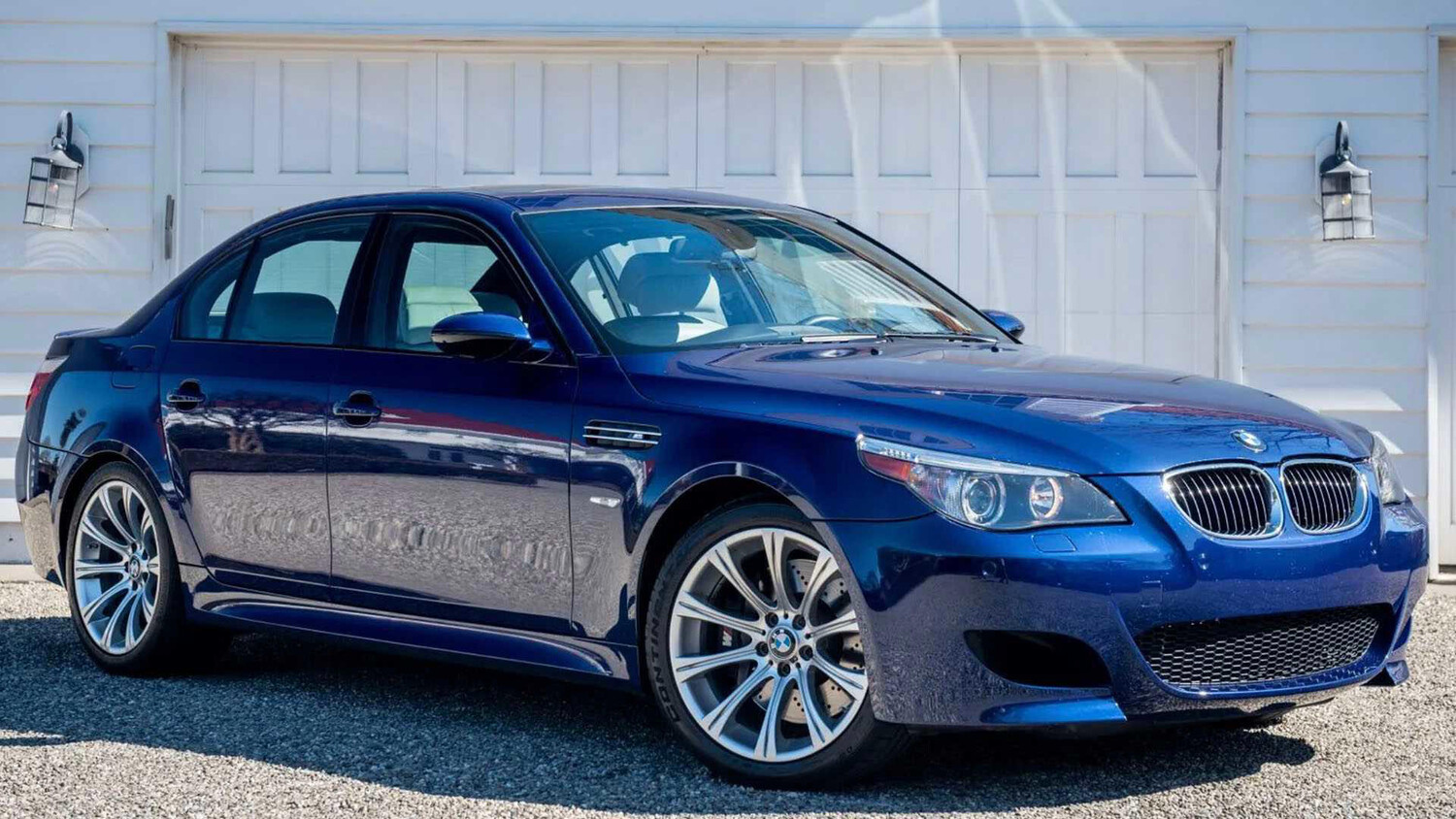
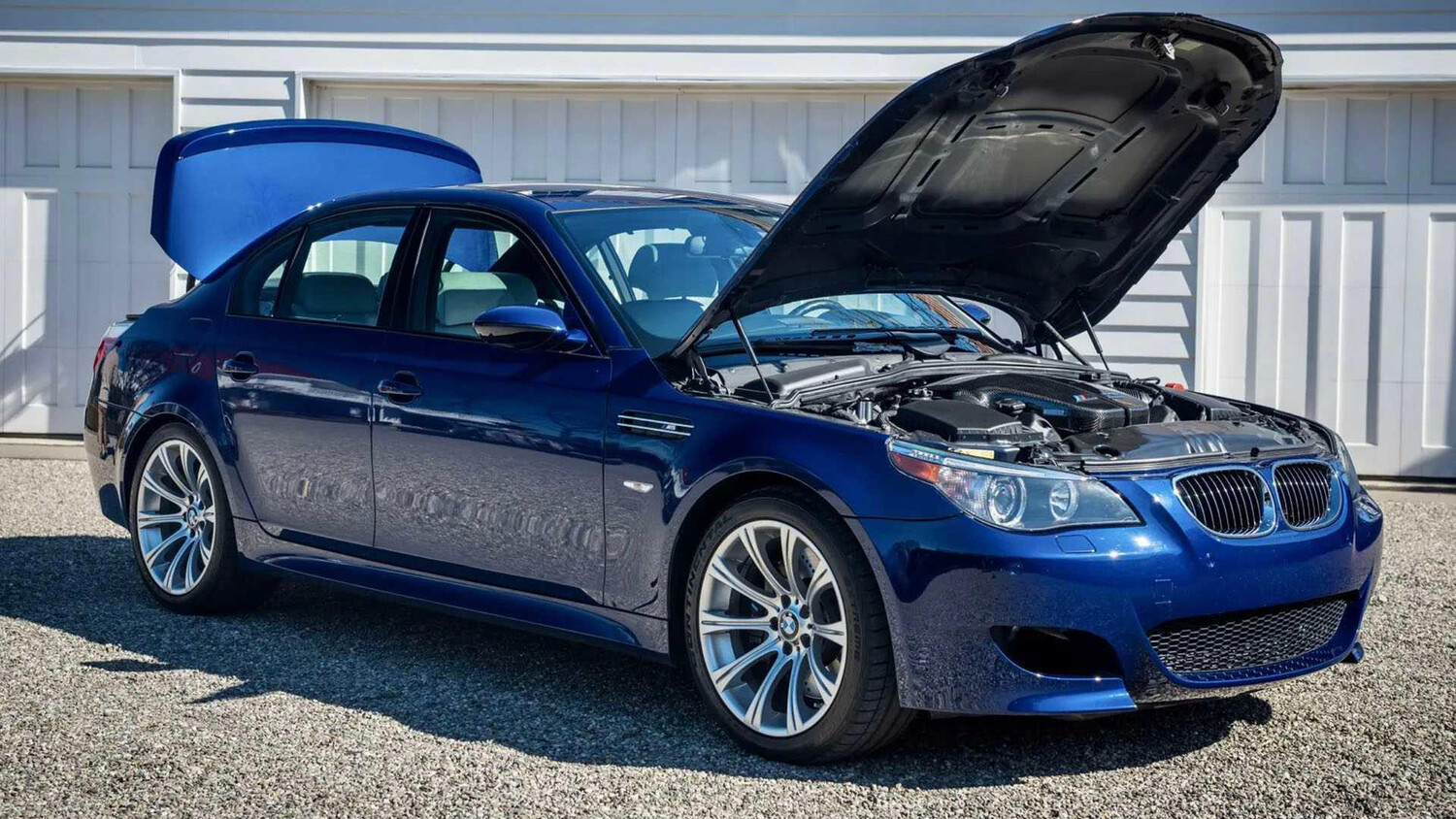
Super sedans have long walked a fine line between everyday usability and serious performance. They were born from the desire to offer the track-capable, high-performance characteristics of a sports car, seamlessly blending the three-box, four-door body for everyday practical use, fit for a family. Over the years, manufacturers have sharpened this formula, turning executive sedans into genuine corner-carving performance weapons.In the early 2000s, the race to break new ground led to a landmark achievement—a production sedan that crossed the 500-horsepower threshold for the first time. At a time when even flagship sports cars like the Ferrari 360 Modena offered around 400 hp, this four-door family-friendly sedan reset expectations. Using an engine that traced its roots to Formula 1, packing more power than a Ferrari at its time and a screaming 8,250 rpm redline, this German sedan set new benchmarks for fast and practical cars. Yet, despite its technological edge and benchmark-setting stats, it fell short in long-term durability.Today, the same car that once cost over $80,000 new can often be found for just over a tenth of that. It stands as a symbol of how some of the most advanced sport sedans can lose value rapidly, especially when complex engineering doesn’t age gracefully. Here's everything you need to know about the world's first 500-hp sedan, and why it is selling for peanuts today. A 500-HP BMW M5 E60 Is Worth Less Than $20,000 Today BMW M5 E60 Sedan Front Three Quarter 2005-2010 BMW M5 E60 Values (Source: Classic.com, KBB)The BMW M5 E60 was the first production four-door sedan to offer 500 hp, and it cost $81,200 in 2005. However, in 2025, the four-door high-performance sedan holds an average used selling value of $23,646, according to Classic.com, which collates all the recent auctions and prices. Meanwhile, 2005 models are the cheapest, selling on average for just under $21,000, according to the site. These prices reflect the values of well-kept models auctioned in the last five years, and a large chunk of well-kept M5s sell for well under that number.The online aggregator of used car listings highlights $62,700 as the highest recorded price paid – for an E60 M5 automatic. The lowest recorded sale, however, was just $9,400, which is nearly a 10th of the original value. These values are based on 183 sales recorded in the last five years for the E30 M5 with the SMG automated manual transmission, which is more abundantly available due to larger production.A total of 9.491 units of the E60 M5 were manufactured for the US. However, exclusively for the North American market, BMW introduced a 6-speed manual transmission. According to the BMW Registry, BMW M produced a total of 1,366 examples (including six pre-production vehicles) of the manual models, sold as a no-cost option. Due to its rarity and desirability, the E60 M5 with the manual transmission has held its value better in comparison.Classic.com suggests the manual E60 M5 holds an average value of $36,436, based on 93 sales over the last five years. The listing with the lowest recorded sale was $15,000. But the highest recorded sale for a manual V10-powered M5 is $127,500. This high-valued example was a 2008 model in highly original condition with 10,000 miles sold in 2022. E60 BMW M5 - Production Production Years - 2005-2010 E60 M5 Total Production - 20,589 Units Sedan Global Production - 19,564 Units Sedan US Production - 9,491 Units Sedan + Manual Production - 1,366 Units (North American market only) E60 M5 Touring (Wagon) Production - 1,025 Units (Europe only) The E60 M5 Was Powered By The S85 5.0-Liter V10 BMW M5 E60 Sedan V10 Engine Performance Specifications (Source: BMW)The BMW E60 M5’s engine stands as the most unique powertrain ever installed in a production sedan. BMW developed the S85B50 engine from the ground up, drawing heavily from its Formula 1 program at the time. The result is a naturally aspirated 5.0-liter V10 that produces 500 hp at 7,750 rpm and 384 lb-ft of torque at 6,100 rpm. With a redline of 8,250 rpm, the S85 offered a power band and character rarely found in sedans of its era—or since.The S85 uses a 90-degree V10 layout with aluminum construction for both the block and cylinder heads. It employs double overhead camshafts and 40 valves, allowing for efficient airflow and high-revving capability. BMW fitted it with Double-VANOS variable valve timing on both intake and exhaust camshafts, enabling optimized performance across the rev range. The engine’s compression ratio sits at 12.0:1, which enhances thermal efficiency and power output without forced induction.To manage the high-revving characteristics, the S85 uses individual throttle bodies (ITBs) for each cylinder and a semi-dry sump oil system. These features help maintain consistent lubrication and throttle response under aggressive driving conditions.BMW paired the engine with a 7-speed SMG III automated manual transmission as standard. This single-clutch gearbox allows for rapid gear changes through steering-mounted paddles or a central gear lever. In the U.S., BMW later introduced a 6-speed manual transmission due to customer demand, making the M5 one of the few V10 sedans to offer a traditional manual option.The E60 M5’s chassis complements the engine’s output with a near 50:50 weight distribution and adaptive suspension. The car rides on an aluminum-intensive suspension system and features performance-tuned electronic dampers. BMW also fitted a limited-slip differential for enhanced traction and cornering stability. Braking comes from large ventilated discs with electronic brakeforce distribution and dynamic stability control. Unreliable V10 Resulted In High Depreciation For The E60 M5 Via: Bring a Trailer BMW S85 Common Problems Rod bearings Throttle actuators SMG Transmission Valve cover gasket oil leak BMW Tuning lists the four most common problems with the BMW M's S85 engine. According to the platform, the S85 is prone to premature rod bearing failure. Their deterioration can lead to engine knocking or catastrophic failure, leading to expensive preventive maintenance.The throttle actuators for the ITBs often fail due to internal gear wear or electronic issues. The SMG automatic transmission is known for its complexity and potential for failure, generally caused by problems with the hydraulic pump, clutch, or electronic components. That is why manual conversions became popular among E60 and E61 M5 owners. Lastly, the S85’s valve cover gaskets can degrade, leading to oil leaks, which is common in older BMW models. If not attended to immediately, it can result in oil seeping onto the exhaust manifold, causing smoke and potential fire hazards.Yet, for enthusiasts willing to maintain it, the performance-per-dollar ratio remains unmatched. In a world where modern sedans often rely on turbochargers and electronic trickery, this naturally aspirated pioneer still delivers an analog thrill—at a fraction of its original price.