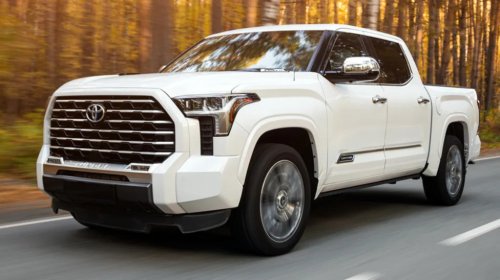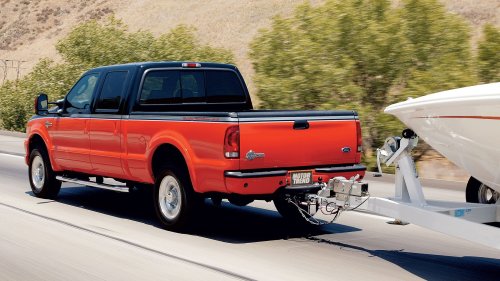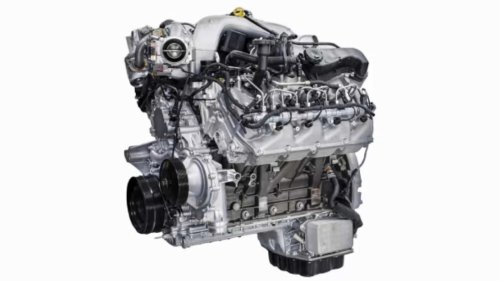
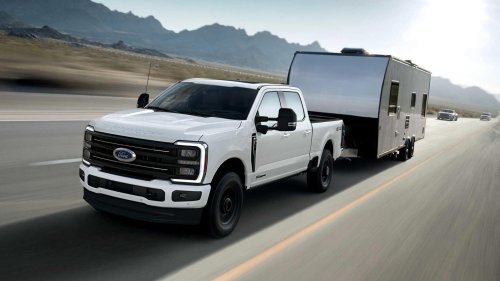
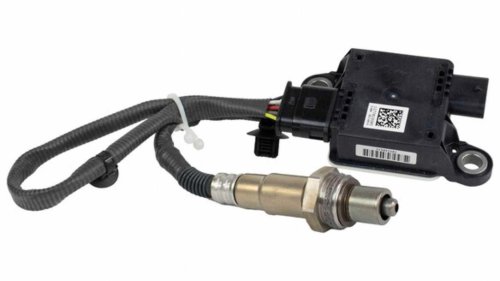
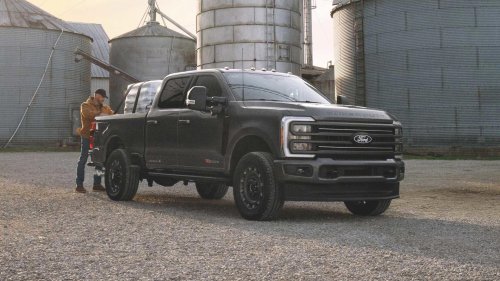
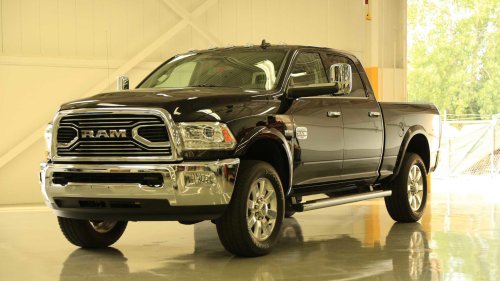
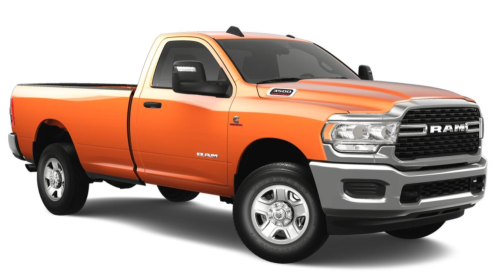
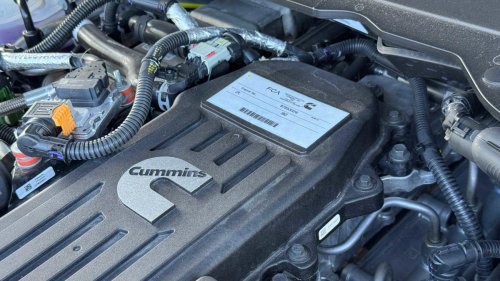



















Jump LinksThere's a reason why manufacturers keep turning out heavy-duty diesel-powered trucks. Owners use these vehicles to haul equipment over long distances or to use as a business tool for the brute-force torque they deliver. These folks may also love the idea of a heavy-duty pickup that can get on with its work rather than sound like it's fighting every hill.But the diesel engine in these vehicles is just part of a much bigger ownership equation, and there’s far more to this story than just the purchase price. Many buyers discover, once their truck reaches a certain age, that there are many bills to consider and repairs to make, long after most of the useful warranty coverage has expired. Diesel Premium Still Feels Justified From The Driver's Seat Ford ProModern heavy-duty diesel trucks are quite remarkable pieces of equipment, with engines like Ford's 6.7-liter High Output Power Stroke V8, producing up to 500 hp and 1,200 lb-ft of torque. That's certainly not fake capability, and it's perfectly capable of hauling a loaded trailer over the highway. Buyers don't mind paying the diesel premium when first purchasing a vehicle to gain that mechanical advantage over gasoline counterparts.Diesel buyers know they can rely on the engine's low-RPM pull with full confidence. They'll have a truck that feels calm under pressure, especially when climbing long grades. It can merge with confidence into traffic while carrying a full payload, or hold speed for hours on end during long highway slogs.FordTo those owners, the ownership math looks quite simple. They just need to spend the appropriate amount of money and can then rely on a truck that will work harder for a long period of time. And as they settle into ownership, they may realize that while the engine is the most expensive part of the equation, it's also among the most durable components.For no-nonsense heavy-duty pickup buyers, that was often the entire pitch, especially in the old diesel days. However, things are no longer quite as straightforward, as modern diesel trucks are far more complex. Certainly, the engine is still tough, but the ownership risk is more nuanced and involves some of the systems designed to keep the engine compliant with emissions regulations. The Window Sticker Doesn't Show The Support System Ford The window sticker on the side of that showroom truck gives plenty of information about its power, towing, trim, payload, cameras, interior tech, and trailer assist features. For most buyers, that's enough to sell the sizzle, and they don't necessarily ask about the hidden components that have become increasingly important. So, they may not grill the salesperson about particulate filter regeneration, NOx sensors, diesel exhaust fluid (DEF) quality sensors, SCR catalysts, EGR coolers, fuel filters, or derates. They may be blissfully unaware of these items and the diagnostic labor time they may need to pay for if one of those systems goes awry.The truth is that a modern diesel truck is certainly not a gas truck with a different fuel tank. Diesel truck owners need to perform additional tasks, such as refilling the diesel exhaust fluid tank at every oil change. They may need to drain the fuel-water separator and, in some cases, inspect the exhaust system. And they may have to be particularly careful to stay within the oil life monitor's limits, which may require no more than 10,000 miles or a maximum of 1 year between service intervals.Diesel truck ownership adds extra layers of responsibility and additional points of potential failure. And while a gas truck can have its own expensive problems too, it doesn't carry the same after-treatment burden. If someone buys a diesel truck and uses it mostly for short runs or allows it to idle for extended periods, they may need to consider additional costs and implications down the road. The same can be said for anyone who might buy a used diesel truck without a clear emissions service history. The Hidden Cost Starts With DEF, DPF, EGR, And SCR Repairs Ford Some of the biggest costs associated with a modern diesel truck involve the emissions system itself. While DEF refills are predictable, some downtime may be ahead if the truck thinks that the DEF system, diesel particulate filter, EGR system, or selective catalytic reduction (SCR) hardware is not quite right. The truck itself may seem to be motoring along okay, but the dashboard might say otherwise. And the owner may need to turn it in for diagnostic work, sensor inspection, cleaning, forced regeneration, or even major parts replacement before everything can get back to normal.The biggest fear is probably the diesel particulate filter replacement. Some outlets reference a price of between $2,000 and $5,000, including labor, although cleaning and forced regeneration may cost less if the technician can recover the filter. DEF and SCR faults can be more irritating, and a urea quality sensor, NOx sensor, DEF pump, heater tank issue, or pressure fault could trigger a warning, a countdown, or a power derate. These can sometimes trigger dashboard illuminations even if there is sufficient DEF or no actual emissions problem.The EPA has said in the past that DEF sensor errors have led to widespread failures across vehicle and engine brands. Meanwhile, the NHTSA has also issued recall documents for certain 2014 to 2019 Ram 1500 EcoDiesel pickups because thermal fatigue could cause cracks in the EGR cooler. This might allow vaporized coolant to enter the EGR system, triggering combustion events in the intake manifold. That particular recall covered around 108,000 vehicles and is just one example of what EGR failures can cause. The Used Truck Surprise Usually Arrives After The Easy Warranty Window Stellantis Some of these accumulating issues typically arise when a diesel pickup reaches the six- to ten-year age window. This means that the first buyer may not necessarily be exposed to those costs, but someone picking up what they think is a used bargain could be. The subsequent buyer may see a good-looking truck with a clean body and attractive mileage, and at a price that’s high but justifiable because this type of truck "lasts forever."For that latest buyer, there's every chance the original warranty is long gone. While coverage varies by GVWR class, some manufacturers offer only federal emissions warranty coverage for up to 5 years or 50,000 miles for covered emissions parts. While that's meaningful protection, a six-year-old used diesel pickup buyer might be outside the safe window.It's also important to remember that powertrain coverage and emissions coverage are not necessarily the same thing, so a failed emissions component may not be treated as an internal engine failure. And forum posts show how ugly that type of timing can become. One 2016 Ram 2500 owner reported that their DEF pump had failed twice, with the first failure occurring while still under warranty, but the second failure occurred outside the window, triggering an unwelcome cost of around $3,000. The Regulatory Backdrop Makes Future Costs More Complex Not Simpler Ram In early 2026, the EPA gathered DEF system failure data from 14 manufacturers that collectively represented more than 80% of products using such systems. After receiving most of that data, the EPA then issued guidance aimed at removing the DEF urea/quality sensor requirements for diesel equipment. This suggests that regulators believe DEF-related sensor failures and derates are too much of a problem for owners in the real world.But still, that rule does not remove the complexity surrounding DPF, EGR, SCR, NOx sensors, fuel filtration, and associated diagnostics. And it doesn't automatically protect used truck owners from existing repair bills.Elsewhere, the EPA and DOJ reached a settlement with Cummins in 2024, imposing a $1.675 billion civil penalty and more than $325 million in remedies related to alleged defeat devices in the emission software of diesel-powered Ram 2500 and 3500 vehicles. That just shines a light on emissions compliance as a central part of the diesel truck story.Jared Rosenholtz/CarBuzz/ValnetThe cautionary Cummins tale also suggests that deleting emissions equipment could represent a dangerous shortcut for individual owners, even if some see it as a reliability solution. Certainly, repairs can be awkward, expensive, and frustrating, but the legal, inspection, resale, and environmental consequences of equipment deletion can still be serious.Today, a modern diesel truck still makes plenty of sense for the right owner, especially those who tow heavy loads, run long distances, or earn money with their vehicle. But for used buyers especially, it's very important to consider the entire picture and not buy a truck just because the torque figure looks irresistible.The best way to look at diesel vehicles is to appreciate their durability, while being aware that hidden costs may lie in the after-treatment ecosystem. And that means that people should buy such trucks with their eyes wide open. After all, they may be getting an engine that's perfectly capable of hard work, but there's an asterisk to consider because of potential future bills related to the engine’s complex systems.