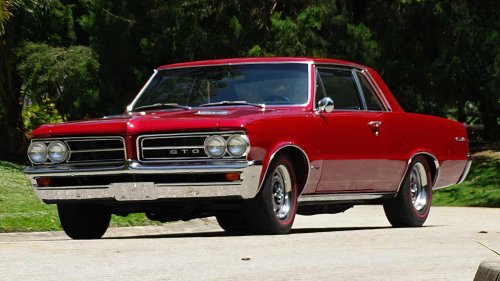
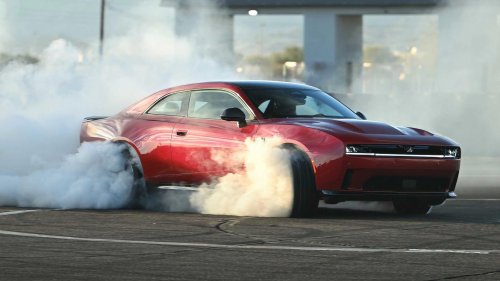
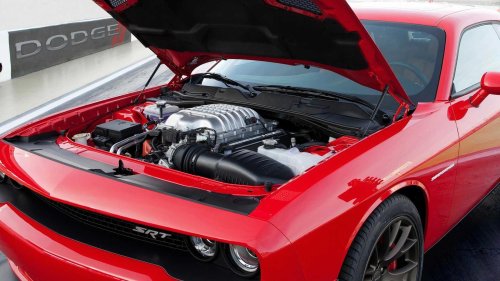
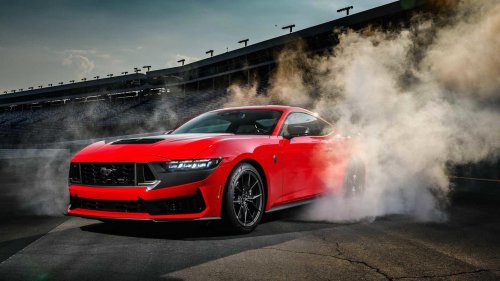
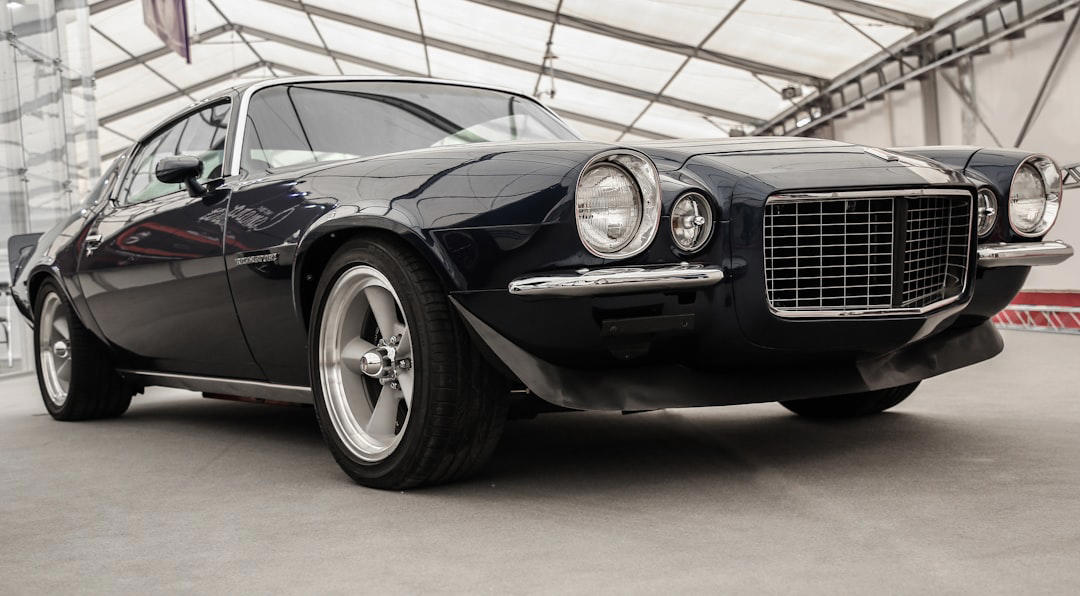
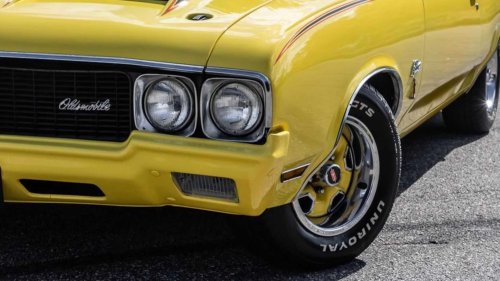
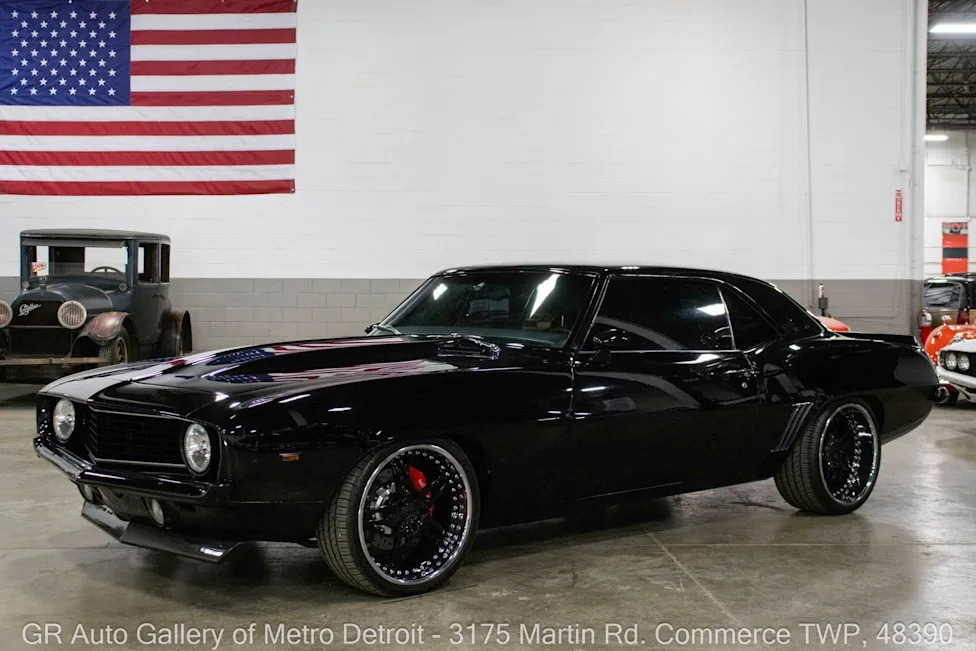
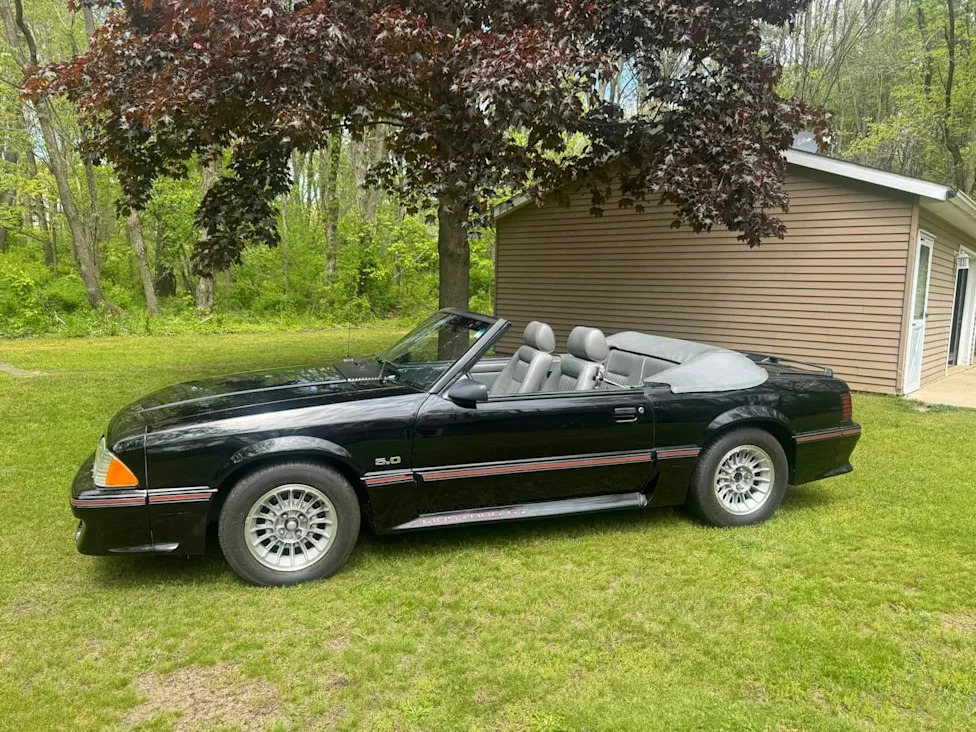
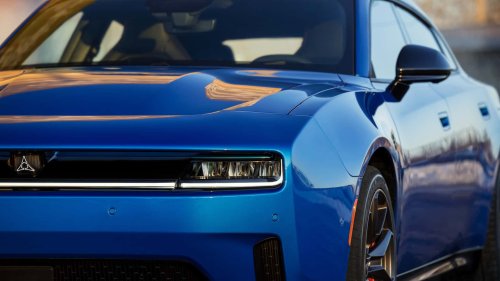
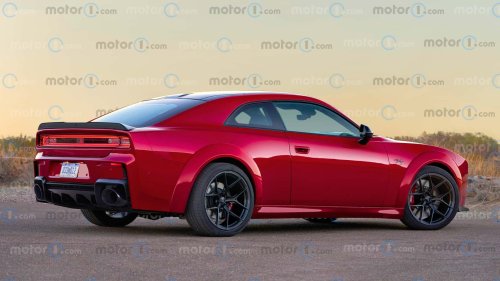
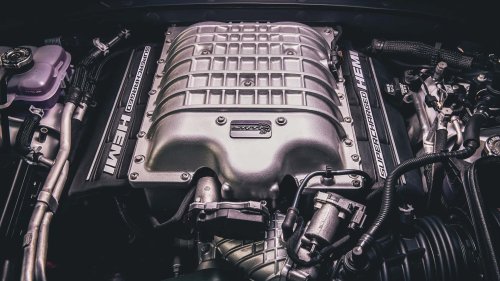
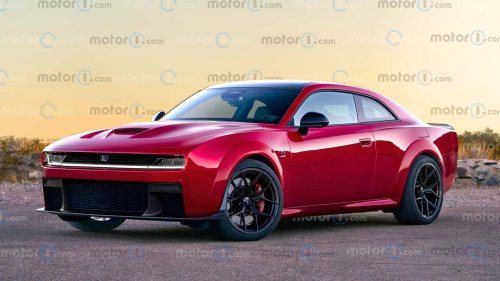
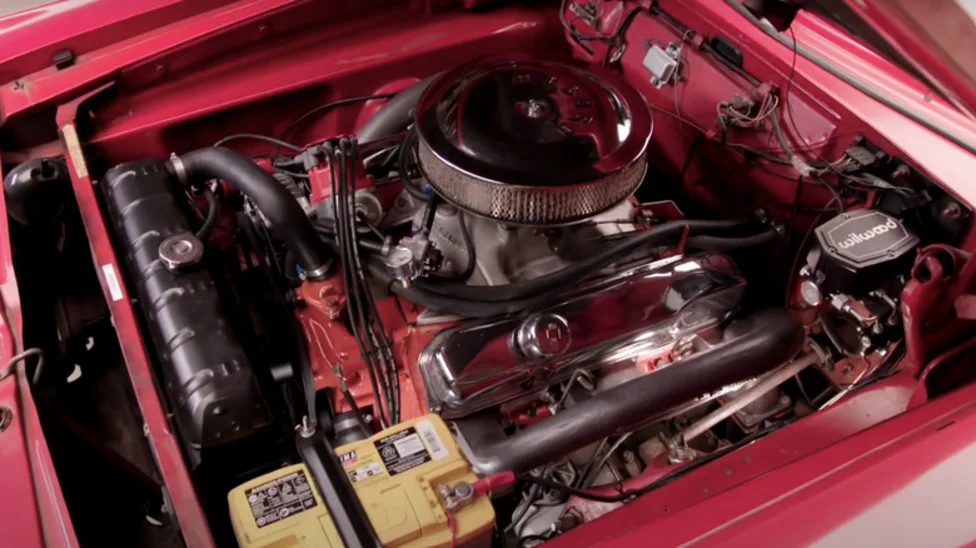
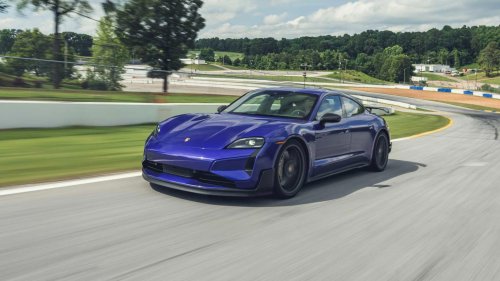
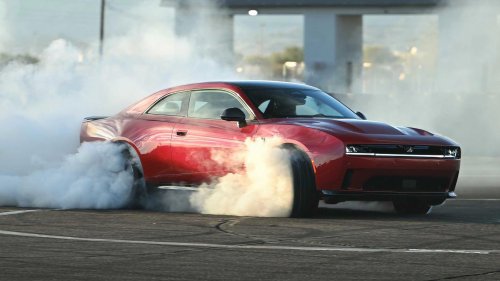
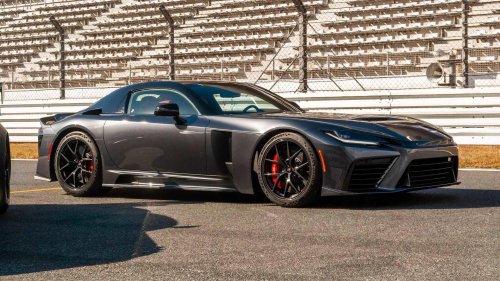
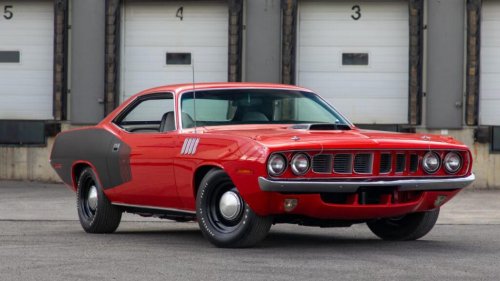
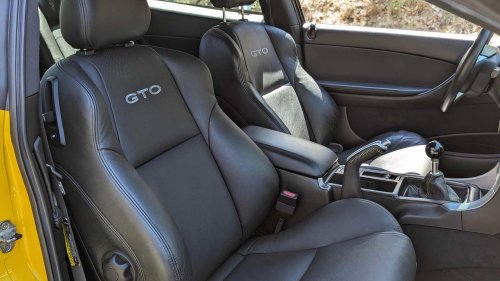
The Modern Muscle Car Era had a soft launch in 2006 with the reintroduction of the Dodge Charger, but went completely gonzo a few years later when the resurrected Challenger and Chevrolet Camaro joined the Ford Mustang to terrorize the streets once again. The high-performance V-8 also made a comeback, and with so much horsepower available, it was actually kind of scary, but in the most fun way possible. It was like the Golden Age of American Muscle on steroids, which is exactly as awesome as it sounds.There has, however, been a radical shift in the past few years. The Challenger and Camaro have been discontinued, plus the Charger is now an EV. The V-8 engine has also been put on the endangered species list, with automakers favoring turbo four and six-cylinder engines, as well as hybrid systems. While these newfangled propulsion systems are capable of impressive power, it aint the same, especially for muscle cars. Tofurkey isn't turkey, AI is a poor substitute for a real friend, and a twin-turbo inline-six doesn't have the same grit or roar of a big honkin' V-8 engine.To give you the most up-to-date and accurate information possible, the data used to compile this article was sourced from various manufacturers and other authoritative sources. Muscle Cars And V-8s Are Inseparable Mecum The 1964 Pontiac GTO was an American-made, intermediate, two-door coupe with a powerful V-8 engine, and since it was the first muscle car, it got to define the segment. Every Golden Age ride that tried to copy the GTO's success, from the Chevy Chevelle to the Dodge Charger, used the template laid out by John DeLorean and Pontiac. When the Charger was rebooted in the 2000s, it broke the door limit rule, but made up for it by bringing back the Hemi V-8, so it gets a pass. Yes, pretty much every muscle car ever made had six-cylinder options, but you've never heard of someone bragging about their 198 slant-six Plymouth Barracuda. Best Muscle Car/V-8 Pairings of All-Time 1967 Chevrolet Camaro SS - 396ci V-8 1968 Dodge Charger R/T - 426ci Hemi V-8 1969 Ford Mustang Bos 429 - 429ci Super Cobra Jet V-8 1969 Pontiac Trans Am - 400ci Ram Air IV V-8 1969 Plymouth Road Runner A12 - 440ci 6BBL V-8 1970 Chevrolet Chevelle SS - 454ci LS6 V-8 1986 Ford Mustang GT - 5.0-liter V-8 2015 Dodge Challenger SRT Hellcat - 6.2-liter supercharged Hemi Hellcat V-8 You've also never seen a Buick GS 250 inline-six line up against a Hemi-powered Mopar in a red light challenge. The fact of the matter is, muscle cars were made for the power and mystique of the V-8 engine. In many cases, the V-8 is as big a star as the nameplate, with some cars defined by their engine, like the Hemi 'Cuda. A lot of the other rules for a muscle car can be relaxed, but cutting the V-8 out of the equation is non-negotiable. This was established in the Golden Age and has carried over to modern times. It's not immediately obvious what to call a muscular-looking ride without a V-8, but it's crystal clear that it is not a proper muscle car. V-8s Are Strong in the Demographic Mecum Muscle car enthusiasts are much different than the average performance fan. While they don't hate sports cars or supercars, they prefer the raw aggression of an American muscle car. That, of course, means they are into the power and fury that can only be delivered by a V-8 engine. Any automaker trying to offer up anything but a V-8 in a muscle car is not reading the room, as that's not what consumers want. It's like trying to convince a life-long Green Bay Packers fan that European soccer is every bit as good as American football. Yeah, they are both sports, but one has dudes prancing around in short-shorts, while the other one is coordinated and directed violence. That's the difference between alt-powerplants and V-8s. Romantic Entanglements Bring a Trailer The V-8 is kind of a romantic notion in that owners have genuine feelings for and emotional attachments to their engines. They are also a source of pride, every time someone asks them what they got under the hood. The same thing can't be said of any other car power source. Nobody is ever going to write a song about a 1.8-liter turbo inline-four. Rappers aren't even trying to find something that rhymes with permanent-magnet synchronous AC motor. There isn't one single person on this planet with a "94-kWh lithium-ion" tattoo, nor is anyone mulling one over. Everything else is simply a way to get the wheels turning, while a V-8 is almost a sentient being, adored by muscle car fans. The Tragic Fate Of The Dodge Charger Dodge Nothing illustrates the importance of V-8 power in American muscle like the face-plant Dodge made with the Charger Daytona EV. Dodge had the extremely popular ICE Chargers and Challengers, which accounted for most of their sales, but abruptly discontinued them in 2023. The news got worse when they announced that these ferocious V-8 beasts were being replaced by an electric vehicle. They didn't actually have the Charger Daytona EV ready to go for the 2024 model year, so for the first time in company history, they had no cars for sale. Eventually, they rolled out the EV sometime in mid-2024, or possibly for the 2025 model year, but nobody noticed. Dodge 2025 First Quarter Sales Durango - 13,701 units Hornet - 4,108 units Charger Daytona - 1,947 units Charger - 1,052 units Challenger - 922 units Journey - 1 unit It's impossible to find sales figures for the Charger Daytona in 2024, but the 2025 first-quarter numbers are brutal. This EV was actually outsold by the leftover stock of the 2023 ICE Challenger and Charger. Dodge has touted the Charger Daytona as the "world's first electric muscle car," which it is, but that's not the flex they think it is. Even with piped-in vroom vroom noises, which the Daytona EV literally has, there is no substitute for the rumble of a gas-powered V-8. More importantly, Dodge has overestimated how much muscle car enthusiasts want to drive a glorified blender that costs almost $80k. They made a muscle car that no muscle car fan wants or can afford, which is the recipe for failure. The SIX PACK Lacks Credibility Dodge perhaps sensed that an EV muscle car might not be a blockbuster, so they also announced an ICE version of the Charger Daytona, known as the SIX-PACK. It derives its name from the legendary 440 Six Pack that made the '69 Super Bee a street champion, but this updated version features a 3.0-liter twin-turbocharged inline-six. The H.O. Hurricane engine produces an impressive 550 horsepower, but it's not likely to lure many Mopar fans. Dodge and Plymouth muscle cars were always equipped with Chrysler V-8s, but this thing is a Stellantis engine, which begs whether it even qualifies as Mopar. We Need A Hemi Hero Dodge Here's the thing: Dodge knocked it out of the park with the Charger Daytona's dynamite design. They just need to put something hot in it to match the sizzling style, and that means a Hemi V-8. If Dodge made the SIX-PACK available with the 5.7-liter and 6.4-liter 392 Hemi engines, they would sell a ton of these bad boys. They should also consider an SRT Hellcat version to really bring the hardcore fans back into the fold. Of course, they would also have to bring the Street Racing Team back from the dead, because that's another thing Dodge did away with in this epic fiasco. The Loyal Ford Mustang Gets It Ford While the Charger Daytona EV calls itself a muscle car, it's not, and that leaves the Ford Mustang as that last pure piece of American muscle. While Dodge and Chevy were finding ways to rid themselves of V-8 performance, Ford went the other direction and squeezed even more power out of their iconic 5.0-liter. Ford unleashed their modular engine, known more familiarly as the Coyote V-8, in 2011, and ratcheted up its power consistently since. Starting with a credible 412 ponies, this amazing engine now exudes up to 500 horsepower, making it the most powerful naturally-aspirated muscle car engine ever. 2025 Mustang Dark Horse Power and Performance (Specs sourced from Ford)Ford clearly understands that muscle car buyers want a kickass V-8, and that's probably the reason why the Mustang is the last one standing. The Mustang does come standard with a 315-horsepower EcoBoost turbo four-cylinder, which is pretty okay, but that's for a different demographic. The 5.0-liter Coyote V-8, which blasts 486 horsepower in the GT and 500 in the Dark Horse, was built for real muscle freaks. There are no EV Mustangs, except for the Mach-E, which is a goofy-looking crossover that is not a Mustang by any stretch of the imagination. There are also no hybrid Mustangs, just gas-chugging V-8s that appeal to the muscle faithful. V-8 Muscle Has The Right Attitude Ford Technology is advancing at a dizzying pace, and automakers are keen to tap into these advances for their models, especially in the propulsion department, but the muscle car is one segment that doesn't need an update. Power on a V-8 can be increased with performance parts or higher compression ratios and doesn't need an electric assist. Muscle cars also shouldn't have their V-8s replaced by battery packs and electric motors. Muscle cars have a surly attitude, and the V-8 is the chip on the shoulder that dares you to start something, so ditching the ICE engine pacifies these street scrappers.Some EVs generate over 1,000 horsepower, but they somehow seem wussier than a muscle car with 500 ponies under the hood. Mopar fans would obviously rather have a 485-horsepower 6.4-liter Hemi Charger 392 than a 670-horsepower Charger Daytona Scat Pack EV. Driving a V-8 muscle car is a visceral experience that excites the senses, while there is something cold and distant about operating EVs. The same is true of hybrids and low-cylinder turbos, in that they just don't bring the ass-kicking joy that a V-8 delivers.