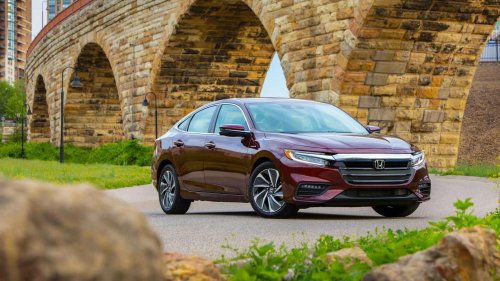
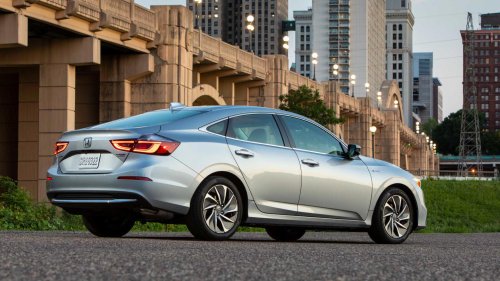
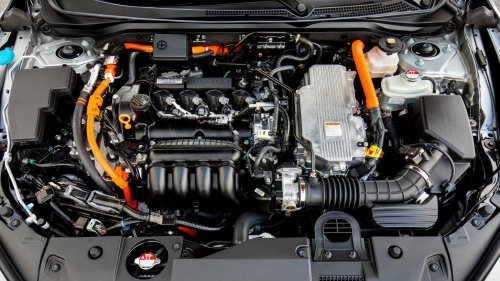
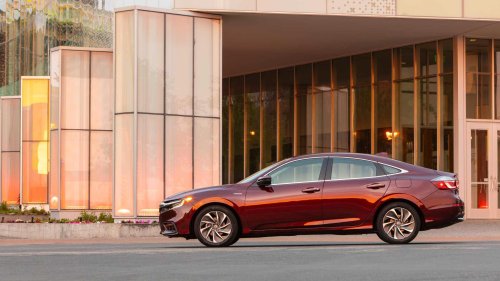
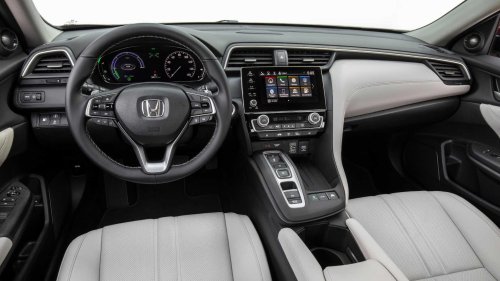
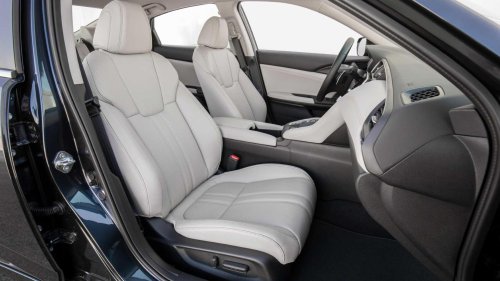
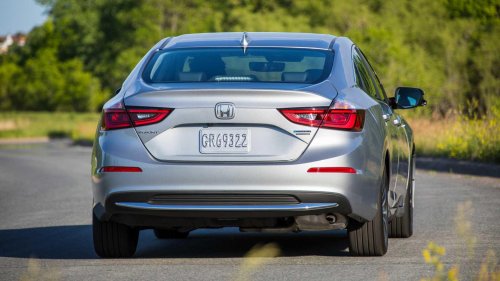



















Hybrid technology in the U.S. has undergone a remarkable transformation, evolving from a niche, experimental segment at the turn of the millennium into a cornerstone of the modern automotive market by 2026. Initially defined by specialized, efficiency-focused vehicles like the early Honda Insight and Toyota Prius, the technology was once viewed with skepticism and largely relegated to early adopters seeking maximum fuel economy.Over the decades, however, manufacturers have successfully moved beyond these limited applications, integrating advanced hybrid systems across a diverse array of platforms, including popular SUVs, sedans, and luxury vehicles. This shift was accelerated by a pragmatic consumer demand for fuel efficiency without the range anxiety or infrastructure reliance associated with pure electric vehicles. Over time, there have been a few compelling and revolutionary HEV creations, but one Japanese model stands out as a remarkable but underappreciated option. How Hybrids Are Shaping The New Car Market Lyndon Conrad Bell | Top Speed As of 2026, the demand for hybrid cars in the U.S. has reached a historic peak. The market is estimated at approximately $778 billion and captures a 42 percent share of the global hybrid sector. This surge is primarily driven by a pivot among American consumers who seek significant fuel efficiency and lower emissions without the range anxiety or infrastructure hurdles currently associated with fully electric vehicles.Over the last decade, hybrids have evolved from niche, economy-focused commuter cars into sophisticated, high-performance vehicles. Modern systems now benefit from advanced power electronics and lightweight materials to provide better acceleration and towing capabilities than their gasoline-only predecessors, effectively positioning hybrids as the new mainstream standard for the American road. Honda's Dedication To HEV Technologies HondaHonda’s journey into hybrid technology began in 1999 with the original Insight, a groundbreaking two-seater that served as the first mass-production hybrid available in North America, earning acclaim for its ultra-lightweight aluminum construction and record-setting fuel efficiency. Over the subsequent quarter-century, the brand evolved its approach from the early Integrated Motor Assist system to its sophisticated, current-generation two-motor hybrid powertrain.Today, this technology is a cornerstone of Honda’s U.S. lineup, powering popular models like the CR-V, Accord, Civic, and the returning Prelude. The commercial success of these models has been significant; electrified variants now represent over 25 percent of Honda’s total brand sales in the U.S., with the CR-V and Accord frequently topping sales charts as the best-selling hybrid SUV and car in the nation, respectively. This widespread adoption marks a successful transition from niche innovation to a core volume driver for the company, helping Honda achieve record electrified sales volumes in recent years. The Honda Insight Is A Revolutionary Hybrid Honda The now-defunct Honda Insight is a forgotten gasoline-electric hybrid sedan that remains a benchmark for modern HEV technologies. Given how few units the brand sold during its availability, from 2018 to 2022, the Insight is a really well-kept secret for good efficiency and reliability in the used market. According to J.D. Power, the 2019 ZE4-generation model year is the one to get, as it benefits from a 78/100 overall score, which includes 77/100 for quality and reliability, 81/100 for the driving experience, and 76/100 for resale.It is admittedly subject to seven recalls relating to the fuel system, seat belts, and other components, but as for the drivetrain itself, it appears to be a very trustworthy unit that will run for a long time, so long as you conduct the correct care and maintenance. What sets it apart from modern counterparts is its hugely impressive fuel consumption achievements. The Edmunds consumer review portal reveals a 4.6/5 average score for the 2022 model year, highlighting its fuel efficiency, handling, and interior packaging to be key benefits. World-Class Consumption Estimates Honda The main reason why you'd want to consider the Insight is because of its outstanding fuel consumption. The base derivative is the most appealing option, as it returns 55/49/52 MPG on the EPA's city/highway/combined cycle and covers 551 miles on a single 10.6-gallon tank with some help from the 1.2-kWh lithium-ion battery pack. You can expect to save up to $5,000 on fuel every five years compared to the average new vehicle currently on sale in the U.S. and spend $1,150 on fuel every year. A full tank of gas will cost you $42.If you opt for the more premium Touring trim, you'll take a hit on consumption and range because of the larger wheels. This model returns 51/45/48 MPG and covers 509 miles on a single tank. You can expect to save $4,500 on fuel every five years and spend $1,250 every year. It costs you $2.08 to drive this hybrid 25 miles. The Brilliance Of Simplicity Honda The Honda Insight features the brand's naturally aspirated 1.5-liter four-cylinder engine with one permanent-magnet synchronous motor attached to a direct-drive eCVT. This system produces 151 horsepower and 197 pound-feet to the front wheels, exclusively, resulting in an 8.1-second 0 to 60 MPH time and 114 MPH top speed. Honda's In-Depth Engine Design Honda The Honda LEB-MMD engine, part of Honda’s Earth Dreams Technology lineup, serves as the internal combustion component in Honda’s hybrid powertrains. This 1.5-liter Atkinson-cycle engine prioritizes thermal efficiency and fuel economy. The Atkinson cycle, achieved through delayed intake valve closing, allows for a longer expansion phase, maximizing energy extraction from combustion. Honda optimizes the LEB-MMD’s design with lightweight aluminum construction and a low-friction architecture to reduce internal resistance.The engine integrates seamlessly with an electric motor, functioning primarily as a power generator while the electric motor handles propulsion. This design eliminates the need for a conventional transmission, enhancing mechanical simplicity and reducing energy losses. The engine’s high thermal efficiency, aided by an advanced exhaust gas recirculation system and optimized combustion chamber design, further improves fuel economy and emissions. Honda's attention to durability and refinement ensures minimal wear and exceptional longevity, making the LEB-MMD a standout in hybrid powertrain engineering. Appealingly Low Used Prices Honda A 2022 Honda Insight typically sells for around $13,761 to $18,409, depending on your specification, condition, and mileage. When new, the LX cost $22,930, the EX $24,160, and the Touring $28,190. These prices exclude the $930 destination charge. The LX comes standard with automatic climate control with rear air vents, cruise control, manually adjustable front seats, a 160-Watt six-speaker audio system, a five-inch LCD interface, LED ambient console lighting, and one USB port for data transfer.Upgrading to the EX gets you a rear-seat center armrest, a 60/40-split-folding rear bench, an improved 180-Watt eight-speaker audio system, and an eight-inch semi-touchscreen infotainment system with Android Auto, Apple CarPlay, Sirius XM, and HD Radio. There are also upgraded USB ports.HondaThe flagship Touring derivative adds the larger 17-inch alloy wheels, LED turn signals on the chrome-finished door mirrors, rain-sensing intermittent wipers, LED fog lights, a passenger-side seatback pocket, HomeLink, dual-zone climate control, and an auto-dimming rearview mirror. Additional features include heated and electrically adjustable front seats, leather upholstery, and a premium 450-Watt 10-speaker audio system with a subwoofer.This generation of the Insight also has the bonus of featuring an impressively comprehensive suite of passive, active, and advanced safety systems. This includes adaptive cruise control, lane-keep assist, and traffic sign recognition. Additional features include Honda's Advanced Compatibility Engineering body structure, airbags covering the front, sides, and curtains, and auto-on high beams. Why The Insight Project Was Abandoned Honda Honda discontinued the Insight in the U.S. market due to weak sales and shifting consumer preferences toward SUVs and electric vehicles. Despite being one of the first hybrid models introduced in the early 2000s, the Insight struggled to gain traction against dominant rivals like the Toyota Prius. The third-generation Insight, launched in 2018 as a hybrid sedan, was positioned as a more premium alternative to the Civic Hybrid.However, it failed to capture a significant market share in an increasingly competitive segment. Honda's focus on electrification and the expansion of its hybrid lineup, particularly with the Accord and CR-V hybrids, further diminished the Insight's relevance. Additionally, the company's strategic shift toward fully electric vehicles played a role in reallocating resources away from the Insight. With the Civic lineup now offering hybrid powertrains, the Insight's role became redundant, ultimately leading to its discontinuation in 2022.