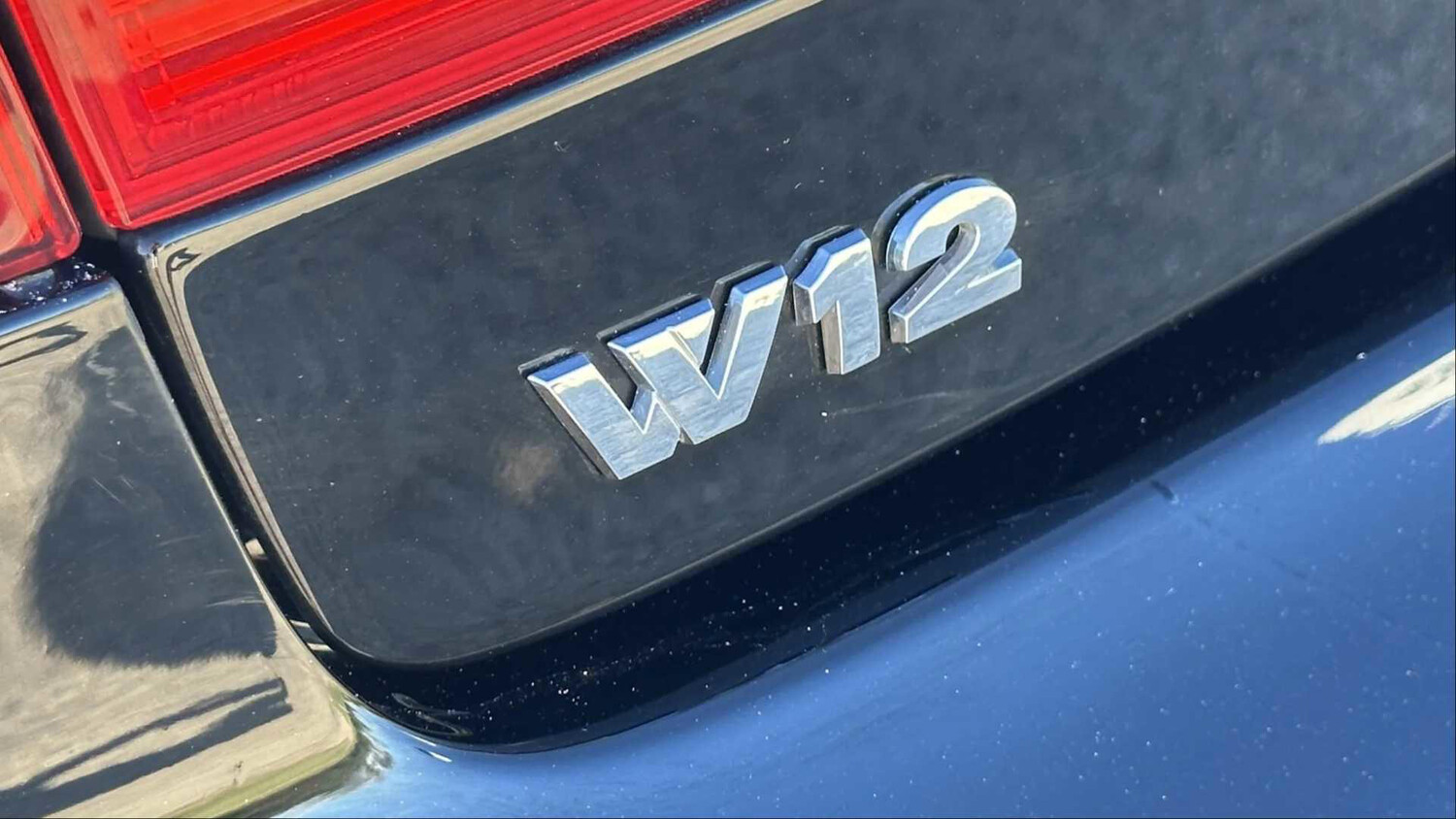
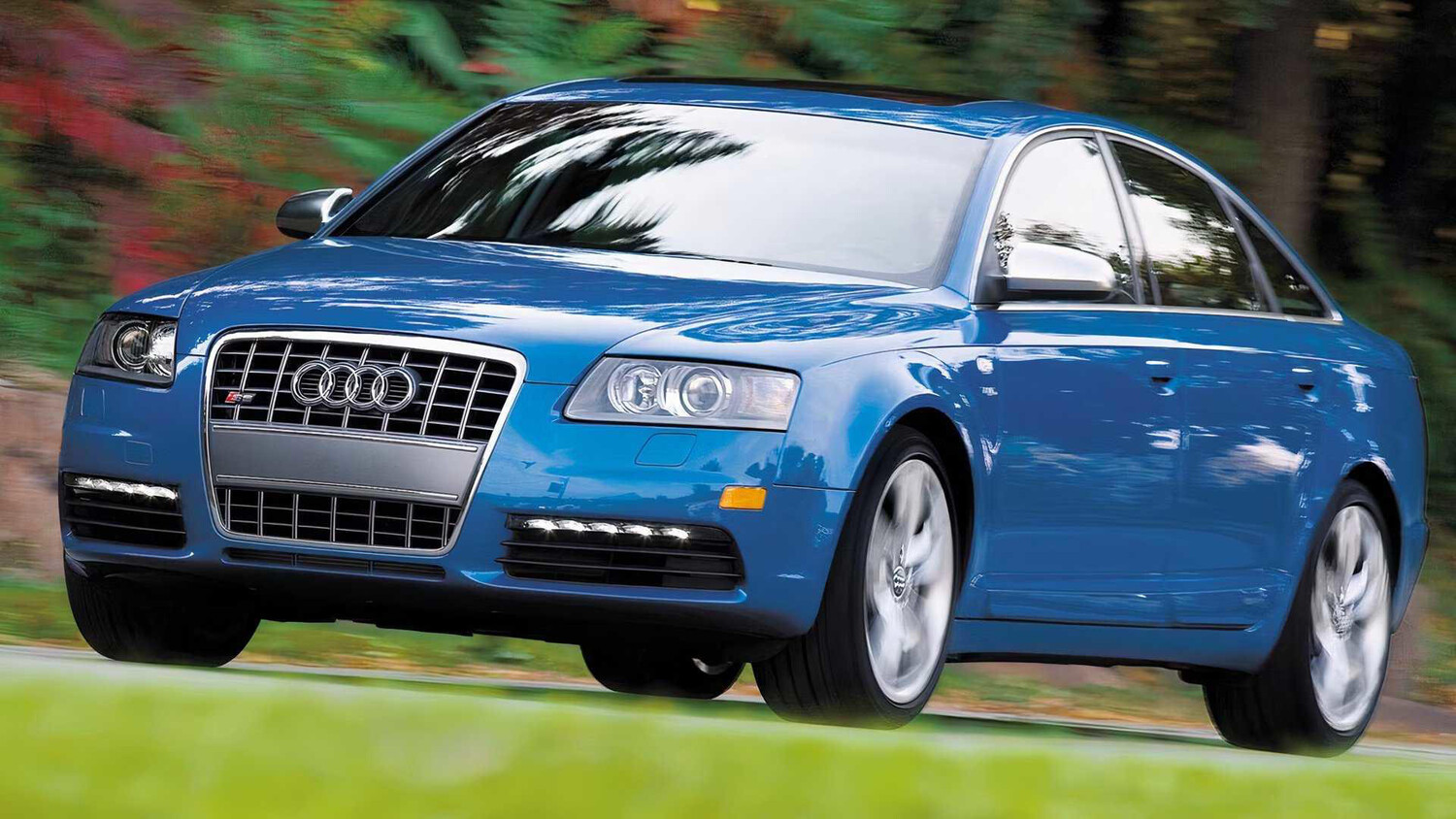
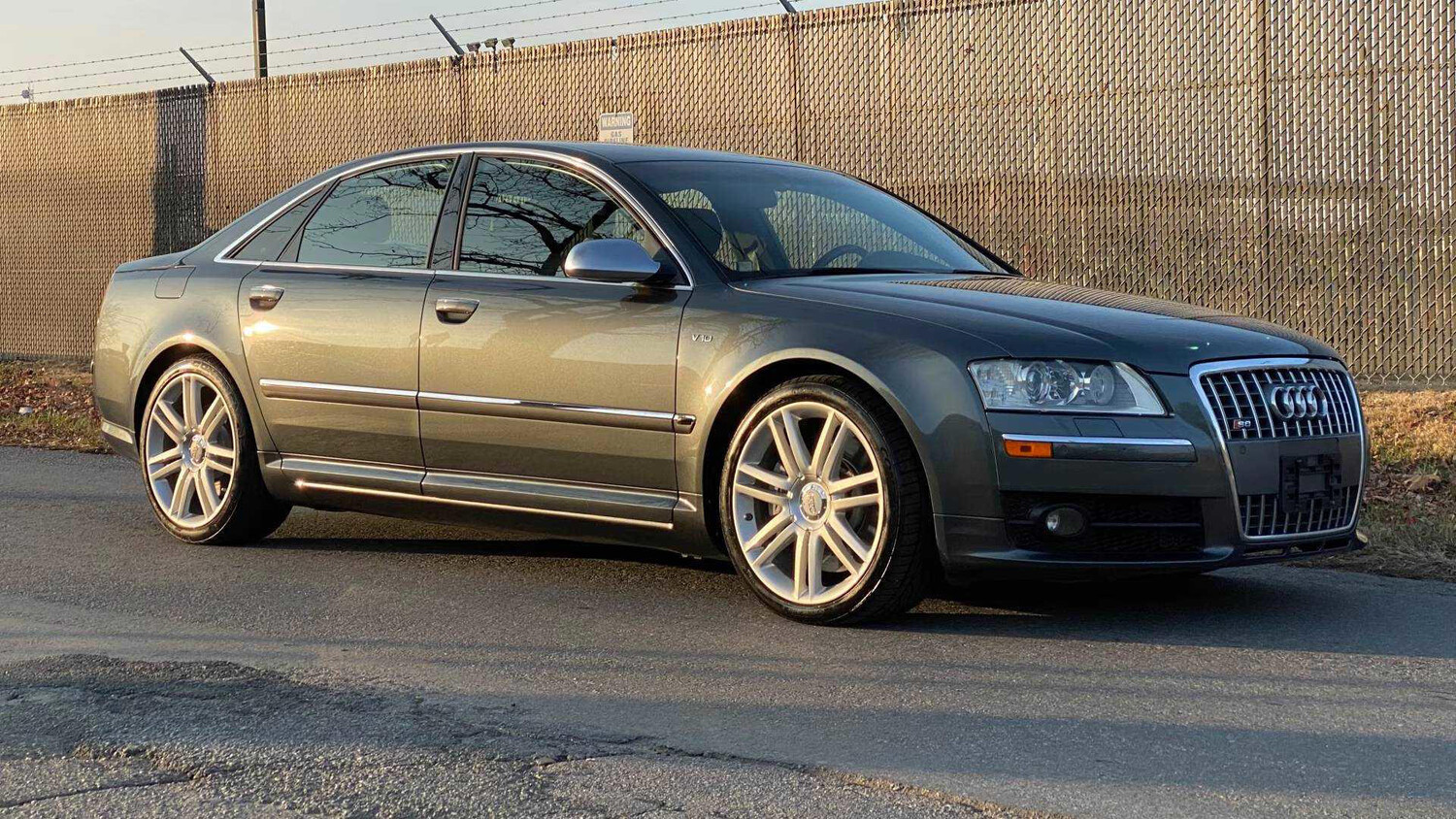
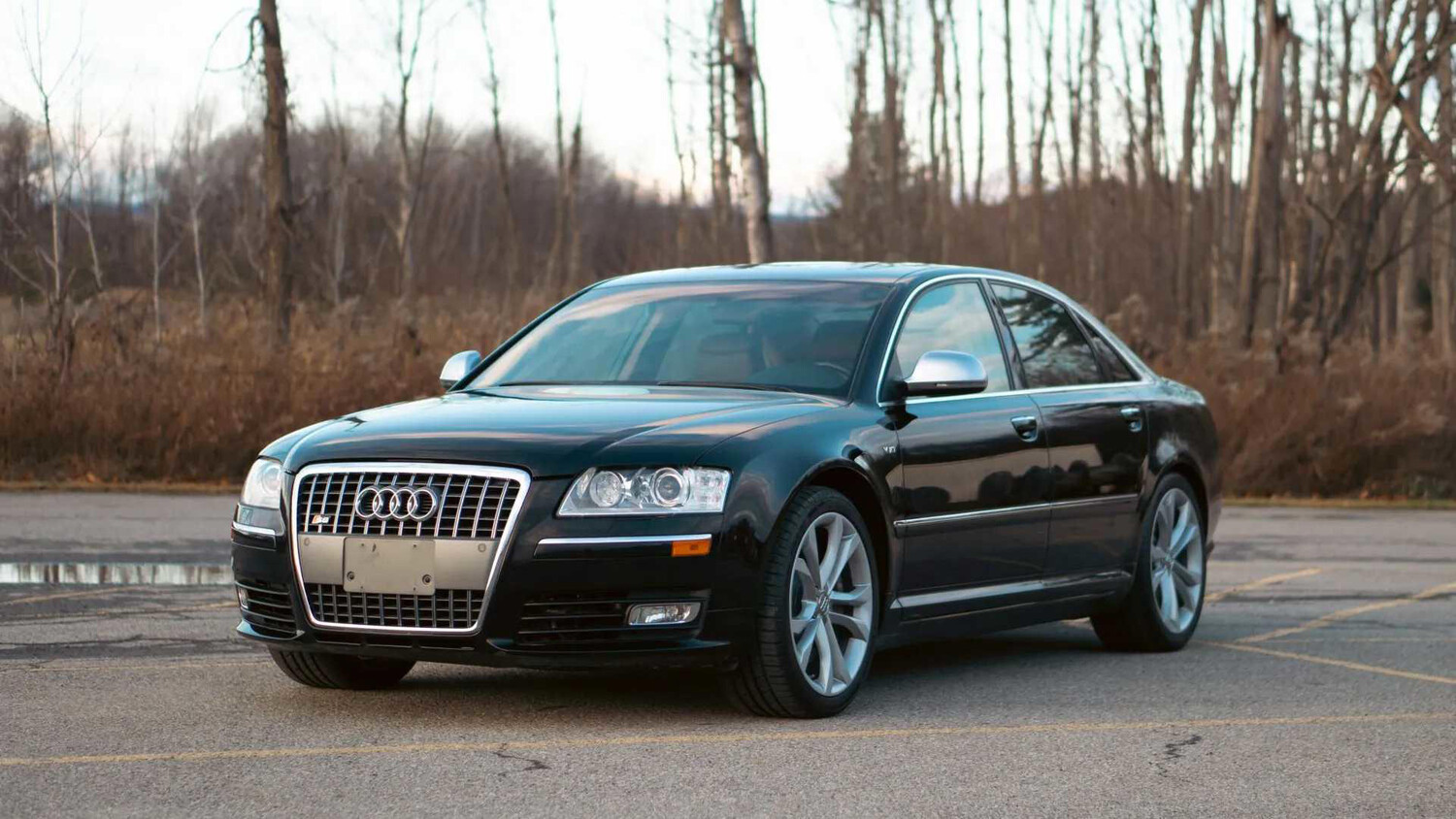
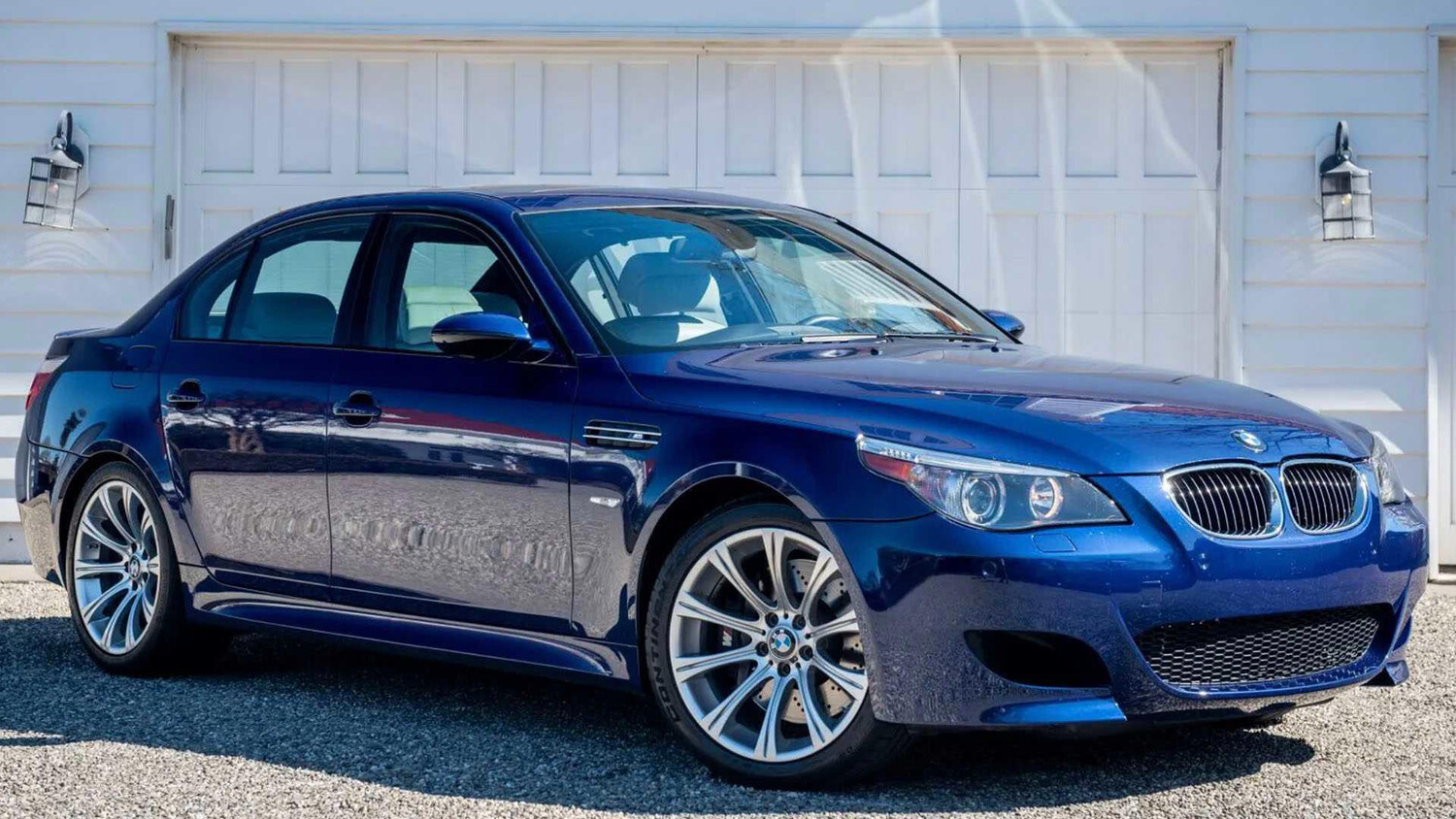
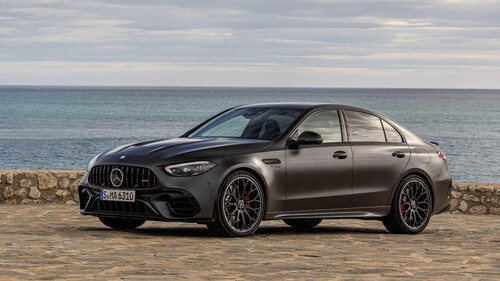
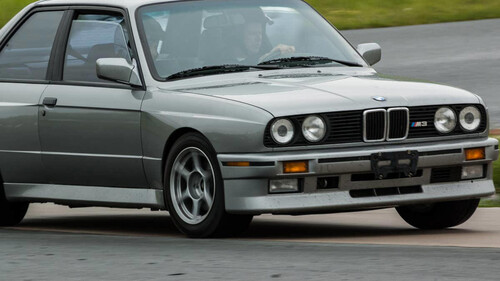
You may have read about the “death of sedans” before, but the sedan is the template for our understanding of the car. When kids draw pictures of cars, it’s usually a three-box sedan style, and if someone offered you their car to take to dinner, you’d probably be expecting a Toyota Camry or BMW 3-Series, not a Jeep Grand Cherokee or Honda Pilot. It’s more than semantics because our collective understanding of how the average automobile looks and functions has made a hard left into the land of egg-shaped computer labs that won’t even give you a hard button for your heated seat. And if some companies had their way *cough* BMW, you’d be paying for your heated seat with a monthly subscription. Back in the 1990s and 2000s, it was a very different story.During this period, along with giving us plenty of nicely designed buttons and knobs, manufacturers seemed to be competing to see who could stuff the biggest engine with the most cylinders into the smallest sedans they could justify. Luxury performance cars were packing V8s and V12s, Honda Accords and Nissan Maximas had big V6s, and the replacement for displacement (forced induction) hadn’t fully expanded into the mainstream yet. In the midst of this push for massive engines, a few examples of a very rare engine configuration entered production. The V10 sedan came and went so quickly, you may have even missed it. The More Cylinders, The Better Bring a Trailer If you aren’t a big fan of vehicles of the four-door variety, you may not have known that 90s and 2000s sedans play host to an incredibly diverse range of engine configurations, some of which we primarily associate with Italian wedge-shaped icons. This hierarchy of powertrains actually matters quite a lot to the consumer, especially American consumers, which is part of the issue with EV adoption here.Why, you ask? Well, for the longest time, a certain engine or cylinder count was an easy way to justify higher costs and signify a certain level of performance and exclusivity. For example, when the Ferrari F80 was released last year, many enthusiasts were disappointed that it had only a V6, because we associate the V6 with Honda and Toyota, not Ferrari. The same happened in the 1990s with the Jaguar XJ220. It had originally been announced as a V12, so when the production version had a turbocharged V6, many felt the cost was no longer justified despite the immense performance.Bring a Trailer At the price point that some of these supercars and super sedans live, pure performance isn’t necessarily the most compelling element of a car's spec sheet. It’s more about what the higher price can give you that is fundamentally different from the cheaper end of the spectrum. In the 90s, BMW offered the E38 7-Series with an I6, V8, or V12, depending on trim. Mercedes was the same, with most of their cars having V6 and V8 options, but some, like the S600, CL600, and SL600, offered a 6.0L V12. Audi offered the A8 with a V8 and W12 option, which is essentially two VR6 engines combined. Even Volkswagen offered those same V8 and W12 engines in the Phaeton during this era. Downsizing Killed The Cylinder Competition Bring a Trailer Downsizing has been at work for the better part of the last 15 years. In the 2000s, it seemed like engines could only get bigger and crazier, but that all ended after the recession. Not only were high gas prices to blame, but also ever-increasing emissions restrictions. And look, we all like the environment, but cars are very emotional purchases. So, we can’t help but be a little bit sad over this change in the industry.In the last few years, we’ve seen the V12 leave BMW and Mercedes (except Maybach) and the W12 depart Audi’s lineup. The W12 didn’t have the longest heritage, but BMW offered its first V12 in 1987, and Mercedes responded with its first V12 in 1991. Heritage is much of what is keeping these larger engines alive. That is why the Revuelto still has a naturally aspirated V12, and it’s why the Corvette still has a V8, but not all engines have quite as much protection as those. In many cars, V8s have been replaced by V6s or, worse, four-cylinders.Mecum The most harrowing example is the C63 AMG. Mercedes recently thought that replacing the beloved 4.0L V8 with a buzzy 2.0L I4 hybrid would be no problem for customers, so long as it had more power. And more power it got, but not more customers. As it turns out, the customers Mercedes said they knew so well didn’t really appreciate the change. I get it — we all get it — it’s hard to justify spending $90k on a car with the same engine as the base version, which costs $40k less, even if you acknowledge the other performance upgrades.The V10 engine, though, had a limited history outside of racing. The first production car with a V10 wasn’t until the original Dodge Viper in 1991. Because of this lack of history, the V10 came quickly and disappeared just as fast. While the V8, V12, and even V16 are alive in 2026, the V10 is dead. Audi Put A Gallardo Engine In The S6 Audi The V10 may be dead today, but during the glorious mid-2000s period, the V10 found its way into three different sedans. From 2007 to 2011, Audi decided that its mid-size performance sedan required 10 cylinders to reach its desired speed. Given it was 4,540 pounds, having a 435-horsepower 5.2L V10 wasn’t a bad idea. It gave it enough power to reach 60 in 5.4 seconds, which isn’t as impressive in the modern era of EV acceleration, but impressive for the time, given its size and certainly not slow by modern standards.Bring a Trailer Importantly, whether it was a true Lamborghini design or an Audi design, you still get the privilege of listening to the musical noise of a V10 powering you along. And much like its V8 and W12 brethren, the V10 S6 is very affordable to purchase. Average values are comfortably plateaued around $13,000-$15,000 for a decent example. Now, whether you can afford to maintain them after the fact is a different question, as they are notoriously expensive and often irritating to fix and maintain. The S6 was not the first V10 sedan, but it was the very last, ending production just a year after the other two V10-powered sedans. Audi S8: Same Engine, Bigger Car MecumThe D3 generation of the Audi A8/S8 might have the most diverse engine lineup of any modern production car, with the exception of the G11/G12 BMW 7-Series. Though you couldn’t option any of the V6 options for the North American market, we were still offered a choice of V8, V10, or W12. The V8 was the legendary 4.2L, the V10 in the S8 was the same 5.2L from the S6, and the 6.0L W12 was also found in the Volkswagen Phaeton and Bentley Continental GT.BringATrailer The S8 is the true gem of the bunch, though, and actually gets a bit more power out of its V10 compared to the S6, about 10 more to be exact, with 444 hp. It also only weighs about 70 pounds more, with a curb weight of 4,609 pounds. Despite being 200 inches long, the D3 S8 can hit 60 in just 5.3 seconds. The newer cars can obviously go faster, but they don’t do it with quite as much charisma. The immediate successor to the D3 and the current generation moved to the ubiquitous 4.0L twin-turbo V8. Fast, but what could be more exciting and feel more unique than a V10? Besides, this S8 is in the very same price range as the S6, meaning you can pick them up for as little as $10,000. The E60 BMW M5 Is The Only Manual V10 Sedan Ever Bring a Trailer Though only three V10 sedans were ever produced, the E60 M5 is the ultimate, the final word. Part of that is the performance, as unlike the Audi entries into the land of V10 sedans, the M5 was a proper performance car. Any M5 is a solid performance car, but this generation will be remembered as the most unique. Yes, the E39 is possibly one of the most beautiful sedans ever designed, but the E60, especially in M5 guise, has a really gorgeous shape of its own. A pretty design plus a 5.0L V10 with an 8,250 RPM redline, a 6-speed manual transmission, and M-Division performance chops couldn’t be more of a fever dream spec. Plus, you can say you own the ONLY V10 sedan that was ever offered with a manual transmission.BMW The subsequent three M5 generations have all shared the same 4.4L twin-turbo V8, which is fantastic, but not nearly as exotic or musical as the S85 in the E60. While not quite the bargains the S6 and S8 are, the E60 M5 will only set you back between $35,000 and $40,000 if you want a decent manual example. However, if you don’t mind the SMG transmission, you can snag one for as little as $20,000. Why so cheap? To keep a long story short, the E60 M5 is famously unreliable. Most notably, it has premature rod-bearing failures. This is primarily the era that gave BMW its horrible reputation for long-term reliability, after all. Ultimately, V10s are rare, V10 sedans are even rarer, and a manual one…well, this is it, folks. The one and only. The V10 is dead and if it's not making its way into any supercars, you can be damn sure you won’t find one in a sedan ever again.