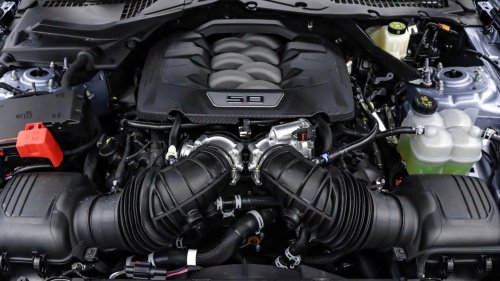
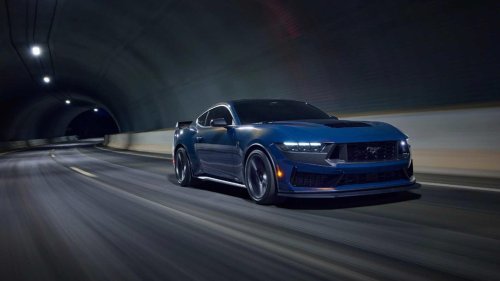
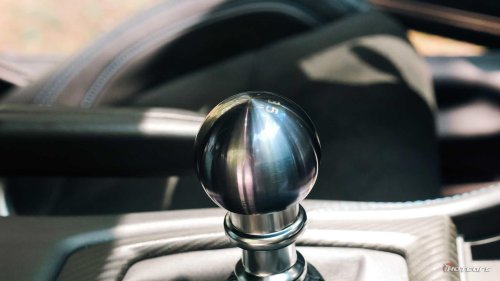
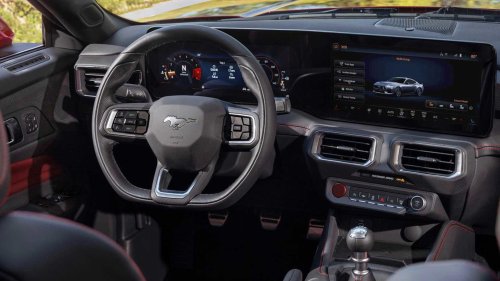
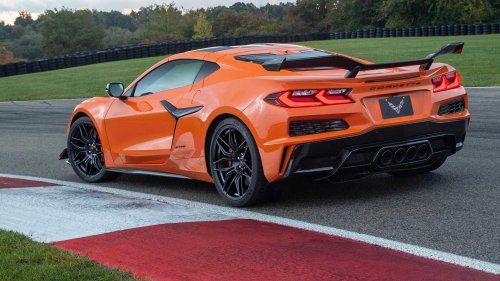
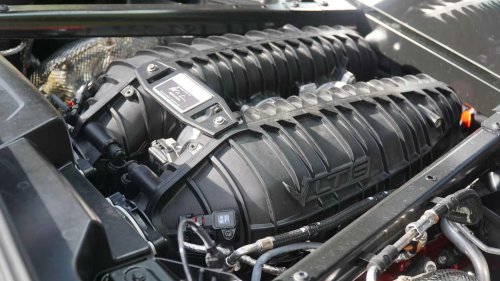
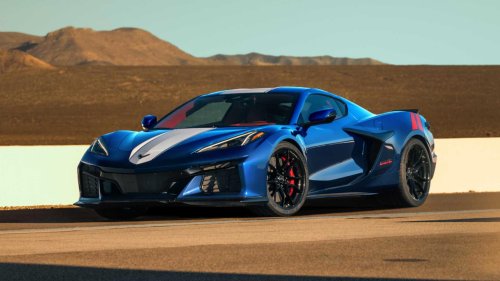
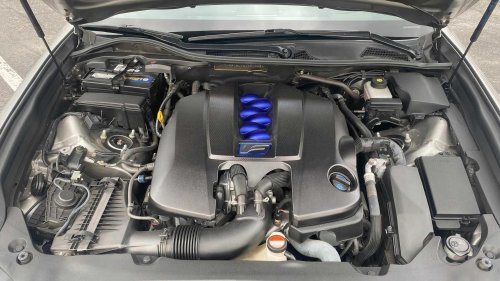
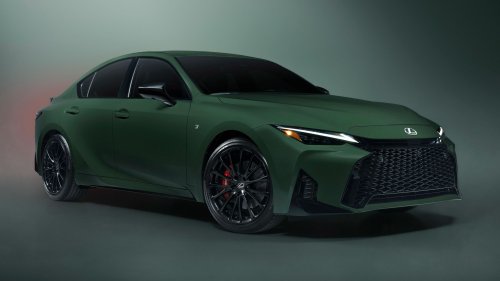
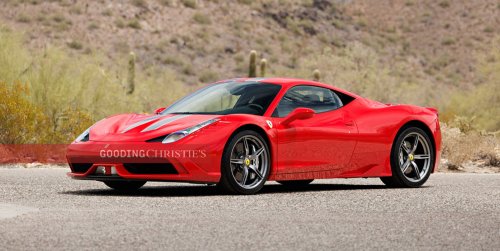
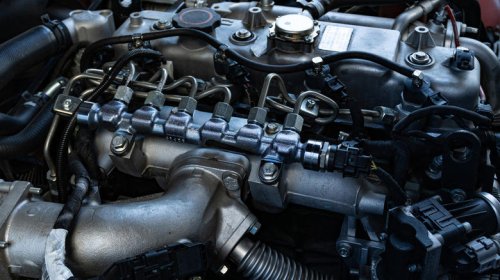
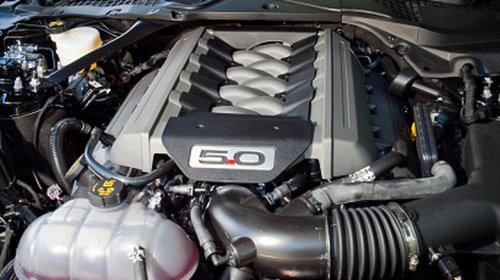
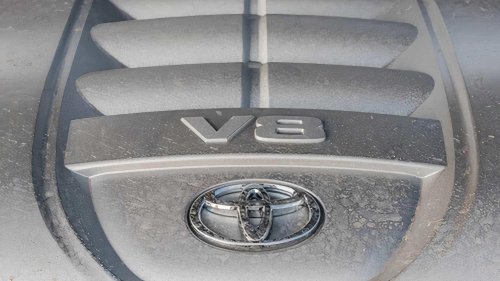
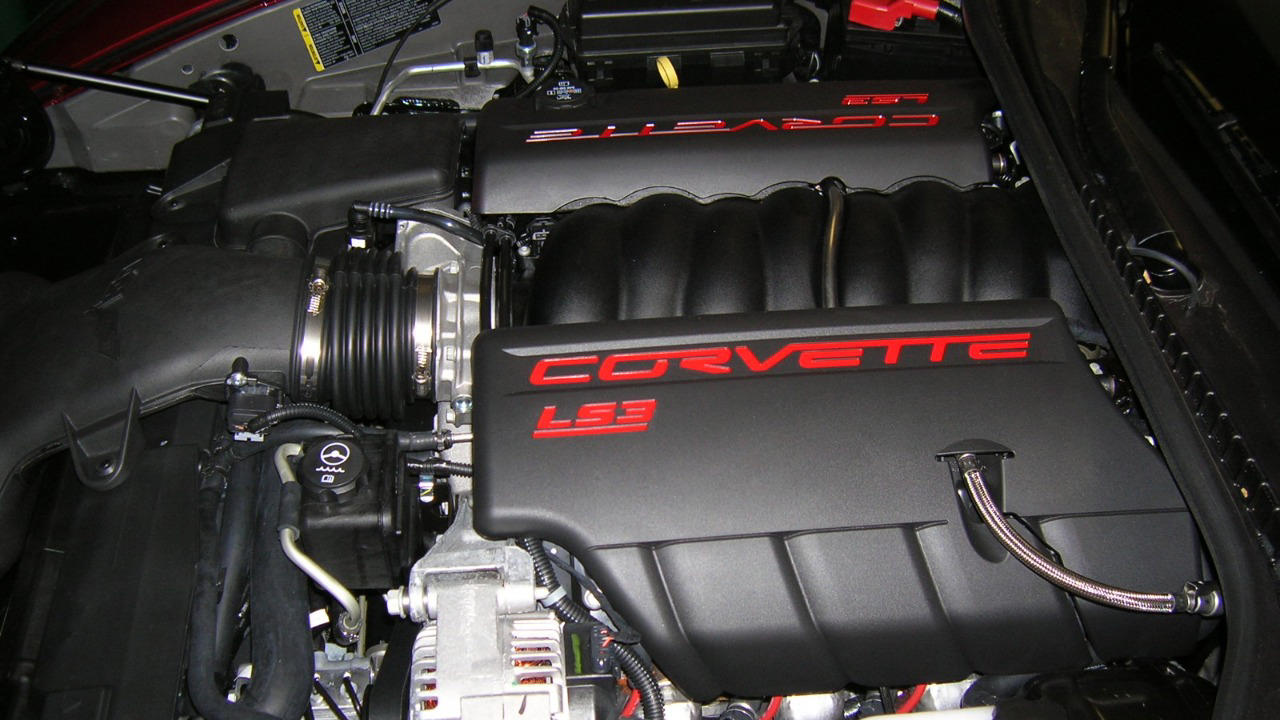
Why do you care whether a V8 is naturally aspirated or not? This is a valid question, so let me try to explain the wild inner workings of a car enthusiast's brain. Turbocharging robs you of sound and, with few exceptions, offers a vastly different experience because of its impact on the powerband. A turbocharged car doesn’t typically encourage or entice you to shift right at redline. My 2016 Focus ST, for instance, sort of dies off after 5,000 rpm despite the redline being 6,500 rpm. Meanwhile, my 2007 Accord V6 doesn't make peak power until 6,250 rpm, despite the redline being 6,800. Naturally aspirated engines can be so exciting because you are actually building power until the moment you shift to the next gear, at which point the rollercoaster ride starts all over again.This certainly isn’t a knock on turbocharged engines, which can also offer an enjoyable, albeit distinctly different experience from naturally aspirated engines. Importantly, we are not discussing the smattering of SUVs, trucks, and cargo vans that continue to run naturally aspirated V8 engines. Every car we discuss here will be a performance sedan or dedicated sports car, because that is the market segment where the perceived benefits of an N/A engine truly matter. Sadly, if you’re an enthusiast who loves an N/A V8, only four remain…and after 2026, that number drops to three. The Everyman Supercar Heartbeat: 6.2L LT2 Mecum One of the least surprising N/A V8s left on the market belongs to the Corvette. The 6.2L LT2 V8 is not only a large-displacement V8, but an old-school pushrod engine. This means no overhead cams, compact size even with such large displacement, massive amounts of low-end torque, and better durability due to its relative simplicity. It’s true that active/dynamic fuel management has impacted reliability over the years, but at least you’ll get very impressive fuel economy. While the Stingray is only rated at 16/25 MPG (city/highway), many owners report achieving in the low 30s during gentle highway cruising.Chevrolet The LT2 lineage technically begins with the LS1, introduced in the C5 Corvette back in 1997. That said, Chevy has been making iterations of the small block since 1955, where, coincidentally, it was first fitted to a Corvette. The history of the Corvette is so closely tied to the small-block V8 that it would seem wrong for Chevy not to offer one. The small block even plays a significant role in keeping the Corvette somewhat attainable for the working class. Rather than creating a bespoke engine for the base Corvette, the cost is reduced because the LS/LT family of engines also finds a home in Suburbans, Tahoes, Silverados, Escalades, and the list goes on. I recognize that the Vette isn’t “cheap”, but early C8s are in the $50k range now, even with low miles. Thankfully, while it's true that GM will be replacing the LT2 for the 2027 model year, its replacement should be more than satisfactory. The Modern American Powerhouse: The Coyote V8 Bring a Trailer The current-generation 5.0L Coyote in the Mustang GT produces 480 horsepower and 415 lb-ft of torque, with a 7,500 rpm redline. Not many crossplane crank V8s rev that high, but not many American V8s have ever been DOHC, either. It’s actually quite surprising how rarely American manufacturers deviate from the old-school pushrod-style V8 found in the Corvette and Charger/Challenger, especially given how successful the 5.0L has been. To Ford’s credit, the predecessor to the 5.0L was the 4.6L, which was a SOHC engine, so Ford actually hasn’t had a pushrod engine in the Mustang since the Windsor 5.0L in 1995.Ford The Coyote is not only DOHC but also has Ford’s Ti-VCT (twin independent variable camshaft timing) system. If you can imagine how VTEC functions with that iconic crossover to a more aggressive cam profile, Ti-VCT can do the same thing independently and continuously to perfectly adjust the intake and exhaust cams based on driver input. In marketing-speak, it's designed to “maximize performance and efficiency." The Coyote is quite an advanced engine and only gets more impressive with each generation. It even has forged internals and utilizes both port and direct injection, which helps prevent carbon buildup. In its current and fourth generation, it makes as much as 500 hp and 418 lb-ft in the Dark Horse. The Coyote Is The Only N/A V8 Mated To A Manual Transmission Hot Cars / Valnet / Bradley HasemeyerThe C8 may be mid-engine and powered by freedom, but it’s lacking an important enthusiast ingredient: the manual transmission. Chief Corvette Engineer, Tony Roma, said, “The car is faster and essentially better with the transmission we make,” referring to the Tremec TR-9080 DCT. The fact that there isn't much of a business case for the C8 is fair enough, but let's not pretend that faster means better. Most enthusiasts don’t take their cars to the track, which is the only place where lap times and tenths of a second matter. When you’re out on the road, I’d argue that it's more about experience than pure performance.Ford On the other side of the corporate spectrum, Ford’s CEO, Jim Farley, took a completely different tack. He said, “Regulators will have to rip the Ford Mustang’s stick shift out of our cold, dead hands.” And what do you know, the S650-generation Mustang offers two different 6-speed manuals: the Getrag MT-82 (GT) and the Tremec TR-6060 (Dark Horse). The joy of being able to play an engine as good as the Coyote like a musical instrument is simply underrated. No other car with a naturally aspirated V8 allows you this three-pedal privilege. Thankfully, it looks like the rev-happy Coyote and its manual transmission are sticking around for the long haul. Chevrolet Made A Modern Ferrari 458 Engine For The Z06 Chevrolet Consider the climate of the current automotive market. It’s very often that I’m writing about the death of sedans, big engines, the manual transmission, etc, but it’s awfully rare that I get to celebrate an all-time great engine that isn’t already in the rear-view mirror. It would be a surprise if any enthusiast expected Chevy to go in the direction they did with the latest iteration of the Z06. They didn’t just slap a supercharger on the 6.2L, as they did for the C7 Z06. Nope, they gave us something Ferrari left behind in 2015: a naturally aspirated flat-plane crank V8. It’s got 670 hp, 460 lb-ft of torque, and an 8,600 rpm redline.Mecum The naturally aspirated V8 might be dying, so how cool is it to get an engine like this in the 2020s? And not only is the LT6 impressive, it’s actually the most powerful naturally aspirated production V8 ever made. Though American DOHC engines are very rare, the LT6 is actually not the first DOHC engine in a Corvette, as that honor goes to the LT5 found in the C4 ZR-1. However, as good as the LT5 was, this LT6 is something even more special. Having spent some time behind the wheel of a C8 Z06, I can only confirm that the noise, speed, and response of this engine is sublime. Let’s just hope GM keeps this thing around for as long as they can. Two Engines Departing, One 6.7L Arriving Chevrolet Now, it’s time for some sad news. The 2UR-GSE, Toyota’s 5.0L naturally aspirated V8 that has powered the LC 500, RC-F, GS-F, IS-F, and IS 500, among others, will be gone for good in August of this year. Beloved for its monstrous induction noise and incredible reliability, it’s genuinely a devastating loss for enthusiasts. Unlike the other N/A V8s we’ve discussed, the 2UR is found in grand tourers and sports sedans rather than dedicated sports cars/supercars. In some ways, that's good because, even though every Lexus with this V8 holds its value very well, you won't have to win the lottery to buy an IS 500. With Lexus ditching most of their other N/A engines, we can only hope that the 4.0L twin-turbo V8 from the upcoming GR GT finds its way into future versions of these beloved Lexus models.Bring a Trailer Sadly, the LC 500 and its V8 stablemates don’t have the same heritage as the Mustang or Corvette. They are two of the longest-running nameplates in the history of the automobile, so it makes sense that GM and Ford would have put forth the effort to keep them connected to their V8 past. In fact, just three years ago, GM announced an $854 million investment in the sixth-generation small block. From that investment, we now have a new 6.7L V8, the “LS6”, which will replace the LT2 for the 2027 model year. It was first announced as an engine for the upcoming Grand Sport, but it looks as though the 535 hp and 520 lb-ft of torque (more than a C6 Z06) will also be coming to the Stingray. Thankfully, despite saying goodbye to the 2UR and LT2, at least the LS6 is coming to wipe away our tears, and for that, I’m grateful.