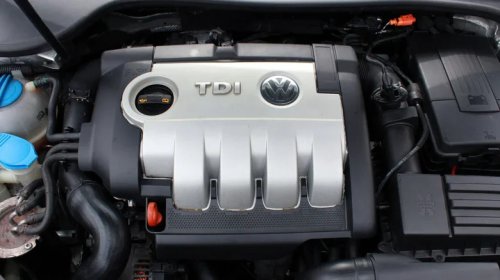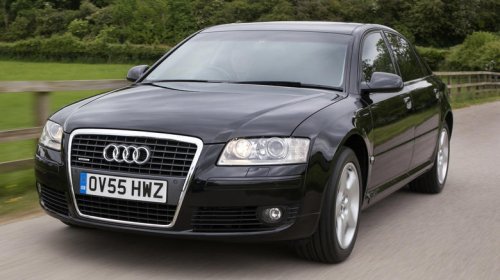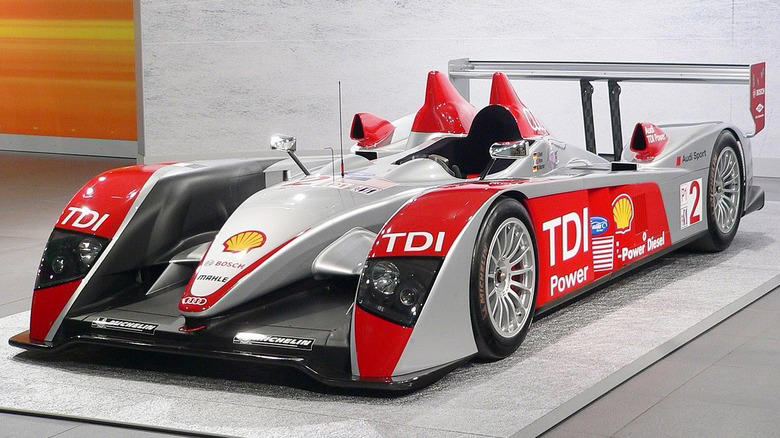
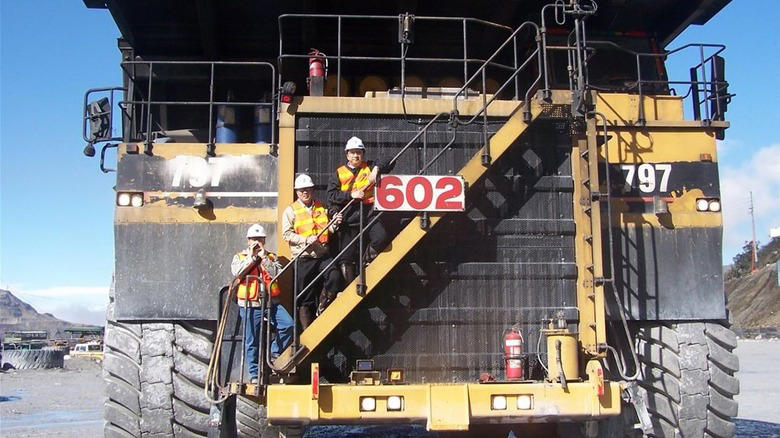
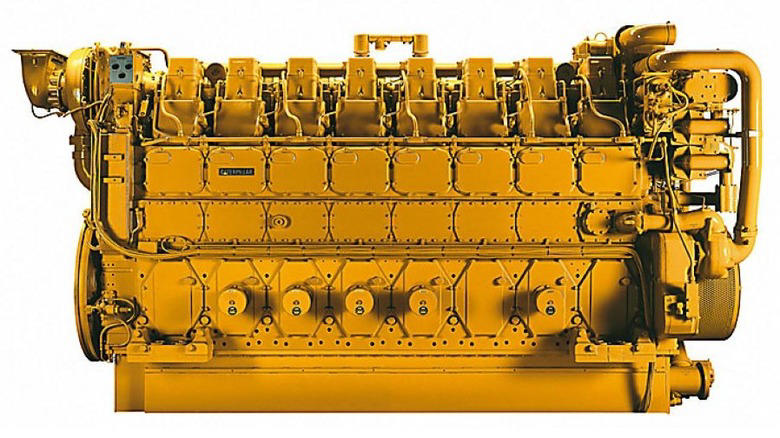



















Race Car: 5.5-liter V12 TDI in the Audi R10 TDI LMP1Audi is another company known for sophisticated street cars. It has built plenty of cars with turbo-diesel power in its TDI (turbocharged direct injection) line. Turbochargers and diesel engines go together like peanut butter and chocolate. Diesels use air compression to create torque and increase efficiency. A turbocharger force-feeds air into the ignition chamber, thereby increasing the compression ratio and producing more torque.Like many major manufacturers, Audi uses racetracks to test and improve technology, which eventually ends up in road-going cars. After bowing out of factory racing after 2002, Audi returned with a vengeance in 2006 with a big surprise in the form of the R10 TDI LMP1. That's right, Audi became only the fourth team in history to compete in the historic 24 Hours of Le Mans Prototypes competition with a diesel-powered entrant.The R10, powered by a 5.5-liter V12 TDI engine and equipped with a pair of Garrett turbochargers, was a force to be reckoned with. It boasted a horsepower rating between 650 and 700, a testament to its raw power. Even more impressive was its torque production, peaking at a staggering 948 lb-ft, available consistently between 3,000 and 5,000 rpm. Such was its dominance in the torque department that Audi specialists had to recalibrate the dyno the first time the R10 was tested on it.The R10 TDI performed no less impressively on the track, ultimately earning the top spot at three consecutive Le Mans races. It also went on to win four constructors' and drivers' championships.Construction Equipment: Caterpillar C175-20 in the Cat 797F mining truckThere is a certain allure to the massive equipment found on mining sites. The sheer scale of the machinery required to dig precious resources out of the ground captures the imagination. That's why so many children grow up playing with toy trucks, and a favorite is the Caterpillar 797F mining truck.With a rated payload of 400 tons and a gross machine weight of over a million pounds, no V8 will do for the 30-foot-tall dump truck one can find trundling around mining operations. Fortunately, Caterpillar, which makes this massive mining machine, also builds mighty diesel engines.Within the Cat 797F is the heart of a behemoth. The C175-20 diesel engine in the engine bay is over 8 feet tall on its own and features 105.8 liters of displacement spread between 20 cylinders. With four turbochargers, the C175 makes 4,000 hp and up to 16,474 lb-ft of torque. The C175 can also make up to four megawatts of electricity when hooked up to a generator.Though the 797F mining truck is likely its most recognizable application, the C175 also sees duty in passenger ships, offshore drilling sites, and locomotives.Industrial and Marine Equipment: Caterpillar 3616Despite the impressive technical specifications of the Caterpillar C175-20, it is not the company's most powerful diesel engine. The Caterpillar 3616 exceeds its little brother as a tool for power generation, large-scale industrial projects, and marine propulsion.With 16 cylinders arrayed in a V-configuration and a total displacement of up to 295.6 liters, the 3616 has fewer cylinders but more displacement than the C175. Liquid-cooled and turbocharged, it produces as much as 7,200 hp and 35,690 ft-lbs of torque at a rumbling 850 rpm. It can also generate up to 4,920 kW of electrical power in conjunction with a generator just in case you need to power a small town for a while.Caterpillar sometimes struggled in developing its big-boy diesel. The conglomerate had to create all-new manufacturing processes due to a complex engine block that required special casting techniques to meet Caterpillar's stringent safety and durability requirements. We're glad the engineers figured it out, though, because the world is a better place with this grunty diesel on hand.