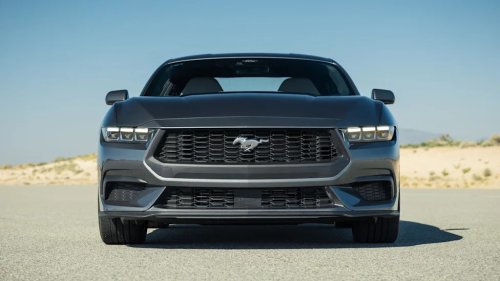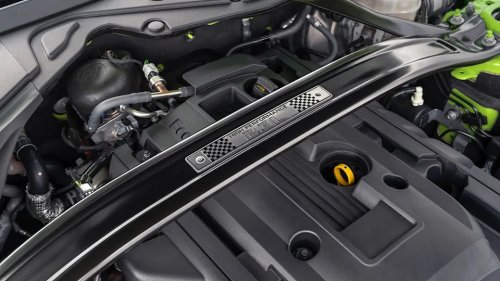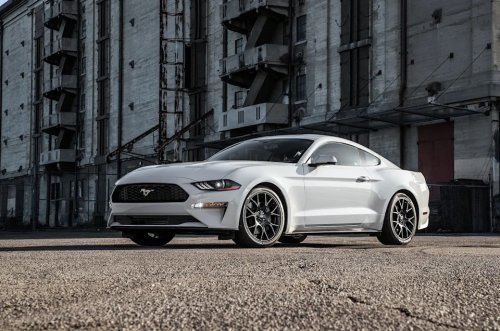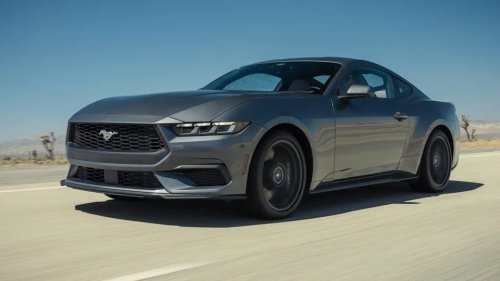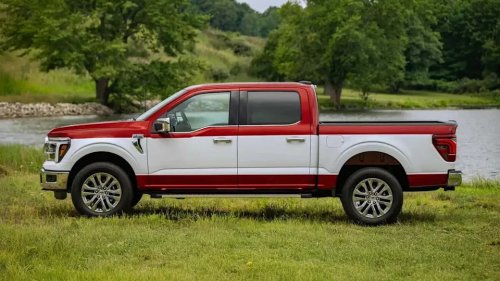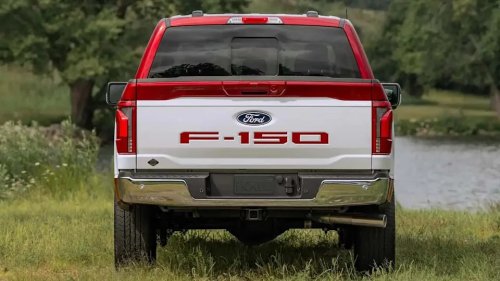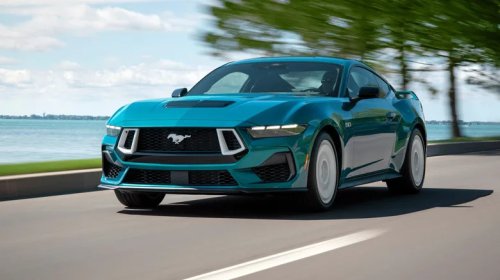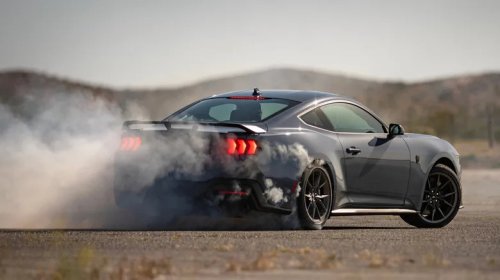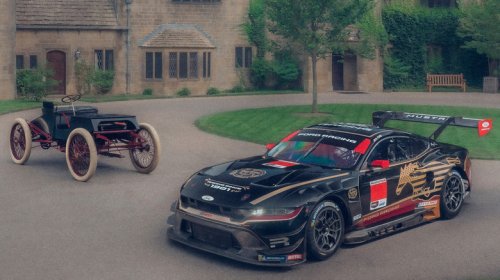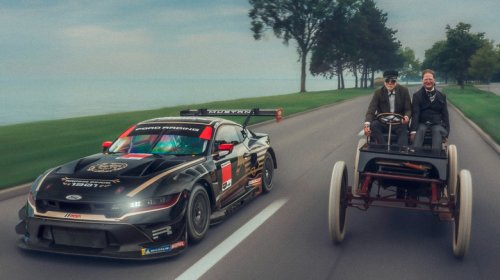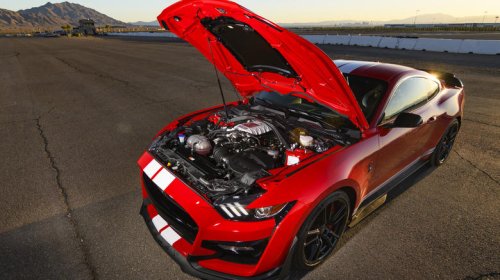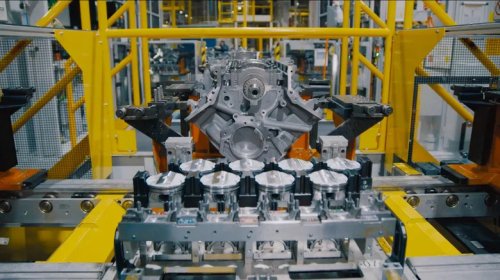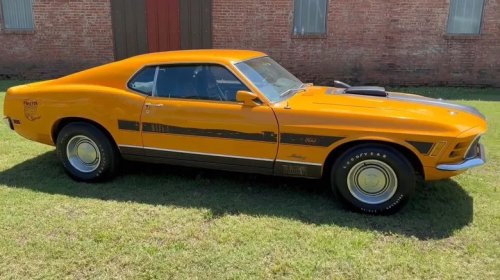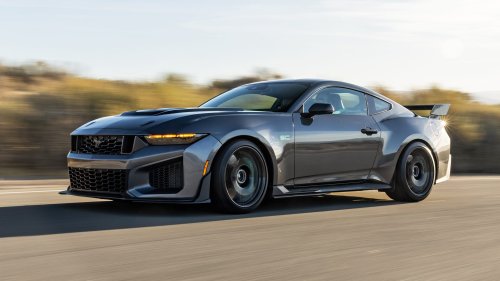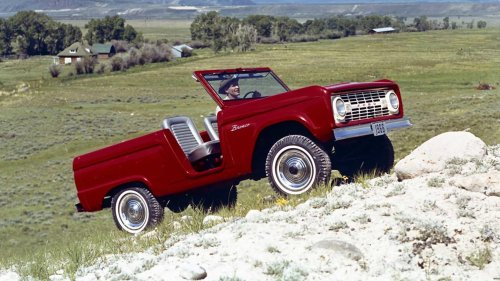
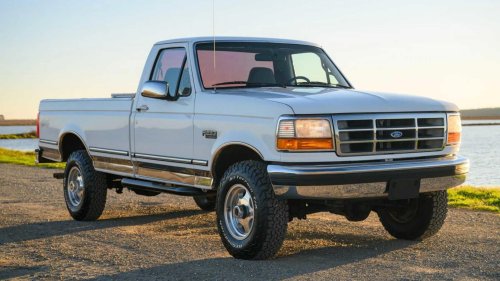
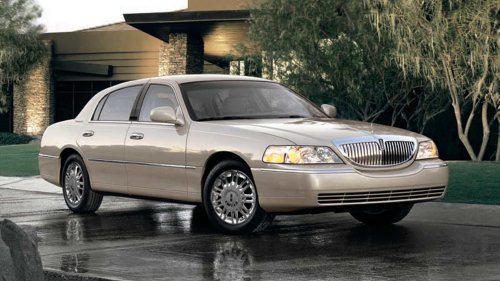
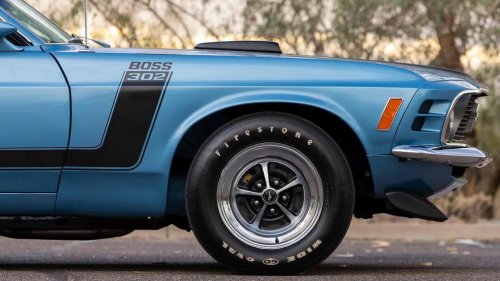
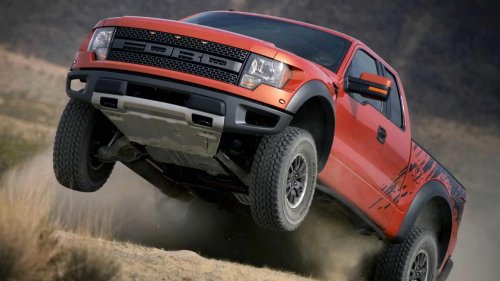
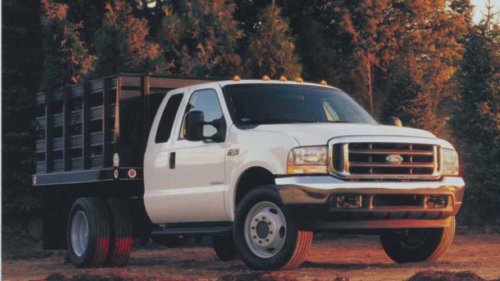
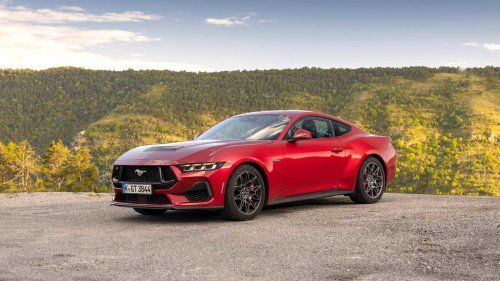



















Founded in 1902, the Ford Motor Company is one of the oldest surviving legacy automakers. In that time, the company has made a profound impact on our world, not just through the cars it has produced, but also by changing the way they are made. From offering a livable worker's wage to limiting the working day to 8 hours and then developing a streamlined mass-production process, Ford's influence reaches far and wide.Cars like the Model T, GT40, Mustang, and F-150 are iconic the world over, and, of course, their success and popularity stem in part from the engines they have used. The early inline-fours brought mobility to an entire nation, the rumbling V8s democratized power, and more recently, the rugged diesels have made Ford's trucks even more capable heavy-duty workhorses. But what set many of these cars and engines apart was their sheer ruggedness. Many old Mustangs and F-150s still soldier on today thanks to their solidly built powerplants.For this article, we have focused on the most reliable and long-lasting engines of them all. And to ensure our data is as reliable as these powerplants, we focused on engines that have proven themselves in real-world conditions, often over decades of use. So, in no particular order, here are the seven most reliable Ford engines ever made. 300 Cubic Inch (4.9-liter) Inline-Six Production Years: 1965-1996 Power Outputs: 101–170 hp Red 1965 Ford Bronco U13The 300 Six is quite possibly the hardiest and most durable engine Ford ever produced. Developed for use in heavy-duty applications, it featured a heavy cast-iron block, seven main bearings, and gear-driven cams. This meant no timing chains or belts, and since it was profiled to develop its maximum torque as low as 1,600 rpm, it was extremely under-stressed. The inline-six layout also meant smoother running than any V6 or V8, and over hundreds and thousands of miles, that translates to less stress on the engine mountings and internal components.The early carb-fed engines needed some coaxing on cold mornings, but the switch to fuel injection in 1987 made them more powerful and less finicky. Aside from the tendency of the exhaust manifold to crack over time, these motors have routinely done mega miles with just regular maintenance. UPS delivery trucks used them for decades. But to really underline just how much they were trusted for trouble-free operation, these engines also saw duty in generators, tractors, and even woodchippers. 7.3-liter Power Stroke Diesel V8 Production Years: 1994-2003 Power Outputs: 210–275 hp 1995 ford f-250 front whiteManufactured by Navistar for Ford, this engine was designed from the outset to handle years of hard use. The Hydraulic Electronic Unit Injection (HEUI) was very robust, and thanks to the absence of the complex emissions systems fitted to modern diesels, this engine is less restricted and runs cooler for longer. A troublesome Camshaft Position Sensor (CPS) on early engines was replaced with a newer design, and the cooling system needs to be regularly flushed to avoid issues.The Power Stroke V8 was popular in the Ford F-250 and F-350 Super Duty, as well as the full-size Ford Excursion SUV. It was also used in the E-Series vans, where it really proved its worth. While this engine's power output wasn't all that impressive, the unit made tons of torque at low revs, with later models making over 500 lb-ft. 4.6-liter Modular V8 Production Years: 1991-2014 Power Outputs: 190-302 hp (naturally aspirated) 2009 Lincoln Town CarIf you've ever had a ride in an old Crown Vic taxi, or perhaps in the back of a police car, you would have experienced the4.6-liter modular V8. Built to handle years of hard use, this engine featured a simple overhead-cam design and port fuel injection. Still, later variants, especially those designed for top Mustangs, could develop serious horsepower.Issues with plastic intake manifolds and spark plug threads that were so shallow they could blow out the block were soon resolved, and the Modular V8 became a legend in its own time. Aside from being the engine of choice for Police interceptors, the 4.6-liter engine was also used in the contemporary F-150 and the 1990s Mustang GT. Power outputs varied greatly between versions, peaking with the 390-hp supercharged engine in the 2003 Mustang SVT Cobra. But for top reliability, the early two-valve naturally aspirated engines (with the manifold fix) are the ones to have. 5.0 (302) and 5.8-liter (351) Windsor V8 Production Years: 1962-2001 (302), 1969-1997 (351) Power Outputs: 130–250 hp (excl. Boss) 1970 Ford MustangThe Windsor family of small-block Ford engines earned its reputation for long-lasting reliability through the simple overhead-valve design and cast-iron blocks with thick cylinder walls. Thanks to the sheer numbers built, there's always a ready availability of parts. With such a long production run (across both engine variants), the Windsor motor powered a diverse range of vehicles from the early Thunderbird, Fairlane, and Mercury Cougar to the Mustangs, F-150s, and Broncos in the 1980s and 1990s.During this period, the Windsor V8 slowly evolved, gaining roller cams and fuel injection, but the basic sturdy layout remained the same. Modified versions were used in certain Mustang Boss models, which set the standard for power and performance in their day. They are still popular today, thanks to the large community that still supports these never-say-die motors. 6.2-liter Boss V8 Production Years: 2010-2022 (F-Series), 2017-present (E-Series) Power Outputs: 385-500 hp 2010-2012 Ford SVT Raptor JumpDesigned to replace the trusty 5.4-liter Triton, the6.2-liter Boss V8was used in vehicles like the first-gen Raptor. It stuck to a simple single-overhead-cam valvetrain, used two spark plugs per cylinder, and was thankfully free of the timing chain and cam phaser issues that had plagued its predecessors.Aside from the occasional valve springs on very high-mileage examples, these engines have proven to be seriously robust, even under tough use. As well as being the motive force behind the 2010-2014 Raptor, the 6.2-liter Boss engine was also used in the F-250 and F-350 Super Duty. 6.8-liter Triton V10 Production Years: 1997-2021 Power Outputs: 275–362 hp 1999-2004 Ford F-450/550 Super Duty Front 3/4For those who prefer a massive gas-powered engine instead of a diesel, theTriton V10 was essentially a 5.4-liter V8 with an extra pair of cylinders. Designed for use in school buses, trucks, vans, and motor homes, this massive beast delivered years of fuss-free use thanks to the low-stressed components.That said, early models suffered from the same spark plug blowout issues as the 4.6-liter Modular V8s, and the two-piece spark plug design could snap during removal. Ford updated the design to resolve these issues, and many Triton V10s have done incredible mileages hauling heavy loads day in and day out. 5.0-liter Coyote V8 Production Years: 2011-present Power Outputs: 360-500 hp 2025 Ford Mustang GT CoupeDespite having been around since 2011, theCoyote V8is the 'youngest entrant' on this list. Being a newer engine means a more complex design, but despite having double overhead cams and variable valve timing, they have proven to be solid and hardy motors. The basic layout has been updated and refined over the years, with 2018-on versions adding port and direct injection to address the carbon buildup issues inherent in most direct-injection engines.The Coyote is also a very versatile platform, being profiled for low-down torque in the F-150, and tuned to deliver more power at higher revs in the latest Mustang. As with any new engine developing up to 100 hp per liter, oil quality and regular servicing are as important as ever, but the Coyote has shown that performance and reliability can co-exist, even in today's high-tech world.