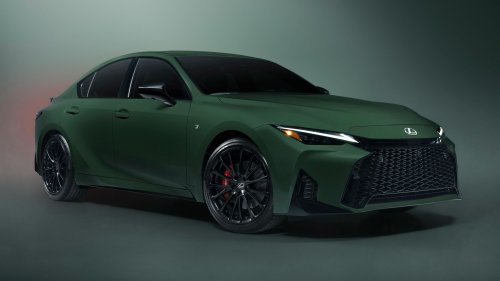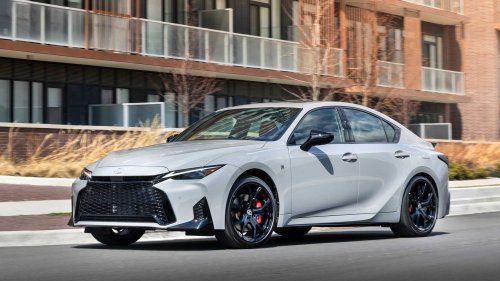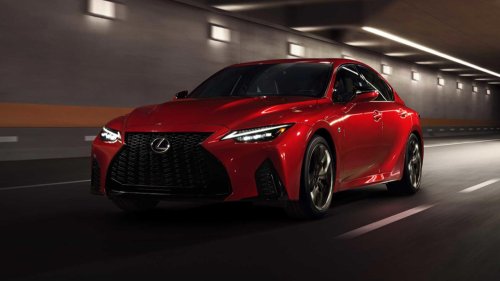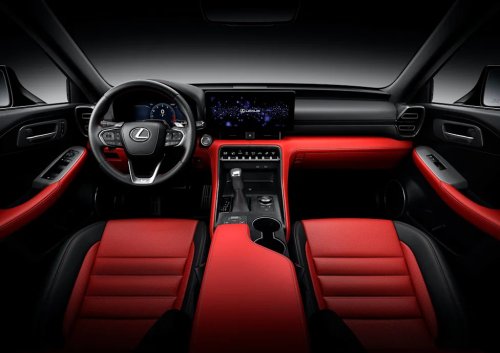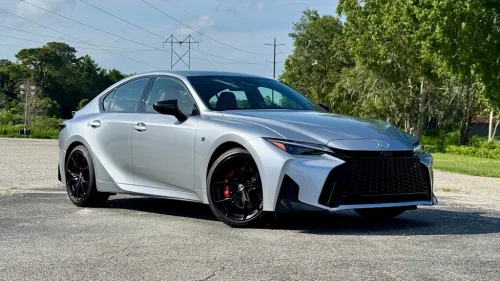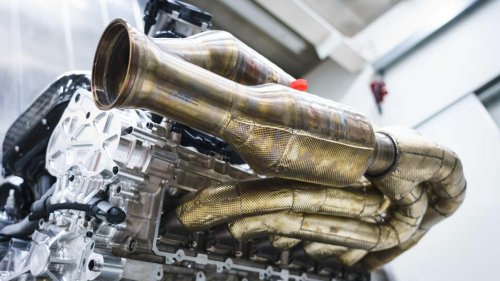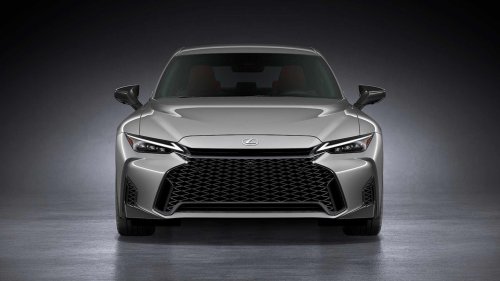
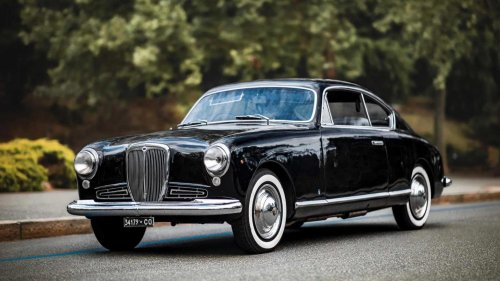
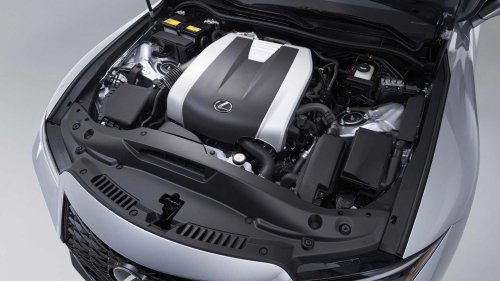
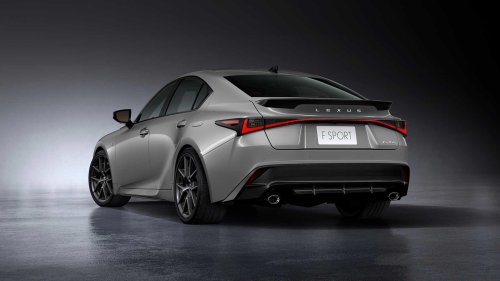
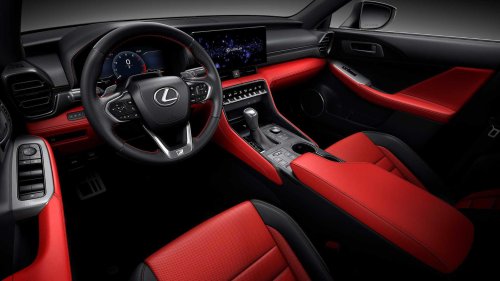
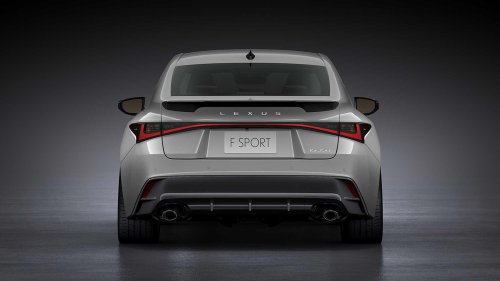
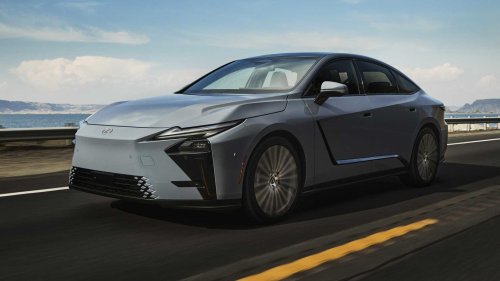
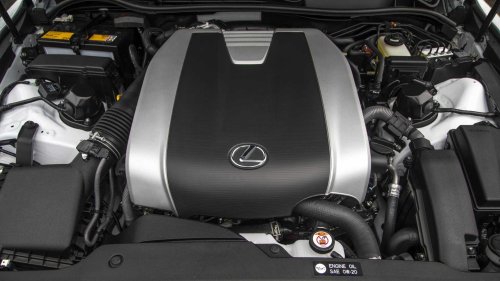


















Once a staple of performance and refinement, the naturally aspirated V6 has nearly vanished from the automotive landscape. Where big six-cylinder engines once delivered effortless smoothness across multiple segments, tightening emissions regulations and rising fuel economy expectations have steadily pushed automakers toward smaller displacements.Lexus Turbocharging has become the default solution – often paired with electrification – as manufacturers look to reclaim power and drivability while shrinking overall engine size and reducing consumption. In the sedan segment, that evolution has left the Lexus IS as the sole remaining option for anyone still wanting an NA V6 – but even this last holdout feels increasingly like it’s operating on borrowed time. The NA V6's Enduring Appeal Bring A Trailer Long before turbochargers became a cure-all, the V6 earned its place as the sweet spot of internal combustion. It delivered a level of smoothness and refinement that four-cylinders struggled to match, without the bulk or appetite of a V8. While engineers toyed with six-cylinder layouts early in the automobile’s history, it wasn’t until Italy's Lancia Aurelia arrived in 1950 that the V6 truly found its footing, setting the template for decades to come.That template proved incredibly versatile. A V6 could deliver respectable power and torque while remaining more compact than inline-six and V8 engines, making it ideal as cars downsized through the late 20th century. Packaging advantages became especially important with the rise of front-wheel drive, where space under the hood is at a premium. Compared to a heavier V8, a V6 also kept weight off the nose, preserving the kind of balance and agility that drivers actually notice.Lexus Naturally aspirated V6s doubled down on those strengths with a linear, predictable power delivery that’s increasingly hard to find in turbocharged engines. Throttle response is quick, the powerband builds cleanly, and there’s no waiting around for boost to arrive. That sense of effortlessness made the engine a favorite in luxury sedans, where refinement matters as much as output. Even today, while sedans have largely moved on, several mainstream SUVs still lean on V6 power for exactly these reasons.For sedan buyers, at least in the US, the only avenue today is the Lexus IS. Now deep into its third generation and freshly updated for 2026, the IS has quietly shed its alternative powertrains, dropping the IS 300 trim with its turbocharged 2.0-liter inline-four and the IS 500 F Sport Performance with its 5.0-liter V8 – the latter also being a naturally aspirated unit that was the last among sedans. What remains is the IS 350 trim and its 3.5-liter V6, a configuration that now feels almost out of date. For some buyers, though, that simplicity has appeal, promising durability and long-term dependability in a world of ever-more complex powertrains. 2026 Lexus IS 350: The Last Of Its Kind As mentioned above, the IS has been updated for the 2026 model year. It’s actually the third such update for the current third-generation IS, which first arrived for the 2014 model year and was given similar updates for 2017 and 2021. In the US, there’s only the V6-powered IS 350, while other markets also get an IS 300h, which pairs a 2.5-liter inline-four with a hybrid system.Unfortunately, Lexus’ decision to drop the previous IS 300 trim means the starting price of the 2026 IS has gone up, and not by a small amount. For the privilege of owning what is effectively the last naturally aspirated V6 sedan on the market, you’ll need to pay an MSRP of $45,500. That’s up almost $5,000 from the 2025 model’s starting price for the entry-level IS 300 trim, and even comparing IS 350 trims across both years still shows an increase of $1,640. The upside for enthusiasts is that the IS’ strong reliability record means bargain hunters can still feel confident shopping used examples.Lexus The IS 350’s V6 is known for its smoothness, strong mid-range punch, and willingness to rev to its 6,600-rpm redline. First introduced for the 2006 model year with the second-generation IS (the original IS relied on inline-six engines), it now produces 311 horsepower and 280 pound-feet of torque in 2026 form. The engine is paired with an eight-speed automatic and sends power to the rear wheels as standard, or to all four with the available all-wheel-drive system.While the engine carries over unchanged for the latest IS update, Lexus didn’t leave the chassis alone. The steering has been retuned with a revised electric-assist setup that better adapts to speed and road conditions, delivering a more natural, less artificial feel off-center. At the same time, the suspension benefits from reworked dampers that react more quickly to surface imperfections, tightening body control and improving stability without sacrificing the IS’ trademark ride comfort.Lexus The 2026 IS is easiest to spot by its revised front fascia, which visually lowers the nose and reinforces the sedan’s already planted, low-slung stance. Inside, Lexus gives the dashboard a subtle modernizing touch, though the basic layout carries over. A 12.3-inch central touchscreen now sits in cleaner alignment with a matching 12.3-inch digital gauge cluster, still housed under a traditional hood rather than floating free. Physical controls remain part of the mix, including steering-wheel buttons and a row of toggle switches beneath the center display. Why The NA V6's Days Are Likely Numbered Lexus For reasons touched upon above, the naturally aspirated V6 is being squeezed out on multiple fronts, with the primary driver being the relentless push for improved efficiency. Whether to meet tightening emissions regulations, satisfy fuel economy targets, or simply align with evolving consumer expectations, automakers are being forced to rethink the traditional six-cylinder formula. In most cases, that means downsizing to turbocharged inline-four engines, adopting electrified four-cylinders, or increasingly, combining both turbocharging and hybrid assistance to deliver strong performance with significantly reduced consumption.Even beyond the shift to smaller engines, V6s – turbocharged or otherwise – have become far less common than they were a decade ago. A major factor is the industry-wide move toward modular engine families, particularly inline configurations that can be scaled across multiple displacements and applications. Many manufacturers now favor inline-sixes derived from shared architectures with inline-fours, and in some cases even inline-threes, allowing for greater parts commonality and development efficiency. One of the most prominent examples is BMW’s B-series engine family, which spans 1.5-, 2.0-, and 3.0-liter variants and underpins a wide range of models across the lineup.Lexus Even Toyota is moving away from the naturally aspirated V6, as seen in the eighth-generation 2026 Lexus ES. The new sedan is offered exclusively with a 2.5-liter inline-four hybrid powertrain or a fully electric option, marking a clear break from larger-displacement engines. Lexus is expected to take a similar approach with any next-generation IS, should it materialize, with industry speculation also suggesting that the compact sedan could eventually transition to an electric-only lineup. Quiet Exit For A Classic Lexus For all its smoothness and performance, the naturally aspirated V6 is now firmly on the way out. Tightening regulations, electrification, and shifting engineering priorities are closing the door on an era defined by effortless six-cylinder refinement. And once that door shuts, it’s unlikely to open again. This is one goodbye the industry probably won’t reverse, at least in the mainstream.Sources: Lexus