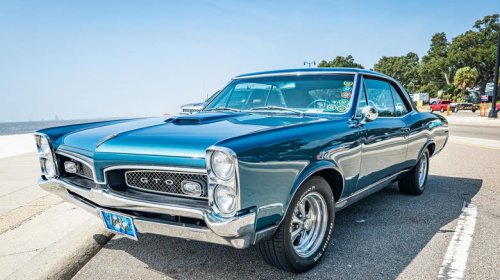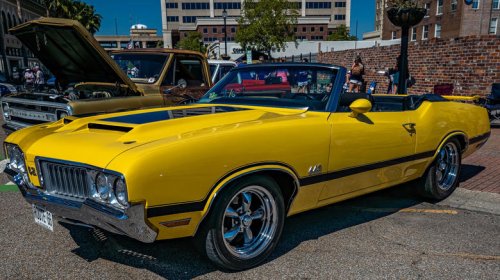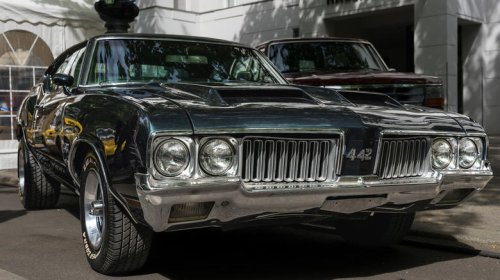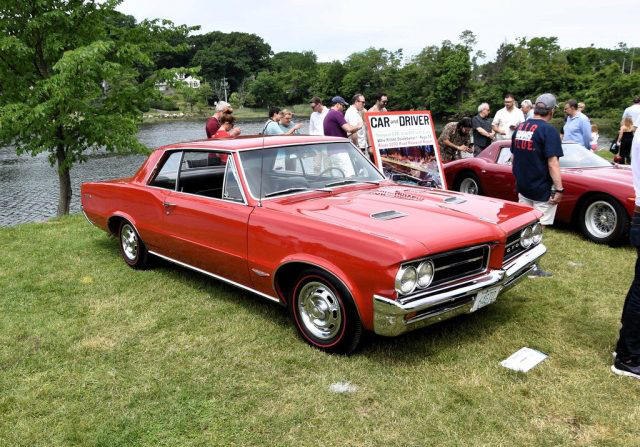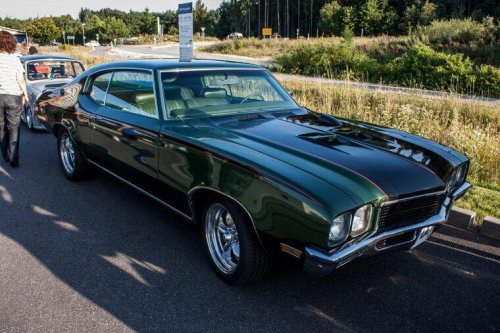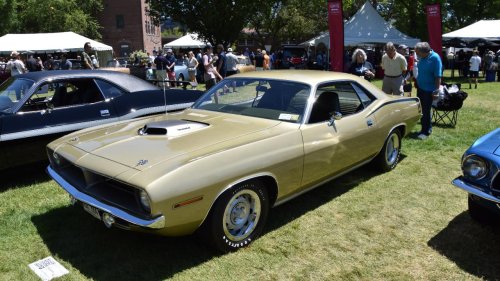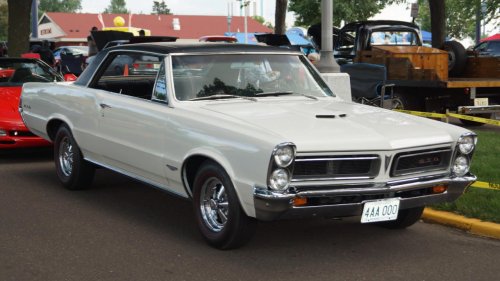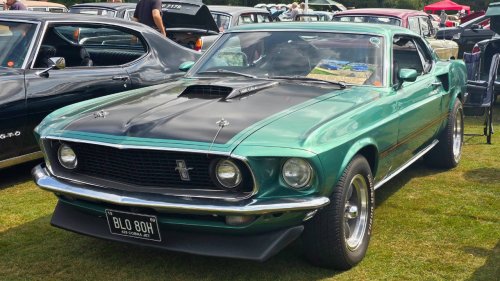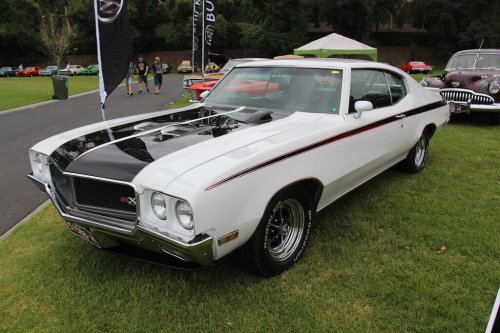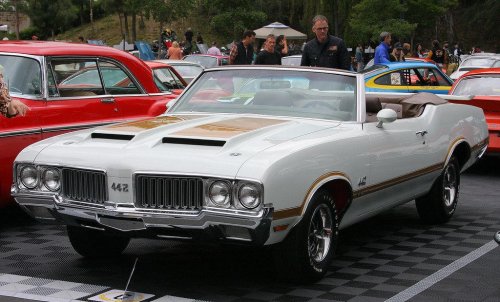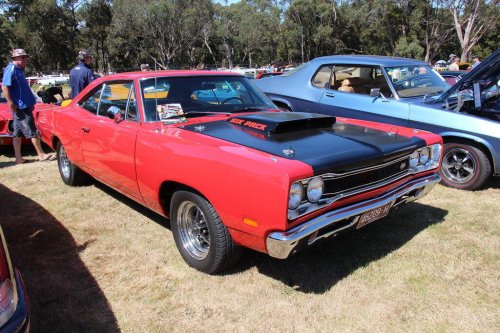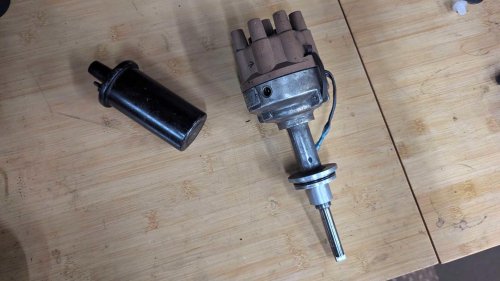
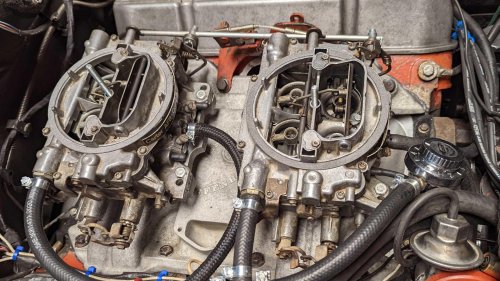
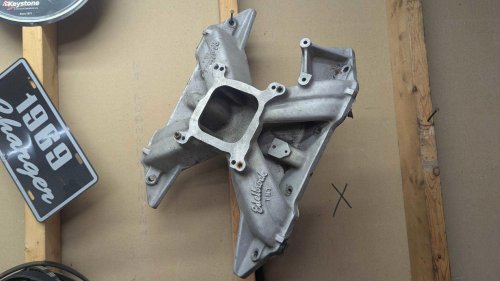
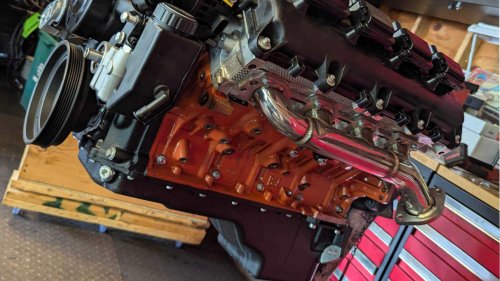
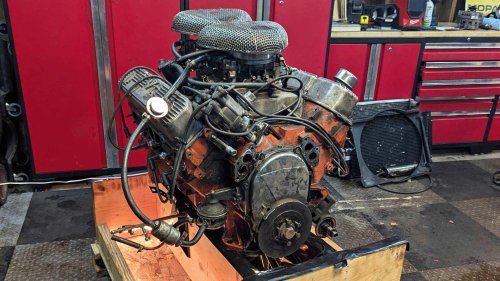
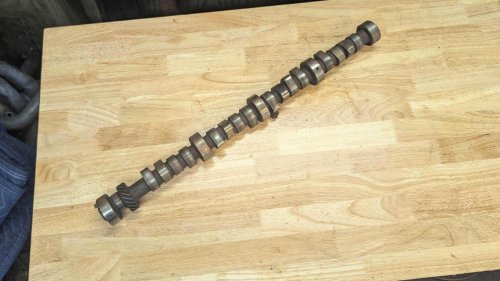
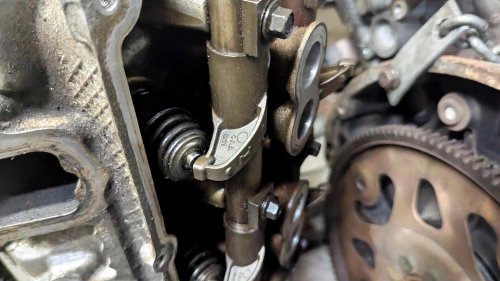
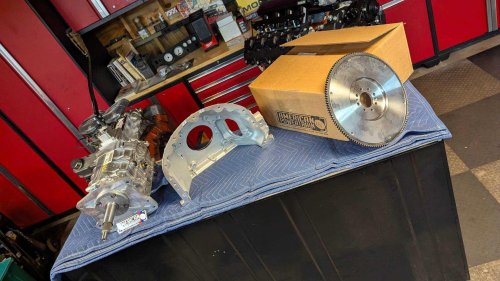
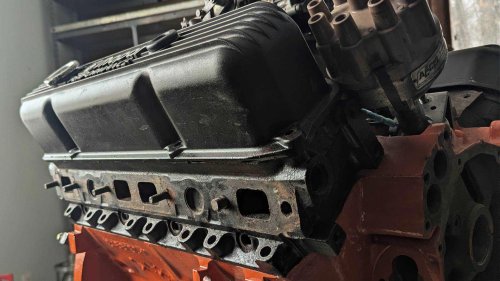
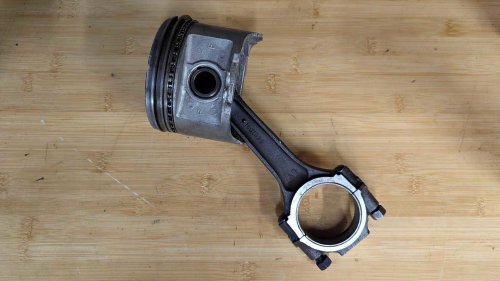



















Let's face the facts. Not all classic muscle carsare rocket ships on wheels. A lot of them rolled out of the factory with massive V8 engines that fall short of expectations. Sure, they look and sound aggressive, but they seem to hardly get out of their own way when you hammer the gas. In a perfect world, you'd justdrop a new, hard-running engine under the hood and be done with it. Unfortunately, that's not always an option, and you'll just have to work with what you've got.The good news is that old school V8s have a lot of potential, and you can get any of them running a bit harder with the right modifications. Some are simpler to work over than others, and the catch is that you'll need to familiarize yourself with your engine to know what its specific weak points are, and what you need to do to counter them. That said, I'm going to talk you through ten of the best ways to get more power out of any engine. Address The Timing Hank O'Hop / Valnet One of the biggest things that holds back a lot of classic V8s is a bad tune. Getting the timing sorted out is a great place to start. Every engine has an ideal ignition timing curve. Think of the ignition timing like putting a lead on a moving target. The combustion events need to happen at the exact right moment to fire the piston downward to make good power. Too little will bog power down, while too much will lead to preignition problems. The right moment will change as an engine speeds up, which is why you have base timing and total timing which might look something like 10-degrees of advance at idle and 36 degrees at wide open throttle.Ignition timing is controlled by the distributor, which is a mechanical device that tells the spark plugs when to fire. To make sure it's working properly, you'll need a timing light, the timing specs for your engine, and possibly a distributor curve kit. The curve kit includes springs and sometimes limiters that allow you to alter how much timing the mechanical advance adds and how quickly, which you may need to change if your distributor is all out of whack, or if you want to make your engine snappier, which a quicker curve will help you achieve.Pro tip: Now's the time to consider replacing the old harmonic balancer that may have slipped and thrown off your timing marks. Tune/Swap Your Carburetor Hank O'Hop/Valnet While the distributor controls timing,the carburetor controls the flow of air and fuel to the engine. It's also a mechanical system that can be out of calibration and holding performance back. If you just want to wake an engine up on the cheap, tuning the carburetor you have is the way to go. Adjusting the idle air adjustment screws will optimize the air-fuel ratio at idle, changing jets will address lean or rich conditions while on the throttle, and making changes to the accelerator pump circuit will help cure any off-idle stumble issues. This is a practice that takes time to get a handle on, and learning to read plugs is something you'll need to master to really get it down, which will be beneficial to mastering timing as well. A vacuum and an AFR gauge can also prove to be super helpful.In many cases, the factory carburetor may be the problem itself. A lot of old school engines were set up with carbs that were more economy-minded than anything, and moving to a performance alternative is necessary to really get it running hard. This is especially true if you have a two-barrel rather than a four-barrel carb, like a lot of old V8s did.That said, picking the right size and configuration depends on your driving style and general expectations. As a rule of thumb, Holley-style carburetors are better for all-out performance, whereas Edelbrock's are better for normal driving. That said, picking the right size is a bit of an art form. There are carburetor CFM calculators that will help you get in the right ballpark, but your best bet is to read forums and see what folks with similar builds are running to determine which is best for yours. Swap Intake Manifold Hank O'Hop / HotCars The intake manifold's job is to direct airflow from the carburetor to the combustion chambers. Factory intakes are rarely the best possible option for classic V8s. They're usually crudely-formed chunks of cast iron that just get the job done, without really optimizing performance. Moving to a better design can help you pick up a considerable amount of power, and you might not have a choice if you're moving from a two-barrel to a four-barrel carburetor.Intake manifold designs have a direct impact on how much and when power is made, and the manufacturer will provide peak power ranges to give you an idea of what kind of performance an intake will deliver. The key here isn't to focus on the intake that produces the highest possible peak power numbers. Unless you're drag racing or are only concerned with how an engine performs at wide-open throttle, you'll want something that can help produce a flat, healthy power curve across a wider RPM range. As a general rule, a nice, aftermarket dual plane is ideal for street-driven vehicles, while single planes are best for racing applications. Upgrade The Exhaust Hank O'Hop Classic V8-powered muscle cars came equipped with exhaust systems that left a lot to be desired. That's not just true in terms of sound, either. Most were plagued by restrictive exhaust manifolds and pipes that really bogged power down. While some were worse than others, it's a universal issue across all makes and models. By upgrading to headers and moving to a better exhaust system, you can stand to make significant improvements to performance, especially when used in combination with other upgrades like a cam and intake manifold. A better-flowing exhaust can also improve the sound quality of the exhaust note, making this one of the most rewarding ways to personalize your classic muscle car.Pro tip: While there's debate over whether an H-pipe or X-pipe is better, any system with a crossover is better than those without. Swap/Eliminate Accessories Hank O'Hop One of the biggest letdowns of owning a classic car is coming to the realization that real-world performance often falls short of expectations. While old-school V8s could produce awesome power, most of the horsepower ratings manufacturers advertised were achieved with engines that had noaccessoriesor drivelines attached to them. As you start adding things like power steering and cooling fans, horsepower starts to drop off. While moving to manual steering isn't for the faint of heart, you can free up some horsepower by moving to a clutch fan or electric cooling fans over a factory fixed-blade setup. Swap The Cam Hank O'Hop / HotCars Everyone will tell you that the first thing you should do to make more horsepower from an old engine is to throw ahawg cam in it. While they have a point, you don't need to toss the biggest, baddest cam in yours. In fact, doing so can be detrimental to performance. The camshaft's job is to tell the valves when to open, how much, and for how long. This has a direct relationship to when the engine produces peak power. Because factory cams are generally on the conservative side, making the swap can do wonders in making an old-school engine run harder.The catch is that you want to pick a cam that matches the engine's compression ratio, your torque converter, and the rear gear. It also needs to be balanced just right to deliver performance that matches your driving style. It truly is the centerpiece of the entire build, and special care needs to go into selecting one. Before you buy one, you really want to have a fleshed-out idea of what you're trying to achieve and any other mods you may make. Speaking with cam specialists at any top suppliers will go a long way in helping you make the right choice. Move To High-Lift Rockers Hank O'Hop / HotCars Here's a bit of a cheat code for you. Aftermarket rocker arms are a great upgrade that can offer improved stability to the valve train at high RPMs, and are a necessary upgrade for hardcore builds because of it. They can also increase valve lift, making them a great alternative to cam swaps in some cases. When you get a camshaft, it'll come with a spec card that tells you details like how much lift it has. This is a measurement of how far it'll open the valves and is based on the factory rocker arm ratio. By moving to rocker arms with a higher ratio, like 1.5:1 to 1.6:1, you effectively increase the lift of the valves without having to swap cams. Ultimately, nothing beats having the right cam, but this will work if you don't want to get involved with that big of a project and want a small boost in performance. Reduce Flywheel Weight Hank O'Hop / HotCars This is an upgrade for owners of manual muscle cars to consider. Factory flywheels are heavy and really slow down the rev speeds of an engine. By swapping to a lighter-weight flywheel, you can make some notable improvements to throttle response. Keep in mind that this does make a car snappier and a bit more of a handful to drive at slower speeds, but it's a great way to liven up an old car. Best of all, you can make the swap next time you're changing out the old, tired clutch and flywheelin your car as part of normal maintenance. Port/Swap Cylinder Heads Hank O'Hop / HotCars The cylinder heads are a major part of an engine. Making improvements to castings or moving to a different set of heads is no small feat and can be really expensive. However, it's something you almost can't avoid getting involved withif you're serious about picking up power.The thing to keep in mind is that this is a very application-specific ordeal, and you'll need to familiarize yourself with the heads on your engine specifically and whether you can modify them for power or if you should swap them out.A lot of engines were equipped with restrictive, poor-flowing heads that really bog down performance potential. The quickest and easiest thing to do in most cases is to move to either an aftermarket set or a better-flowing factory set that will bolt in place of what you have. Additionally, you can often stand to make heads flow much better by having port work done to clean up imperfections or reshape the runners, as well as increase the size of the intake and exhaust valves. Increase Compression Hank O'Hop / Valnet Unless you're dealing witha high-performance V8 from the peak of the horsepower wars, chances are that the compression ratio is fairly low. While '70s and '80s cars are notorious for having obscenely low compression, even some '60s engines can stand to see improvements here as well.Increasing the compression ratio is incredibly important to making real horsepower gains. Unfortunately, doing that is easier said than done. In some cases, a good set of heads with a smaller combustion chamber will work. In most situations, you'll need a new set of pistons to bump up compression, which often entails a full rebuild. Of course, the proper solution is specific to the engine you're dealing with, and you'll need to do your research here.