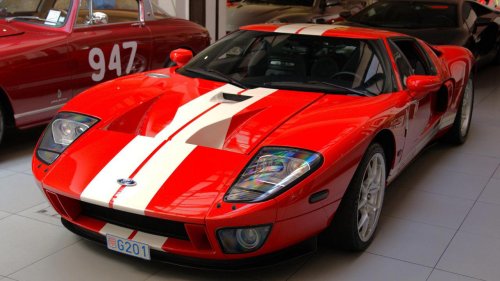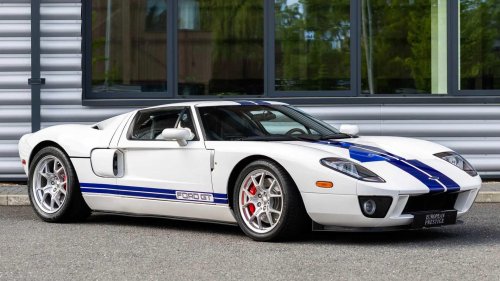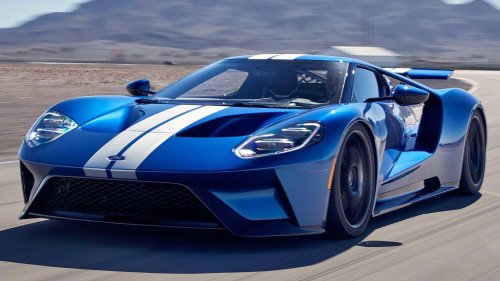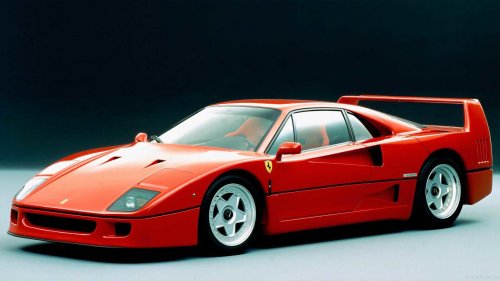
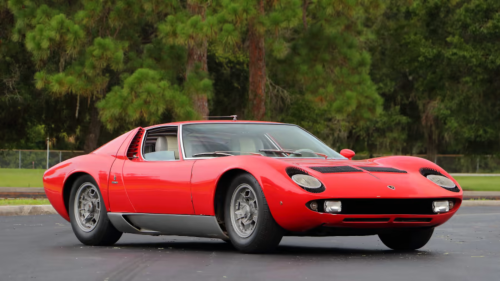
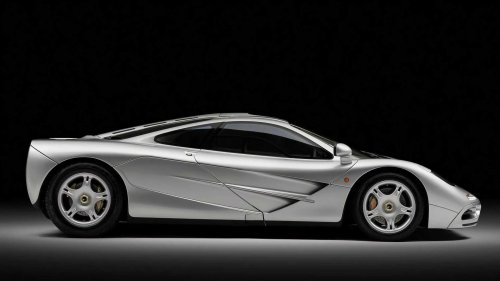
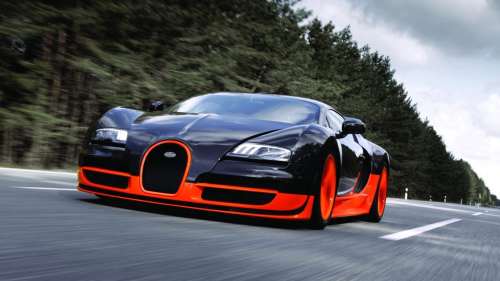
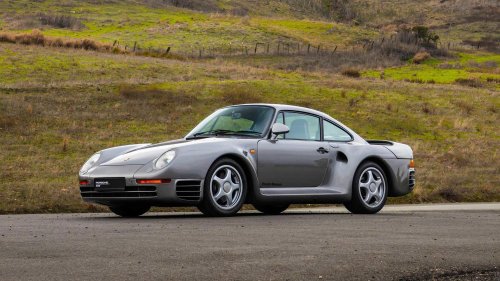























Supercars are not just fast cars. Well, they are obviously fast, but more than their intended performance, they are cultural earthquakes on wheels. Supercars warp the idea of what’s possible in design, speed, and engineering while making teenage bedroom walls infinitely cooler (at least from my generation). These cars have rewritten the rulebook, set the bar higher, and made us wonder. But, what really makes a car iconic?I am going to give you my idea of an iconic supercar. By definition, to be iconic, the subject must be a representative symbol of something. To count here for my choices, it has to have delivered revolutionary technology, redefined performance in its era, cemented itself in pop culture, and, of course, looked like the kind of car that would make me go ga-ga. The following five supercars I have picked as the most iconic aren’t just the fastest supercars ever, they’re legends that terrified other car brands and inspired millions of people - even if they weren't gearheads. This list is not ranked, because in my mind all these cars deserve the same level of respect and admiration. Welcome to Supercar Dreams Week! This is our tribute to the wildest, most jaw-dropping supercars ever built—the cars we fantasize about driving and the legends that keep us awake at night. All week long, we’re unlocking the garage of dreams to bring you stories of hypercars, exotics, and automotive icons that blur the line between fantasy and reality. From poster-worthy legends to modern-day unicorns, this is where car dreams come alive. Buckle up—we're about to redline. Ferrari F40 Production Years: 1987–1992 netcarshow.comWe are starting this off with the Italians, and when it comes to exotic Italian supercars, the Ferrari F40 is 'the' car. This is the same supercar that Enzo Ferrari himself signed off on before he left this planet, which is about as close to divine intervention as you get in the automotive world. The car was built to celebrate Ferrari’s 40th anniversary, and it was a wild animal of a machine that cared nothing for comfort. No luxury features. No airbags. Just raw carbon fiber, plexiglass, and a twin-turbo V8 that spat flames like it had a personal grudge against the atmosphere.In the late 1980s, this car was the fastest production machine you could buy. More importantly, it looked unlike anything we had ever seen before. My first experience with this car was what really got me into cars in the first place, and even now, the Ferrari F40 is the most beautiful supercar I have ever seen. The massive rear wing became its calling card, and the car itself became the Ferrari featured on every car poster. The F40 raised the bar of performance and design, and then threw the bar into a different dimension. Lamborghini Miura Production Years: 1966–1973 via MecumAs we move away from the prancing horse, we move to another Italian, but this one is a raging bull. Lamborghini makes some of the best supercars in the world, and the legacy of the brand truly started with the introduction of the Miura. Before the Miura showed up in 1966, sports cars were fast but not necessarily exotic. Then Lamborghini decided to stuff a V12 behind the driver’s head and sculpt a body so beautiful that even Ferrari must have quietly nodded in approval. The Miura changed the game completely, and some even say it invented the category we now call the supercar. While that is debatable, it is a fact that the Miura is the most iconic supercar ever. With its low-slung body, dramatic curves, and those sleepy eyelash headlights, the Miura was fast, but it was also an artwork that could do 170 mph. Pop culture embraced it instantly, and it set the stage for every wild Lamborghini that followed. Without the Miura, there would be no Countach, no Aventador, and no embarrassing TikTok clips of influencers mispronouncing Huracán. McLaren F1 Production Years: 1992–1998 McLarenThe McLaren F1 arrived in the 1990s as if it were dropped off by time travelers. This British supercar wasn’t just fast. It was absurd. It was perhaps the world's first hypercar. A naturally aspirated V12 from BMW that revved to the heavens, a body sculpted from carbon fiber, and a seating arrangement that put the driver dead center like a fighter pilot. It was the first road car to hit over 240 mph, and it did it without turbos, superchargers, or stupid excuses. But beyond the numbers, it was the design and engineering philosophy that made the McLaren F1 so revolutionary. Gordon Murray and his team treated the F1 as if it were a Formula 1 car disguised for the road, and the result was a machine that has never really been equaled. Pop culture wise, it was the forbidden fruit of the 90s. Every kid with a PlayStation controller wanted one in Gran Turismo, and the lucky few who actually got one today guard them like dragons sitting on piles of gold.I was fortunate enough to drive one straight out of college. It's an experience that I will never forget. It was as terrifying as it was exciting. The McLaren F1 was, quite literally, a Formula 1 car for the road. That naturally aspirated BMW V12 was so vicious and so thunderous that it could be life-changing. Nothing else in its time could even sniff that. It was alien technology on wheels for the time period, and now one of the most iconic supercars of all time. Bugatti Veyron Production Years: 2005–2015 BugattiFor many of the most recent years, people have argued that cars had reached their limits. Then, out of nowhere, Bugatti said "hold my champagne" and unleashed the Veyron. The French, or German, or Italian supercar's (whatever you want to call it) mission was simple: build a car so fast and so luxurious that the entire world had to stop and pay attention. And it worked. The quad-turbo W16 engine cranked out over 1000 ponnies, making it the first production car to break the 250 mph barrier while still offering heated seats and cupholders. The Veyron wasn’t just a supercar. This thing was a flex by the Volkswagen Group to prove that anything is possible when you throw billions of dollars and German engineering at a problem. Pop culture latched on instantly. Top Gear declared it the greatest car in the world, rappers name-dropped it in songs, and it became shorthand for “ultimate.” Even if you didn’t know cars, you knew the Bugatti Veyron was a big deal. Porsche 959 Production Years: 1986–1989 PorscheThe Porsche 959 might not have the poster car looks of the F40, or the shock factor of the F1, or the speed record of the Veyron, but in terms of revolutionary tech, it was decades ahead of its time. This German sports car was built in the '80s, and it had twin-turbocharging, all-wheel drive, adjustable suspension, and even tire pressure monitoring when most cars still came with ashtrays as standard equipment. It was born out of Group B rally ambitions, which meant it was designed to survive the hardest road conditions. On the road, it was a revelation. Nothing could touch its combination of speed, safety, and stability. Porsche made sure the 959 was both futuristic and understated, which is why it remains the favorite car of tech nerds and serious collectors. Bill Gates even tried to import one before it was legal, proving that even billionaires couldn’t resist its pull. The 959 set the benchmark for everything back then, and everything today has what it does because of the 959. That puts it on my list of the most iconic supercars of all time. Now, these five cars I selected are much more than just fast cars. They defined entire generations of automotive culture. The Ferrari F40 was raw passion with wheels. The Miura invented the supercar playbook. The McLaren F1 showed us how far genius engineering could go. The Bugatti Veyron redefined excess. And the Porsche 959 quietly built the blueprint for every modern performance car. There have been many others along the way that do deserve icon status, but, for me, these are the five cars that are on the Mount Rushmore of supercars.If you’re wondering why your favorite exotic didn’t make the cut, don’t worry. That’s the beauty of supercar debates and personal choices. They’re less about who’s right and more about how we all share the same passion. However, if I were to add five more cars to this list, here they are below. Honorable Iconic Supercar Mentions Lamborghini Countach netcarshow.comIf the Miura invented the supercar, the Lamborghini Countach invented the hot exotic car. With its wedge-shaped body, scissor doors, and lines sharp enough to cut glass, the Countach was less of a car and more of a teenage fantasy made real. Performance was wild for its day, but its true legacy is design. No car screamed “supercar” louder. Jaguar XJ220 JaguarWhen Jaguar decided to build a supercar in the early '90s, the world didn’t expect this missile. The XJ220 was once the fastest production car in the world, clocking over 210 mph. It may have arrived with controversy because of its downsized engine and a few compromises, but history remembers it as the British rocket ship that proved Jaguar could run with the Italian supercars of that era. Pagani Zonda Horacio Pagani came from nowhere and slapped the supercar established order in the face with the Zonda. Built with obsessive attention to detail, carbon fiber everywhere, and wild design cues, it instantly became a cult icon. Each Zonda looked like it came from another dimension, and the sound of its AMG V12 is still one of the greatest symphonies in modern automotive history. Ford GT (2005) FordThe Ford GT was America’s mic drop moment. Inspired by the Le Mans–winning GT40 of the '60s, the 2005 revival looked the part, and it delivered performance that rivaled best supercars of the modern era. It proved that Detroit muscle could play in the exotic league, and it looked incredible doing it. Aston Martin DB5 Aston MartinNot the fastest car on this list, but arguably one of the most famous. The DB5 became immortal thanks to James Bond, and pop culture influence doesn’t get much bigger than that. It cemented Aston Martin as the cool gentleman’s supercar brand and showed that design and charisma could be just as iconic as power.