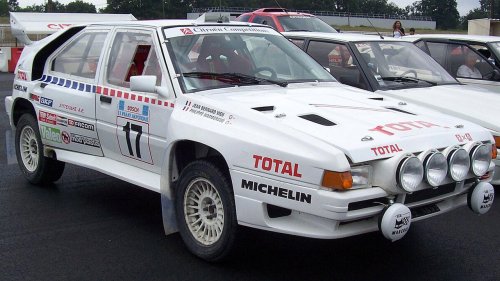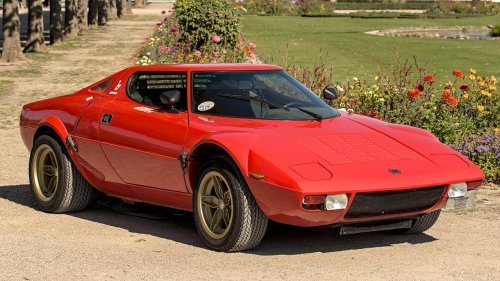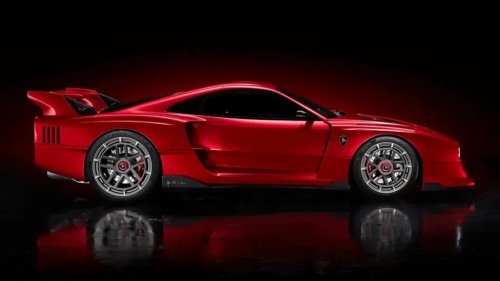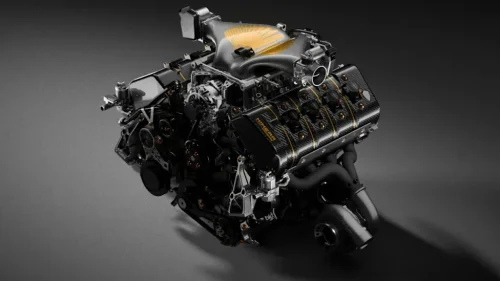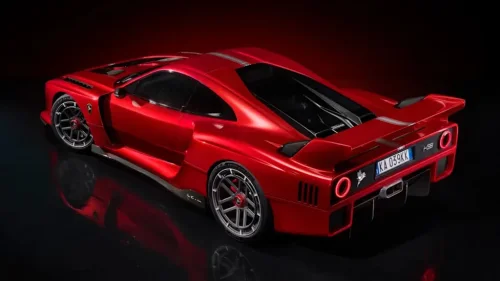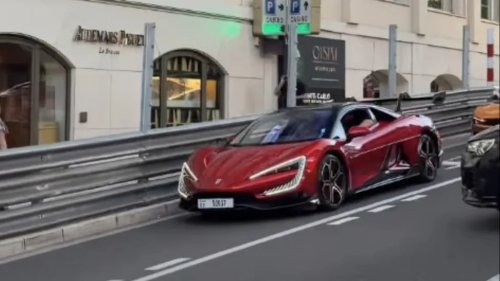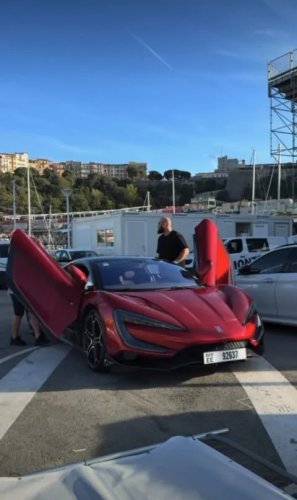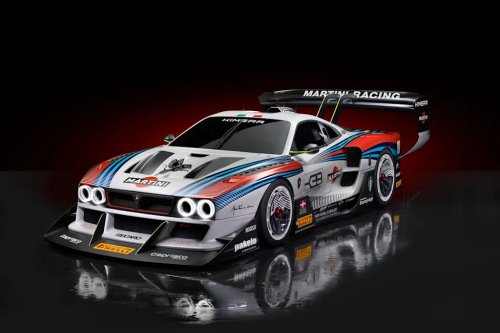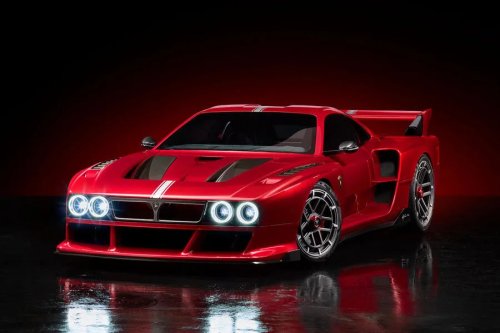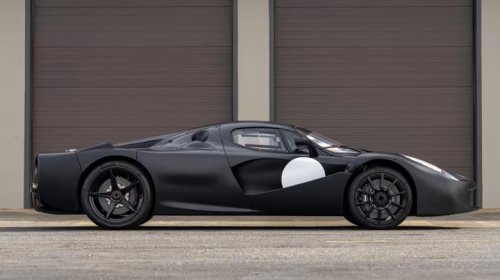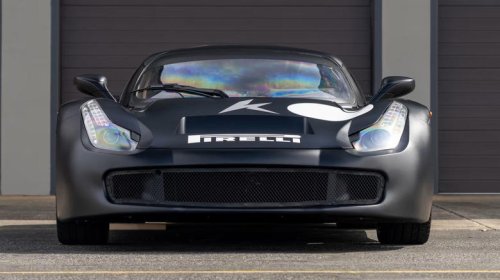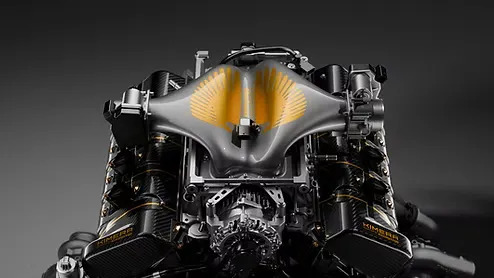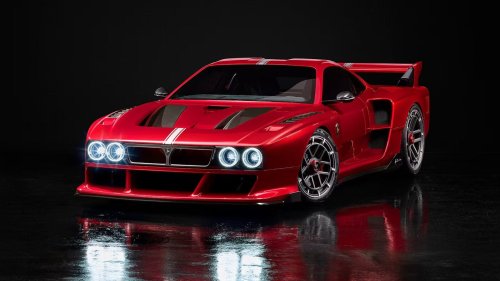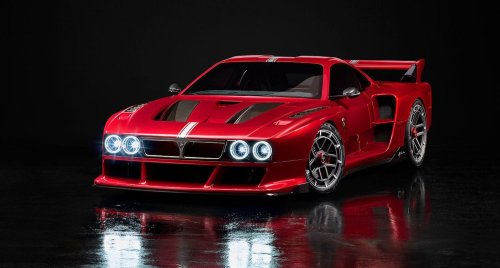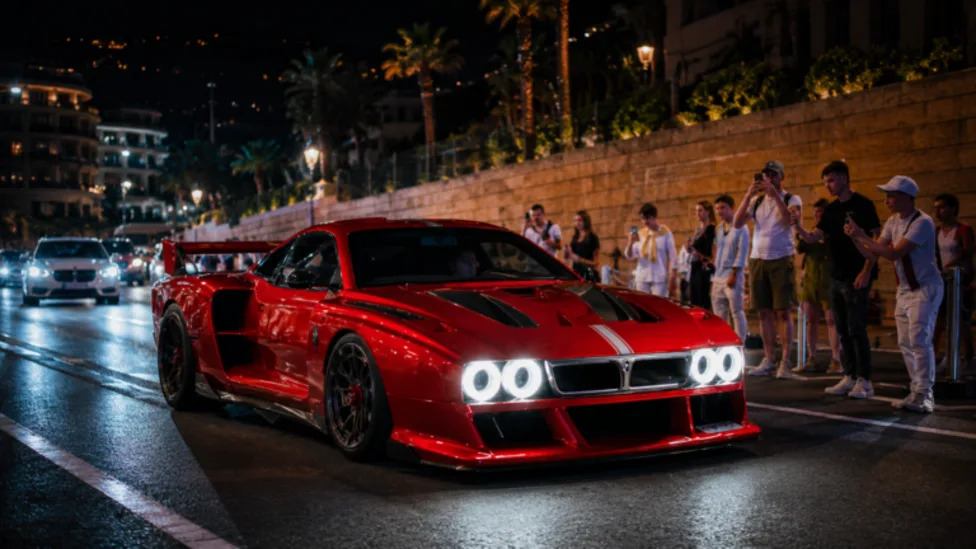


















The Kimera K39 Just Cruised Through the Monaco GP and It Looked Completely UnrealMonaco during Grand Prix weekend is already the most overloaded visual experience in motorsport: barriers, sponsor hoardings, and more cameras per square meter than most countries own in total. Drop a blood-red Italian hypercar into that at night, and the whole scene tips into something absurd.That's what a recent video circulating online captures: the Kimera K39 rolling slowly through Monaco's circuit roads after dark, sharing tarmac with regular traffic, a passing cyclist, and a steadily growing crowd of pedestrians holding up their phones. The car wears Monaco plates reading "W097," a serious flex.From the front, the K39 announces itself with quad circular LED rings and an aggressive front splitter sitting improbably close to the ground. The hood carries prominent aerodynamic vents and a central NACA duct – functional, not decorative.AdvertisementAdvertisementAn S-duct integrated into the nose channels air from beneath the front splitter through the bodywork and exits at the top of the hood, generating downforce on the front axle without the drag penalty of a conventional splitter.The rear, though, is where bystanders' jaws appear to drop on camera: a massive integrated rear wing, wide diffuser with sharp vertical fins, large circular tail lights, and a single central exhaust outlet all converge into something that looks closer to a Group C prototype than a road car.What's Actually Under That BodyworkThe K39 is a clean-sheet, fully original project, developed from the ground up with the aim of joining the small circle of the world's most exclusive hypercars.That's a meaningful change for Kimera, a company that built its entire reputation on Lancia 037 restomods with the EVO37 and EVO38. The K39 shares nothing with those cars beyond a philosophical connection to 1980s Italian motorsport.AdvertisementAdvertisementThe design draws on the silhouettes of the cars that dominated the World Sportscar Championship in that era, specifically the 1981 Lancia Beta Montecarlo Turbo Group 5 silhouette racer.The engineering partnerships involved are pretty unusual. Kimera has partnered with Koenigsegg to develop a bespoke twin-turbocharged V8, and the project also involves Dallara, the Italian competition-engineering specialist, working with Kimera in a technical consulting and shared development role.Christian von Koenigsegg does not typically license his engines to outside manufacturers. The engine produces 972 hp at 7,350 rpm and 885 lb-ft of torque at 5,500 rpm, with the rev limiter set at 8,250 rpm. Compared with more extreme Koenigsegg applications, the forced-induction system was lightened and optimized to improve throttle response and overall drivability.The gearbox is a 7-speed manual. There is no dual-clutch option. No paddle-shift alternative. You change gears yourself, with a physical lever, connected mechanically to a gearbox that sends every one of those 972 horsepower to the rear wheels.AdvertisementAdvertisementThat decision alone sets the K39 apart from virtually every other hypercar launched in the last decade.The K39 is priced at €2.3 million, and twenty customers had already committed before the car's public reveal. Given Kimera's track record with the EVO37 and EVO38, both of which sold out entirely, the remaining allocation is unlikely to last long.None of that context was needed by the pedestrians lining the Monaco barriers in the video, phones raised, watching a car they'd probably never seen before roll silently past under a Lenovo overpass. They didn't need the spec sheet. The thing just looked like it had arrived from a different dimension.