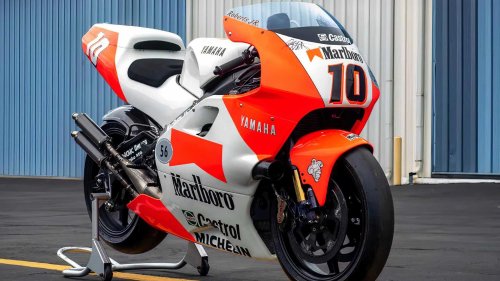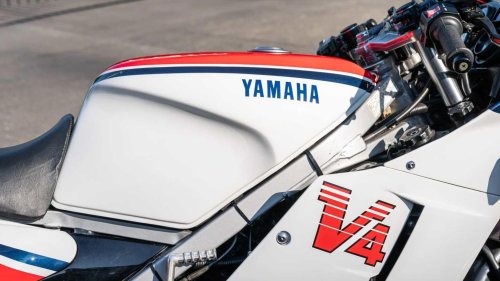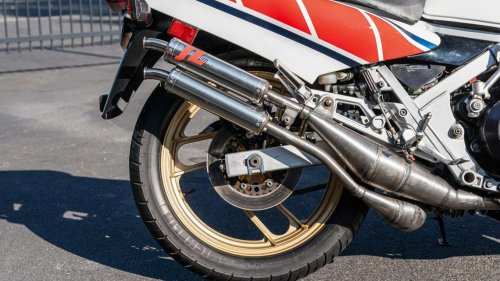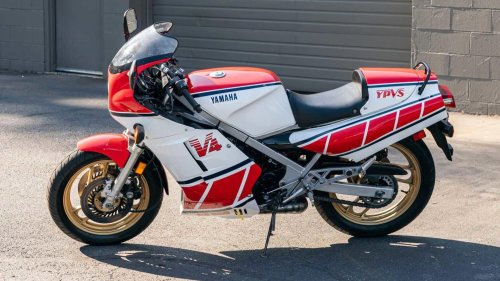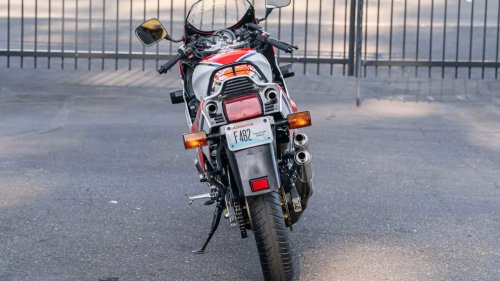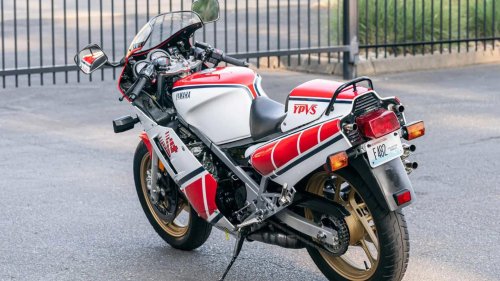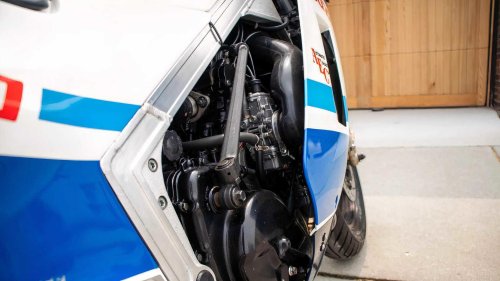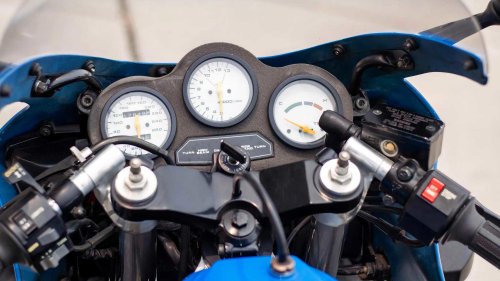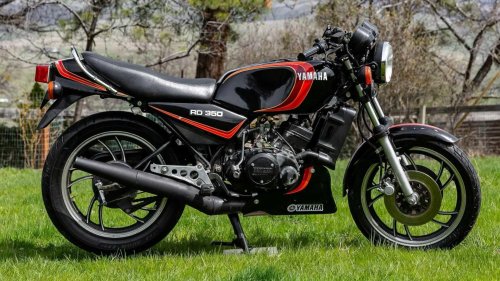
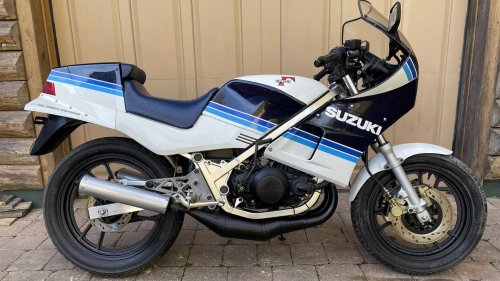
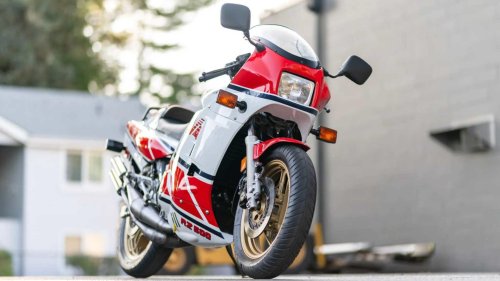
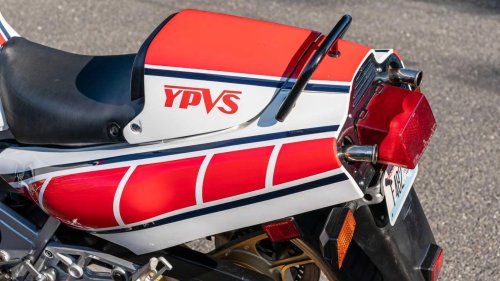
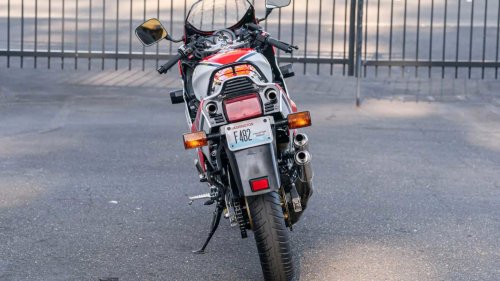
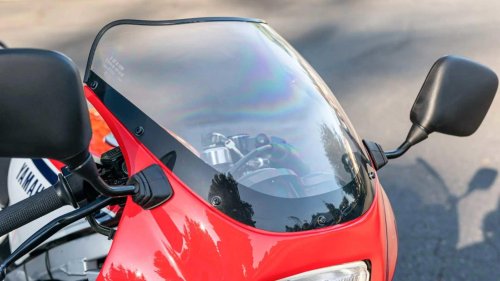

















Two-stroke engines offer a mixture of impressive performance, versatility, and a sound and smell combination like no other. While their popularity might have given way to the four-stroke, there was a time that two-strokes were the engine that everyone wanted. Japanese manufacturers had been working on them for some time by the mid-1980s but, when Yamaha released this two-stroke V4-engined bike, the motorcycling world took notice. The Last Great Age Of The Two-Stroke Bring a TrailerThe 1970s and 1980s were when two-strokes were at their peak for motorcycle performance. They were lightweight, simple, had far fewer moving parts and, crucially, had motorsport backing because of it. Four-strokes had been king on track through the 1960s. However, as the Japanese marques started to invest more in two-stroke technology, they quickly became the engine to have. They weren’t only fast, but would redefine the sport.Giacomo Agostini claimed the 1975 500 cc Grand Prix Motorcycle Racing title on the two-stroke Yamaha YZR500, signifying a changing of the guard among engine layouts. By 1979, there would be just one manufacturer continuing with the four-pot, as Honda contested the season with the NR500.With so much evidence proving their superiority, the 1980s saw even greater investment into the format. Two-stroke V4s offered immense power-to-weight ratios and speed for the track, while the old adage of “win on Sunday, sell on Monday” was proved true as race replicas flew off the forecourts. Manufacturers Brought Grand Prix Dreams To The Street MecumStreet motorcycles had always taken inspiration from their race-going cousins, but it wasn’t until the 1980s that a dedicated race replica bike was produced. This was largely because Grand Prix Motorcycle Racing didn’t require homologation specials. Without a requirement to build a street-legal version, manufacturers had little incentive to absorb the cost of developing a race replica for the public. There were other reasons, like the race bikes’ prototype nature and street frames not being strong enough to handle race bike power, but manufacturers with racing dreams and blank cheques cared little for bringing that tech to the street.Suzuki bucked this trend in 1983, as its RG250 Gamma (a precursor to the wildly popular GSX-R750) was perhaps the first true mass-market race replica. The bike looked every bit as sporting as its track-only version, with a three-quarter fairing with race livery, an aluminum frame, and Suzuki’s “full floater” suspension. It was a runaway success. The bike proved that there was a market for road-going race bikes and, in 1984, Yamaha released its first take. The Yamaha RZ500 Was A V4 Two-Stroke Masterpiece Bring a TrailerWhile Suzuki had tested the waters in 250 cc form, Yamaha went higher; entering in full Grand Prix fare with the 499 cc RZ500. The bike, known as the RD500LC in Europe, was a street-legal version of the race-winning 1983 Yamaha YZR500 (OW70) that Kenny Roberts took to second place in the 1983 Grand Prix Motorcycle Racing season. The RZ500 was packed with technology inspired by the race-going bike, chief among which was its two-stroke V4 engine.The liquid-cooled 499 cc engine was designed to replicate that of the Grand Prix bike. It had a 50-degree V4 layout, with twin crankshafts to separate the front and rear cylinders and both allow better optimization and throttle response.With the engine being tuned for high-revving, high-speed racing, Yamaha fitted it with the Yamaha Power Valve System (YPVS). This was a valve-shaped flap in the exhaust which, at low RPMs, partially blocked the height of the exhaust port. This created more back-pressure and air velocity to give the bike more low-end torque that the race bike wouldn’t have (nor need). The valve was opened at higher RPMs, which raised the exhaust port to its full size. This released the back pressure and allowed the engine to operate normally, giving it a much smoother power band and making it much more pliable for road riding.Bring a TrailerWhile the engine was the real party piece, the bike was more than just a power unit. It had an aluminum frame to help with weight reduction, a full fairing to help both aerodynamics and the race rep aesthetics, anti-dive forks, quad under-seat exhausts (like those found on the race bike),It all led to a bike that had 88 horsepower and weighed just 436 pounds wet, making it both powerful and light. And while buyers in Europe, Canada and Australia all fought to get their hands on one of the bikes, one market it was conspicuously missing from was the US.EPA emission standards at the time were based on four-stroke motorcycles, which are much more efficient from a fuel standpoint. A four-stroke engine produces power on every other rotation, meaning that (almost) all the fuel sucked into the piston chamber is used for combustion before being expelled. A two-stroke produces power on every rotation which, while good for some applications, does mean that some hydrocarbons escape the engine without ever having been burned. It meant that two-strokes were much more difficult to get through emissions testing, and Yamaha left it out altogether. Still, some (typically Canadian) bikes have found their way to the States through avid collectors. The RZ500 Wasn’t Just A Fast Bike Bring a TrailerWith the RZ500 showcasing the sum of Yamaha’s two-stroke racing exploits, it was more than just a fast motorcycle; it was the closest normal people could get to a genuine Grand Prix bike.Suzuki would release the RG500 Gamma a year later as a direct response to the popularity of the RZ500. With a clear target for Suzuki to aim towards, they exceeded Yamaha’s bike by offering seven more horsepower (88 HP vs 95 HP), slightly more torque (48 LB-FT vs 53 LB-FT), a marginally higher speed (148 MPH vs 150 MPH) and a considerably lighter bike (386 lbs vs 437 lbs). It was undoubtedly the better bike on paper, being both lighter and more powerful, though it would suffer the same EPA-restricted fate as the RZ500 and forgo sales in the US.But while the RG500 might have been the superior bike by the numbers, it was the RZ500 that captured the public’s attention more. It came first, which helped, but the Yamaha had that V4 engine while the Suzuki’s was square. This helped give the RZ500 a more usable power band, which was slightly more pliable on the roads than the comparatively feral RG500. The Suzuki would go on to be worth more, but the Yamaha arguably became the more recognizable thanks to its V4 layout and closeness to Yamaha's racing machines. The RZ500’s Legacy Lives On Today Bring a TrailerThough it only lasted three years, from 1984 to 1986, the RZ500 is still talked about with reverence. For many, it helped establish the Grand Prix race replica category, and its two-stroke V4 engine was a large part of that. It proved that bigger race replicas worked, and even showed it could take the fight to four-strokes by winning the 1984 Castrol Six-Hour at Oran Park, Australia.Today they sell for around $18,000, with particularly well-restored examples selling for slightly higher (a restomod bike sold for ~$30,000 in 2025). Though other race replicas released later would surpass the RZ500 on every metric, the RZ500 is still very much sought-after not for its specs, but for what it represents; the peak of two-stroke technology and Grand Prix performance.