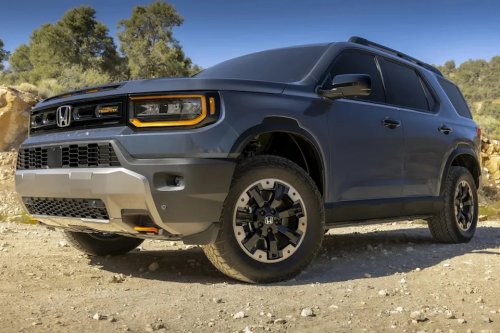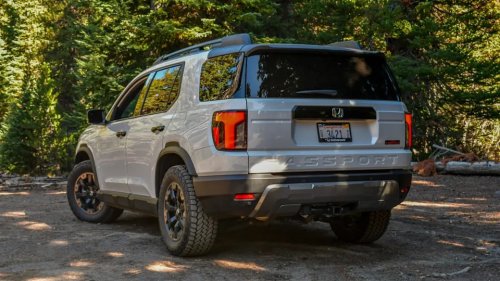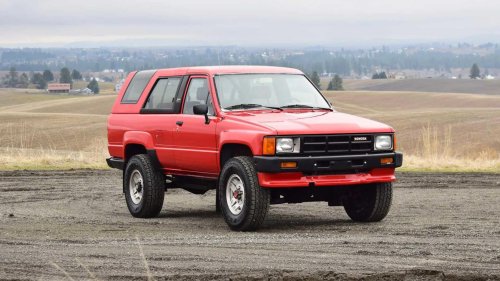
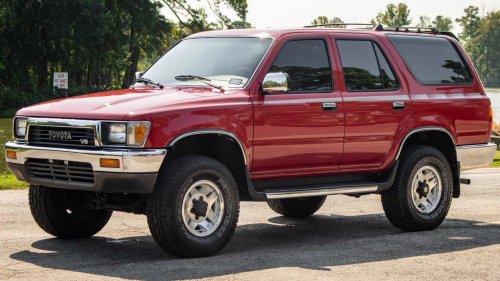
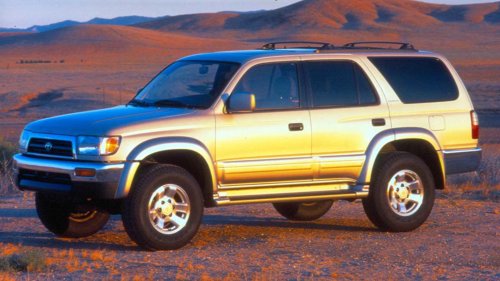
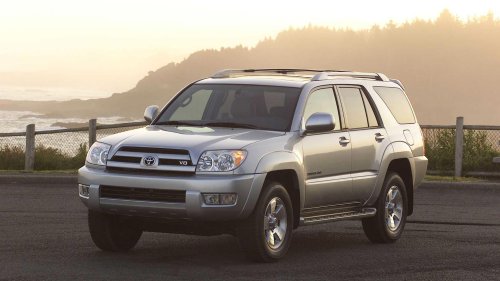
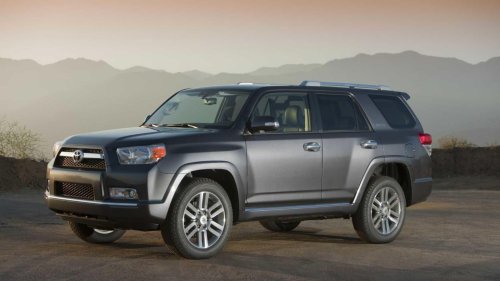
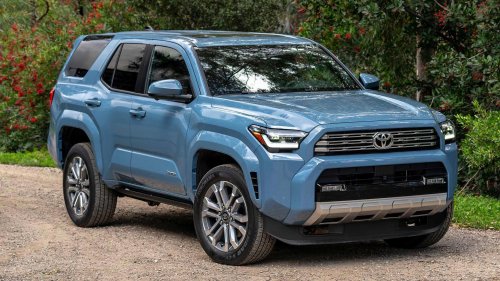
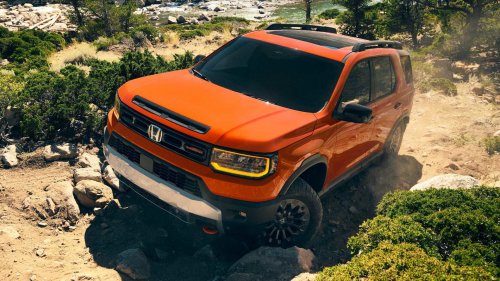
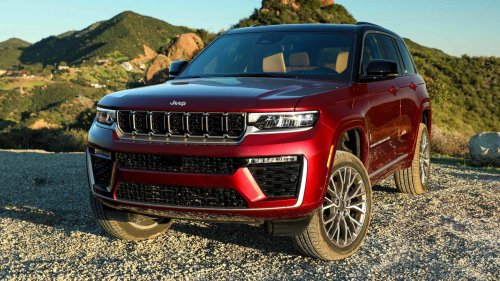
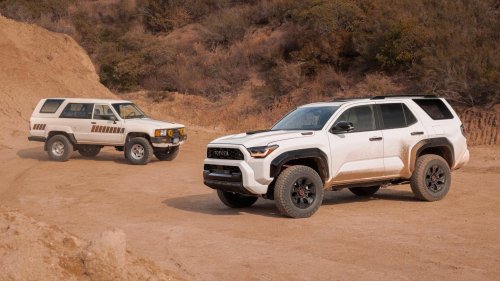



















1984 was truly an All-American year. The Summer Olympics were held in Los Angeles and Bruce Springsteen’s “Born in the U.S.A.” topped the charts, but an even bigger, steel-clad rolling piece of Americana hit the streets that year. The minivan. However, if you weren’t ready to surrender just yet to the first-generation Plymouth Voyager and Dodge Caravan, there was another vehicle that offered up more fun with a smidge of practicality, too.Enter the Toyota 4Runner. Sharing a common ancestor with the Tacoma, the 4Runner started life as a single cab pickup with a bed cap, but over the years it has become the SUV we’ve all had a crush on at one point or another. A great deal of us, your author included, have a real soft spot for the 4Runner, and this should come as no surprise. Over the last four decades or so, this once-humble SUV has become ingrained into American life as one of the most trusted family-hauling and off-road-capable options out there. Through The Years... First Generation Bring A Trailer 1984: 6498 units 1985: 5495 units 1986: 5564 units 1987: 3635 units 1988: 20,880 units 1989: 36,987 units The 4Runner’s roots are ever so slightly deeper than you might think. Its predecessor was produced in small batches by a Toyota dealer in Wisconsin who contracted the R/V builder Winnebago to manufacture a vehicle that could fill the gap between the pickup and FJ40 Land Cruiser. Winnebago built fiberglass bed caps and installed a removable bench seat just behind the cab. The dealer was calling its creation the Trekker. After a few years of selling in strong numbers, Toyota picked up on the popularity and started to make its own version from 1984-1989 that followed the same recipe. Second Generation Bring A Trailer 1990: 48,295 units (intro of four-door) 1991: 44,879 units 1992: 39,917 units 1993: 46,652 units (end of two-door) 1994: 74,109 units 1995: 75,962 units After the sales success that was the first generation, Toyota made a few changes to maintain its market share in the small SUV segment. Becoming more family-oriented (remember that), the addition of two more doors came in 1990, as well as a fixed roof. Gone were the days of the open-top second row and easily removable bench. What it did keep, however—despite being a proper SUV and not a pickup with a bed cap—was the tailgate and powered rear window.Being family oriented wasn’t just a sales gimmick, too. My mother swears by the second-gen’s tailgate being the best impromptu diaper-changing station on road trips. Third Generation Toyota 1996: 99,597 units 1997: 128,496 units 1998: 118,484 units 1999: 124,221 units 2000: 111,797 units 2001: 90,250 units 2002: 77,026 units A new 3.4-liter V6 was shoved into the third-generation 4Runner, which also shared lots of features with the then-new Tacoma pickup. New trims were added along with features like traction control, four-wheel ABS, and cruise control. Sales of the third generation crested 100,000 units, but for every 4Runner Toyota sold, Jeep was selling three Grand Cherokees. More changes were needed to compete with its main adversary, so a better traction control system was added later in this generation, but the biggest changes were still to come. Forth Generation Toyota 2003: 109,308 units 2004: 114,212 units 2005: 103,830 units 2006: 103,086 units 2007: 87,718 units 2008: 47,878 units 2009: 19,675 units Gone was the base four-cylinder engine option in the 4runner for the fourth generation. Two new engines found their way under the hood: a lumpy and lazy 4.0-liter V6 and an even lazier 4.7-liter V8. Both 4Runners drank fuel like it was water in a desert oasis, leading to the V8 getting axed after 2009. Third and fourth generation models have since become popular with off-roaders due to both their engine options and prices, but stock, these things drove like baby 200 Series Land Cruisers. Fifth Generation Toyota 2010: 46,531 units 2011: 44,316 units 2012: 48,755 units 2013: 51,625 units 2014: 76,906 units 2015: 97,034 units 2016: 111,970 units 2017: 128,296 units 2018: 139,694 units 2019: 131,864 units 2020: 129,052 units 2021: 144,696 units 2022: 121,023 units 2023: 109,951 units 2024: 92,156 units The longest-running generation of 4Runner, the fifth generation spanned 2010 to 2024 with the same engine, transmission, basic overall looks, and most of the interior. The fifth generation 4Runner was old (I'd say archaic but the Chevrolet Express turns 30 this year). By the time it was replaced by the sixth generation, it was 15 years old. Sixth Generation Toyota 2025: 98,804 units Arguably the steepest jump in the 4Runner’s evolution, the latest generation brings back a four-cylinder engine as the main power plant, but a hybrid system lurks in its midst. The latest off-road vehicle to bare an i-FORCE MAX hybrid powertrain, the three mid-tier trims (TRD Sport, TRD Off Road, and Limited) are available in hybrid formats, but the top three (Platinum, Trailhunter, and TRD Pro) are hybrid-only.The SR5 starts at $41,870, with the cheapest hybrid starting at $53,090. The latest trims to join the 4Runner lineup are those top tier hybrid-only trims, spanning from the low-to-high $60,000 mark. The Jeep Grand Cherokee and Honda Passport, the only other living competitors to the 4Runner, bookend the base SR5 in price at $37,095 for the Grand Cherokee and $44,950 for the Passport. We could lump the Jeep Wrangler and Ford Bronco in there, but those aren’t as practical as the former in most use cases. Key Rivals Tried Their Hardest To Give The 4Runner A Tough Time Honda At one point, Nissan, Jeep, Ford, Chevrolet, Isuzu, and Honda offered competitors in the small SUV segment you could cross-shop with the 4Runner. The story of the Nissan Pathfinder is similar to the 4Runner, sharing roots with the Frontier pickup and then growing into a crossover in its latter years. Honda’s two SUVs started life as more soft-road and off-road vehicles before turning into the popular crossovers they are today. The last years of the Ford Bronco II and Chevrolet Blazer followed similar blueprints of both the first and second generation 4Runner, but only three would be left standing in 2026.The Grand Cherokee, Passport, and 4Runner names still exist today, each of them offering something different than the other. Want a hybrid? The 4Runner is your only option after Jeep pulled the plug on its hybrids. Need something comfortable? The Grand Cherokee is pining after the luxury brands with its top trims, and if you need old-school V6 power, the Passport has you covered.Jeep Where the 4Runner outperforms the competition is in resale values. The average depreciation rate for three-year-old 4Runners was significantly less than other SUVs, according to iSeeCars. Where others would see over 25% of the value disappear after three years, 4Runners lose only 6.7% of their value on average. After 10 years, the 4Runner loses 56% of its value compared to the Passport and Grand Cherokee, which lose 67% and 73% on average, according to the site.The 4Runner's ability to retain value so well is due to the fact it has proven itself as a wildly capable and laughably reliable option for decades now. While sumptuous interiors and powerful engines are all well and good, when it comes down to what people really want from an adventure and family friendly SUV, the 4Runner ticks those boxes better than any other option out there. 4Runner 4Ever Ian Wright/CarBuzz/ValnetThe 4Runner consistently ranks as one of the most reliable vehicles on the market, and if there’s any better lesson on how you shouldn’t fix what isn’t broken than the fifth generation 4Runner, we’d like to hear it. Sure, by the time it was replaced, the 4.0-liter V6 and five-speed automatic was archaic at best, but it was proven to be dead-reliable. Sure, it’s a thirsty beast, and they’re quite expensive, but if you want something you could drive right off the showroom floor without using the door and give the keys to your kids a decade later, there really is nothing like it.40 years of near-Porsche-like subtle iterations helped keep 4Runner owners happy and returning for more. Now that the latest generation of 4Runner could potentially return fuel economy beginning with a "2," there's no better time to finally buy one if you're wary about fuel costs. If that doesn't matter, then why don't you have one already?