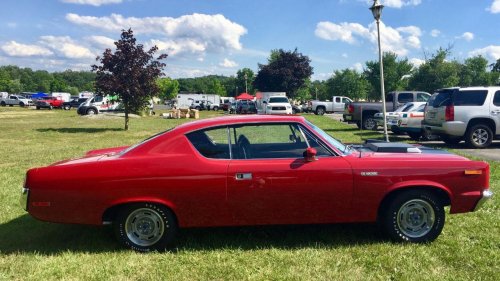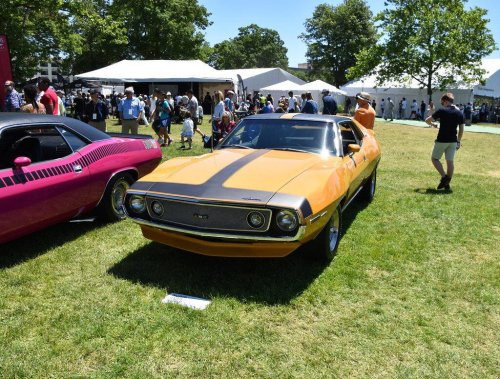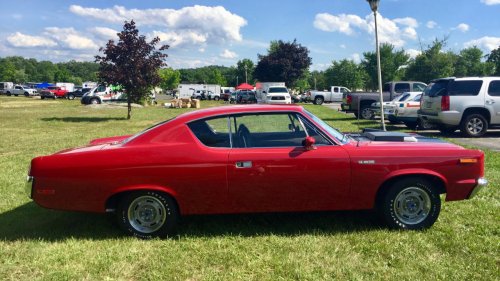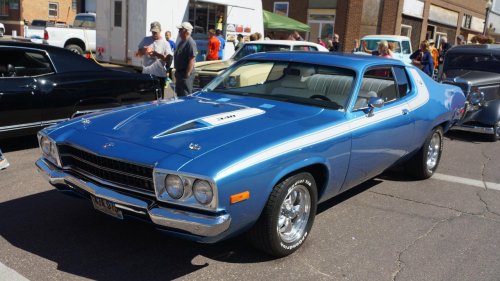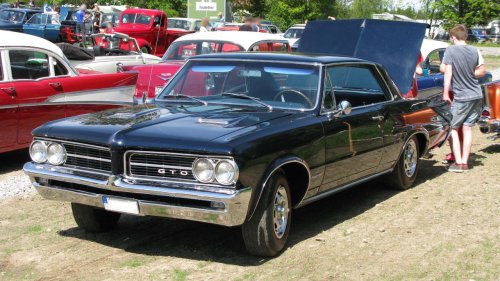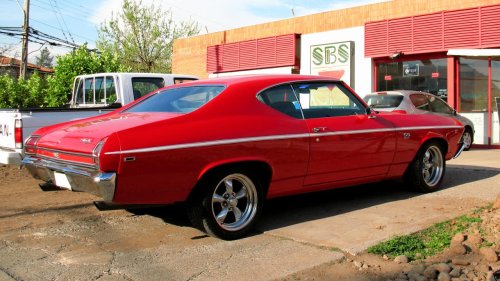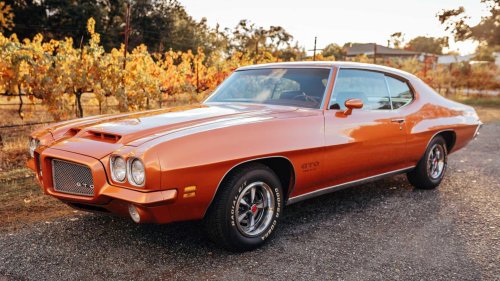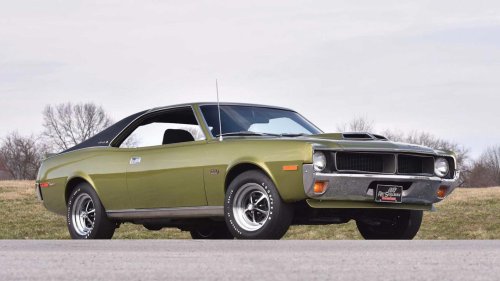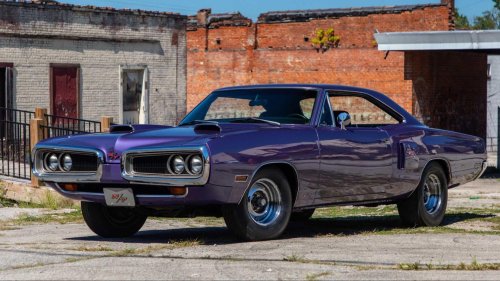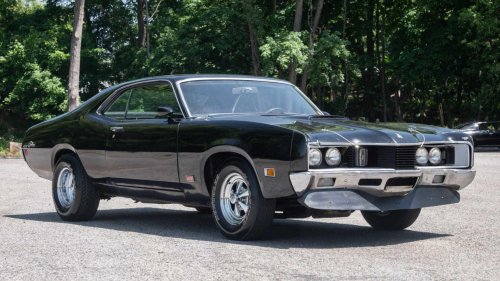
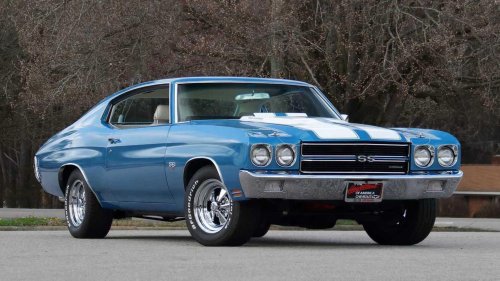
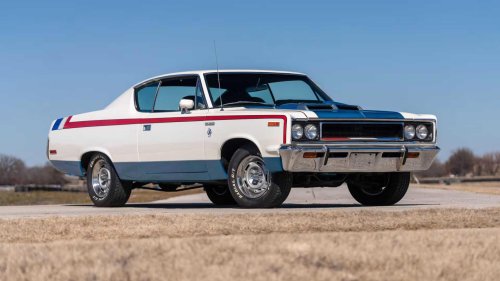
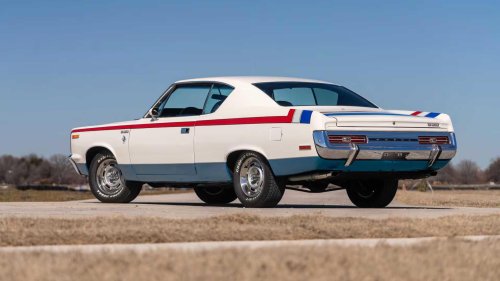
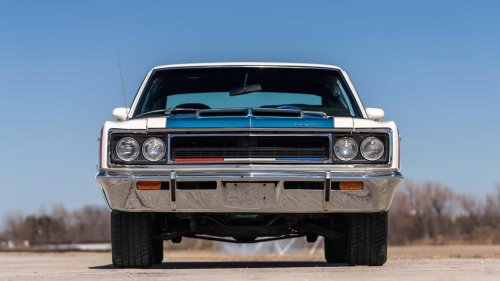
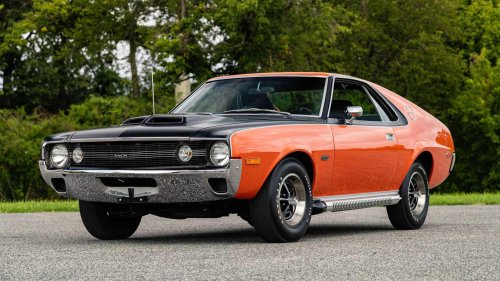
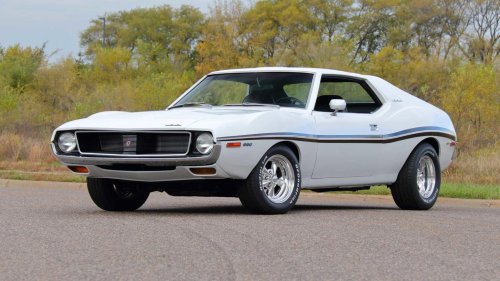
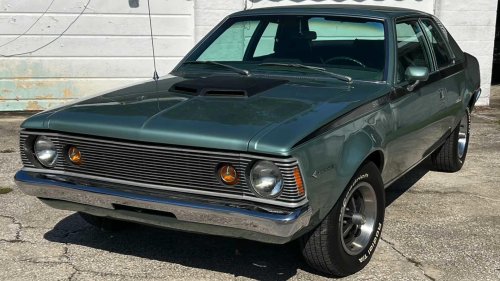
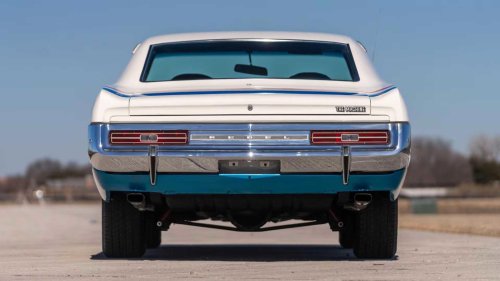


















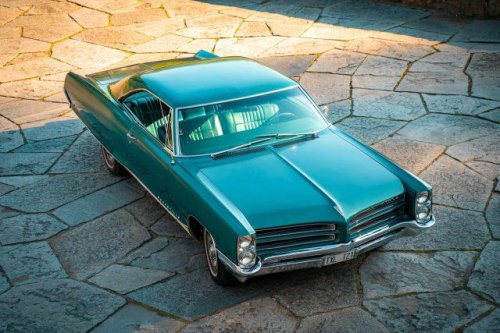
In the music industry, bands that never quite top the charts or sell their albums in huge numbers are often later remembered for influencing more successful groups after they've thrown the towel in and called it a day. Groups like The Velvet Underground or Big Star are prime examples of this well-documented phenomenon, and critics have long argued their influence and inspiration far outweighed their commercial success.But these stories aren't just limited to the music scene - the American muscle car boom also saw smaller players building cars that didn’t quite break into the mainstream, but still delivered the kind of performance that demanded attention. Which brings us to a short-lived family car from 1970. It didn't top the sales charts, nor did it carry the same brand weight as its rivals like General Motors and Ford, but what it did have going for it was up to 340 horsepower and quarter mile times in the low 14s. Late-1960s Muscle Cars Proved Performance Could Exist in Unexpected Places Mecum Much like those overlooked bands that never quite broke into the mainstream, the muscle car era had its own share of under-the-radar performers - cars that didn’t dominate headlines, feature on magazine covers, or appear as posters for bedroom walls, but still delivered where it mattered most.By the late 1960s, some manufacturers were beginning to challenge the status quo of what a performance car should look like. While coupes like the Pontiac GTO and Chevelle SS were taking all the spotlight, sticking to the classic and safe formula for commercial success and attention, they weren’t the only cars capable of some serious speed. Lesser known marques were in on the action too, while also starting to experiment with new ways to inject performance into more practical shapes.Mecum These became cars that challenged perceptions, and ones that didn’t necessarily advertise their capabilities at first glance. A bit like Rocky Balboa - unexpected, the underdog, but impossible to ignore once he starts throwing them punches.Like dropping a HEMI V8 into a humble taxi cab, practical mid-size platforms for families became unlikely foundations for this approach. With the right engine, these cars could deliver the same straight-line performance as their more celebrated counterparts, but without the aggressive styling or marketing push to match. A wolf in sheep's clothing, so to speak.MecumIt was an interesting shift - one that opened the door for a very different kind of muscle car - one that relied less on image and name recognition, and more on what it could actually do. A bit like a nepo baby, but with some actual talent and without the famous or well-connected parents for its success.Smaller companies like American Motors Corporation (AMC) weren't exactly commonly known household names like Detroit’s biggest players, and neither did they have the financial muscle to match them either. But these things couldn't stop them from competing in the performance car arena, while also carving out their own niche space within the market. The AMC Rebel Machine Delivered 340 HP and Low 14-Second Quarter-Mile Performance Mecum Auctions When AMC revealed the Rebel Machine, it was seen as a kind of anti-establishment player in the segment. It didn’t arrive as a stripped-out drag special, or as a one-off, halo coupe. Instead, it took the form of a standard, mid-size Rebel and put it on steroids, and its deceptive look concealed a heavily reworked 390-cubic-inch V8 - making it similar to the way Bruce Banner is secretly the Incredible Hulk.Officially rated at 340 hp, the engine was more than just output alone. AMC engineers developed it using components from their AMX and Javelin programs, including a high-flow intake, upgraded camshaft, and a free-breathing exhaust setup which improved volumetric efficiency across the rev range. In simple terms, this meant the engine could draw in and burn more air and fuel more efficiently at different engine speeds, resulting in stronger, more consistent power, rather than a short burst at the top end.That broader, more efficient power delivery wasn’t just a technical talking point to sell on showroom floors - it had a direct, real-world impact on how the car performed on the road. With close to 430 lb-ft of torque available low in the rev band, the Rebel Machine didn’t need to work hard to get moving. As soon as some pressure was applied onto its gas pedal, the Rebel Machine would deliver instant pulling power like a hungry dog chasing a bone.This was enough for road tests at the time to record quarter-mile times in the low 14-second range and trap speeds nudging past 95 mph. With these stats, AMC created a snake in the grass performer that was able to compete firmly with those contemporary big-block rivals—the Chevelle SS, the Pontiac GTO, and Ford Mustang. But while those cars shouted about what they could do via their looks before actually proving anything on the drag strip, the Rebel Machine was seen as the rather underestimated underdog.Via Mecum Auctions In terms of transmissions, there was a choice of two options. Buyers could opt for a Borg-Warner four-speed manual, which made full use of the engine’s torque curve, or a three-speed automatic that traded a fraction of outright pace for more consistent launches. Power, meanwhile, was sent through a Twin-Grip limited-slip differential to help prevent all that torque overwhelming the rear wheels.Crucially, this wasn’t just a big-block V8 dropped into a standard, family-friendly chassis. To cope with the added performance from that heavily tuned powerplant, AMC reinforced key suspension components and fitted heavy-duty springs and shocks, while front disc brakes were standard - a feature that wasn’t commonly a given across the industry at the time. The result was a car that didn’t just go quickly in a straight line. It could also repeatedly handle the stresses and strains of V8 power and torque, without being overwhelmed and getting its knickers in a twist. Muscle Car Performance Comparison Low Production Numbers And Unique Positioning Drive Collector Interest Today Via Mecum Auctions As well as its deceptive looks concealing a GTO-competing V8, scarcity is also a defining part of the Rebel Machine’s identity. Built exclusively for the 1970 model year, 2,326 examples were produced, making it more of a factory experiment than an ongoing performance line, and a statement of what AMC engineers can do when they put their minds to it.While that limited production run suggested planned exclusivity, it was more about operating on a smaller scale than Detroit’s much bigger players. Still, it’s that rarity which has since translated directly into strong collector interest and value today, with some examples going under the hammer for as much as six figures. Having only done seven miles, Classic.com once saw a Rebel Machine go for just over $145,000. Based on past listings from 2020 onward, very few higher mileage ones seem to sell below $50k as a minimum, showing strong appreciation across the board.With two transmission options, price differences between examples often come down less to whether the car is manual or automatic, and more to factors like originality, documentation, and overall condition. Several AMC Models Proved The Brand Could Build Serious Performance Cars Mecum The Rebel Machine wasn’t a one-off though, and AMC had already proved their performance credentials in a few earlier models, such as the AMC AMX. This was another rare, two-seat muscle car built on a shortened Javelin platform, and was designed primarily for weight savings. It combined a compact footprint with potent V8 options, like a 390-cubic-inch unit making 315 hp. While it was less powerful than the Rebel Machine, it could still achieve a sub-6-second sprint from 0 to 60 mph, making it one of the quickest American cars of its time.Mecum That performance credibility continued with the AMC Javelin, which became AMC’s primary weapon in SCCA Trans-Am racing, and even a championship winner in 1971. Road-going versions, meanwhile, benefited from this success, offering a range of V8 engines and performance packages that tied directly to AMC's participation in motorsport.Muscle Car Campy / YouTube Last was perhaps the rather underrated AMC Hornet SC/360, which marked a more compact and understated take on the muscle car formula. It was powered by a 360-cubic-inch V8 producing up to 285 hp, and delivered strong straight-line performance in a lighter, more affordable package. It was positioned as a budget-friendly alternative to larger muscle cars, yet was still capable of mid-14-second quarter-mile times. The Rebel Machine Shows How AMC Challenged Expectations With Pure Muscle Via Mecum Auctions In many ways, the Rebel Machine represents a brief moment when AMC refused to play by the same rules as its larger rivals. It may not have had the head-turning and eyebrow-raising looks of a GTO, but it did have impressive performance in an unexpected package—hardly a common combination at the time.While this may not have been enough to reshape the muscle car landscape, it did prove that even outside Detroit’s biggest names, there was room for bold ideas, and that sometimes, the most interesting cars are the ones that don’t always follow the script.