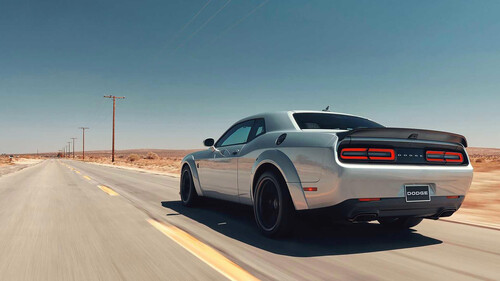
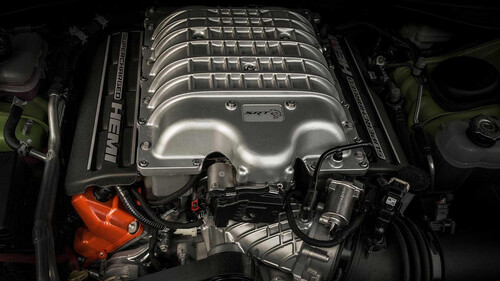
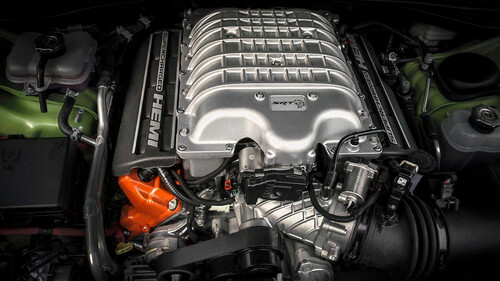
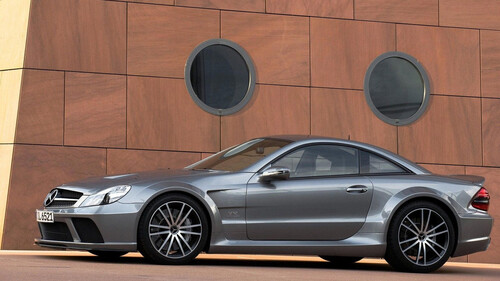
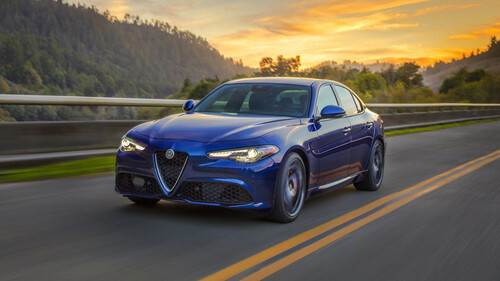
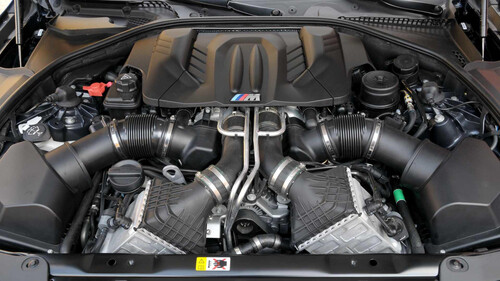
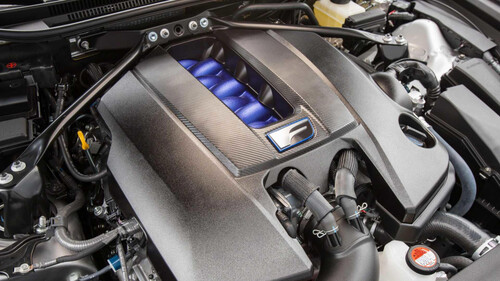
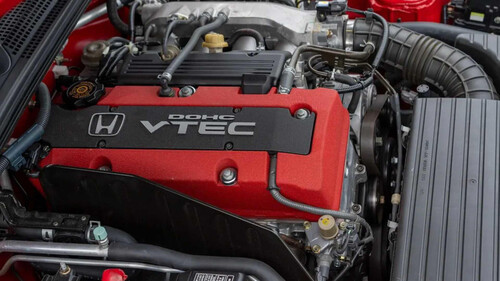
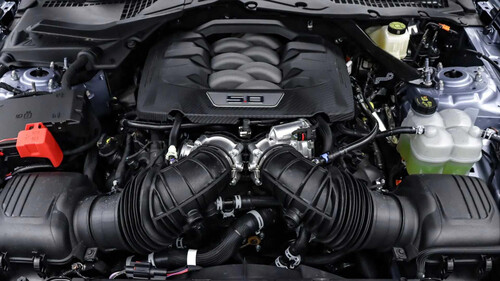
At least here in the US, for so many car enthusiasts, the sound of a V8 is one of the first noises you'll hear that might awaken the car-nut gene in you. The V8 is a tipping point, usually. It's not a decision that's made by an automaker in the name of economy or cost savings. Usually, it's a step towards performance, whether that decision is made for speed or capability. Here, you'll find a list of engines made for both, but they share one common thread: as car enthusiasts, you've probably heard of (or should have heard of) each of them.In order to give you the most up-to-date and accurate information possible, the data used to compile this article was sourced from various manufacturers and other authoritative sources. Toyota UZ 1998001_2003_tundra_4-7l_v-8_engine-1.jpgIt makes sense to start with the Toyota UZ series of V8 engines. It might have been your first exposure to a V8, maybe in the back of mom or dad's miscellaneous Toyota or Lexus SUV. The UZ V8 powered it all back in the day, from Toyota's Tundra and Sequoia to a smattering of Lexus models. That includes the famed LX and the GX, as well as a few Japan-only Toyotas, like the Aristo, Soarer, and Crown.No matter what, having the UZ under the hood grew to mean one thing: durability. This, along with some of Toyota's V6 and four-cylinder engines, is a key cornerstone in the reputation for reliability the brand has enjoyed since the late 1980s, and one that remains strong today. The UZ was definitely geared more towards capability and durability than performance, however, and most versions (even late production 3UZ motors) barely cleared 300 horsepower. Still, Toyota did use one in its Super GT racers until 2009, and that one made 500 horsepower. BMW M S65 BMW S65 V-8 Engine BMW's S65 V8 is arguably the polar opposite. Powering the only V8 M3 ever made, it produced 414 horsepower, but "just" 295 pound-feet of torque. That's a pretty lowly figure for a performance car, especially during a point in time when German brands were each trying to one-up each other with successively larger engines placed in their most sporting cars. BMW more than made up for the low torque figure by putting the redline at an astounding 8,300 rpm.The S65 was also used exclusively in the M3 of the day, and it's by far the shortest-lived engine on this list, having only been produced from 2007 to 2013. The S65 is the star of the show in the M3, blending power, responsiveness, and a killer exhaust note. Predictably, it also had its problems later in life. BMW recalled this engine for rod bearing failure, in typical Munich fashion, and the engine's throttle actuators had a reputation for giving up the ghost, too. Ferrari F136 ferrari-f430-15-1.jpgThe third slide in this gallery was on my wall when I was a kid- I found it online and used up "the good ink" (as my parents like to call the color ink) to print out an 8.5x11 shrine to the coolest Ferrari I'd ever seen. It's held up pretty well, and so has the F136 engine. It was also Ferrari's last naturally-aspirated V8 engine. It powered a ton of Ferraris after succeeding the F106 V8 (below), including the F430, California, and 458 Italia.Depending on its application, the engine made around 385 horsepower to 597 horsepower. It also revved like a naturally-aspirated, flat-plane engine should, and it's so iconic, that the V8 is pretty easily identified on sound alone. It's one of those engines that existed for a very long time, and in doing so, became inseparable from the brand that produced it. BMW S63 2018 BMW M5 (12)BMW produced a thoroughly modern, entertaining engine in the S63. It's also one of the few turbocharged engines that isn't inherently muted by its turbos. BMW goes big on power here, offering at least 600 hp and 553 lb-ft of torque in the previous-generation M5, which is now hybrid-assisted. As such, this engine also potentially marks the last time the BMW M5 was devoid of electrical assistance to the motor.However, the S63 isn't solely limited to the M5. It's still used in a ton of other BMW M products, like all of the brand's "S" engines. That includes the excellent M5 CS, the current X6 M, the X5 M, and the M8, among many others. BMW also ditched the turbos for certain applications in the past, leaving the engine wholly unassisted. Dodge Hemi Engine of 2015 Dodge Charger SRT HellcatDodge's Hemi motors are the stuff of legend, but arguably, the format peaked in the brand's supercharged iteration that ran from 2015 to 2018. It occupied some of the brand's greatest V8-powered cars, including the Challenger Hellcat Redeye, Durango SRT Hellcat, and Cherokee Trackhawk. It's also available on its own from Mopar for a hefty $21,807. It sounds like a bargain when you remember the engine produced as much as 807 horsepower and 717 pound-feet of torque in the Dodge Challenger Hellcat Super Stock.There's also a bit of finality to this motor, at least for the moment. Dodge doesn't make any V8-powered performance cars, though the Hemi has crept back into the Stellantis lineup due to consumer demand in recent months. For now, at least, these were the last of the supercharged Hemi cars, and that's something worth paying for. Ferrari F106 1996 Ferrari F355 engine bayFerrari's F106 V8 and its derivatives were effectively omnipresent in the brand's lineup for several decades. The Dino V8 can trace its roots to racers in the 1960s, and was finally replaced after the 360 left production in 2004. Arguably, the engine peaked in the Challenge Stradale, with 420 horsepower and a sky-high 8,500 rpm redline. The engine is also featured in the F40 and 288 GTO in turbocharged form.Ferrari kept this engine going for more than 30 years, thanks largely to its consistent updates. The motor went from 250 horsepower from a 2.9-liter, naturally-aspirated engine to a twin-turbocharged version of the F106, producing 471 horsepower in the legendary F40. Revisions included adding more modern tech as it became available, like electronic fuel injection and multi-valve heads. McLaren M838T / M840T The M840T V-8 engine in the 2018 McLaren 720SMcLaren began producing V8-powered road cars with the M838T in 2011, when it introduced the MP4-12C. It's a lot of numbers, but the engine quickly became a staple of the McLaren lineup. It's currently the only engine the brand uses, barring the V6 found in the Artura. The 3.8-liter version is found in cars like the 650S, while 4.0-liter versions are used for the brand's range-toppers, like the current 750S.McLaren also produces an even higher-performance version for its most serious cars. The Senna is powered by the 814-horsepower M840TR, and in the McLaren Speedtail, the same engine produces a combined 1,035 horsepower with help from an electric motor. Aside from the above Ferrari engine, there aren't many examples of an automaker getting so much literal mileage out of a V8 engine design. Audi 4.2-Liter FSI The V-8 FSI Engine in a 2008 Audi S5Audi's FSI V8 is one of the most distinct and iconic German V8s ever built. Some timing guide issues aside, it's also a shockingly reliable motor. The FSI was also something of a departure for the automaker that helped pioneer the use of forced induction in its cars when Audi introduced the engine in the 2006 RS4 sedan. It would go on to power some of the most iconic Audis ever, including the R8 and the S5.It also featured more power and a similarly high redline to BMW's S65, without a lot of the oil feed and throttle actuator issues present in it. Audi was able to extract 444 horsepower from the unit, with a huge 8,250 rpm redline. Audi also put it in a few of its SUVs and passenger cars, including the A6 and Q7. GM LT1/LT2 Small Block Chevrolet Corvette Stingray (C8), engineAnother thoroughly modern engine, GM's LT series of V8s, is downright iconic. The motor is still used in the C8, but it previously powered the old C7 Corvette and the Camaro starting in 2014. GM makes two versions, the LT1 and LT2. The former is found in the C8, but the LT1 is still offered as a crate engine, putting out 460 horsepower for a pretty darn reasonable $10,000.GM isn't using some pig iron block of metal to make this power either. As mentioned above, the LT2 is a thoroughly modern engine, featuring more efficient air intakes over the LT1, better lubrication, and stronger cams. It was also designed specifically for mid-engine applications like the Corvette, featuring dry-sump lubrication and a relatively compact footprint given the motor's displacement and size. Mercedes-AMG M156 Another iconic German V8, the M156, was introduced in 2006 and found a home in a string of high-powered and high-performance AMG models from 2006 to 2014. The AMG motor earned quite a reputation owing to its long production run, and a largely positive one at that. Aside from some issues with the engine's head bolts, which were almost omnipresent regardless of application, the M156 earned a reputation as a reliable high-powered engine.Engine bay of a 2010 Mercedes-Benz E 63 AMGMercedes put the motor in everything, from the C, E, and S 63 AMGs to the deeply weird R53 AMG minivan. The 6.2-liter engine could also rev pretty well, given its size, with a 7,200 rpm redline. Power was similarly stratospheric, and depending on its application, the motor made between 451 horsepower and 622 hp, in addition to a healthy 465–479 pound-feet of torque.