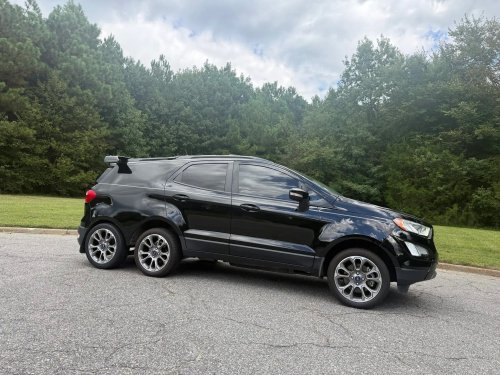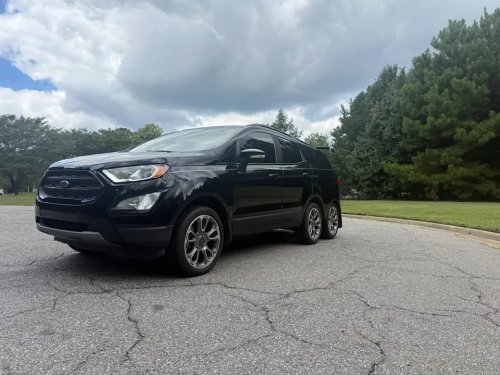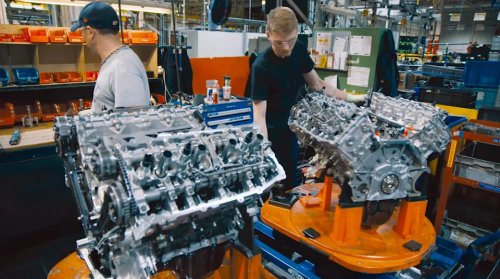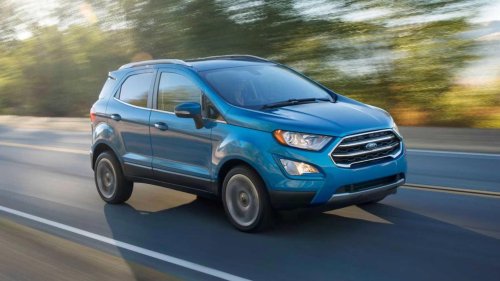
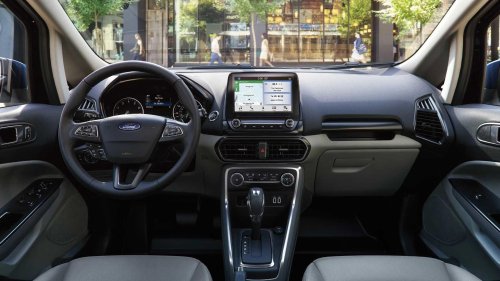
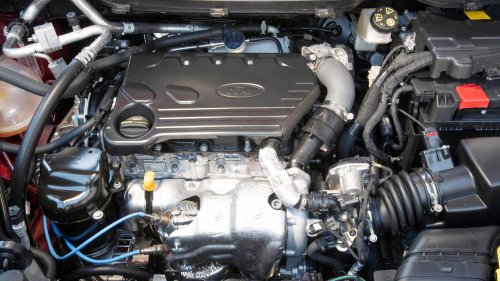
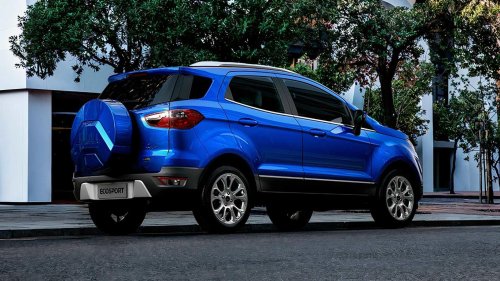

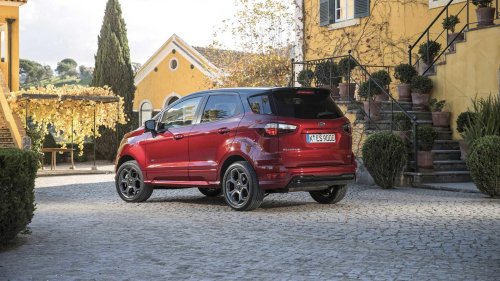



















While larger crossovers and SUVs have found considerable success in the US over the last couple of decades, the same can't be said for smaller vehicles. Small hatchbacks like the Toyota Yaris have been pretty much outlawed across the board due to a lack of interest, primarily in the face of the onslaught of subcompact crossover SUVs. The Chevrolet Trax and Subaru Crosstrek rule the roost in this particular arena, but new examples will set you back north of $20,000.Ford is one of the most trusted names in the automotive world, so perhaps opting for a used example of its now-dead EcoSport subcompact instead could be a good way to go. They are very cheap, after all, especially given that the latest examples are only a few years old. Be careful though, as there are some good reasons why the model is offered for peanuts on the used market. Ford's Deceased Subcompact Can Be Had For A Bargain These Days Ford While the EcoSport was pretty cheap when it was on sale, with base versions going for around $20k, it has struggled to hold its value following years out in the wilderness. According to the CarBuzz Marketplace, early 2018 entry-level S specimens equipped with Ford's three-cylinder EcoBoost engines have an average value of $11,876. This rises slightly with newer cars, with 2021 EcoSports on the market in decent condition for around $13k.If you can deal with a car that sports more mileage on its odometer, say over 100,000 miles, then you have a wide range of choices at around the $7k mark. On the face of it, this seems like excellent value for a car only a handful of years old, but hold off on that thought. Don't Expect A Premium Experience Ford While Ford interiors are usually pretty solid, the one found in the EcoSport is anything but. You'll find a sea of cheap and nastily produced materials when you climb inside, which feel poor even for a car priced towards the lower end of the spectrum. Don't be surprised when you're attacked by random noises coming from the badly-fitting trim as you cruise along, while the rather rough engine note of the three-pot engine will find its way into the cabin more prominently than you'd like.Ford is hoping to avoid similar failures in the future by harnessing the power of artificial intelligence on its production lines, but we'll see how that turns out. It is at least pretty practical versus its rivals, and decently well-equipped, but not to the point where it positively stands out. The EcoSport's Three-Cylinder Engine Lacks Grunt Ford Should you be interested in saving as much money as possible, the less powerful but multi-award-winning 1.0-liter turbocharged EcoBoost three-cylinder powerplant-equipped models will be the ones to gun for. The trouble is, while cheap, the engine lacks outright performance. With just 123 horsepower on tap to propel the EcoSport's 3,000-pound mass, don't expect to challenge much else on the road. Indeed, you'll be doing well to get close to 11 seconds in the sprint to 60 mph. Adding insult to injury, the 'EcoSport' isn't even economical. The three-pot can only muster an average MPG figure of 28, with the city-specific number being a rather subpar 27 MPG.On the positive side, the engine feels peppy lower down, which helps it feel responsive at slower speeds. This is well-suited, given the car is generally aimed more at city driving anyway, but prepare to struggle should you fancy escaping the concrete jungle. Its six-speed automatic transmission gets the job done, but it's nothing to write home about as far as gearboxes are concerned. Its Poor Refinement Isn't Helped By A Rough Ride Ford The EcoSport is also pretty nippy around city streets thanks to quick steering and a responsive brake pedal, though things fall apart once you gather speed. Despite being shipped with a super soft suspension setup, which when combined with its high ride height results in considerable body roll, you'll feel the bumps on uneven surfaces.The harsh ride means the EcoSport can be a pretty dismal place to be, particularly when twinned with the poor-quality cabin. Plus, while fast, the steering lacks feel, which can rob you of confidence when dealing with higher-speed routes. It's not sounding great so far, and, sadly for the EcoSport, it gets worse. The EcoBoost's Three-Pot Powerplant Is A Ticking Time Bomb Ford Unfortunately, the 1.0-liter turbocharged inline-three available in the EcoBoost has a checkered past. It's infamous for blowing up with very little warning, which can leave owners facing huge bills for a brand-new engine. The primary reason for this is due to its wet belt design, which involves the engine's rubber timing belt being contained inside the unit while being submerged in oil. The idea behind this design is that the belt will have to deal with less friction due to its oily coating, allowing the engine to run more efficiently.While a sound idea on paper, the reality is that the oil, as well as the fact that the belt had to deal with heightened temperatures by being located directly inside the engine, sped up the aging process of the rubber drastically more than Ford anticipated. The result was that the component could fail early in the engine's life, which could lead to dangerous oil blockages, and eventually engine failure if not caught early enough. While these issues can be prevented by having the belt replaced before it fails, most gave out well before Ford's official 150,000-mile replacement interval. In reality, many went pop between 60,000 and 100,000 miles, leaving hordes of drivers fuming that they had been left with costly engine replacement bills.Plus, if that wasn't annoying enough, the EcoBoost unit is known to suffer from coolant leaks, courtesy of a dodgy degas pipe. The coolant can leak into the engine's cylinders as a result, leading to expensive engine problems. The EcoSport is undoubtedly a cheap used deal, but you'd better make sure the engine has been well taken care of during its life before you pull the trigger. And, please, replace the wet belt before it exceeds 60,000 miles, or you'll have a new engine to source. If You're Destined For An EcoSport, The Four-Cylinder Alternative Is A More Sensible Option Ford For buyers feeling the EcoSport offers enough value to put up with its drawbacks, we reckon you'd be better off settling for a higher-spec variant that features Ford's naturally aspirated 2.0-liter inline-four powerplant instead. Despite being bigger, and lacking a turbo, it's just as efficient as the three-pot, while also providing an extra 40 hp. This ensures you'll have more grunt to play with once you get out of the city, making it more versatile.Plus, you won't have to deal with any of the scary wet belt issues, which will save you money by not having to replace it as quickly, and not to mention putting your mind at greater ease. An extra advantage is that the I4-equipped EcoSport came with all-wheel drive as standard, whereas the I3 car could only be had with the power being sent to the front wheels. The AWD system provides extra traction and security on the road, especially when dodgier weather rears its head. Notably, all 2022 versions of the EcoSport got the I4, since Ford had so many issues with the three-cylinder unit, it decided to ditch it for the final model year. You'll need to spend a couple of grand extra on average, but we reckon it's worth it for the extra power, the addition of AWD, as well as superior peace of mind.The EcoSport was discontinued in 2022 as sales got progressively worse, with Ford instead turning to its Maverick pickup truck to cater to those after a practical compact machine. This places it as an affordable used subcompact crossover choice, but only if the required checks have been done.Sources: Ford.