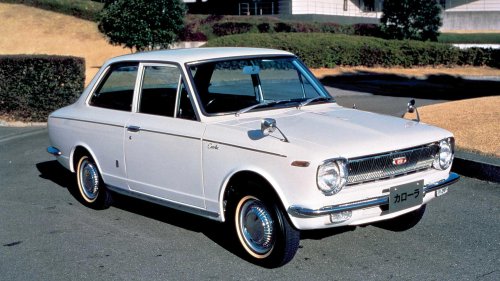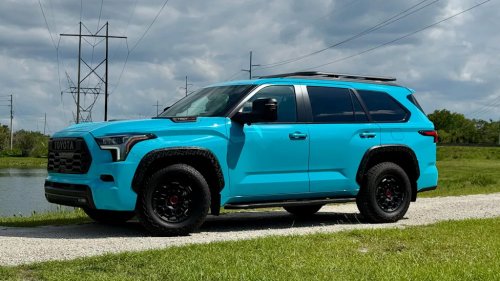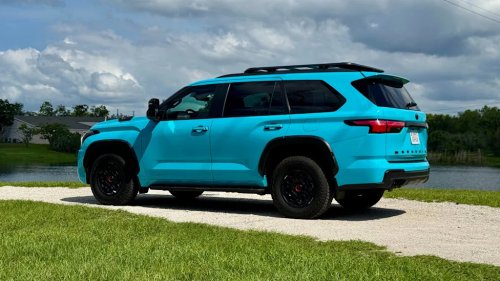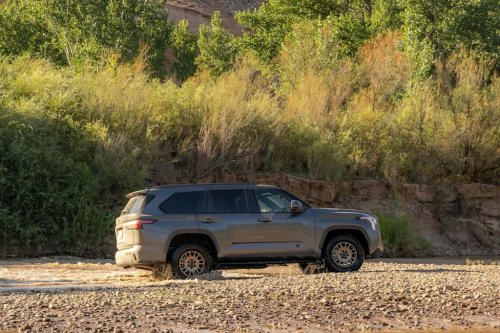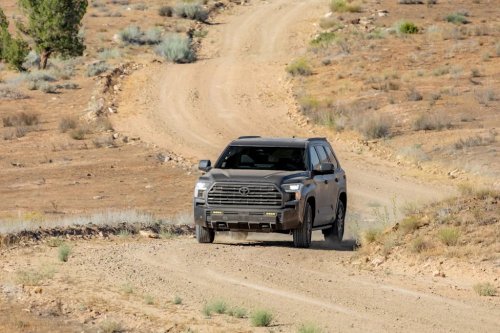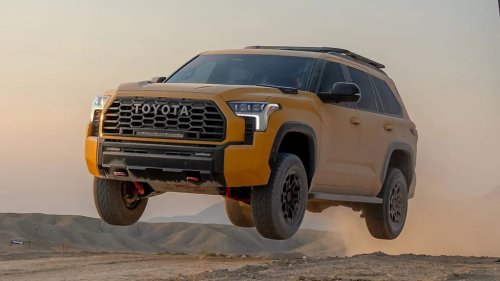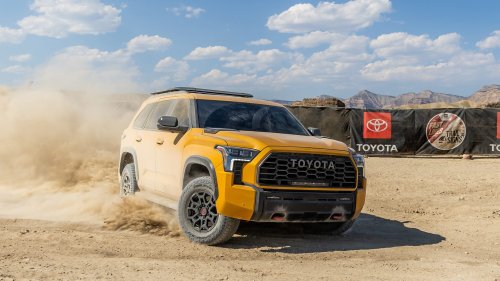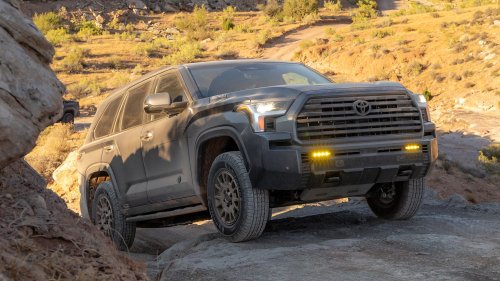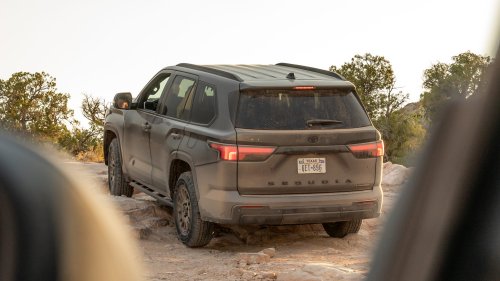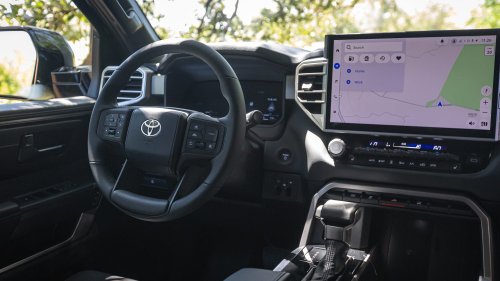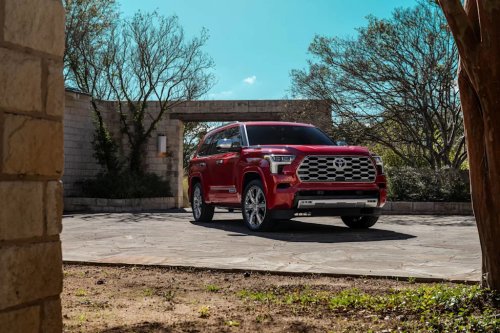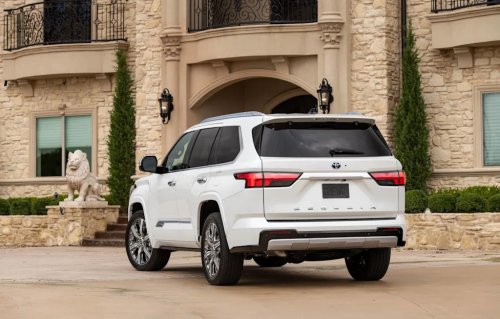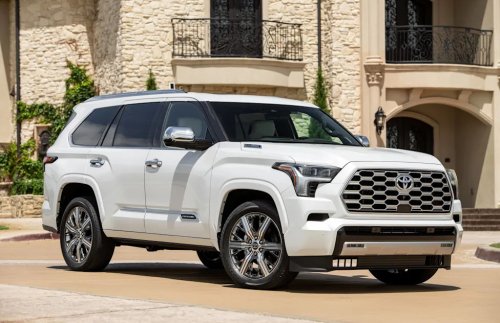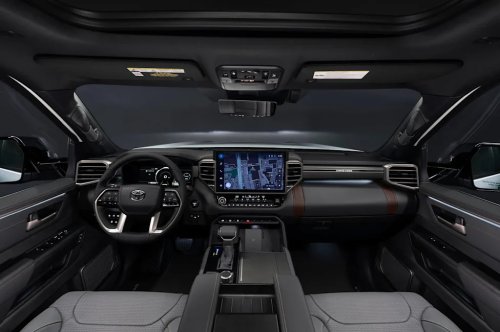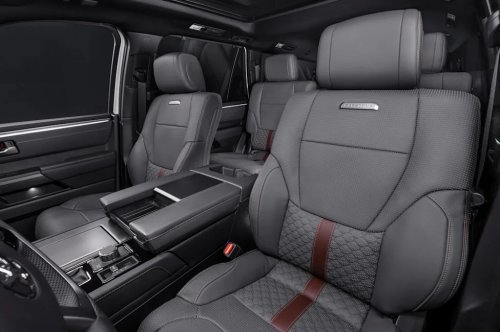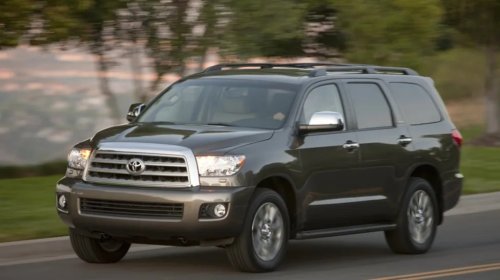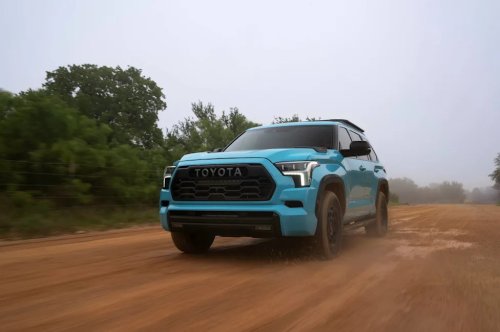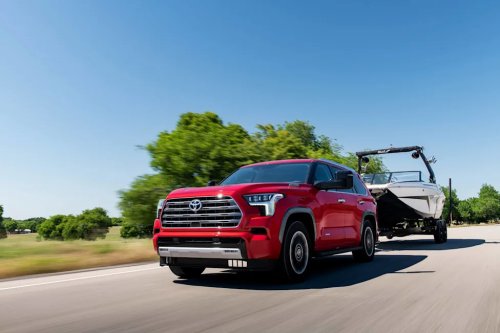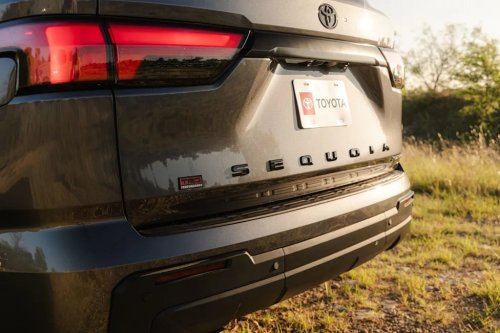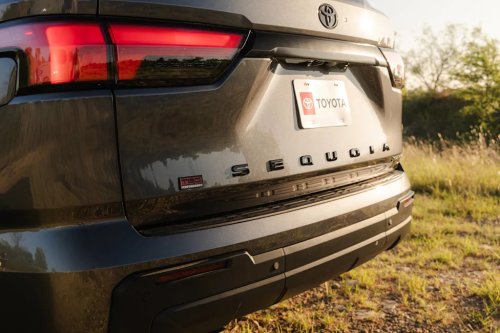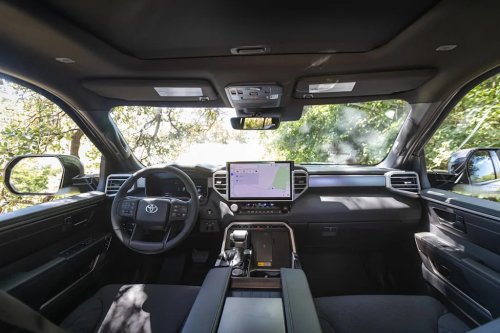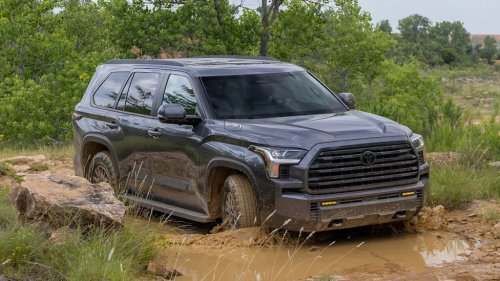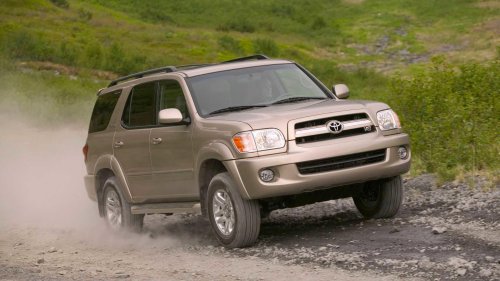
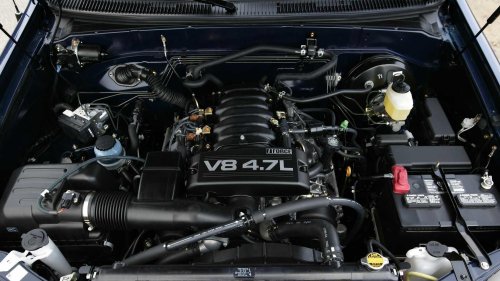
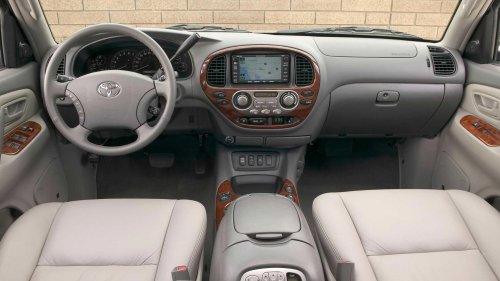
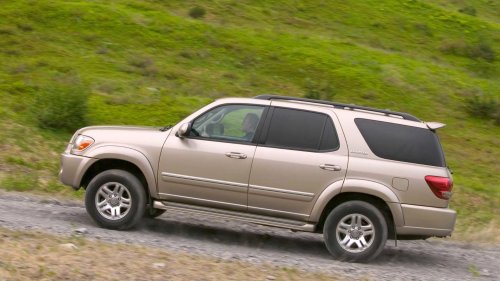
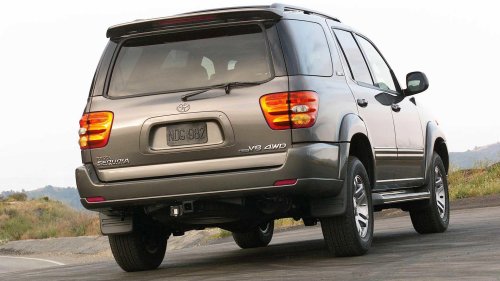
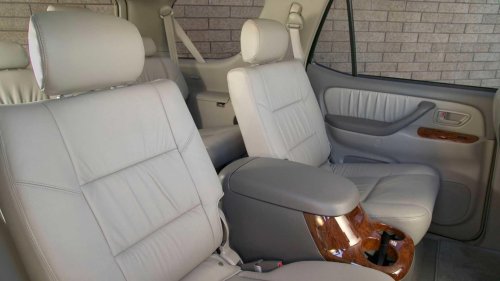
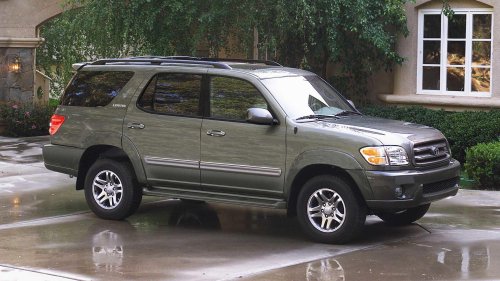

















Cost-of-living pressures are squeezing just about everyone these days, and big families feel the pinch harder than most. That strain extends to the driveway, where three-row SUVs, the default choice for hauling kids and cargo, now routinely crest $50,000. And that’s before you even glance at vehicles with luxury badges. Even the once-humble Toyota Sequoia has joined the climb, with a starting price of $64,825 (before $2,095 destination) that puts it firmly out of reach for many buyers who actually need the space.That reality is pushing more shoppers into the used-car market, but without a new-car warranty as a safety net, dependability becomes everything for those on tight budgets, and few brands carry a reputation as strong as Toyota's. In the case of the Sequoia, the notoriety translates directly into dollars, with even the first generation from two decades ago still commanding as much as $20,000 today. Why The First-Gen Sequoia Still Appeals Toyota Key Facts To Know Debuted at the 2000 Detroit Auto Show Offered from 2001 to 2007 Shared a platform and production line with the first-gen Toyota TundraFor families who need space without financial strain, the first-generation Toyota Sequoia makes a compelling case. It's a full-size SUV that delivers eight seats, a smooth, comfortable ride, and the kind of durability Toyota built its reputation on. It's also powered by the iconic 2UZ-FE V8, widely recognized as the brand's most reliable eight-cylinder powerplant. This, in combination with simple underpinnings shared with the original Tundra full-size pickup, ensures the Sequoia can rack up huge mileage with minimal drama, making it an ideal choice for buyers who prioritize reliability and usability over flash or cutting-edge tech.Developed primarily with the US market in mind, the first-generation Sequoia was the result of Toyota engineers studying the Chevrolet Tahoe and Ford Expedition to figure out exactly what American buyers wanted in a full-size SUV. Offered from 2001 through 2007, with incremental updates along the way, it delivered straightforward, dependable choices. Buyers could opt for rear-wheel drive or all-wheel drive, and either the standard SR5 or the better-equipped Limited trim. The only engine available was the 2UZ-FE V8, which was initially paired with a four-speed automatic and, starting with the 2005 model year, a five-speed. Toyota's Most Reliable V8 Under The Hood Toyota The 2UZ-FE V8’s reputation for dependability is legendary, and for good reason. It was engineered as an overbuilt mill with a cast-iron block, forged steel crank, and simple, proven components – qualities that make it exceptionally tolerant of high mileage and less-than-perfect maintenance. It was used across a variety of Toyota models, including the Land Cruiser, Tundra, and the Sequoia, as well as the Lexus LX and GX, proving itself in everything from daily driving to heavy towing. It’s common to find vehicles fitted with this engine surpassing 300,000 miles, and going well beyond that is rarely an issue.When the Sequoia launched, the 2UZ-FE was rated at 240 horsepower and 315 pound-feet of torque, delivering modest but smooth, reliable performance for full-size SUV duty. For the 2005 model year, Toyota added variable valve timing and paired the engine with a five-speed automatic transmission, boosting output to 282 hp and 325 lb-ft. In 2006, the figures were re-rated under updated SAE standards, dropping slightly to 273 hp and 314 lb-ft. With those numbers, the Sequoia isn't going to earn any drag-strip trophies. Still, it delivers enough performance for confident highway maneuvers and a respectable towing capacity of up to 6,500 pounds. Space For Eight Passengers And Some Gear Toyota Inside, the first-gen Sequoia offers a spacious, straightforward cabin with durable materials and plenty of three-row room for families. Controls are simple and functional, with options such as leather seats, power windows, and dual-zone climate control on higher trims. Cargo space is generous, and the sliding rear window is a smart touch for tight garages where the tailgate can’t swing open. With all eight seats in use, luggage capacity is still a decent 26.6 cubic feet, expanding to 128.1 cu ft with the rear seats folded or removed. One thing to note is that buyers accustomed to modern parking sensors and backup cameras will have to give them up in the original Sequoia. However, aftermarket solutions are available for features like that. Hopping Behind The Wheel ToyotaOn the road, the first-generation Sequoia delivers a composed driving experience that suits family duty more than enthusiast thrills. However, the engine has a pleasant sound, especially at startup. The V8 offers smooth, linear power delivery that’s adequate for highway merging and towing, and its low-stress design keeps NVH in check, producing a quiet cabin at cruising speeds with only a gentle rumble under hard acceleration. Likewise, the transmission (both the four- and five-speed automatics) shifts seamlessly with minimal fuss.The ride quality is compliant and controlled over bumps, despite the SUV's truck-based suspension borrowed from the Tundra. However, the handling can feel cumbersome at times. With its roughly 5,300-pound curb weight, the Sequoia feels big and somewhat unwieldy in corners, and its overly light steering lacks feedback. The braking performance is surprisingly solid, but once again, there’s a lack of feel. Fuel-conscious buyers should also take note of the EPA’s fuel economy ratings, which weren’t good even for the era. How Much To Pay Today Toyota Searching popular classifieds reveals plenty of first-generation Sequoias up for sale, with prices starting as low as $2,000. At that end of the spectrum, however, you’re typically looking at high-mileage examples, often approaching 300,000 miles, or vehicles with an accident history, or both. Move up the ladder, and many listings cluster around $15,000, which appears to be the general upper limit. At that price, it’s not hard to find clean examples with around 100,000 miles and occasionally even fewer.ToyotaThat said, prices do appear to be trending upward, particularly as the Sequoia attracts interest from millennial buyers who may have grown up with one. Online auction-tracking sitesshow multiple sales exceeding $20,000 over the past year, including a standout example with just 30,000 miles that sold for an eye-catching $45,000. Anyone considering buying one should take note of some common trouble spots.While the first-gen Sequoia is regarded as robust, some items still wear out over time, and rust could also be an issue, depending on where the vehicle spent most of its life. According to owner reports and reliability data from CarComplaints and RepairPal, issues can include premature lower ball joint wear and problems with the rear hatch handle and latch mechanism. Some owners also report exhaust manifold cracking and occasional transmission concerns in higher-mileage vehicles. As a result, prospective buyers should budget accordingly for preventative maintenance and any necessary repairs. Still A Smart Choice For Families On A Budget Toyota For families seeking a spacious, reliable three-row SUV without breaking the bank, the first-generation Sequoia remains a smart choice. While values are creeping upward, there are still plenty of well-maintained, affordable examples on the market, offering decades of Toyota durability, usable V8 power, and family-friendly practicality.