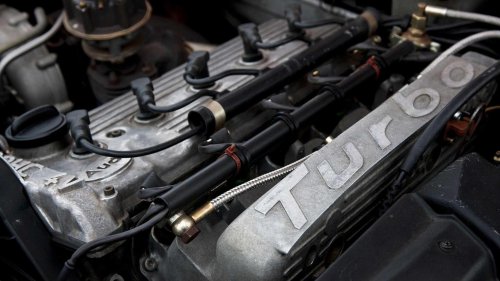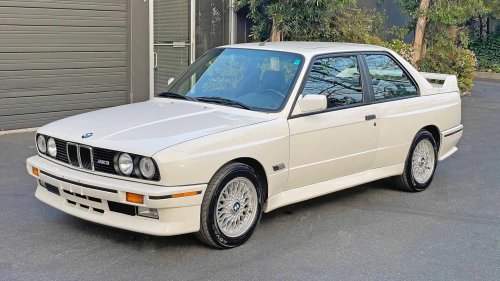
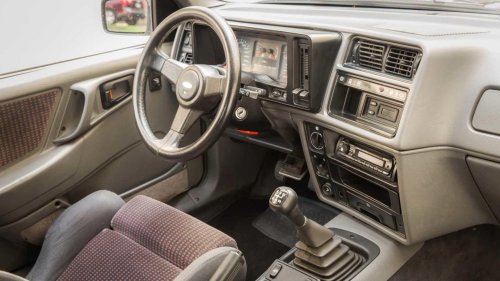
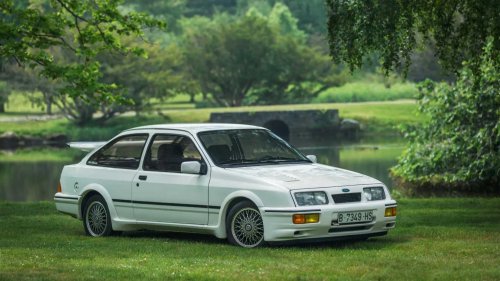
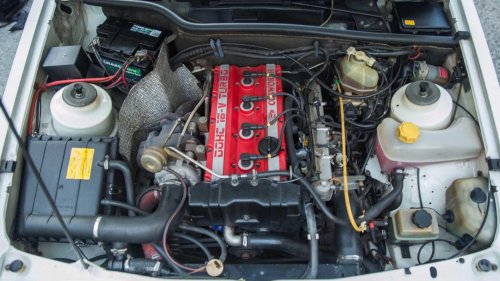
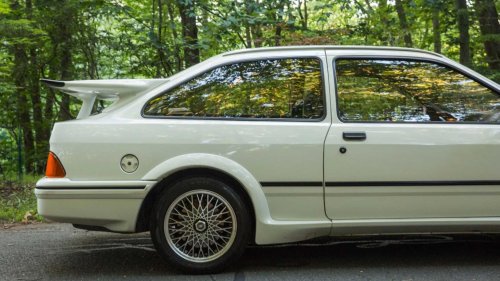
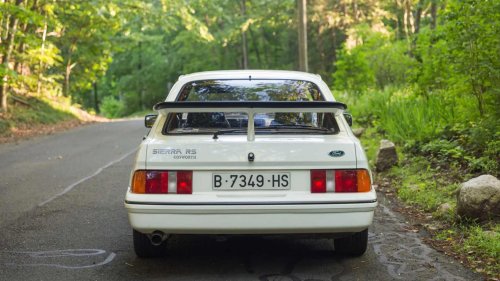
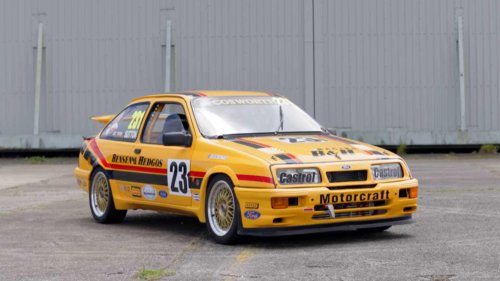


















In 1986 the European performance car market had a clear hierarchy. At the top sat the Germans: precise, expensive, naturally aspirated, and built on the assumption that credibility cost money. If you wanted to be taken seriously at speed, you bought a BMW or a Mercedes-Benz, accepted the premium, and understood that was simply how things worked. Ford was where you went for a fleet car. The Sierra was where company reps spent their motorway hours. What arrived in the summer of 1986 carrying a Cosworth badge, a whaletail rear wing, and the unofficial title of the fastest fast Ford ever built was not supposed to threaten that order. The Cossie did it anyway. What Passed for a Performance Car in 1986 Bring aTrailer The BMW E30 M3 launched the same year as the car in question and arrived at £22,750, around $35,700, in the UK, a significant premium over anything wearing a blue oval badge. It produced 197 horsepower from a 2.3-liter naturally aspirated four-cylinder, ran to 60 mph in 6.5 seconds, and topped out at 146 mph. The Mercedes-Benz 190E 2.3-16, developed with Cosworth and built for the same Group A homologation regulations, made 185 hp and took 7.4 seconds to reach 60 mph. Both cars were technically impressive, motorsport-derived, and priced accordingly. Both wore badges that commanded automatic respect from the press and the public.The turbocharged four-cylinder was not part of the performance conversation in this context. Turbocharging was something rally cars did, or something you found under the hood of a Porsche 930. Fitting one to a 2.0-liter engine derived from a Ford Pinto block and dropping it into a family hatchback was not, on paper, a recipe for embarrassing Munich. The touring car landscape of the mid-1980s was defined by exactly the kind of high-revving, naturally aspirated precision engineering that the German manufacturers had spent decades perfecting. The Brief That Changed Everything Bring a Trailer Stuart Turner took over as head of Ford Motorsport Europe in 1983 and immediately identified a problem. Ford was no longer competitive in Group A touring car racing. The solution required a homologation special, and the Sierra's aerodynamic body made it the obvious platform. Turner approached Cosworth for an engine, and Cosworth agreed, but on two conditions. They would supply a minimum of 15,000 units, and the road version would produce no less than 201 hp. Ford had originally asked for 180 hp. Cosworth, having developed the engine, could not de-tune it that far and hold a straight face.The 15,000-engine minimum is the detail that explains everything that followed. Ford needed to sell enough road cars to absorb that commitment, which led directly to the four-door Sierra Sapphire Cosworth and eventually the four-wheel-drive variant. The RS Cosworth was not designed as a halo product. It was designed as a racing car that happened to need road-legal variants to qualify for competition. The fact that it became one of the most celebrated performance cars in European history was, in the strictest sense, a side effect. Meet the Ford Sierra RS Cosworth: The Family Car That Outran a BMW M3 Bring a TrailerThe Ford Sierra RS Cosworth went on sale in July 1986 priced at £15,950, about $21,000, nearly £7,000 less than the BMW E30 M3. It was faster to 60 mph, faster at the top end, and built on the same basic bodyshell as the Sierra fleet car that nobody's regional sales manager had ever found exciting. Ford built 5,545 examples at its Genk factory in Belgium before December 1986, the minimum required for Group A homologation. All came in three colors only: Diamond White, Black, and Moonstone Blue. The whaletail rear wing, designed to generate aerodynamic downforce at speed, became its most recognisable feature and the source of equal parts admiration and mockery depending on who you asked.The shock was not simply that it was fast. The shock was what it cost, what it looked like underneath the spoiler, and what it said about where performance engineering was going. A turbocharged four-cylinder built around a cast-iron block from a car that had been powering Cortinas and Granadas for a decade had just outrun the BMW M3 on paper and undercut it by a significant margin at the dealer. The established order had a problem. The Cosworth YBB and What Made It Historic Bring a Trailer The YBB engine used Ford's cast-iron T88 Pinto block as its foundation, to which Cosworth added a bespoke aluminium DOHC 16-valve head, a Garrett AiResearch T03B turbocharger, an air-to-air intercooler, and Weber-Marelli digital engine management with electronic port fuel injection. The compression ratio was set at 8.0:1 to accommodate the forced induction. Road output was 201 hp at 6,000 rpm and 204 lb-ft at 4,500 rpm, delivered through a five-speed Borg-Warner T5 gearbox, the same unit used in the Ford Mustang, specially configured for the higher-revving application.The milestone buried in those numbers is that the YBB was the first series production car engine to exceed 100 hp per liter. At 201 hp from 1,993cc, it produced just over 100.8 hp per liter at a time when the naturally aspirated benchmark from BMW's S14 managed around 85 hp per liter. That specific output figure had been the preserve of racing engines. Cosworth had put it into something you could drive to the supermarket. What a Ford Sierra RS Cosworth Is Worth Today Bring a TrailerThe Cossie was never sold new in the United States, it was excluded on emissions grounds, but examples have crossed the Atlantic since enthusiasts have cottoned on to their brilliance. Market data places the average three-door RS Cosworth sale at $57,042, with clean, documented examples regularly clearing $100,000. The four-door Sapphire, a more practical daily fast Ford built on the same YB engine and derived running gear, typically trades from around $37,000 in honest condition up to six figures for the finest low-mileage examples.The RS500 is a different conversation entirely. Only 500 were built, all right-hand drive, all converted from standard three-door shells by Aston Martin Tickford in Essex, making them simultaneously the most capable Group A homologation tool Ford ever produced and the rarest Cosworth Sierra on the market. The highest recorded sale reached $590,500 at auction for a 5,192-mile example in February 2023, a record for the model. That a Tickford-converted fast Ford with a turbocharged Pinto-based four-cylinder now trades at those levels is the clearest possible measure of how thoroughly the Cossie's reputation has been reappraised. What It Did on Track and Why That Mattered on the Road Bring a Trailer The purpose of the RS Cosworth was always competition, and the road car's reputation was built as much on what happened at Spa and the Nürburgring as it was on press road tests. In 1987 and 1988, the RS500 variant dominated Group A touring car racing across Europe. Klaus Ludwig took the 1988 Deutsche Tourenwagen Meisterschaft drivers' title in a Ford Team Grab RS500, and the car claimed the 1987 24 Hours of Spa outright. In British rallying, Jimmy McRae won back-to-back British Rally Championship titles in 1987 and 1988 in the rear-wheel-drive RS Cosworth, a remarkable achievement given the car's traction disadvantage against the four-wheel-drive Lancias on loose surfaces. Carlos Sainz won the Spanish Rally Championship in the same period. Didier Auriol gave the car its sole World Rally Championship win at the 1988 Tour de Corse, a tarmac event that suited the rear-drive chassis perfectly.The motorsport record mattered to the road car because it validated what period testers were already saying. A homologation special that wins at the Nürburgring is not just a badge exercise. The RS Cosworth had arrived at a time when buyers had no framework for evaluating a turbocharged Ford against a naturally aspirated BMW. The racing results provided that framework quickly and brutally. By 1988, the question was not whether the Sierra RS Cosworth was a serious performance car. The question was whether anything else in its price range, running the same YB engine architecture in whatever state of tune, could keep up. The RS500 and the Limits of the Formula Motor Addicts/YouTubeThe RS500 was announced in 1987 as a homologation evolution, allowing Ford to field an even more highly developed Group A racer. Tickford converted 500 three-door shells, fitting a larger Garrett T31/T04 turbocharger, a bigger intercooler, twin fuel injectors per cylinder, and a strengthened block. Road output rose from 201 hp to 224 hp from the YB engine. Race output, in fully developed Group A trim, exceeded 550 hp. The external changes were deliberate in their restraint: a second spoiler added above the whaletail, a revised front splitter, additional cooling vents. To a casual observer, it looked almost like a standard Cossie. That was the point.The record auction result of $590,500 for a low-mileage RS500 is the clearest statement of where the market has landed. At launch, the RS500 cost £19,950, about £4,000 more than the standard three-door RS Cosworth and a fraction of what a contemporary Ferrari or Porsche cost. The road performance advantage was modest: the RS500 ran to 60 mph in 6.2 seconds and reached 153 mph, versus the same sprint time and 149 mph for the standard fast Ford. The real value was always what it represented on track. The fact that collectors now pay Ferrari money for a Tickford-built homologation special with a turbocharged Pinto block is the market's long-delayed acknowledgement of what the engineers at Cosworth and Ford SVE understood in 1986: that the formula of a small, light, turbocharged four-cylinder in an ordinary body was not a compromise. It was the future.Sources: Classic.com, Bring a Trailer, Iconic Auctioneers.