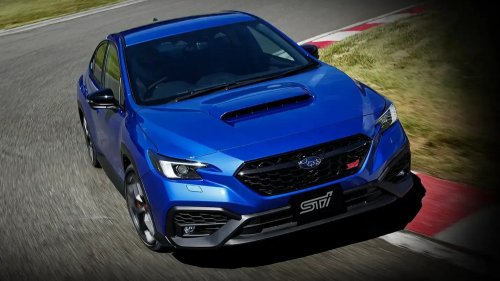
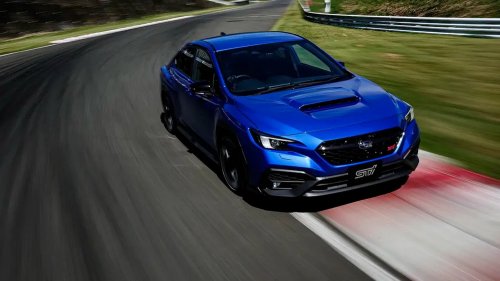
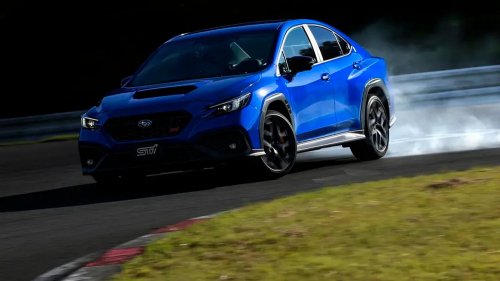
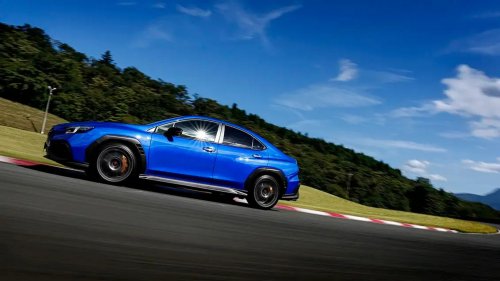
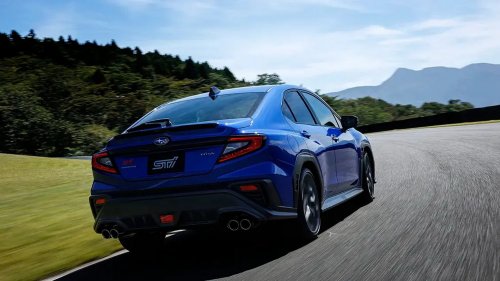
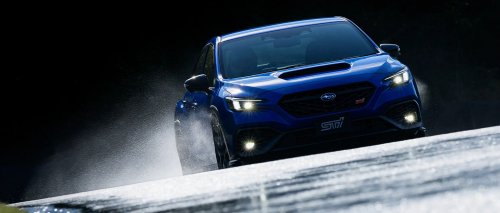
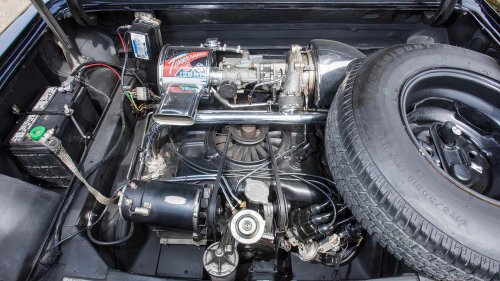
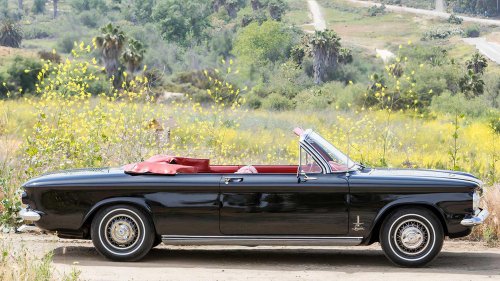
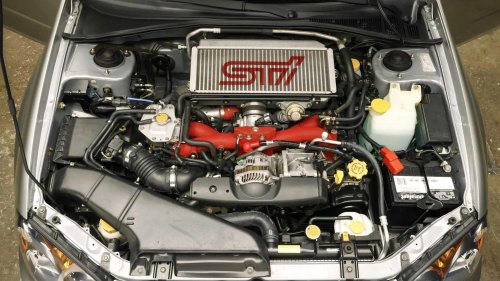
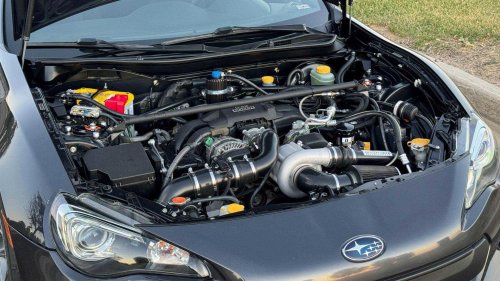
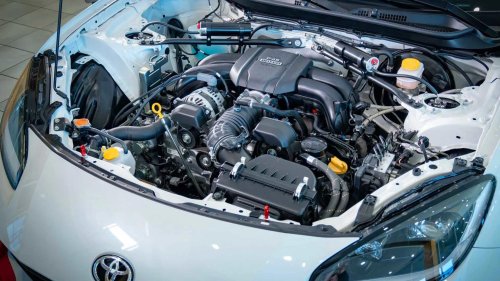
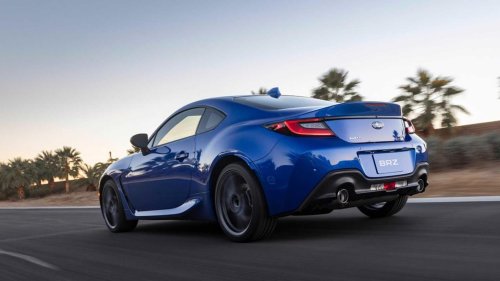
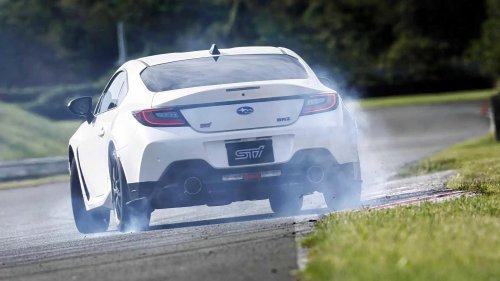
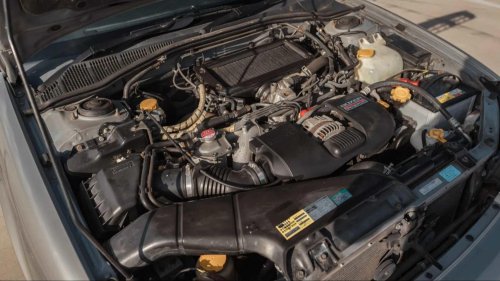
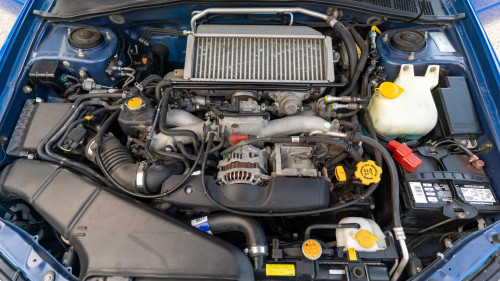
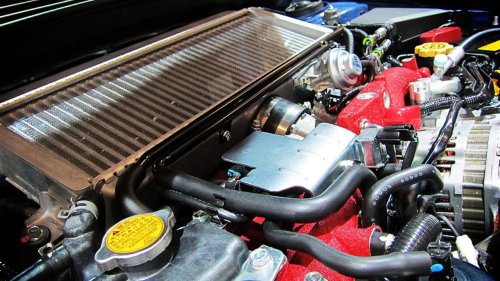
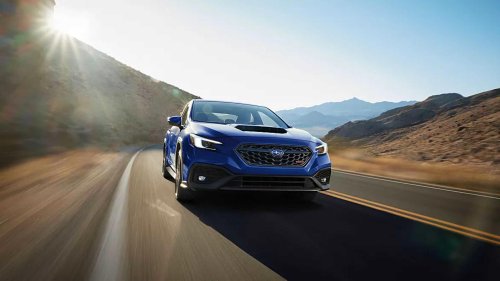
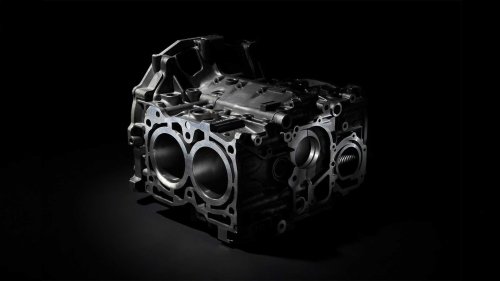
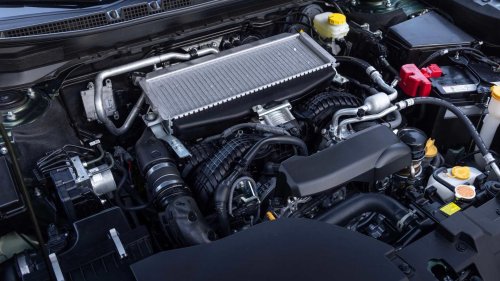
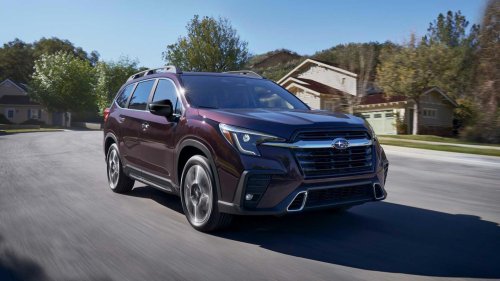
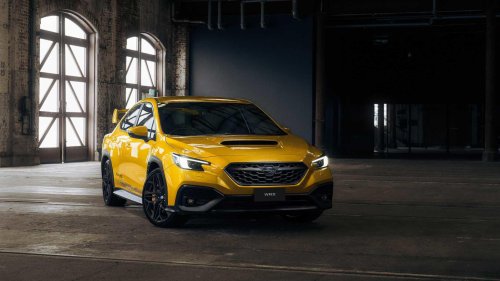
The turbocharged flat-four engine has always stood out like a sore thumb against the broader engine landscape. Certainly, it serves the same purpose as the others, but it looks and sounds very different and is typically tied to brands that want to do things their own way.This great mechanical curiosity used to be more prevalent in America than it is today, but now, only one manufacturer chooses to offer the solution in the mainstream market. Porsche kept it alive for a while with its 718 Boxster and Cayman, but when it ceased production of the ICE-engined 718 in October 2025, it handed the reins over to Subaru.Thankfully, you can still find the boxer engine in that company’s WRX, turbo Outback models and in the Ascent, so it’s not just a heritage engine that sits in one enthusiast special. Subaru Now Stands Alone Subaru of AmericaWhen it comes to this engine's story, Porsche's exit is quite a big deal. After all, it did a lot to keep the turbo flat-four visible in the modern era, especially after it shifted the Boxster and Cayman away from six-cylinder power in most trims. The 718's 2.0- and 2.5-liter turbo flat-fours weren't just engineering novelties, but proof that you could still please those emissions hawks and satisfy owners looking for robust performance.The engine could clearly form part of a sophisticated driver's brief, but as internal combustion engines themselves came under more pressure, Porsche wasn't convinced and decided to move on. By contrast, Subaru doubled down. It continued to build its lineup around a boxer engine and all-wheel drive, and now it stands alone, in the US marketplace at least. In America, it’s the only mainstream carmaker that has this type of engine in its regular production vehicles. The FA24 Engine Keeps The Idea Alive Subaru The hero of the story is Subaru's FA24 turbo, a 2.4-liter direct-injection boxer-four. In the 2026 WRX, it produces 270 hp and 258 lb-ft of torque, with a twin-scroll turbo and electronic wastegate that delivers a broad, usable torque curve. The WRX has a six-speed manual, to the delight of enthusiasts, and that allows purists to fully explore the turbo boxer formula on the open road.The bigger part of this story is how Subaru can still make the boxer turbo recipe work in an emissions-compliant world. Plenty of modern turbo-fours can make the same kind of power as this one. But here, the torque band is particularly strong between 2,000 and 5,200 rpm, which makes for excellent drivability, and the car can also reach the 60-mph target in around 5.5 seconds.Still, Subaru’s boxer hasn't always been the sharpest tool in the shed, and earlier versions were a little edgy, laggy, and perhaps too dramatic. The company learned those lessons well, however, and has come a long way with its newer engine, which is far more advanced as a result.The FA24 is a lot stronger in the mid-range, making it more flexible in daily driving, and that also makes it better suited to a broader range of vehicles. Perhaps that's why the turbo flat-four has survived at Subaru when it has gradually vanished elsewhere, as a scalable and practical part of Subaru's entire product strategy. Subaru Moved The Turbo Boxer Beyond The WRX Subaru Porsche was very specific in its turbo flat-four approach and contained the idea within a tight sportscar line. But Subaru has developed a very different mission for this particular engine, and the architecture has a life beyond one performance sedan with this Japanese manufacturer.In the 2026 Outback XT and Outback Wilderness models, the 2.4-liter turbo boxer produces 260 hp and 277 lb-ft of torque. This helps give the larger, heavier Outback a far better low-end shove, of the type that you'd expect in a premium crossover or adventure wagon.In practical terms, the 2026 Ascent makes the same basic point. Here, the 2.4-liter turbo boxer is rated at 260 hp and 277 lb-ft of torque in this three-row SUV. It's perfectly capable of working in this environment, too, and can deal with the kind of towing and family-hauling requirements that might make other manufacturers turn to a naturally aspirated V6. The Ascent has a towing capacity of up to 5,000 lbs as well, which helps to show that this turbo boxer can be a solid mainstream powerplant, rather than just a niche performance engine.All of this means that Subaru has a real business case for keeping this engine as it works so well across various models. The WRX probably keeps the engine’s mythology alive, but the Ascent and the Outback are where the turbo flat-four becomes commercially viable. And by making this engine as useful as possible, Subaru doesn't simply have to try to justify its survival beyond the raw enthusiast market. The Boxer Layout Still Gives Subaru A Real Engineering Identity Subaru A boxer engine may be an oddball, but it is nevertheless quite good at its work. It has a low center of gravity and a well-balanced operation and lines up nicely with the longitudinal layout of Subaru’s symmetrical all-wheel drive. The engine's pistons move horizontally in opposing pairs and that helps to reduce vibration significantly. In turn, engineers can place the engine far lower in the chassis than a taller inline design, which also helps to aid stability and handling balance.Subaru has always been synonymous with all-wheel drive, and the boxer just seems to work naturally in this environment. The company has been able to design around the boxer and all-wheel drive pairing, rather than trying to build a front-drive-based platform and adapting it.The turbo boxer certainly feels authentic in its Subaru home and gives the WRX that signature blend of traction, mid-range shove, and mechanical presence. It may also place the Outback and Ascent apart from other generic crossovers to make them feel like real Subarus. And this is important in a market where such vehicles seem all too alike and mechanical interchangeability is usually the name of the game. Why This Matters Beyond Subaru Subaru Australia The fact that Subaru and its flat-four engines stand apart from all the rest says a lot about the modern automotive business. It suggests that the industry has basically stopped rewarding any specialization, probably due to economies of scale and major pressures from elsewhere.Those other Original Equipment Manufacturers (OEMs) are under pressure to consolidate engines, simplify architecture, and make sure that their plans are scalable. And even though the turbo flat-four is eminently workable, it's usually not in favor because its format is unusual. And so, it's good to see that Subaru is still committed to the turbo boxer, even though the engine itself runs against any broader industry logic.The FA24 also gives Subaru a distinctive identity to play with, which is quite rare in this business. Other OEMs can talk up character, heritage, and brand DNA, but few of them can point to any clear mechanical distinction. Subaru, on the other hand, proves that its turbo flat-four is not just some kind of relic from the rallying era. The company also insists that the boxer isn't a nostalgic nod to older fans but is retaining the engine's position in the showroom due to its inherent practicality.Pedants may argue that boxer engines matter far more for enthusiasts than they do for ordinary buyers, but distinctive engineering still has its place. People in the broader world do tend to notice if a brand has a dramatically different point of view. Those buyers may also find it interesting that a company's performance car, family SUV, and wagon can all originate from within the same engineering culture. And while Porsche was there for a while, it decided to exit stage left, which means that Subaru is now the last obvious US market holdout for this turbo flat-four.Subaru didn't find itself in this unique position simply by chasing novelty. Instead, it stayed committed far longer than others who eventually went after simpler solutions. And thankfully for those who appreciate engineering variety, the company's persistence in an all-too-predictable market has led to this engine’s preservation.Sources: Subaru, Porsche.



















 +5 others